A therapy dog's travel arrangements must suit its welfare and the rules of the destination. Visiting credentials do not provide the same travel or public-access rights as service-dog status.
A good journey starts long before the engine turns over. Therapy dogs thrive on stability, and travel can shake that up if you are careless. The goal is not simply getting from one place to another. The goal is arriving with a dog that is settled, focused, clean, healthy, and emotionally ready to do the work asked of it. Whether you are heading across town for a visit or crossing state lines for an event, preparation makes the difference between a smooth trip and a long, stressful one.
Why Traveling with Therapy Dogs Requires Extra Thought
A therapy dog is not the same as a pet on vacation, and it is not the same as a service dog with protected public access. That distinction matters. Therapy dogs often travel to provide comfort in organized settings, usually by invitation or through a recognized therapy dog program. Because of that, handlers need to think not only about the dog’s comfort, but also about hygiene, behavior, legal expectations, and the needs of the people the dog will meet.
A seasoned therapy dog can feel tension before a word is spoken. But travel can dull that edge if the dog arrives overstimulated or tired. A restless ride, a missed meal, too little water, or too much confusion in a busy terminal can leave even a reliable dog off its game. That is why thoughtful travel is part of responsible handling.
Health, records, and identification
Before any trip, make sure your therapy dog is up to date on vaccinations, flea and tick prevention, and routine veterinary care. Carry copies of health records, vaccination proof, identification tags, and any therapy organization paperwork you may need. If you are traveling far from home, know where the nearest emergency veterinarian is located. Folks often overlook that part until something goes wrong, and that is the wrong time to start searching.
Your dog should wear clear identification at all times. A collar with current contact information is the minimum. A microchip adds another layer of protection. Travel brings strange places, unfamiliar scents, and more chances for a dog to become disoriented. Even a well-trained animal can get spooked by a slammed car door or a crowded lobby.
Practice runs matter
If your dog is new to travel, do not make the first outing a long one. Start with short rides, then build up. Let the dog learn that the vehicle is a calm place, not a rattling trap. Practice loading, unloading, resting quietly, and walking through new environments without pulling or scanning every direction. A therapy dog should be curious without being nosy and attentive without being anxious.
The woods will teach you that. Before trusting a dog in a hard situation, you let it work through easier ones first. The same principle applies here. A therapy dog that can settle during a twenty-minute drive will be better prepared for a three-hour haul down the interstate.
Road Trips with Therapy Dogs
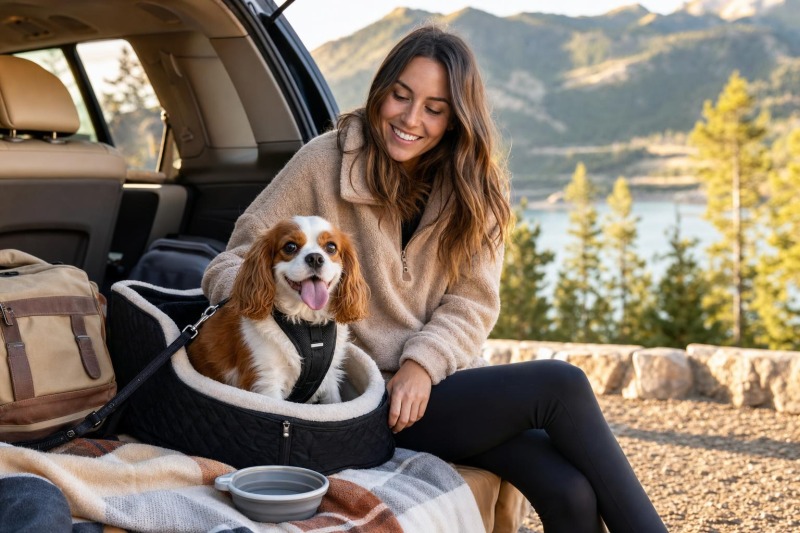
For many handlers, road travel is the most practical option. It gives you control over pace, rest stops, and the dog’s environment. Even so, comfort and safety cannot be improvised. Your therapy dog should ride in a crash-tested crate, secured carrier, or with a proper dog seat belt system. A loose dog in a moving vehicle is not only unsafe, it can build bad habits and unnecessary stress.
Temperature control is equally important. Never assume a cracked window is enough. Dogs can overheat quickly, and a therapy dog that arrives panting and depleted is in no shape to work. Keep fresh water available, but offer it in manageable amounts during the ride so you are not dealing with discomfort or motion sickness. Some dogs travel best after a light meal rather than a full one. Learn what suits your dog before the important trip, not during it.
Plan regular stops for bathroom breaks, stretching, and a little decompression. Choose quieter areas when possible. Not every dog needs to greet strangers at a gas station, and not every stranger needs access to your dog. Protect your animal’s energy. A therapy dog should not be treated like a public exhibit all the way to the destination.
Flying with a Therapy Dog
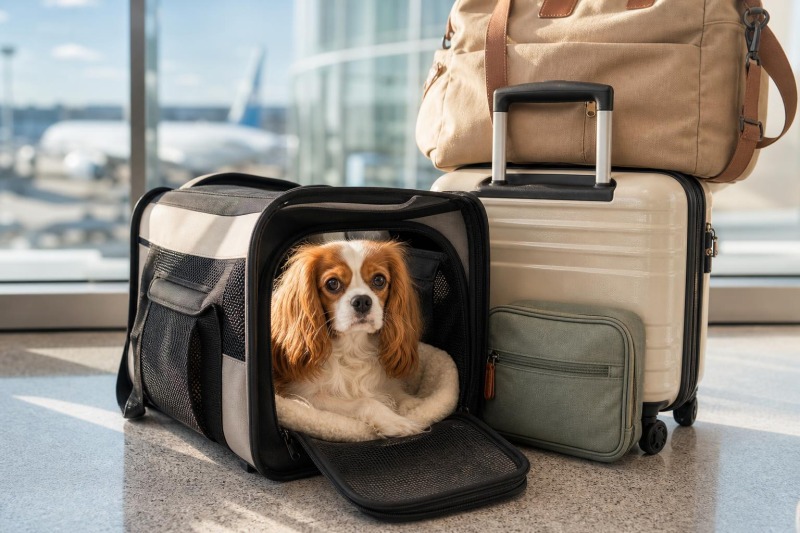
Air travel takes a more careful hand. Therapy dogs do not automatically have the same airline access as service dogs, so you need to review airline rules well in advance. Some therapy dogs may be allowed under general pet policies, while others may need specific accommodations based on size and carrier requirements. Never assume. Call, confirm, and get details in writing when possible.
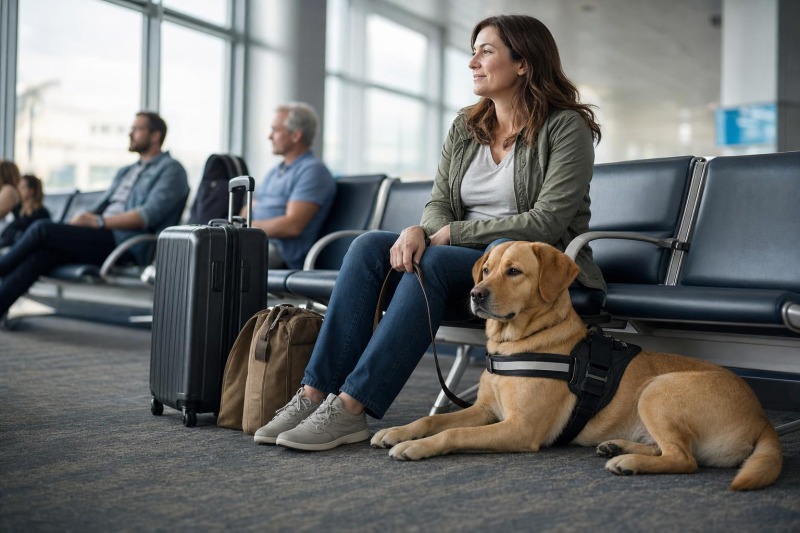
Airport environments can be loud, slick, crowded, and full of competing smells. That can wear on a dog fast. Before flying, expose your therapy dog to elevators, automatic doors, rolling luggage, and noisy public areas. The point is not to toughen the dog for the sake of pride. The point is to help it remain composed in a setting where many dogs would come unglued.
On travel day, give yourself extra time. Rushing is poison for dog handling. A calm handler helps create a calm dog. Move with purpose, but do not drag your dog through the process. Offer quiet praise, keep your commands clear, and watch body language closely. If the ears pin back, the mouth tightens, or the dog starts scanning too much, that is your cue to slow down and help it reset.
Routine is your best friend
Dogs are creatures of pattern. A therapy dog that eats, rests, walks, and works on a steady schedule will usually travel better than one used to chaos. Try to keep feeding and bathroom timing as consistent as possible. Bring familiar items like a mat, blanket, or favorite toy that smells like home. Those little comforts can anchor a dog in a strange place.
Some handlers make the mistake of overexciting the dog with constant chatter and reassurance. A steady dog often needs less fuss than people think. Calm handling, a familiar cue, and a clear expectation go farther than emotional hovering. There is an old lesson in dog work that still holds true: the quieter the handler, the better the dog often listens.
Know when not to ask for work
Not every trip should end with a therapy visit. If your dog is tired, stressed, carsick, or rattled by the journey, respect that. A therapy dog gives emotional support through calm presence, and that cannot be forced. Handlers sometimes feel pressure to follow through because others are counting on them. But a dog that is over threshold can make a vulnerable setting worse instead of better.
Good judgment is part of good handling. If the dog is not right, you wait, shorten the visit, or call it off. That is not failure. That is responsibility.
Hotels, Public Spaces, and Proper Etiquette
If you are staying overnight, choose dog-friendly accommodations that are genuinely comfortable with animals, not places that tolerate them with a sigh. Ask about entrance routes, relief areas, noise levels, and pet policies ahead of time. Once inside, keep your dog under control, clean, and quiet. Therapy dogs should leave a good impression everywhere they go.
It is also important to remember that therapy dogs do not have blanket public access rights the way service dogs do. Be respectful of business rules and never misrepresent your dog’s status. That kind of honesty protects everyone, including people who rely on legitimate service dog access. There is enough confusion in the public already. Handlers should be helping clear the air, not muddying it.
In public settings, advocate for your dog without being rude. Not every person should pet your dog, and not every child understands boundaries. A polite but firm word can prevent stress and keep the dog’s attention where it belongs. Your dog may be friendly, but friendliness alone is not the job. Stability is.
What to Pack for Traveling with Therapy Dogs
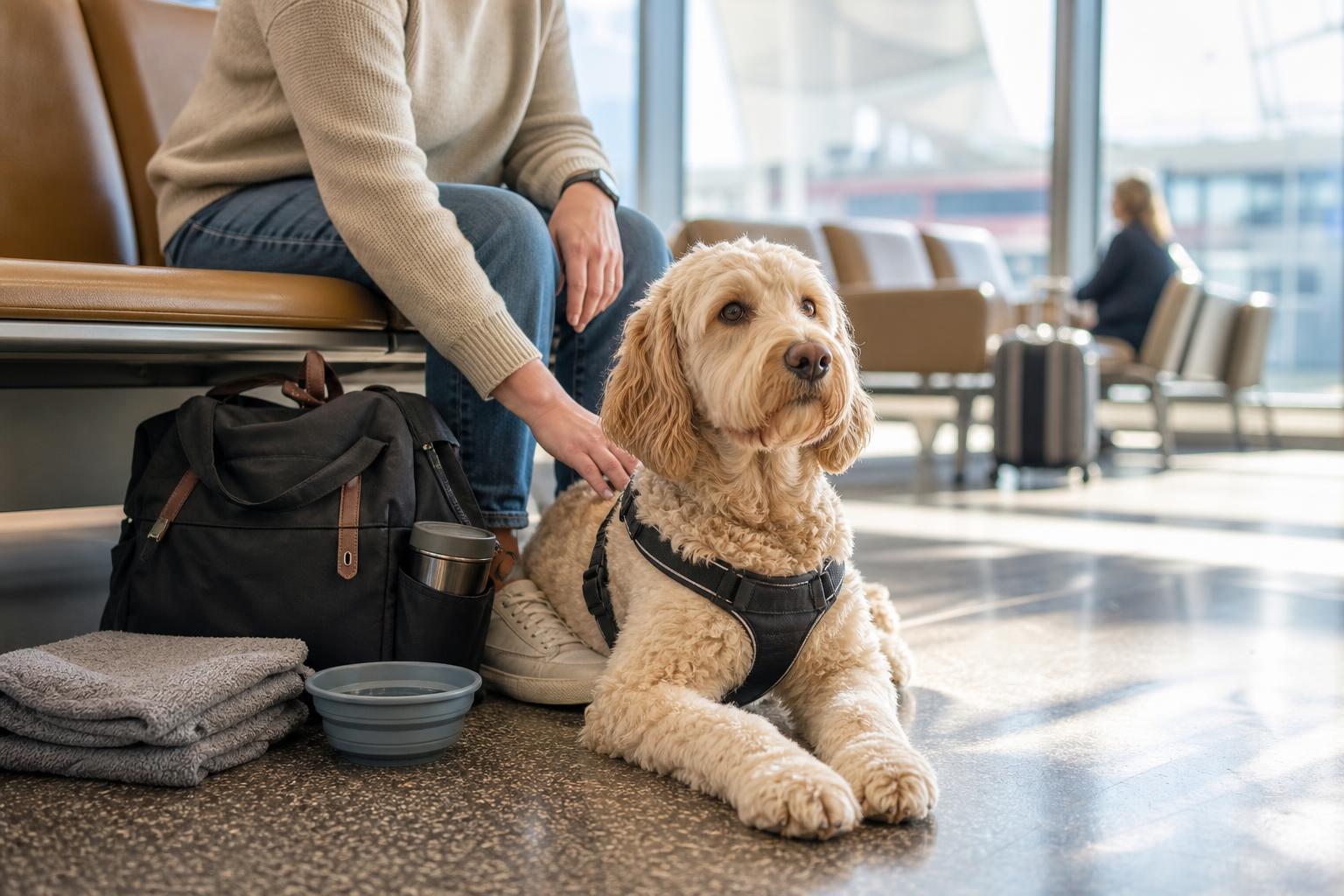
Pack with purpose. Bring food, water, bowls, medications, waste bags, grooming supplies, towels, paperwork, leash backups, and a crate or resting mat. A small first aid kit is worth its weight when you are far from home. Keep cleaning supplies handy too. Therapy work calls for a clean coat, clean paws, and good overall presentation.
Do not forget the practical things that make a dog feel settled. Familiar bedding can help a dog relax in a hotel room. A chew used only during quiet downtime can create a healthy routine. If your dog wears a vest or bandana for therapy visits, keep it clean and packed separately so it is ready when needed.
After You Arrive: Let the Dog Settle
Once you reach your destination, do not expect your therapy dog to hop out and go straight to work like a switch was flipped. Give it time to sniff, relieve itself, drink water, and read the environment. A few calm minutes can restore balance after a long ride. Watch how the dog moves. A stiff gait, heavy panting, or unusual distraction are signs you need to slow the plan down.
The best traveling therapy dogs are not made by pushing harder. They are made by building trust, routine, and confidence one trip at a time. When you handle the road with common sense and respect for the dog in front of you, travel becomes another skill the team can carry with quiet pride.
There is a satisfaction in arriving with a dog that is steady, bright-eyed, and ready to bring comfort. It reminds me of stepping out before sunrise with a dog that knows the work ahead and meets it with calm purpose. Different field, same truth. Dogs do best when we prepare them well, read them honestly, and never ask them to carry what they are not ready to carry.
Traveling with therapy dogs is not about showing off a well-behaved animal. It is about protecting a working relationship built on trust. When you plan carefully, honor your dog’s limits, and move through the world with good manners, your dog can do what it was trained to do best: offer comfort, calm, and connection in places that need it most.