Air travel with a service dog involves airline procedures, required documentation, and practical preparation for the journey. Check current requirements directly with the airline before booking and again before departure.
For folks visiting Companion Dog Central because they are learning about service dogs, therapy dogs, or companion dogs, it helps to start with one truth: not every good dog is ready for a plane. A true service dog is task-trained to assist a person with a disability, and that training matters more in an airport than just about anywhere else. Airports are full of distractions that can rattle an unprepared dog. Rolling bags, food smells, loudspeaker announcements, rushing strangers, children reaching with sticky hands, and the simple pressure of confinement can test even a seasoned working dog.
If you are planning to fly with a service dog, the goal is not merely getting from one city to another. The goal is traveling safely, legally, and with as little stress as possible for both you and your dog.
Understanding the Rules for Air Travel
The first thing any handler needs to know is that airline travel rules have changed over the years. In the United States, airlines generally recognize trained service dogs under the Air Carrier Access Act, but emotional support animals no longer receive the same broad access they once did. That means the dog flying with you should be a trained service dog that performs specific tasks related to a disability.
Most airlines now require forms attesting to the dog’s health, behavior, and training. On longer flights, there may also be a form addressing the dog’s ability to either avoid relieving itself or do so in a sanitary manner. These documents are not something to scramble for the night before. Check your airline’s website as soon as travel is booked, then call the accessibility desk if anything is unclear.
Keep copies of every submitted form, and bring printed backups even if the airline accepts electronic paperwork. Technology has a funny way of failing when you can least afford it. A prepared handler walks in with documents organized and easy to present.
What Airlines Usually Expect from a Service Dog
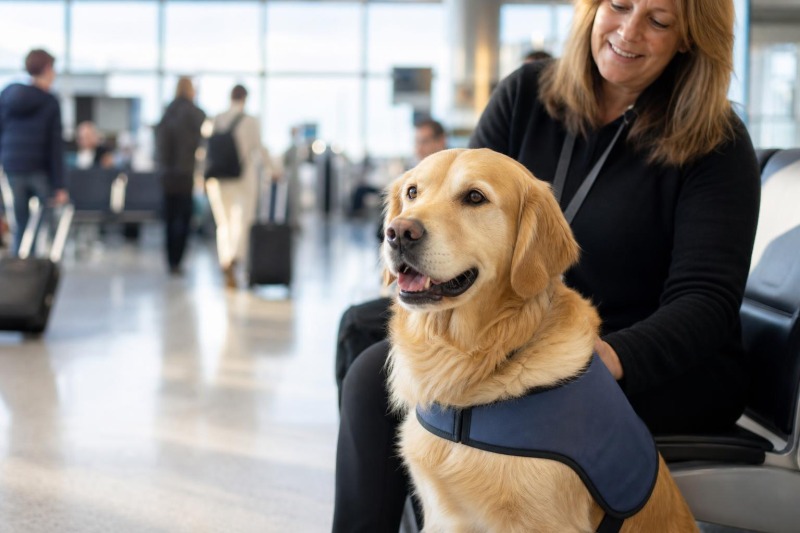
Airlines expect a service dog to be under control at all times. That means no lunging, barking, growling, wandering, or occupying space beyond what is reasonable for the handler’s seat area. The dog should be able to settle quietly on the floor, ignore strangers, and move through the airport without causing disruption. A vest is not legally what makes a service dog legitimate, but clean gear and a professional appearance often help smooth interactions with airline staff and the traveling public.
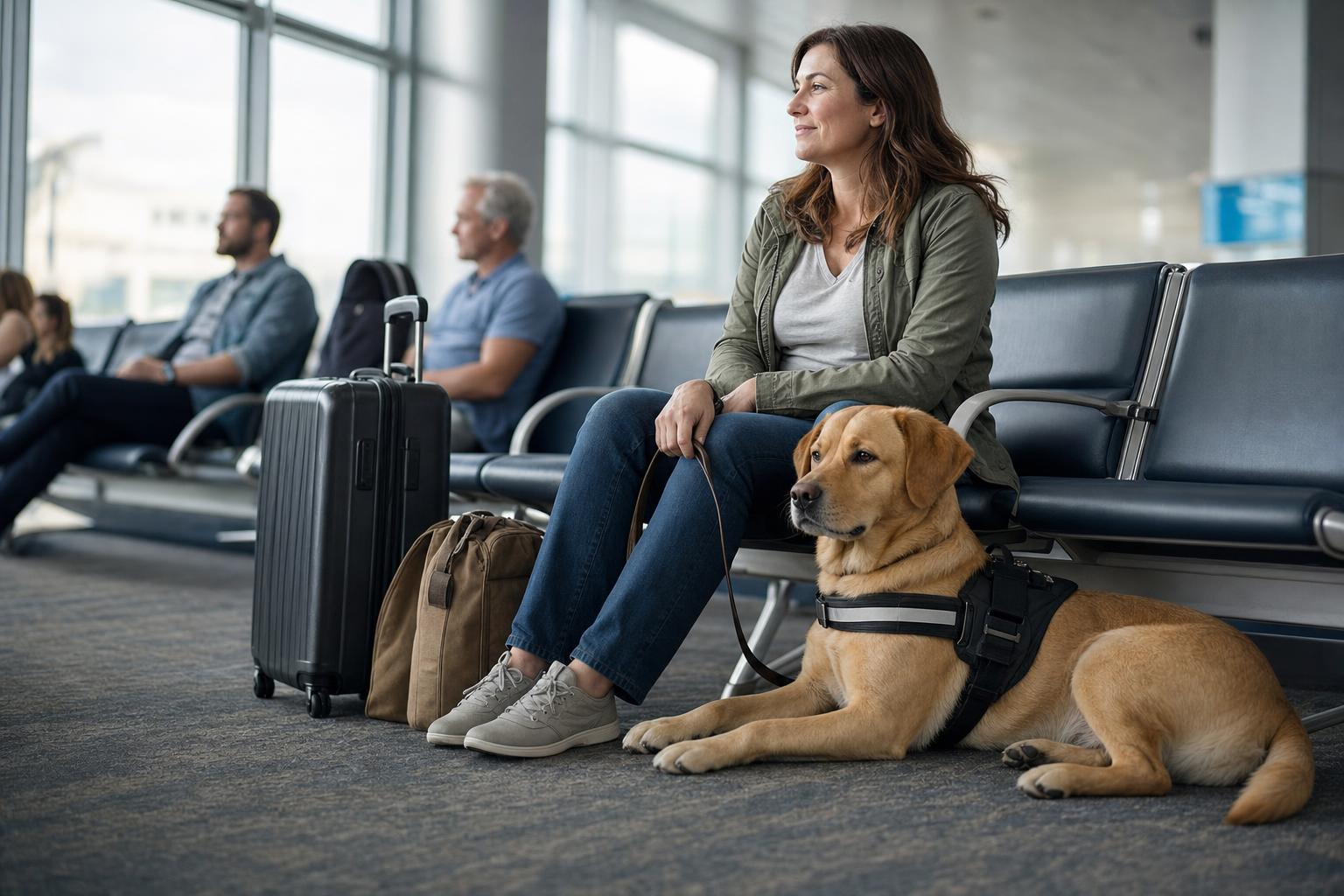
Size can become part of the conversation as well. Larger service dogs can still fly, but the dog must fit within the handler’s foot space or otherwise be safely accommodated. A dog cannot block the aisle or create a safety hazard. If your dog is a bigger breed, call the airline early and discuss seating options. A bulkhead seat may seem attractive, but it does not always offer the most practical floor arrangement. Sometimes a standard row with a little more predictable foot placement works better.
Preparing Your Service Dog Before Travel Day
A bird dog does not wake up opening day ready to work unless somebody put in the miles ahead of season, and a service dog is no different when it comes to air travel. Preparation should start well before your departure. If your dog has never been in a crowded terminal, ridden escalators nearby, heard baggage carts clatter past, or settled under a chair in a busy public place, those are experiences worth training for in advance.
Practice long down-stays in noisy environments. Visit shopping centers, outdoor events, train stations, or anywhere legal and appropriate where your dog can experience movement and pressure without being overwhelmed. Work on tucking neatly under seats or tables. Reinforce calm behavior around food, rolling luggage, and strangers. The dog should be able to recover quickly from sudden noises and take guidance from you without hesitation.
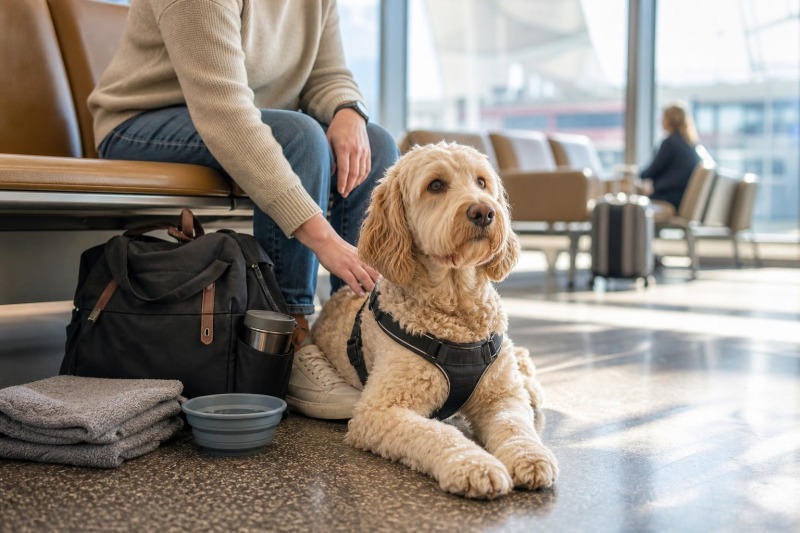
Physical conditioning matters too. A dog that is out of shape will feel the strain of travel more quickly. Keep nails trimmed so footing stays secure on slick airport floors. Make sure equipment fits correctly and does not rub during long periods of wear. Pack a small travel kit with water, a bowl, waste bags, wipes, any medication, and a mat or familiar item that helps your dog settle.
Feeding, Water, and Relief Timing
One of the most common questions handlers ask is when to feed a service dog before a flight. There is no one-size-fits-all answer, but lighter meals well ahead of travel often make things easier. You do not want a dog boarding with a full stomach and limited opportunity for relief. Hydration still matters, especially on long travel days, so the trick is balance. Offer water thoughtfully and take advantage of pet relief areas before security if available, and again after security if the airport has one inside the terminal.
Do not leave relief timing to chance. Build extra time into your schedule. A rushed handler often creates a rushed dog, and that tension can ripple through the whole trip.
Navigating the Airport with Confidence
Airports can feel like organized confusion on their best day. Moving through them with a service dog requires a steady pace and a clear plan. Arrive early enough that you are not forced into bad decisions. When you are hustling, it becomes easier to miss a relief break, overlook a document request, or let your dog absorb your stress.
At check-in, be polite, direct, and matter-of-fact. Most airline staff mean well, but not all of them are equally familiar with service dog rules. Keep the conversation focused on what is needed. If questions drift into inappropriate territory, stay calm and ask for a supervisor or disability assistance representative if necessary. A level head gets farther than a sharp tongue.
Security screening is another point where preparation pays off. Your dog will likely need to walk through screening under your control rather than riding through equipment. Practice removing and replacing gear if asked. The dog should be able to stand, wait, and move on cue without a fuss. If your dog feeds off your body language, take a breath before stepping forward. They notice every bit of tension traveling down the leash.
Handling Attention from the Public
One truth about traveling with any working dog is that somebody always wants to stare, ask questions, or reach out a hand. Some people mean no harm; they are simply curious. Still, a service dog in an airport must stay focused. A short, polite response usually does the job. If it does not, your priority remains your dog and your travel needs, not satisfying a stranger’s curiosity. A service dog is there to work, not to entertain the terminal.
What to Expect During the Flight
Once you board, the real test is quiet endurance. Many service dogs do fine in flight if they have been taught to settle for long periods. The cabin is close, cramped, and full of unfamiliar sounds, but a well-trained dog learns that this is simply another place to work calmly.
Settle your dog as quickly as possible. Give clear cues, arrange the leash so it stays tidy, and avoid creating a tangle in the footwell. If your dog uses a mat, this is a good time for it. Familiar routines help. Dogs are creatures of pattern, and pattern gives them confidence.
During the flight, keep your attention tuned to your dog’s comfort. Watch for overheating, stress signals, restlessness, or repeated attempts to reposition. Most dogs benefit from a quiet hand, a soft word, and the assurance that nothing unusual is expected of them beyond staying settled and available to work if needed. Skip anything that might disturb other passengers, and resist the urge to overmanage every small movement. Often the best thing you can do is project calm and let the dog mirror it.
Common Problems and How Experienced Handlers Avoid Them
The biggest travel problems usually begin before anyone reaches the airport. Incomplete paperwork, poor training, late arrival, or a dog that has never been prepared for confinement can turn a simple flight into a hard day. Another issue is assuming that because a dog behaves well at home, the same dog will automatically handle a crowded terminal. That is like assuming a fine retriever in the backyard will perform flawlessly in icy water with guns going off overhead. Different environment, different pressure.
Veterinary health should also be addressed before travel. Make sure vaccinations are current when required, and speak with your veterinarian if your dog has any condition that could be aggravated by the trip. Sedation is generally not recommended unless specifically advised by a veterinary professional for a particular reason. A service dog needs to remain stable, responsive, and able to work.
If delays happen, and they often do, patience becomes part of the job. Find a quiet corner when possible. Offer water in small amounts. Revisit relief areas if timing stretches longer than expected. Think in terms of helping your dog succeed one stage at a time rather than worrying about the entire day at once.
Flying with a Service Dog Is About Trust
At the heart of all this, flying with a service dog comes down to trust built through training, repetition, and honest assessment. A good handler knows the dog in front of them, not the dog they wish they had. If your service dog is not ready for flight yet, that is not failure. It is simply information, and good information helps you train smarter.
When the work has been done, air travel becomes another extension of the partnership. You move through the terminal as a team, settle into your row, and ride on with the same quiet understanding that carries you through the rest of life. There is something satisfying about that kind of steadiness. It reminds me of a seasoned dog easing into position without drama, knowing the job and trusting the handler at the other end. That sort of confidence is earned, and when it is earned honestly, it shows.
For anyone learning the difference between companion dogs, therapy dogs, and service dogs, flying is one of the clearest examples of why training standards matter. A service dog is not just a beloved dog that tags along. It is a working partner prepared for difficult environments and expected to behave with reliability. If you are planning your first trip, start early, know the rules, train for the pressure, and give yourself more time than you think you need. That old habit has saved many hunts and just as many travel days.