Airport therapy-dog programs operate with the airport's permission and procedures. Teams need preparation for crowds, surfaces, noise, and the option to leave when the dog needs a break.
In an airport, that matters more than many people realize. These dogs are not there for show. They are there because airports can be stressful, and a calm canine presence gives people a moment to breathe, smile, and steady themselves before the next gate announcement rolls over the speakers.
Why Therapy Dogs Belong in Airports
Airports put people under pressure in a dozen ways at once. There is the clock, of course, and the lines, and the noise, and the uncertainty that comes with weather, security, delays, and crowds. Even travelers who have flown for years can get worn down by it. For children, for people with flight anxiety, for those grieving, for military families saying goodbye, and for passengers managing emotional strain, a therapy dog can feel like a hand on the shoulder at just the right time.
The value of therapy dogs in airports comes down to emotional support in the broadest public sense. These dogs are trained and temperament-tested to interact safely and gently with many different people. They do not perform disability-specific tasks like service dogs do, and they are not simply pets tagging along with staff. They are working as part of a program designed to offer comfort, reduce tension, and encourage positive interaction in a place where tension can rise quickly.
That kind of change is not magic, though it can look like it from a distance. It is the result of good breeding, good training, a sound mind in the dog, and a handler who knows how to read both the animal and the crowd.
What Therapy Dogs Actually Do in Airport Terminals
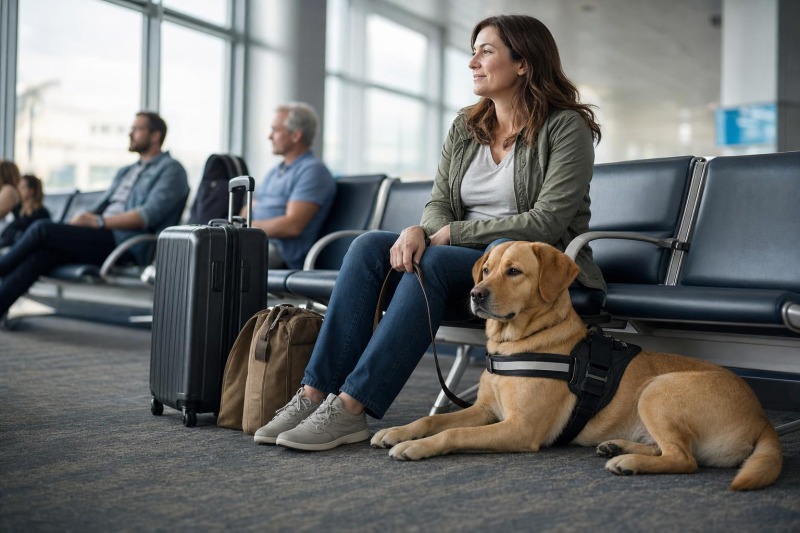
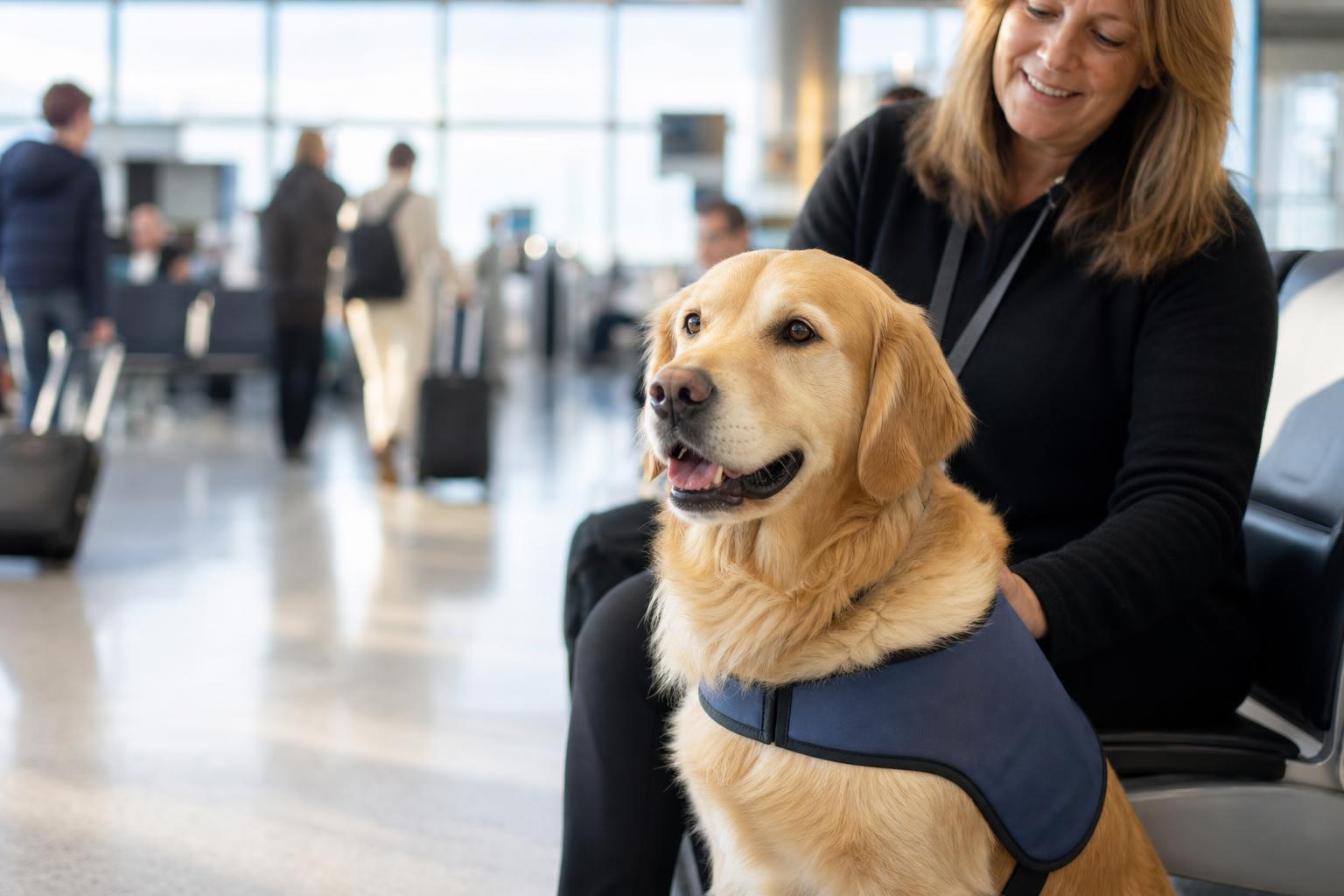
Most airport therapy dog teams walk through terminals, waiting areas, and designated public spaces, greeting passengers who want to interact. Sometimes they visit gates where delays are piling up and tempers are beginning to fray. Sometimes they work near family areas, major concourses, or arrival zones where emotions run high. Their job is simple in wording but serious in practice: offer calm, friendly contact in a public setting filled with strangers.
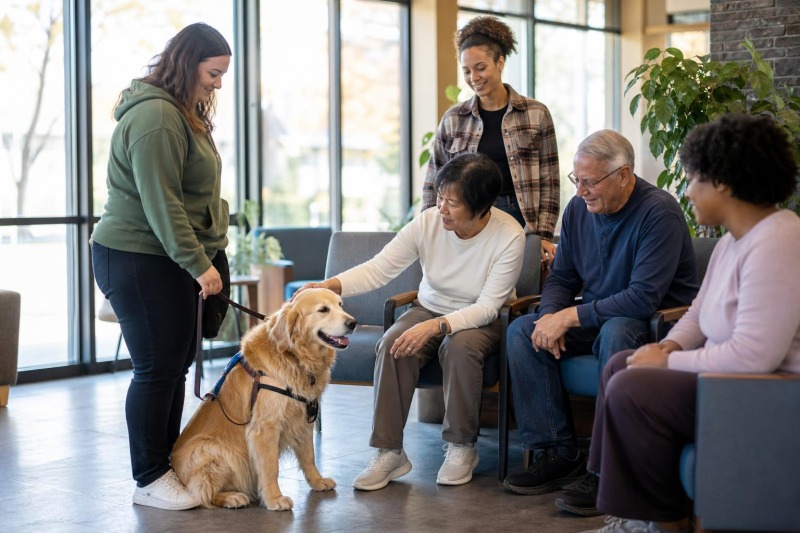
Passengers may pet the dog, ask questions, take photos, or just smile in passing. For some, that is enough. For others, especially nervous flyers, children, and travelers under visible stress, a brief visit with a therapy dog can interrupt spiraling anxiety. There is something grounding about warm fur, soft eyes, and the unhurried patience of a dog that has seen all kinds of people and doesn’t ask much more than a kind hand and respectful approach.
The Human Side of Airport Therapy Dog Programs
Behind every airport therapy dog is a handler who deserves a good deal of credit. A reliable therapy dog team is just that, a team. The handler watches body language, manages greetings, protects the dog from being overwhelmed, and helps make every interaction safe and positive. In a busy airport, that takes focus. Crowds can surge. Children can rush in too fast. Some travelers are delighted by dogs, while others are fearful, allergic, or simply not interested. Good handlers know how to navigate all of that with courtesy and control.
That balance is what makes successful airport therapy dog programs work. These teams are not wandering around without purpose. They are usually part of organized initiatives with clear expectations, health standards, behavioral requirements, and scheduled visits. Airports value them because they improve the traveler experience in a way that feels genuine rather than manufactured.
Therapy Dogs vs. Service Dogs in Airports
This is one point that needs to be clear, especially for anyone learning about different working dog roles. Therapy dogs and service dogs are not the same thing. A service dog is trained to perform specific tasks for a person with a disability. That dog is working directly for its handler and has legal protections tied to that role. A therapy dog, by contrast, provides comfort and emotional benefit to many people in shared settings like hospitals, schools, care facilities, and airports.
In an airport, a service dog may be guiding a blind traveler, alerting to a medical condition, or helping with psychiatric disability-related tasks. A therapy dog may be visiting travelers generally to reduce stress and improve morale. Both roles matter, but they are different in law, training focus, and public function. Confusion between the two can create problems, so good public education is important.
From an experienced dog owner’s point of view, forcing one role into the shape of another is a mistake. Not every friendly dog is therapy material, and not every therapy dog has the training or task work of a service dog. Sound programs respect those lines and make them easy for the public to understand.
What Makes a Good Airport Therapy Dog
A dog working in an airport needs a rare kind of steadiness. This is not a quiet living room or a familiar walking trail. It is a changing environment full of rolling bags, loudspeaker announcements, sudden applause, food smells, strangers from every direction, and the constant rhythm of movement. A therapy dog in that setting must be social without being pushy, relaxed without being sleepy, and confident without being hard-headed.
Temperament is the foundation. Training matters, but training sits best on a dog that already has the right nature. The dog should tolerate strange surfaces, loud sounds, unusual clothing, and unpredictable traffic. It should be content being touched gently by willing strangers and remain composed when people become emotional.
Breed can play a role, but it is never the whole story. Retrievers are often a natural fit because they tend to be friendly, biddable, and socially comfortable, though many breeds and mixes can excel. The individual dog is what counts. A good airport therapy dog is one that enjoys the work and leaves the terminal as calm as it entered.
Training, Testing, and Public Manners
Solid obedience is only the beginning. Therapy dogs need polished public manners and a proven ability to recover from surprises. They should walk calmly on lead, ignore dropped food, avoid jumping, and respond well to handler cues even when distractions stack up. Most therapy organizations also require health screenings, temperament evaluations, and ongoing standards for behavior.
That level of preparation matters because airport work is not a novelty act. If a dog startles easily, crowds can expose it. If it craves constant excitement, terminal traffic can wind it up. If it is uncertain around children or mobility equipment, that uncertainty can become a liability. The best therapy dogs carry themselves with quiet confidence, and the best handlers know when to end a session before the dog gets tired or overstimulated.
The Benefits for Travelers, Staff, and the Airport Itself
Most people think first about passengers, and rightly so, but therapy dogs in airports often help staff too. Airline employees, customer service teams, security personnel, and other workers spend long shifts in a demanding environment. A brief interaction with a well-mannered dog can lift morale and soften the hard edges of a stressful day. It is no small thing to feel your shoulders drop for a minute when the work has been unrelenting.
For airports, these programs also send a message. They say that traveler well-being matters. That may sound like soft language in a hard-edged industry, but anyone who has spent time in major terminals knows emotional temperature affects the whole place. When people are calmer, lines move better, disputes cool faster, and the experience becomes more manageable for everyone.
There is also something memorable about meeting a therapy dog before a flight. Travelers remember it. Children talk about it. Nervous passengers often carry that small comfort with them onto the plane. In a world where travel can feel mechanical and impersonal, therapy dogs restore a bit of warmth.
Things Travelers Should Know Before Approaching a Therapy Dog
As welcome as these dogs are, they are still working as part of a structured visit. The right approach is simple: ask the handler before reaching out, move calmly, and let the dog come into the interaction naturally. Most handlers are happy to invite respectful contact, but permission matters. It protects the dog, the traveler, and the flow of the program.
It is also worth remembering that not every traveler wants a dog nearby, and airports must balance many needs at once. Good therapy dog teams understand that public work includes awareness of personal space, cultural differences, allergies, and fear of dogs. The aim is comfort, never intrusion.
If you are traveling with children, this is a fine chance to teach them proper dog manners. No grabbing, no shouting in the dog’s face, no rushing from behind. A child who learns to greet a working therapy dog politely is learning a lesson that serves them well around every dog they meet later on.
The Future of Therapy Dogs in Airports
As more airports look for ways to improve the passenger experience, therapy dog programs are likely to keep growing. That growth should be handled carefully. Expansion is a good thing only when standards stay high. The demand for pleasant, social dogs can tempt people to treat therapy work as easy or purely symbolic, but it is neither. The dogs must be sound, the handlers must be prepared, and the program must put welfare first.
Done well, airport therapy dog programs represent the best of what dogs can offer in public life. They do not replace skilled customer service, mental health support, or accessibility services, but they add something those systems cannot quite duplicate. A dog offers presence. Not performance in the theatrical sense, but presence in the old, reliable sense. Steady. Attentive. Unbothered by noise. Ready to meet a stranger kindly.
That kind of companionship has always mattered. Out in the field, in the truck at dawn, on a porch after a long day, or in the middle of a crowded terminal with thunderheads in the flight schedule, a good dog brings people back to level ground. That is why therapy dogs in airports are more than a pleasant trend. They are a practical answer to a real human need, and when you see one at work, tail low and easy, eyes soft, greeting one traveler after another, you understand exactly why they belong there.