Therapy-dog socialization should prepare a willing dog for the specific environments it may visit. Practice with distance and choice, and avoid overwhelming the dog in the name of preparation.
A companion dog may love everybody at the cookout, but a therapy dog has to stay collected when a wheelchair clips past its shoulder, when a dropped tray clatters on the floor, or when a stranger hugs too hard out of grief, fear, or excitement. That kind of steadiness begins with socialization done right.
Socialization for therapy dogs is the process of safely exposing a dog to the people, places, sounds, surfaces, and situations it may encounter later in life, while teaching the dog that calm behavior is the path forward. It is not about flooding a dog with every possible experience in a single week. It is about building confidence one layer at a time, so the dog learns to trust its handler and remain composed under pressure.
Why Socialization Matters So Much for Therapy Work
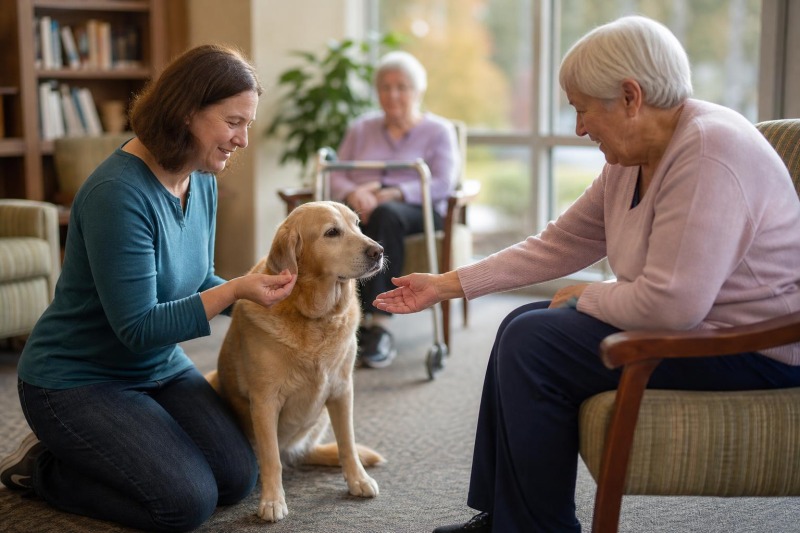
Therapy dogs work in spaces full of unpredictable human behavior. Hospitals smell strange. Nursing homes can be quiet one minute and full of noise the next. Schools carry a different kind of pressure, with fast movement, excited voices, and kids who do not always know how to approach a dog correctly. Socialization gives a therapy dog the experience needed to read these environments without tipping into fear, overexcitement, or avoidance.
A dog that is well socialized does not need every situation to be perfect. That is the whole point. You are not trying to raise a dog that only behaves in a tidy training hall. You are shaping a dog that can keep its footing in the real world. That matters more than flashy obedience. A perfect sit means little if the dog startles at a rolling walker or grows uneasy when a room fills with unfamiliar voices.
Good socialization also protects the people a therapy dog serves. Folks who interact with therapy dogs may be physically frail, emotionally vulnerable, or unfamiliar with canine body language. A therapy dog must be trustworthy, tolerant, and handler-focused. Socialization helps lay that foundation by teaching the dog to recover quickly from surprise and stay emotionally balanced.
The Difference Between Socialization and Simple Exposure
People take a puppy or young dog everywhere, let everyone pet it, and call that socialization. Sometimes that works out, but often it creates a dog that is overstimulated, pushy, or uneasy beneath the surface. Real socialization is not just exposure. It is guided exposure paired with positive experiences and clear expectations.
For a therapy dog, that means learning how to greet politely, how to ignore distractions, how to settle on cue, and how to accept unusual handling. It also means learning that not every person needs to be greeted, not every sound needs a reaction, and not every novel situation is a reason to panic. That lesson takes patience. You cannot rush a dog into maturity any more than you can hurry a green hunting pup into becoming a seasoned field partner. Time, repetition, and good judgment matter.
The Best Time to Begin Socialization for Therapy Dogs
The early months of a dog’s life are especially important. Puppies pass through sensitive development periods where experiences can leave a deep mark, for better or worse. If you are raising a puppy with therapy work in mind, begin with calm introductions to many kinds of people, surfaces, sounds, and settings. Let the pup see men with hats, children moving awkwardly, seniors with canes, carts rolling by, doors opening suddenly, and floors that feel slick or uneven.
Still, older dogs should not be counted out. The key is not age alone. It is whether the dog has the emotional makeup for the work and whether the handler is willing to put in thoughtful, consistent effort. A steady adult dog can often be brought along through deliberate socialization and training, especially if it already has a sound bond with people and a calm outlook.
Temperament Comes First
Not every dog is suited for therapy work, no matter how loved it may be at home. This is a hard truth, but an important one. The best therapy dogs tend to be biddable, stable, people-oriented without being frantic, and able to recover quickly after something unexpected happens. Socialization can strengthen good raw material, but it cannot completely rewrite temperament.
That is why honest evaluation matters. If a dog is persistently fearful, highly reactive, or stressed by close contact with strangers, it may be better suited for another role. There is no shame in that. A fine companion dog does not need to become a therapy dog to live a full and worthy life.
How to Socialize a Future Therapy Dog the Right Way
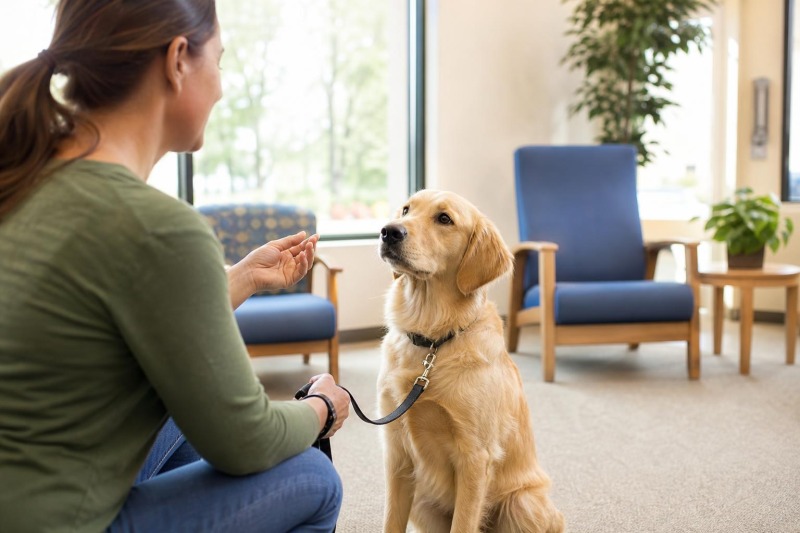
Start with manageable environments and build outward. A quiet park bench, an outdoor shopping area at a slow hour, a friend’s front porch, or a hardware store that allows dogs can all serve as training ground. Keep sessions short and productive. Let the dog observe. Reward calm behavior. Move away before the dog gets overwhelmed. This kind of work is less about mileage and more about quality.
You can tell a lot from the eyes, the mouth, the tail carriage, and how quickly the dog can disengage from a distraction. A therapy prospect should not have to be dragged through the world. The best ones learn to look to the handler, take information in stride, and settle back down after novelty passes.
As your dog progresses, add more realistic challenges. Practice around medical equipment if you can do so safely. Introduce elevators, automatic doors, crowds, children reading aloud, applause, coughing, sudden laughter, and awkward petting from trusted volunteers who can follow instructions. Teach the dog to stay composed when someone leans unsteadily, speaks loudly, or smells unfamiliar. These are ordinary parts of therapy environments.
Handling exercises matter too. A therapy dog may be touched on the head, paws, shoulders, and back by many different people. Pair this kind of handling with praise and rewards so the dog learns to accept contact without tension. Just remember that consent and comfort still count. Socialization should grow confidence, not suppress warning signs. A dog that is uneasy needs distance and slower progress, not punishment.
Public Manners Are Part of Socialization
Socialization and obedience walk hand in hand for therapy dogs. A dog can be brave and friendly, but if it pulls on leash, jumps up, mouths hands, or barks for attention, it is not ready for the job. Public manners are not decorative. They are part of what makes therapy work safe and welcome.
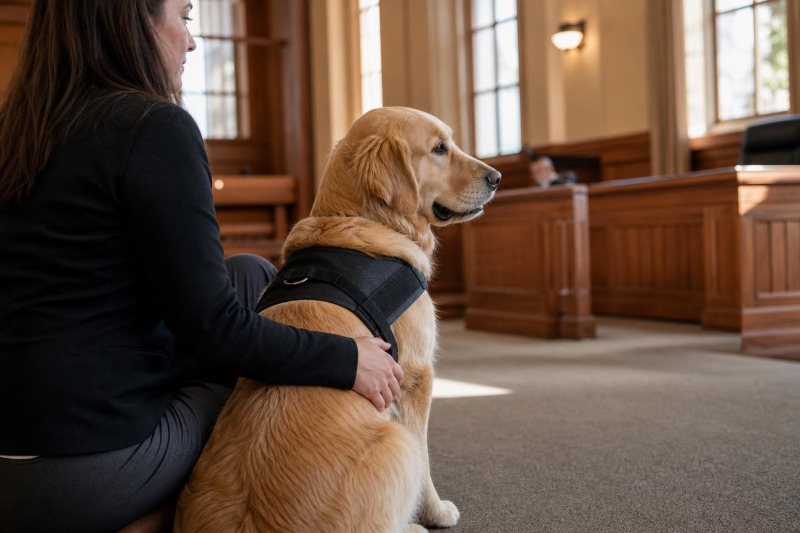
Your dog should be able to walk calmly through a doorway, lie down and relax at your feet, remain steady while people talk nearby, and greet on cue without launching forward. These are the small things that make a big difference in professional settings. They show that the dog can enter a room as a source of comfort rather than confusion.
The same way a good dog in the field learns not to break too soon, a therapy dog must learn patience. There is strength in that steadiness. People feel it the moment the dog enters a room.
Reading Stress Before It Becomes a Problem
One of the handler’s most important jobs is learning to recognize early stress signals. Lip licking, yawning when not tired, turning away, pinned ears, a stiff body, whale eye, or sudden sniffing can all mean a dog is uncomfortable. In therapy work, subtle stress is easy to miss because the environment may look calm to us while feeling heavy to the dog.
If you push past those signs too often, you risk creating a dog that shuts down or begins to dread the work. Socialization should teach resilience, but it should also teach trust. The dog needs to know the handler will listen. That is how you build a working partner that stays genuine and reliable over time.
Common Mistakes in Therapy Dog Socialization
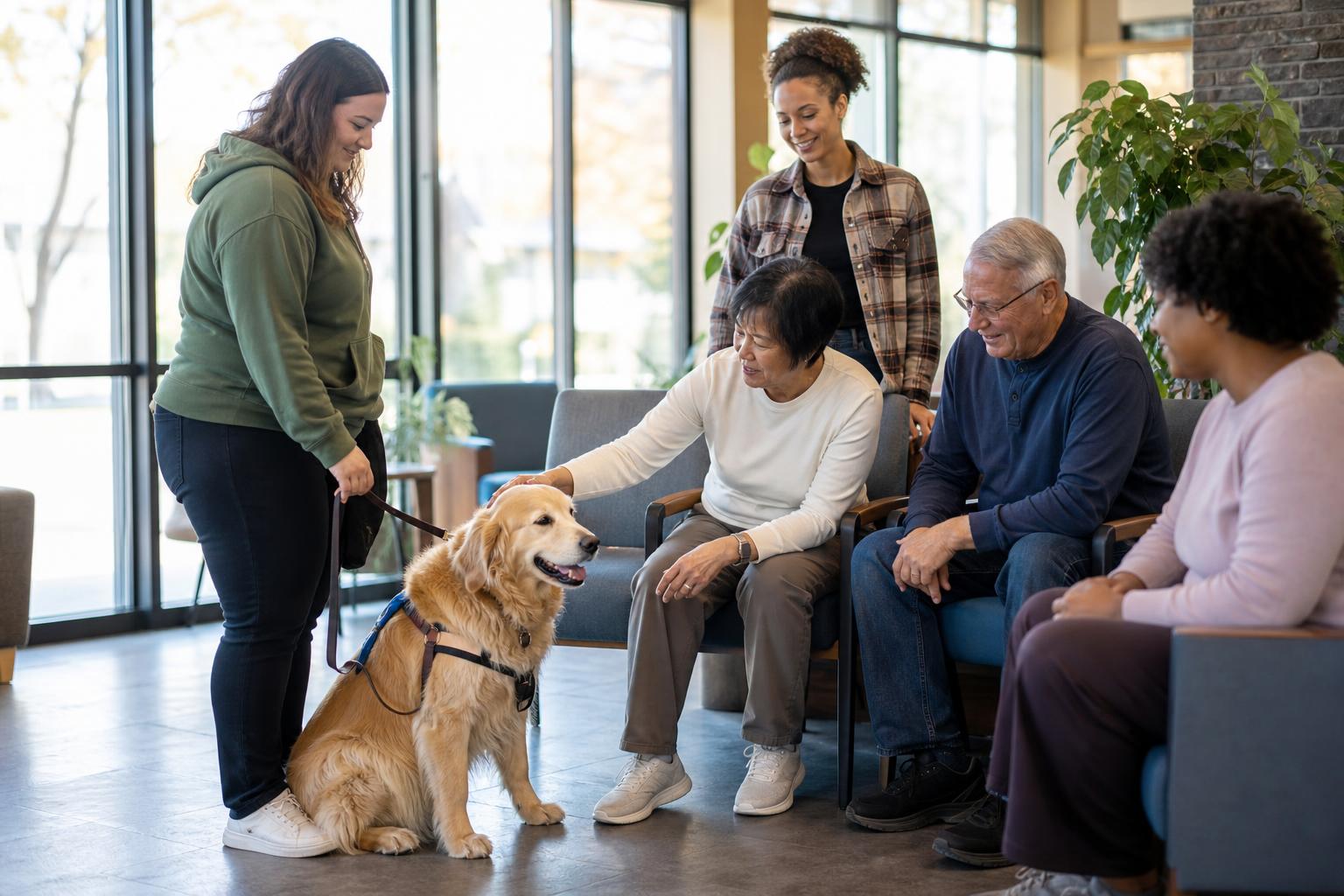
One common mistake is moving too fast. People get excited when a dog seems friendly and start stacking challenge on top of challenge. The dog may tolerate it for a while, but cracks show up later. Another mistake is letting every stranger interact with the dog. Therapy dogs need to be social, yes, but they also need boundaries and handler guidance. Random petting from people who crowd the dog, loom over it, or stir it up is not always helpful.
Another problem is focusing only on friendliness instead of neutrality. A therapy dog should enjoy people, but it should not lose its mind every time someone appears. Calm interest is better than frantic enthusiasm. In many facilities, a dog that can settle quietly beside a bed or chair is more valuable than one that wiggles itself into a frenzy trying to say hello.
Lastly, some handlers ignore their own role. Dogs read us sharper than most people realize. If you tense up, rush, or fumble in busy environments, your dog will notice. Confident handling is part of socialization because the dog learns from your presence as much as from the setting itself.
Preparing for Real Therapy Work
Before a dog begins formal visits, it should be comfortable with the rhythms of public life and able to perform basic obedience under distraction. Many therapy organizations also have evaluation standards that test reaction to noise, crowds, handling, and unusual equipment. Socialization helps your dog meet those standards honestly rather than by luck on a single good day.
Even after certification, socialization never truly ends. Dogs need regular exposure to maintain their confidence and skills. A break from work, a change in health, or a stressful incident can affect performance. Wise handlers keep training fresh, watch for changes, and protect the dog’s welfare every step of the way.
Socialization for therapy dogs is about building a dog that can carry peace into places where peace is often in short supply. That is no small thing. It takes patience, good sense, and respect for the dog in front of you. But when you see a calm dog ease the tension in a hospital room or help a child find the courage to speak, you understand why the work matters.
A true therapy dog is not just sociable. It is steady. It is trustworthy. It knows how to move through noise and uncertainty with a clear head and a soft heart. That kind of dog is shaped over time, one careful experience after another, until the world no longer feels like a threat but a place where it knows exactly how to stand.