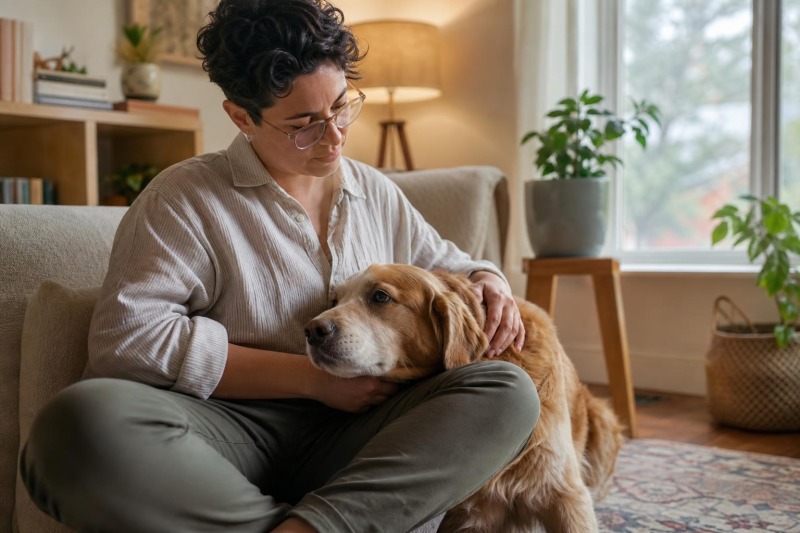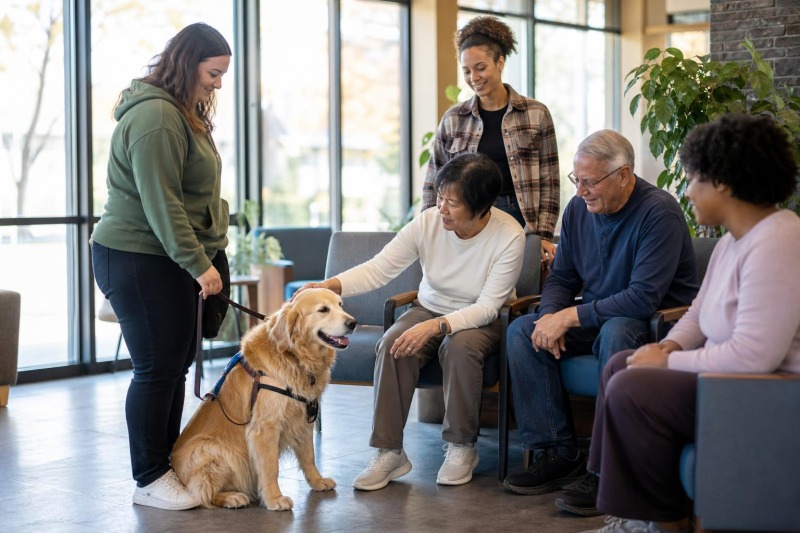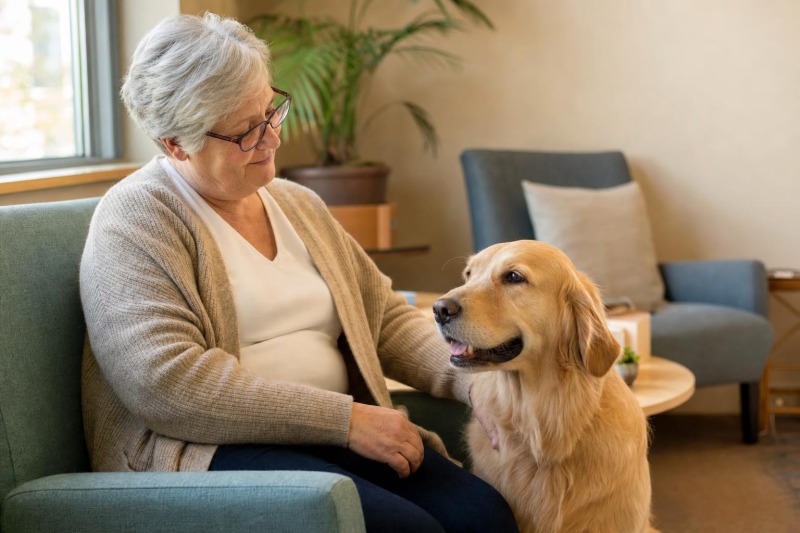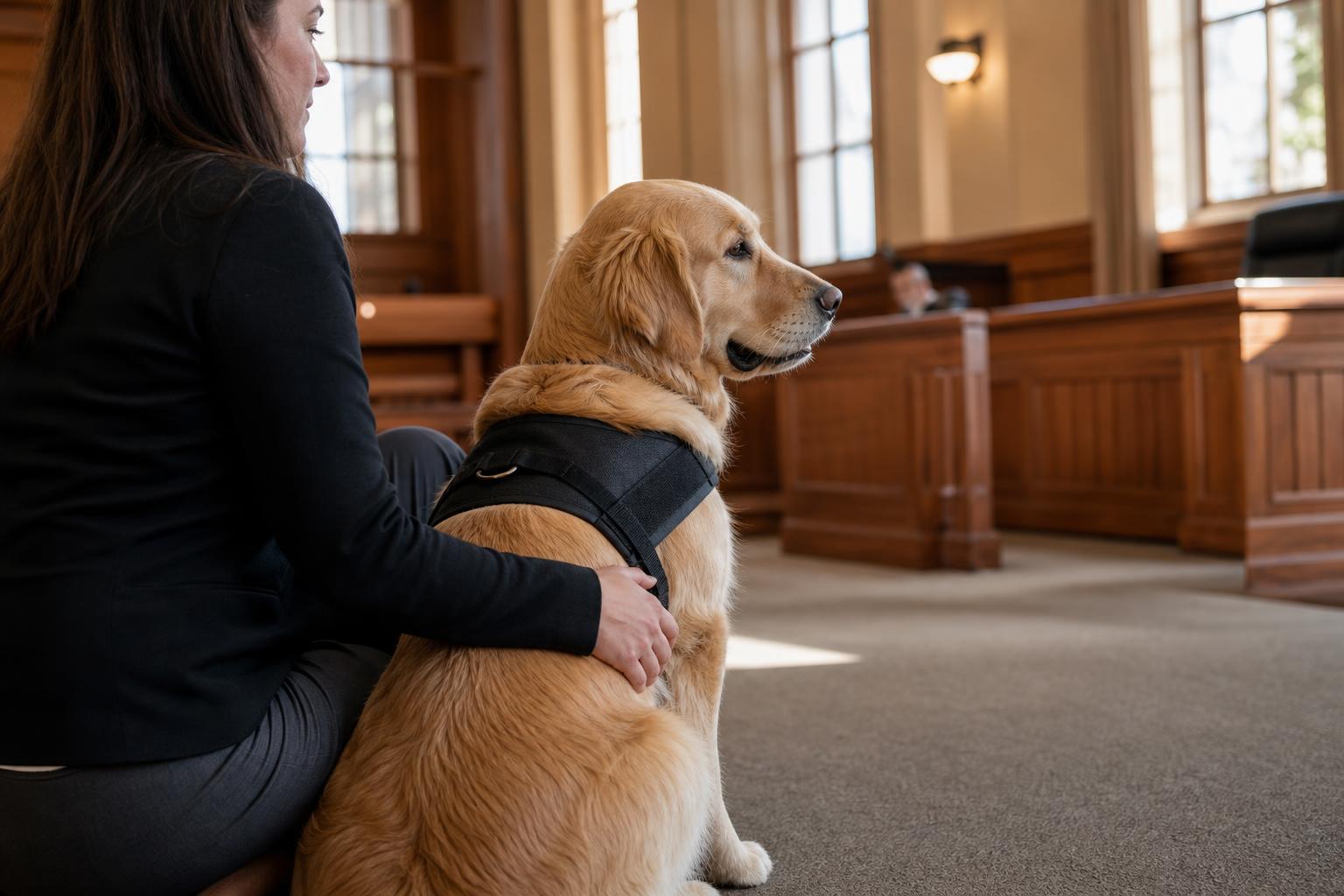
Dogs in court settings operate under specific program and court arrangements. Their preparation and permitted roles differ from an ordinary visiting team, and the needs of the person receiving support come first.
For many people, the courtroom is one of the most intimidating places they will ever step into. It can be especially overwhelming for children, trauma survivors, elderly witnesses, and people with anxiety or cognitive challenges. When a therapy dog is present, the room often becomes just a little less sharp around the edges. Hearts slow down. Breathing gets easier. Words come with less struggle. That doesn’t mean the dog changes the facts of a case. What it often changes is a person’s ability to get through one of the hardest conversations of their life.
As more courts, advocacy centers, and legal professionals look for humane ways to support vulnerable individuals, therapy dogs are earning a respected place in the process. To folks learning about therapy dogs, service dogs, or companion dogs, courtroom work is one of the clearest examples of how a well-trained dog can offer practical emotional support in a serious public setting.
What Therapy Dogs Do in a Courtroom Setting
A therapy dog in a courtroom is there to provide comfort, not to perform legal work and not to influence testimony. That distinction matters. These dogs are carefully trained to remain calm, unobtrusive, and focused in high-stress environments. They may sit beside a witness during testimony, walk with a child to a waiting room, or rest quietly near someone preparing to speak about traumatic events.
Unlike a family pet that offers comfort at home, a courtroom therapy dog must handle unfamiliar people, strange sounds, long periods of stillness, and emotionally charged situations without becoming reactive. This is not casual work. It takes a dog with the right temperament and a handler with deep control, patience, and sensitivity to the setting.
Some dogs are introduced before testimony begins, allowing the witness to meet the dog in a quieter room. Others accompany forensic interview teams or victim advocates rather than appearing directly inside the courtroom. The exact role varies by jurisdiction, judge, and case type, but the purpose stays much the same: help the person feel grounded enough to participate.
Why Their Presence Helps
When a person is under severe stress, memory, speech, and emotional regulation can all suffer. Anyone who has ever tried to speak clearly with a pounding heart knows that fear can tangle even simple words. For a child recounting abuse or a victim reliving an assault, that burden can be crushing. A therapy dog gives the body something reassuring to focus on. The warmth of fur, the rhythm of breathing, and the simple companionship of a nonjudgmental animal can reduce the sense of threat in the room.
That support can be especially meaningful for children. A child may not understand legal procedure, but they understand a gentle dog lying nearby. They understand soft eyes, a slow tail thump, and the feeling that they are not facing the room alone. In that way, the dog becomes a bridge between fear and function.
Who Benefits From Courtroom Therapy Dogs
Most people first think of children when they hear about therapy dogs in courtrooms, and that’s fair. Young witnesses often benefit tremendously from animal-assisted support. But the reach goes wider than that. Adults with post-traumatic stress, developmental disabilities, severe anxiety, or grief may also find comfort in a dog’s presence. Elderly individuals navigating a confusing legal process can benefit too.
Families waiting for hearings, victims speaking with advocates, and even professionals working long days with traumatic material may feel the effects. Court systems can be emotionally cold by design because they must stay orderly and impartial. A therapy dog does not erase that structure, but it can add a layer of humane support where it is badly needed.
There’s also a practical side to this. When people feel safer and more regulated, they are often better able to communicate. They may answer questions more clearly, remain present longer, and experience fewer visible signs of panic. That matters in environments where precision and calm testimony are important.
Therapy Dogs vs. Service Dogs vs. Companion Dogs
Folks new to this subject often mix these terms together, and it’s worth clearing up. A therapy dog is trained to provide comfort and emotional support to many people in settings like hospitals, schools, nursing homes, and courtrooms. The dog usually works with a handler as part of a volunteer or professional program.
A service dog, by contrast, is trained to perform specific tasks for a person with a disability. That dog has legal access rights connected to its handler and is not there to comfort the public at large. A companion dog is usually a beloved household dog whose main role is friendship, routine, and emotional closeness at home.
All three can be wonderful, but their jobs are not the same. In courtrooms, the dog most often involved in emotional support for witnesses is a therapy dog or a facility dog specifically trained to work in professional support settings.
The Importance of Temperament
If you’ve spent enough time with dogs, you know not every good dog is built for every kind of work. A fine hunting dog can have all the heart in the world and still not be right for crowded indoor settings. Courtroom therapy work calls for steadiness above all else. The best dogs for this role are patient, quiet, people-oriented, and difficult to rattle. They don’t need to be flashy. They need to be reliable.
That kind of reliability is earned through training and careful evaluation. A dog must be able to ignore distractions, remain settled for long stretches, accept handling appropriately, and respond closely to its handler’s cues. In a courtroom, there is no room for impulsive behavior.
How Court Systems Use Therapy Dogs Responsibly
The idea of bringing dogs into legal settings can raise fair questions. Courts must protect due process, maintain decorum, and avoid anything that could unfairly sway a jury. Because of that, therapy dog use is typically handled with care. Judges may decide when a dog is appropriate. Handlers may be positioned to keep the dog as unobtrusive as possible. In some cases, jurors may receive instructions clarifying that the dog’s presence should not affect how evidence is viewed.
That careful balance is important. A courtroom is not a place for emotional theater. The goal is not to create sympathy. The goal is to reduce unnecessary distress so a witness or vulnerable individual can participate in the legal process without being overwhelmed by it.
Many programs also rely on partnerships with victim advocacy organizations, child advocacy centers, prosecutors’ offices, and trained facility dog teams. That structure helps ensure the dog is used appropriately and consistently rather than as a novelty.
The Human Side of the Story
It’s presence. A good dog stays with you in the hard weather. That truth carries from duck blinds and back roads all the way into courthouse hallways. Picture a child in polished shoes too small for comfort, sitting on a bench under fluorescent lights, waiting to speak about something no child should ever have to explain. Adults are moving around with folders and clipped voices. Doors open and close. The child’s hands are tight. Then a golden retriever settles beside that bench, leans gently against a leg, and the whole moment shifts. Not solved. Not erased. Just made bearable.
That is the value of therapy dogs in courtrooms. They do not fix injustice. They do not decide outcomes. They simply help people endure the process long enough to be heard. Sometimes that quiet help is more powerful than anything said out loud.
What to Know if You’re Interested in Therapy Dog Work
If you are someone interested in learning about therapy dogs because you may want one, train one, or simply understand their role better, courtroom work is a strong example of why training, temperament, and purpose matter so much. Not every friendly dog is suited for therapy work, and not every therapy dog is suited for a courtroom. The standard should be high, because the work is serious.
Look for programs that value certification, ongoing evaluation, skilled handling, and real-world preparation. A dog working around trauma survivors must be calm under pressure and supported by a handler who understands boundaries and professional conduct. The best teams are humble, disciplined, and deeply tuned in to the people they serve.
For families exploring the broader world of companion dogs, service dogs, and therapy dogs, this topic also highlights something important: dogs serve people in different ways, and matching the right dog to the right role is everything. A warm heart is essential, but structure and training are what turn that warmth into dependable support.
There’s a reason people trust dogs in moments when words fall short. They have a way of standing steady when the rest of the world feels uneasy. In courtrooms, that steadiness can be a lifeline. Therapy dogs help soften fear, support vulnerable witnesses, and make an unforgiving environment more humane without taking away from the seriousness of the law.
For anyone wanting to understand therapy dogs more deeply, courtroom work offers one of the clearest windows into their value. At their best, these dogs bring calm where there is strain, comfort where there is pain, and a little courage where it is needed most. That’s honest work, and any dog person worth his salt can respect it.