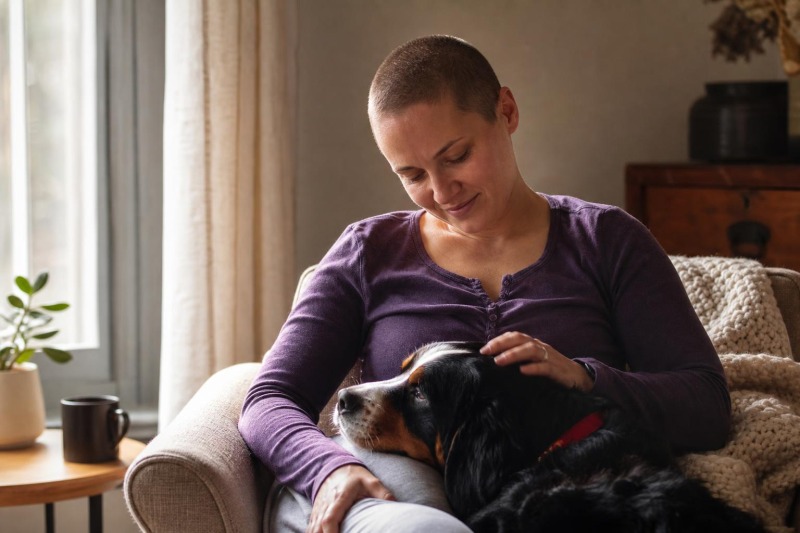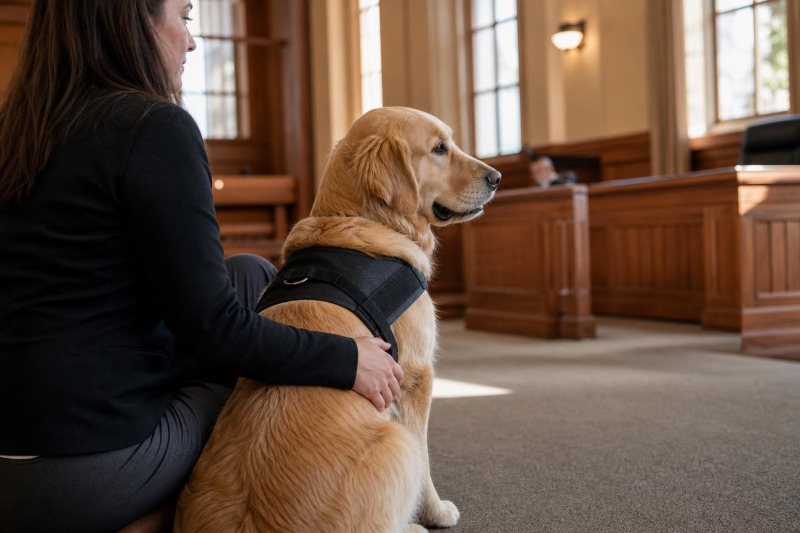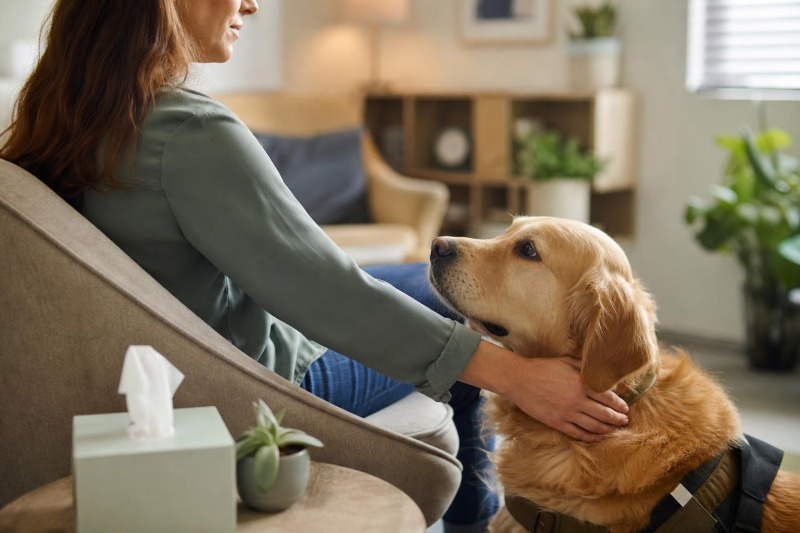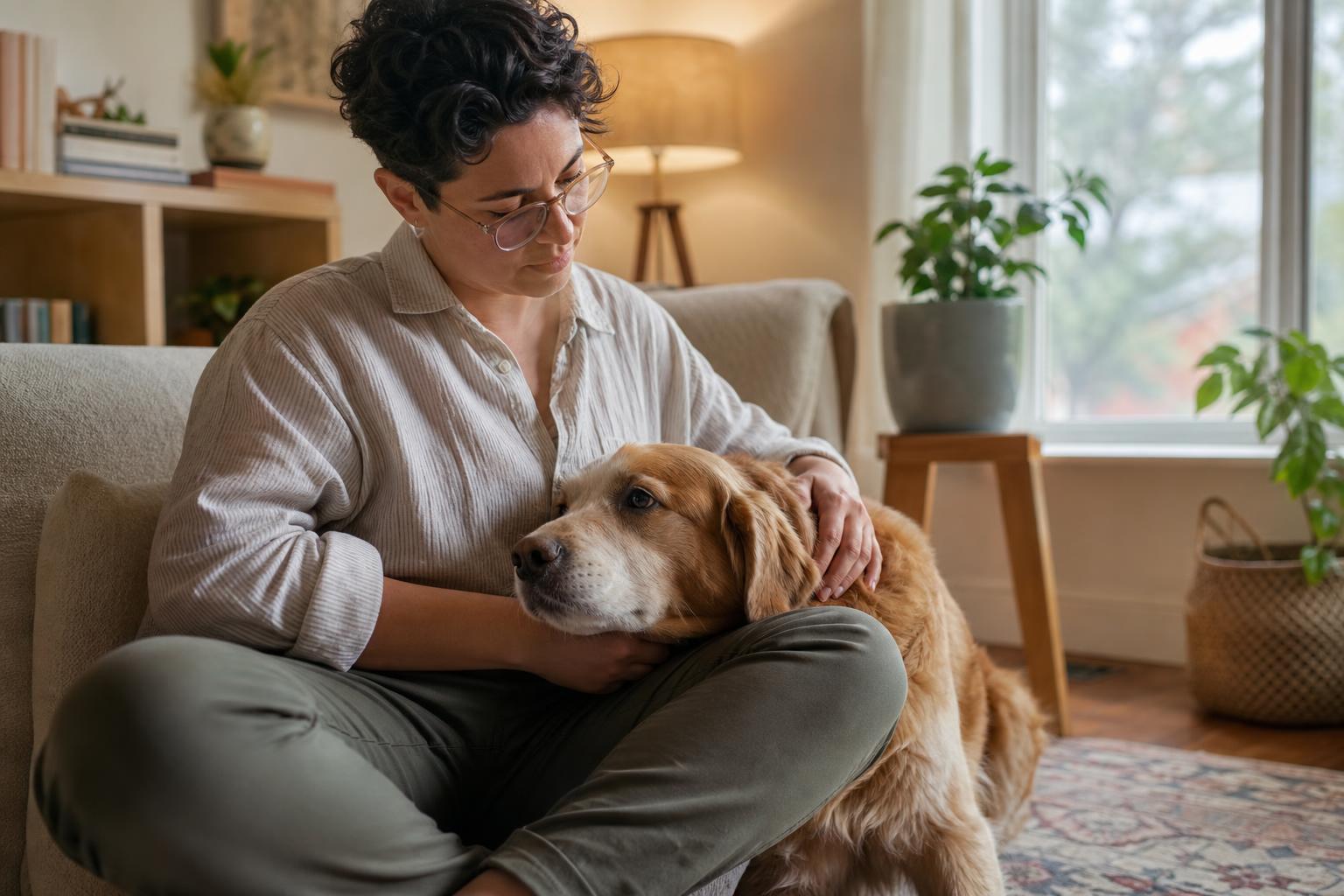
A therapy-dog visit may be one part of a supportive setting for someone experiencing anxiety or depression. Participation should be voluntary, and decisions about treatment belong with the person's clinical team.
Therapy dogs for anxiety and depression have become more widely recognized because people are seeing what experienced handlers have known for a long time. A calm, reliable dog can lower stress, create a sense of safety, and help a person stay engaged with the world around them. That does not mean a therapy dog cures mental health conditions, and it does not replace medical care or counseling. What it can do is offer support that feels immediate, warm, and honest. Sometimes that is exactly what a worn-down mind needs to take the next step.
What a Therapy Dog Really Does
When people first start learning about therapy dogs, they often mix them up with service dogs or emotional support animals. The differences matter. A therapy dog is trained and temperament-tested to provide comfort and emotional benefit in settings such as hospitals, schools, nursing homes, counseling offices, and other community environments. Some therapy dogs also provide tremendous support at home through structured visits or supervised interaction, but their main role is not the same as a psychiatric service dog trained to perform a specific task for a person with a disability.
That distinction is worth understanding if you are exploring help for anxiety or depression. A therapy dog offers soothing companionship, affection, and a grounding presence. The dog’s behavior is predictable, gentle, and responsive. Their gift is not machinery or medicine. It is steadiness. A good therapy dog meets a person where they are, whether that is a moment of panic, a heavy depressive slump, or just a day when getting out of bed feels like climbing uphill through mud.
Why Their Presence Helps
Anxiety can make the body act like danger is close even when the room is quiet. Depression can flatten motivation and drain color from the day. Therapy dogs interrupt those patterns in a natural way. Petting a calm dog can slow breathing and help release tension. Looking after a dog can create a simple routine when everything else feels scattered. A dog’s need for a walk, a meal, or a few minutes of attention can gently pull a person back into motion.
That is where much of their value lies. They are present without judgment. They do not ask for polished words. They do not care if somebody is having a rough day, a rough month, or a rough season. They just show up true.
How Therapy Dogs Support People With Anxiety
For many people with anxiety, the hardest part is the constant anticipation. The mind keeps scanning, the body stays keyed up, and ordinary tasks feel loaded with pressure. A therapy dog can help create a buffer between a person and that rising tide. Their physical presence often encourages touch, breath regulation, and attention to the current moment. Instead of spiraling ten steps ahead, a person can focus on the dog’s fur, breathing, warmth, and body language.
Therapy dogs can also help reduce social strain. In counseling environments, schools, and treatment settings, a dog often makes it easier for people to open up. The dog changes the feel of the room. It softens the edges. A person who struggles to speak about fear or panic may find that conversation comes easier with a dog lying nearby. It is a little like sitting beside a trusted hunting partner at dawn. You do not need to fill every silence. The calm itself does some of the work.
How Therapy Dogs Support People With Depression
Depression often isolates people. It pulls them inward, slows the body, and convinces them that nothing will help. Therapy dogs can push back against that isolation in a quiet but powerful way. They offer companionship without pressure. They make a room feel less empty. They can give shape to a day that otherwise might drift apart.
There is something honest about a dog’s needs. They need care, movement, water, food, and connection. That rhythm can matter deeply for somebody who is struggling to keep time with everyday life. Even if the first step is as small as getting up to greet the dog, that still counts. Recovery often comes in small actions repeated over time, not grand gestures. A therapy dog can help make those actions feel possible again.
The Emotional Bond Matters
The bond between a person and a dog is not sentimental fluff. It is part of the mechanism. Trust, familiarity, and affection help create emotional safety. A person living with depression may feel numb toward much of the world, yet still respond to the steady loyalty of a dog. That bond can encourage engagement, reduce feelings of loneliness, and provide comfort during difficult stretches. For some folks, the dog becomes the one living being that can reliably draw them out of a dark spell.
Choosing the Right Therapy Dog
Not every good dog is suited for therapy work, and not every person needs the same kind of dog. Temperament comes first. You want a dog that is calm, approachable, stable in new environments, and comfortable with different people, sounds, and handling. A therapy dog should not be jumpy, sharp, or easily overwhelmed. The best ones have a kind of level-headed softness about them. They can be affectionate without being pushy and attentive without being needy.
Breed can play a role, but it is not the whole story. Retrievers, poodles, spaniels, and mixed breeds with solid temperaments often do well. Size depends on lifestyle, living space, and the type of support needed. Some people find a large dog’s weight and presence especially grounding. Others need a smaller dog that is easier to manage in a modest home or during visits. You do better judging the dog in front of you than chasing an idea on paper.
If you are considering a therapy dog, watch how the dog handles calm contact, unfamiliar settings, and gentle restraint. Notice whether the dog settles well after excitement. See how they respond to people who move slowly, speak softly, or seem uncertain. The right therapy dog should feel dependable. In the same way you trust a seasoned dog to hold steady when conditions turn rough, you want a therapy dog that does not lose themselves when a person needs calm most.
Therapy Dog Training and Certification
Training matters because heart alone is not enough. A therapy dog should have excellent basic obedience, good leash manners, polite greetings, and the ability to remain composed around distractions. They should tolerate handling, unusual equipment, and a variety of human behavior. Proper socialization and structured exposure are important from the start. The dog needs to learn that new places and new people are not threats.
Many organizations offer therapy dog evaluations and registration. Standards vary, but the purpose is the same: to confirm that the dog has the temperament and control needed to provide safe, reliable comfort. For anyone interested in visiting hospitals, schools, clinics, or care facilities, working with a recognized therapy dog organization is often the best path. It gives structure to the process and helps protect both the handler and the people being served.
Therapy Dogs vs Service Dogs for Mental Health
This is one place where clarity helps. Therapy dogs offer comfort to many people in shared settings. Psychiatric service dogs are trained to perform specific tasks for one person with a qualifying disability, such as interrupting self-harm, guiding a person out of overwhelming spaces, waking them from night terrors, or reminding them to take medication. If someone needs individualized task-based assistance for anxiety or depression, a psychiatric service dog may be the better fit.
For others, a therapy dog or a companion dog may be exactly right. It depends on the person’s condition, daily challenges, treatment plan, and goals. There is no shame in needing one kind of support over another. The important thing is to match the dog’s role to real needs rather than guess at it.
What to Expect From Life With a Therapy Dog
A therapy dog brings comfort, but they also bring responsibility. They need regular exercise, grooming, vet care, and ongoing training. They have off days. They age. They are living partners, not tools to be switched on. The best outcomes come when people enter the relationship with clear eyes and a willing heart. If the dog is cared for properly, the return can be tremendous.
Expect progress to feel human, not perfect. Some days the dog may help settle a hard moment quickly. Other days the benefit may be quieter, just enough to keep the day from slipping too far. That still matters. Anxiety and depression are often managed one day at a time, and a dog’s support tends to work in that same honest rhythm.
Therapy dogs for anxiety and depression matter because they offer something many people are starved for: calm company without condition. In a world full of noise, pressure, and fast opinions, a good dog brings a slower and steadier truth. They help people breathe. They help people connect. They help people begin again after a rough patch, and sometimes that is the start of real healing.
If you are exploring whether a therapy dog is right for you or someone you love, take your time. Learn the differences between therapy, service, and companion dogs. Pay close attention to temperament and training. Choose substance over appearance. The right dog may not fix every problem, but like a sure-footed partner beside you on uncertain ground, they can help you cross places that once felt too heavy to travel alone.