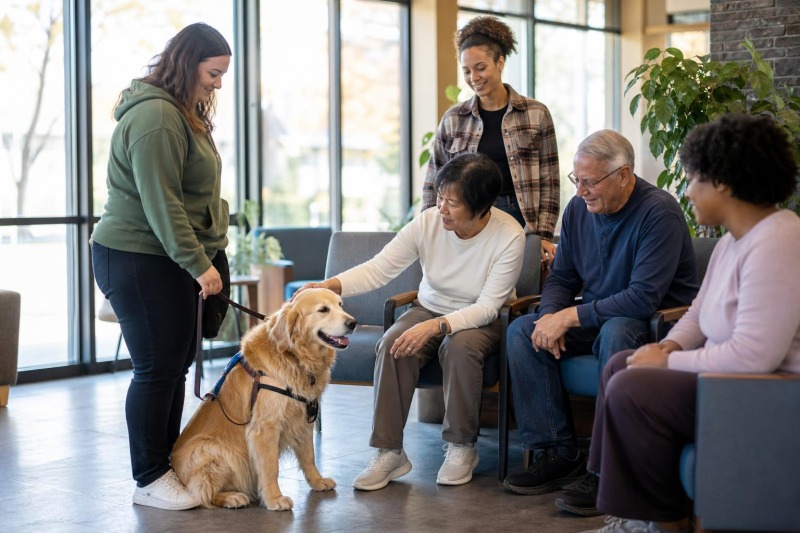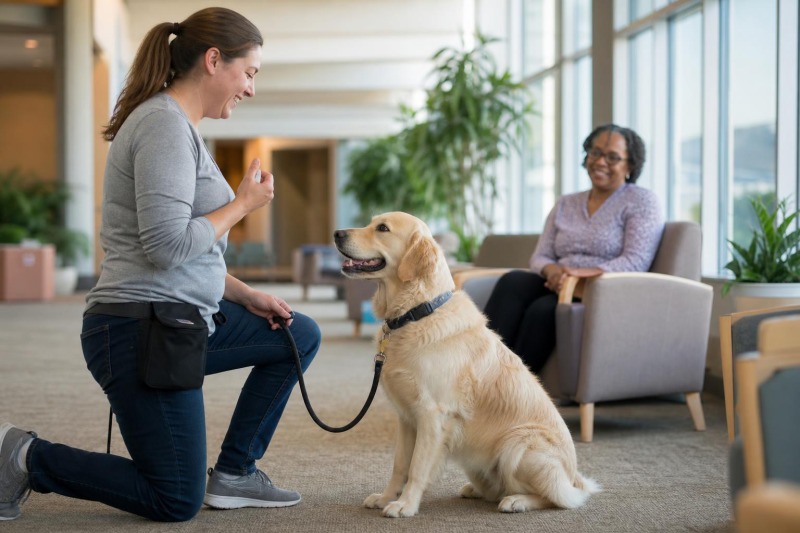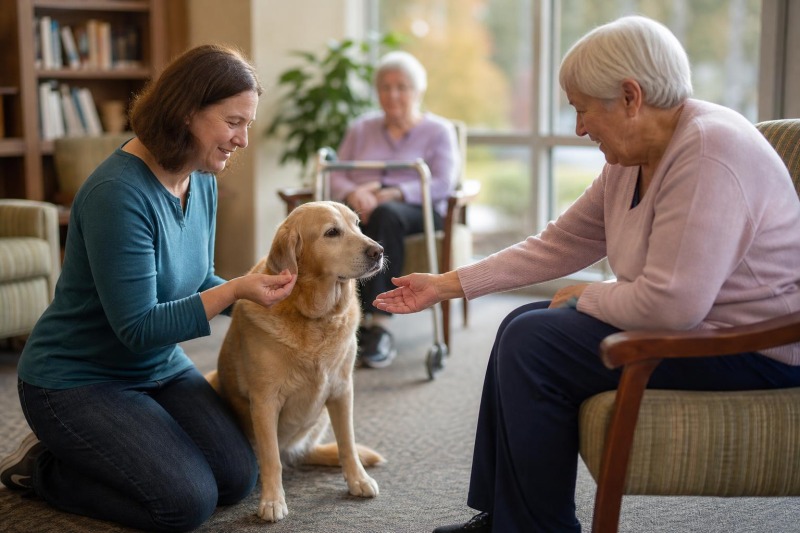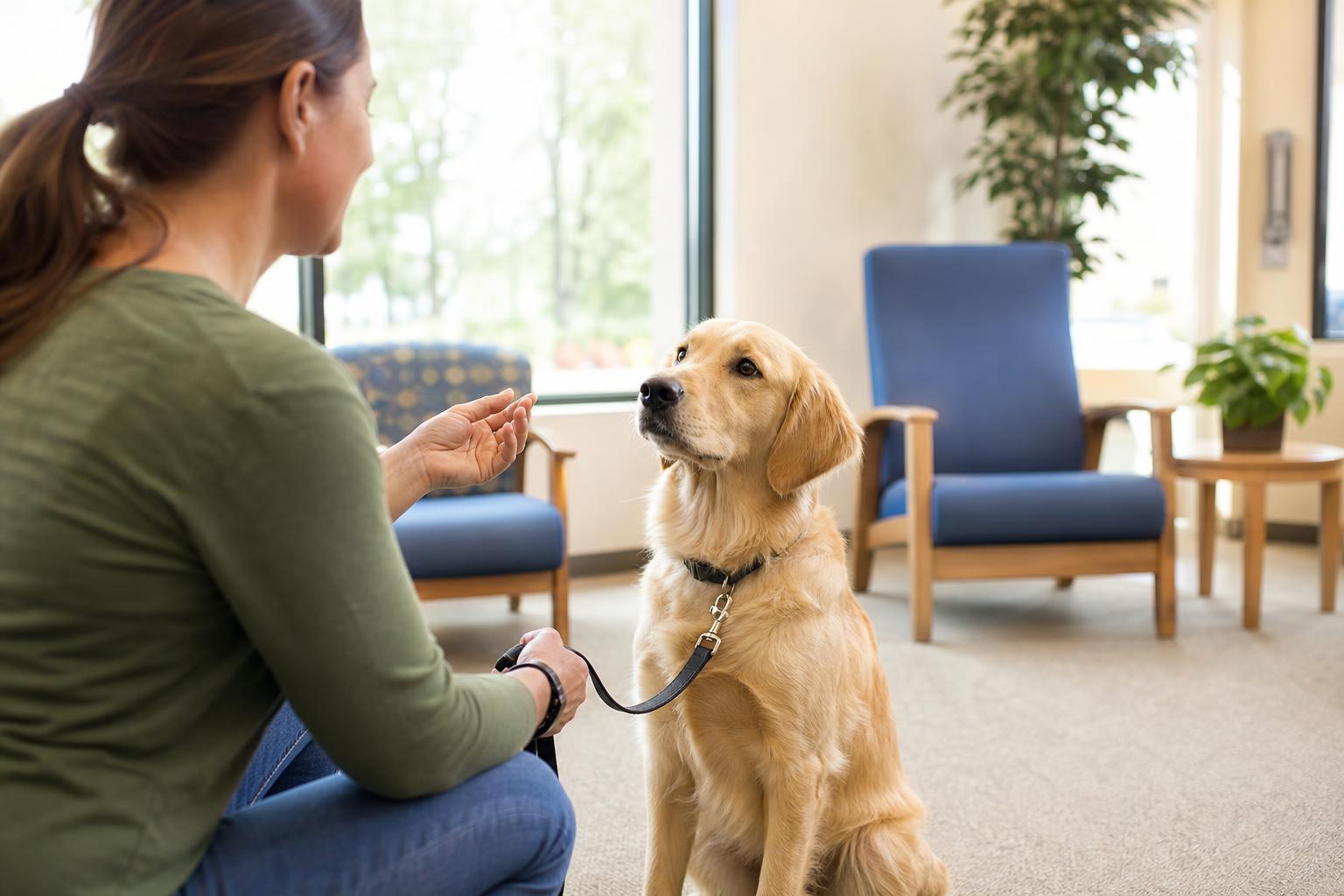
Training for therapy visits begins with everyday skills: settling, loose-leash walking, and calmly disengaging from distractions. Progress depends on the individual dog and the requirements of the visiting organization.
That work starts long before a vest, a certificate, or a first official visit. It starts with temperament, patience, and honest expectations. Some dogs are born with the right kind of softness and confidence. Others may be wonderful companion dogs at home but not suited for therapy settings. Knowing the difference matters, because therapy work asks a dog to tolerate wheelchairs, sudden movements, unusual smells, medical equipment, shaky hands, excited children, and long stretches of controlled behavior. A dog that can do all that is worth its weight in gold.
Start with the Right Temperament
The best therapy dogs are calm, social, adaptable, and biddable. They do not need to be flashy. When evaluating a dog for therapy work, look for one that recovers quickly from surprises, enjoys people without bowling them over, and shows no signs of aggression, possessiveness, or extreme fear.
Breed can play a role, but it is never the whole story. What matters most is the individual dog. If your dog startles easily, guards toys or food, or struggles with loud environments, be careful not to force a path that does not fit. Therapy work should be safe and pleasant for everyone, including the dog.
Age and maturity matter
Young dogs can begin foundation work early, but many are not emotionally mature enough for true therapy visits until they have settled into themselves. A puppy may love everybody in sight, yet still lack the impulse control and composure needed in real facilities. Give the dog time to grow up. There is no prize for rushing. In this kind of training, slow is often fast.
Build Rock-Solid Basic Obedience
If you are serious about training a therapy dog, obedience is your bedrock. Sit, down, stay, come, leave it, and loose-leash walking are not optional. They are the plain tools you will use over and over when the dog needs direction in sensitive environments. A therapy dog should be able to settle beside a chair, walk through a hallway without pulling, greet politely, and remain composed while people talk, move, or reach out unexpectedly.
A dog that only listens in the living room is not trained. Take those commands to the sidewalk, the park, the pet-friendly store, and the parking lot. Let the dog learn that the same rules apply whether the world is quiet or full of motion. Reward generously for calm attention. Correct fairly and clearly when needed, but never train therapy manners through intimidation. You are trying to build trust and reliability, not tension.
One of the most important skills is a relaxed down-stay. In many therapy settings, your dog may spend a fair bit of time simply resting near people. That stillness is not glamorous, but it is often the very thing that makes a dog comforting. Teach the dog that settling quietly is rewarding. A dog that can switch off on cue is a tremendous asset.
Socialization with Purpose
Socialization for a therapy dog is not just meeting lots of people. It is learning how to move through the world without becoming overwhelmed by it. Expose your dog to different ages, voices, surfaces, noises, and environments. Let the dog see walkers, canes, rolling carts, automatic doors, hats, umbrellas, and bustling crowds. Do it thoughtfully, keeping the dog under threshold so confidence grows instead of cracking.
That is as true in therapy work as it is in any other line of canine training. If a dropped clipboard, a squeaky wheelchair, or a child’s sudden laugh sends your dog into a spiral, step back and train more gradually. Confidence is built one successful exposure at a time.
Teach calm greetings
Most dogs are praised their whole lives for being excited to meet people, but therapy dogs need a softer touch. They must greet without jumping, pawing, mouthing, or crowding. Practice with volunteers. Have the dog sit or stand calmly while being petted. Reward the dog for keeping four feet on the floor and a loose body. If the dog gets too worked up, end the greeting and reset. Over time, the dog learns that access to people comes through composure, not chaos.
Prepare for Handling and Unusual Contact
Therapy dogs are touched in ways ordinary pet dogs may never experience. Someone may stroke the dog’s ears awkwardly, lean on a shoulder, hug too tightly, or pat with shaky, uncertain hands. Your dog needs to accept gentle handling over the whole body without flinching or resisting. Work on calm tolerance of touching paws, tail, ears, collar, and sides. Pair handling with praise and rewards so the dog forms a positive association.
This is also the time to teach the dog to stay steady around medical equipment and mobility aids. Practice near wheelchairs, walkers, crutches, and hospital-style noises whenever possible. If you do not have access to those items at home, seek out controlled opportunities with friends, trainers, or community spaces. The dog should not just tolerate these sights. Ideally, the dog should regard them as no big deal.
Train for Public Manners, Not Just Performance
A therapy dog is judged as much by what it does not do as by what it does well. The dog should not bark unnecessarily, sniff all over people, steal food, lunge toward other dogs, or pace from stress. Public manners are the difference between a pleasant visit and a disruptive one. That means you need to practice ignoring distractions as much as following commands.
Take the dog to a safe public place, sit off to the side, and reward calm attention while the world goes by. No frantic heeling drills, no constant chatter, no asking for a circus routine. Just teach the dog to exist peacefully amid noise and motion. That sort of steadiness is the marrow of therapy work.
Watch stress signals closely
Not every wag means a dog is comfortable. Learn your dog’s body language. Lip licking, yawning, turning away, pinned ears, panting when it is not hot, a tight mouth, or a tucked tail can all signal stress. A dog that feels pressured may eventually shut down or react. Good handlers protect their dogs. If the dog is uneasy, create distance, end the session, and revisit the challenge more carefully another day.
Canine Good Citizen and Therapy Dog Testing
For many owners, a smart path is to work toward the AKC Canine Good Citizen test or a similar manners evaluation before pursuing therapy certification. That kind of benchmark helps you measure whether your dog can handle controlled obedience and public behavior. It is not the finish line, but it is a solid gate to pass through.
After that, most therapy dog teams pursue registration through a recognized therapy dog organization. Requirements vary, but they usually include temperament assessment, obedience standards, health records, and supervised evaluations during visits or mock visits. Read the standards carefully before you apply. The goal is not just to pass a test. The goal is to ensure your dog can offer comfort safely and consistently in real-life settings.
Condition the Dog for Real Therapy Environments
Once your dog has the basics, start shaping visit-specific behavior. Practice entering calmly, waiting at doors, walking beside wheelchairs, settling near a bed or chair, and responding to simple cues in close quarters. If your dog will visit children, work around lively voices and unpredictable movement. If the dog will visit hospitals or senior care settings, focus more on slow approaches, quiet demeanor, and comfort with strange equipment and scents.
This phase is where imagination and patience pay off. Set up little scenes at home. Ask a friend to speak loudly, move awkwardly, or drop an object. Reward the dog for staying composed. Invite trusted people to pet the dog while seated or using mobility aids. The more thoughtfully you rehearse, the less likely the dog is to be surprised later.
Do not make practice too long. Therapy dogs need stamina, but they also need to stay fresh. End sessions with the dog wanting more, not feeling drained. A tired or overfaced dog can start making mistakes that have nothing to do with ability and everything to do with pressure.
The Handler Matters as Much as the Dog
Your timing, leash handling, attitude, and awareness all matter. A therapy dog team is exactly that, a team. You need to know when to cue, when to step back, when to advocate for your dog, and when a visit has run its course.
Bring a calm presence. Keep your leash loose but your attention sharp. Respect facility rules. Ask for consent before greetings. Keep visits focused on the people you are serving, not on showing off your dog. The finest therapy teams move through a room like experienced bird dogs through cover, steady and controlled, never wasting motion, always reading the ground in front of them.
Common Mistakes When Training a Therapy Dog
One of the biggest mistakes is assuming friendliness equals suitability. Another is pushing a dog into stressful situations before it has the tools to cope. Some owners also train too much for commands and not enough for neutrality. A therapy dog does not need to perform endlessly. It needs to remain stable, gentle, and responsive in changing circumstances.
Another common error is ignoring health and grooming. Therapy dogs should be clean, well-brushed, and physically comfortable. Nails should be trimmed so they do not scratch delicate skin. Ears, coat, and breath should be attended to. If a dog has pain, skin irritation, or untreated medical issues, that discomfort can affect behavior and make visits unfair to the dog.
When a Dog Is Ready
You will know your dog is getting close when calm behavior becomes the default rather than something you have to wrestle out of them. The dog can walk into a new place, look around, and stay with you. It can greet people without exploding with excitement. It can settle, recover from surprises, and accept handling with a loose, willing body. Most of all, the dog seems to enjoy the work without being overwhelmed by it.
That is the kind of dog people remember. Not because it was dramatic, but because it was steady. In therapy work, steadiness changes lives. A quiet head on a hospital blanket, a patient greeting in a rehab center, a calm body leaned against a lonely knee, those moments matter. Training a therapy dog is not about polishing a pet into a performer. It is about developing a dog whose presence brings ease where people need it most.
If you take your time, train honestly, and put the dog’s welfare first, you stand a good chance of building a team that does real good in the world.