An older dog may have useful everyday experience, but therapy work still requires an individual assessment. Health, sensory changes, stamina, and enjoyment of the proposed visits deserve close attention.
In fact, for therapy work, age can be an advantage. The old saying about seasoning applies here. A dog that has lived a little and learned to handle the world without coming unglued may be better suited for hospital halls, nursing homes, schools, and counseling offices than a young dog still trying to figure out his own feet.
Why Older Dogs Often Make Excellent Therapy Dogs
Therapy work is not about flashy obedience or dramatic tricks. It is about reliability. It is about a dog entering a room full of unfamiliar sounds, scents, wheelchairs, walkers, dropped objects, eager hands, uneasy emotions, and still remaining gentle and composed. Many older dogs are naturally better equipped for that task than younger ones. They tend to have a calmer baseline. They are often less driven to leap, mouth, pull, or spin themselves into excitement. They have also had more chances to be exposed to the everyday world, and that exposure matters.
Now, not every senior or mature dog is cut out for the job. A dog that has grown rigid, fearful, reactive, or sore in body may not enjoy therapy settings. But if you have an older companion who greets strangers with a soft tail, settles easily in busy places, and looks to you for guidance when things get odd, you may be holding a strong candidate. They were the dogs who could breathe easy when a room felt heavy.
Temperament Comes Before Training
Sit and down can be taught. Emotional steadiness is harder to build from scratch. Watch how your dog handles unexpected touch, strange equipment, crowded areas, and awkward movement from people. Therapy dogs need to accept petting that may be clumsy. They need to tolerate hugs they did not ask for, voices that rise suddenly, and scents that are unfamiliar and intense. More importantly, they need to recover quickly if they are startled.
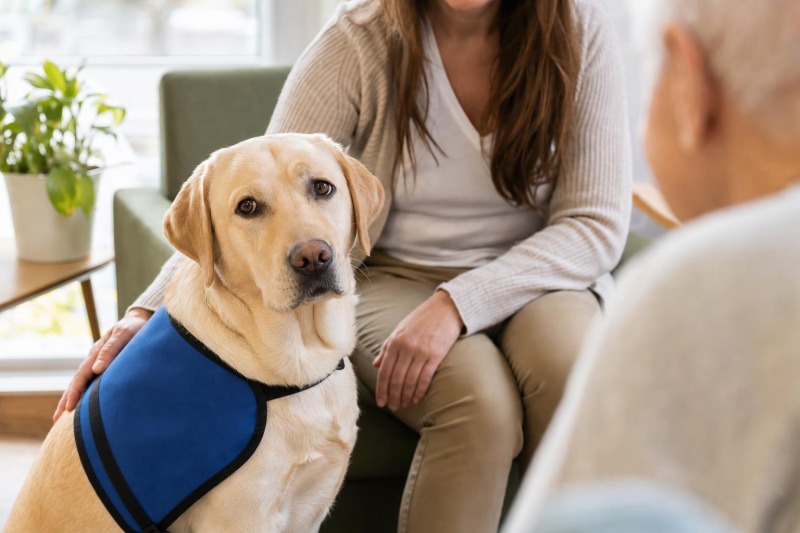
A good therapy prospect does not need to love every person in a bouncing, overfriendly way. He does need to remain safe, approachable, and soft in demeanor. That kind of measured sociability goes a long way in therapy work.
Start with Health, Comfort, and Honest Limits
Before you begin training an older dog for therapy work, get a thorough veterinary check. This is not just a box to mark off. Therapy environments can ask a lot of a dog physically and mentally. Slick floors, long car rides, frequent handling, and unfamiliar spaces can wear on joints, hearing, vision, and stamina. A mature dog may have arthritis, reduced tolerance for standing, or subtle pain that only shows up in stressful settings.
There is no shame in discovering that your dog would prefer short visits rather than long ones, or quiet environments rather than bustling facilities. Good therapy work honors the dog’s well-being first. The goal is not to force a title onto a dog. The goal is to build a partnership where the dog can offer comfort without sacrificing his own peace. Matching the dog to the job is half the battle.
Building the Foundation for Therapy Dog Training
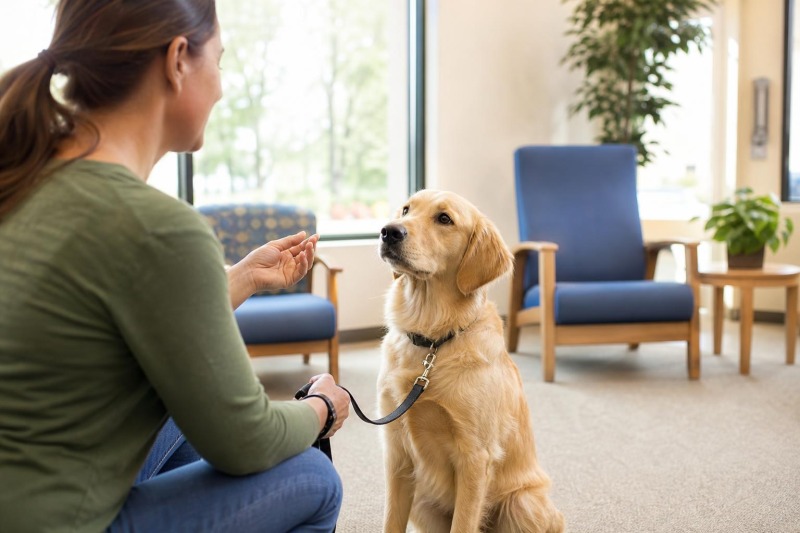
Once health and temperament check out, start with steady obedience that holds up in the real world. You do not need a circus dog. You need a dog who can walk politely on leash, sit when asked, lie down and stay for a reasonable stretch, come when called, and leave distractions alone. Those basics become the framework that keeps therapy visits safe and predictable.
Mature dogs often learn beautifully because they are less frantic than young ones. They can focus. They can think. If you make the lesson fair, they are usually willing partners. Reward generously for calm behavior. Teach loose-leash walking in different settings. Practice greetings without jumping. Work on settling beside a chair while people talk. It is the plain work, done faithfully, that prepares a dog for meaningful service.
Proofing Around Real-World Distractions
This is where many handlers stumble. A dog may perform perfectly in the living room and then forget his manners the moment a dropped cane clatters across a tile floor. Therapy dogs need gradual exposure to the sights and sounds they will encounter. That means elevators, automatic doors, shopping carts, wheelchairs, walkers, children moving unpredictably, and adults who may speak softly one moment and loudly the next.
Go slow and read your dog. Stand near a bench outside a busy store and reward calm observation. Visit a quiet park path and practice polite greetings with willing strangers. If your dog startles, give him room to recover and help him settle before moving on. Confidence is built by repeated success, not by overwhelming the dog and hoping he toughens up.
Teaching the Skills That Matter Most in Therapy Settings
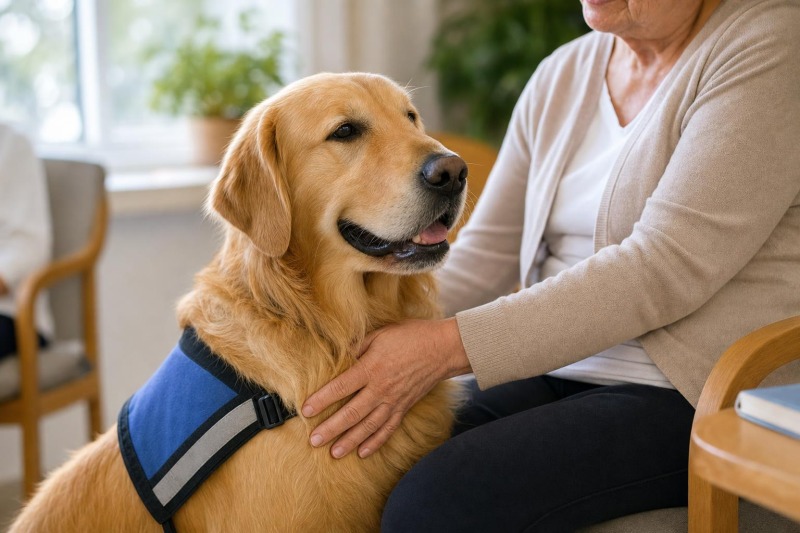
There are a few behaviors that become especially useful once a dog begins therapy work. One is a reliable stand for petting or gentle handling. Another is a settled down-stay at your feet or beside a chair. A dog who can place his head softly on a lap, if invited and appropriate, can offer remarkable comfort. Some organizations also value a dog that can work around food, medical equipment, or sudden movement without losing composure.
Just as important is the dog’s ability to disengage. A therapy dog should not fixate on another animal, strain to greet everyone, or nose into every bag and tray in the room. He needs to move with purpose and then rest with dignity. That controlled, quiet presence is often what people respond to most.
Handling Sensitivity in Older Dogs
Some older dogs carry a little wear in body or spirit. They may be gentle but more cautious than they once were. That does not rule them out. It simply means you need to train with respect. Avoid drilling for too long. Keep footing secure. Watch for signs of stress such as lip licking, yawning, turning away, stiffness, or refusal to take treats. When a dog is telling you he has had enough, listen.
Older dogs also benefit from routine. If you train at similar times, use familiar cues, and introduce novelty in measured doses, they often settle into the work with confidence. There is something satisfying about watching a mature dog realize the game. You can almost see the understanding arrive: stay close, be gentle, let people love on you, and good things follow.
Preparing for Therapy Dog Testing and Certification
If you plan to register through a therapy dog organization, study their requirements early. Most programs expect good public manners, tolerance for handling, calm behavior around distractions, and solid control by the handler. Some ask for a canine good citizen style foundation first. Others have specific evaluations for therapy settings. The exact path may differ, but the principle remains the same. Your dog must be safe, predictable, and genuinely comfortable doing the work.
Consider handlers to practice in places that resemble the eventual job. Train near benches, in lobbies that allow dogs, around mobility aids if you can arrange it safely, and with friends willing to role-play awkward greetings. Ask someone to pet the dog a little too heavily, shuffle their feet, or speak in an unusual tone. You are not trying to trick the dog. You are preparing him for the real texture of therapy visits, which are seldom neat and orderly.
The Handler Matters as Much as the Dog
One truth worth saying plain is that therapy work is a team effort. A fine dog can be undermined by a handler who misses stress signals, allows rude interactions, or pushes for too much too soon. Your job is to advocate for the dog, guide the visit, and know when to step back. If a child is grabbing, if a patient is too animated, if your dog is tired, you intervene kindly and promptly.
That kind of judgment often separates successful therapy teams from those that burn out. An older dog may give you beautiful honesty if you pay attention. He may slow his tail, turn his head, or lean against your leg when he needs a break. Honor that. Therapy work should leave the dog feeling safe, not drained. Some of the best visits are brief, gentle, and ended while the dog still feels bright.
When an Older Dog Is the Right Dog
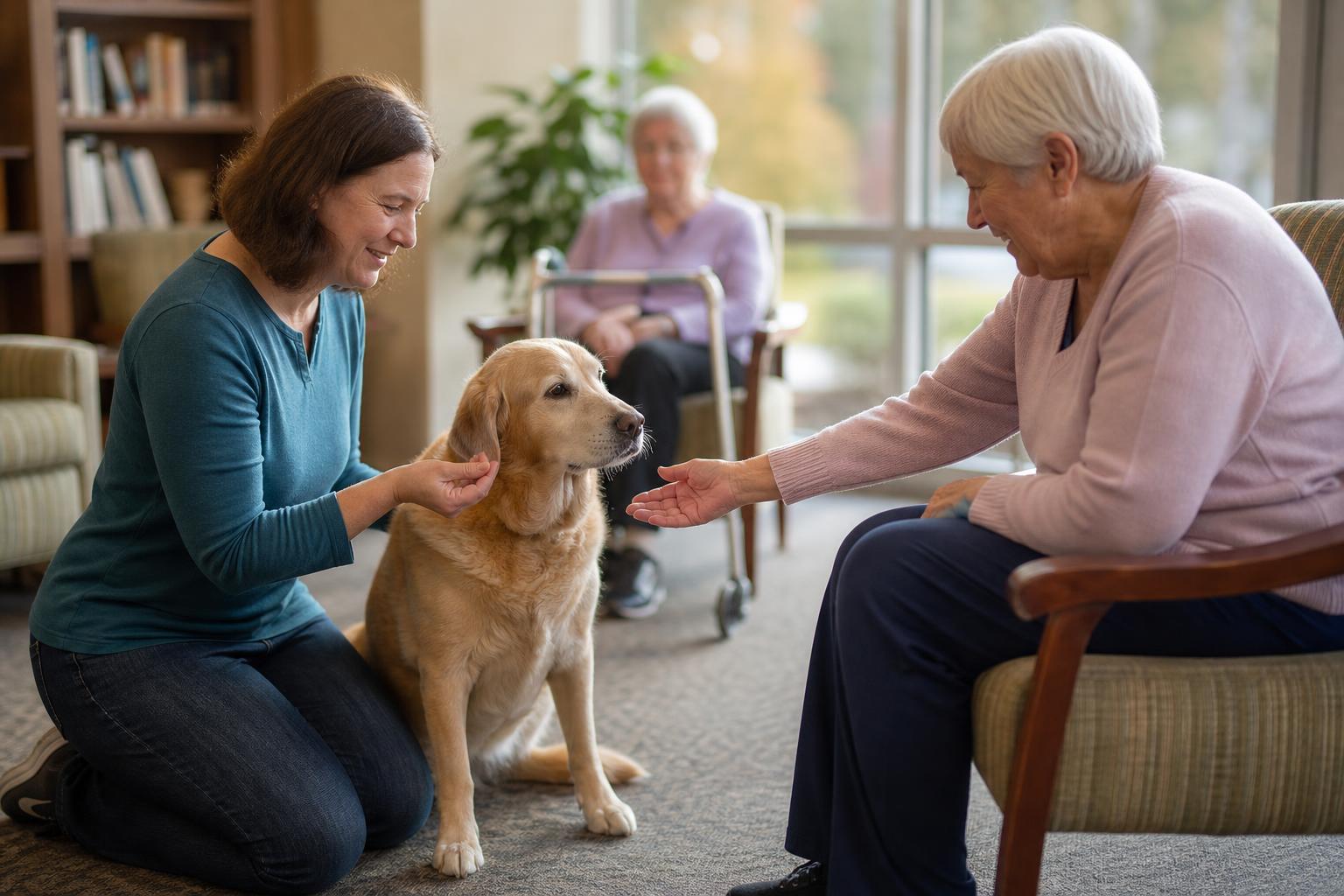
There is a special sort of grace in a mature dog doing therapy work. Maybe it is the gray around the eyes, maybe it is the quiet confidence, or maybe it is simply that age has polished away the rough edges. Whatever the reason, people often respond deeply to these dogs. They feel steady. Trustworthy. Real. In rooms where nerves are frayed or hearts are heavy, that matters more than most folks realize.
If you are wondering whether your older dog can become a therapy dog, do not count him out because of the calendar. Look instead at the whole animal standing in front of you. Consider his health, his patience, his willingness to engage, and his ability to remain calm in strange places. Train the basics until they are solid. Introduce the world carefully. Let the dog tell you what kind of work suits him. If the pieces come together, you may find that a dog with a few years behind him is exactly the partner this work calls for.
There is no need to rush it. Good dogs, like good hunting companions, earn your respect over time. Therapy work asks for heart, steadiness, and trust. Plenty of older dogs have all three in abundance. With thoughtful training and honest handling, a mature dog can step into this role and do something worthwhile for the people around him. That is work to be proud of.