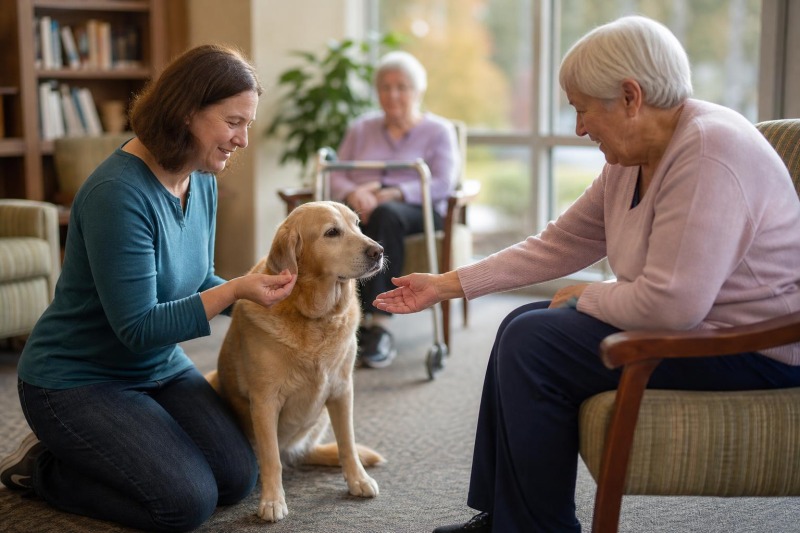
A Golden Retriever's individual behavior matters more than its reputation when considering therapy work. Comfortable greetings, calm disengagement, and recovery from everyday distractions need to be assessed and trained.
The Golden Retriever has long been one of the best-known breeds for homes, hunting camps, and public-facing work because it tends to come with a rare mix of softness and steadiness. A good Golden is social without being pushy, affectionate without being needy, and eager to learn without falling apart under pressure. When you are talking about a therapy dog, those traits matter more than flashy tricks ever will.
For anyone exploring therapy dogs, service dogs, or companion dogs, it helps to understand one important point right from the start. A therapy dog is not the same as a service dog. Service dogs are trained to perform specific tasks for a person with a disability and have legal public access protections tied to that work. Therapy dogs, on the other hand, are usually invited into places like hospitals, schools, nursing homes, counseling offices, and rehabilitation centers to provide comfort and emotional support to many people. The Golden Retriever often fits that role beautifully.
Why Golden Retrievers Make Excellent Therapy Dogs
There is a reason so many therapy organizations, trainers, and handlers keep coming back to this breed. A well-bred Golden Retriever often brings a natural friendliness that feels genuine instead of forced. People can sense that. In a hospital room, in a memory care unit, or sitting beside a child struggling to read out loud, the dog’s quiet willingness matters more than anything else.
Goldens also tend to be highly biddable. That is a trait hunters appreciate in the field and handlers appreciate in public settings. A dog that takes guidance well is easier to shape into reliable behavior. You want a therapy dog that can settle under a chair, walk through a hallway without lunging toward every friendly hand, and remain composed if someone hugs too hard or drops a walker nearby. Many Golden Retrievers have the emotional elasticity for that kind of work.
Another strength is their size. A Golden Retriever is large enough to provide a comforting physical presence, yet not so imposing that most people find the dog intimidating. Their coat, expression, and overall demeanor often invite interaction. That softness is part of the breed’s gift.
Temperament Comes First
If you are considering a Golden Retriever as a therapy dog, remember this: breed reputation is only the starting point. The individual dog matters more than the label. A therapy prospect should be stable, patient, sociable, and resilient. It should recover quickly from surprise, accept handling from strangers, and show no meaningful signs of fear, sharpness, or possessiveness.
Therapy work is less about perfection and more about emotional steadiness.
What a Golden Retriever Needs to Succeed in Therapy Work
Plenty of people assume the breed does most of the heavy lifting. It does not. A Golden Retriever may have the raw ingredients, but the finished dog still depends on breeding, socialization, health, handling, and training. If one of those pieces is weak, the whole picture can wobble.
Early socialization is a big piece of the puzzle. Puppies should be exposed to a wide variety of people, surfaces, sounds, settings, and routines in a controlled way. You are not trying to flood the dog with stress. You are teaching it that the world is broad, manageable, and not something to fear. A therapy dog prospect should learn that wheelchairs, canes, elevators, loudspeaker announcements, and clumsy petting are just part of life.
Basic obedience matters too, though not in a flashy competition sense. Sit, down, stay, loose-leash walking, recall, leave it, and calm greetings form the backbone of therapy behavior. The real test is whether the dog can perform those skills gently and consistently in places full of distractions. A Golden that listens in the backyard but unravels in a crowded lobby is not ready yet.
The Best Therapy Dogs Are Calm, Not Just Friendly
This is where many owners get tripped up. A dog that loves everybody is not automatically suited for therapy visits. In fact, too much enthusiasm can be a problem. Therapy dogs need to meet people with control and grace. They cannot be leaping, pawing, licking excessively, or dragging handlers toward every voice they hear. Calm friendliness beats wild affection every single time.
A seasoned Golden Retriever usually learns to settle into the moment. That might mean laying quietly beside a patient’s bed, letting a nervous child stroke its ears while reading, or standing still while an elderly resident takes time reaching out with a trembling hand. Those are small moments on the surface, but they are the whole point of therapy work.
Training a Golden Retriever for Therapy Dog Work
Training should begin with manners at home and then stretch into the wider world. House manners, impulse control, confidence around visitors, and the ability to relax on cue all matter. From there, a handler can build the public behaviors needed for therapy settings.
Positive reinforcement tends to work very well with Golden Retrievers. They are generally eager to please and often sensitive enough that harsh handling does more harm than good. Reward the behavior you want, repeat it in different places, and slowly raise the level of distraction. Good therapy dogs are built through steady repetition, not shortcuts.
Many owners also benefit from structured classes. Canine Good Citizen-style training is often a useful benchmark, and many therapy organizations require evaluations that test obedience, sociability, handling tolerance, and composure. Depending on the program, the dog may need to demonstrate controlled greetings, polite walking through crowds, neutrality around other dogs, and calm behavior when startled.
That process takes time. Some Goldens mature into therapy candidates fairly early, while others need a longer runway. Let maturity catch up with training. A dog that is mentally ready will tell you.
Health, Grooming, and Practical Considerations
A Golden Retriever intended for therapy work should be physically sound. Joint health, skin health, ear care, and overall fitness all matter because therapy visits can involve long walks through buildings, standing for periods of time, and frequent contact with vulnerable people. A dog that is uncomfortable in its own body will struggle to stay patient and engaged.
Grooming is not optional with this breed. That rich golden coat is part of the charm, but it sheds and needs regular brushing. In therapy environments, cleanliness carries extra weight. Nails should be trimmed, ears kept clean, coat maintained, and body odor managed. A tidy dog makes a better impression and creates a more comfortable experience for the people it visits.
It is also worth mentioning that not every environment suits every dog. Some Golden Retrievers excel in schools and counseling offices but find hospitals too intense. Others thrive in senior living settings where the pace is slower and contact is gentler. Matching the dog’s temperament to the right kind of therapy work often matters as much as the training itself.
Is a Golden Retriever the Right Therapy Dog for You?
That depends as much on the handler as the dog. A Golden Retriever can be a wonderful therapy partner, but this breed needs time, grooming, exercise, and thoughtful guidance. These dogs are people-oriented and usually do best when they are truly included in family life. Leave one under-stimulated, under-trained, or lonely, and you may wind up with a bored dog instead of a balanced one.
If you are buying a Golden Retriever with therapy goals in mind, choose your breeder with care. Look for sound temperament, health testing, and dogs that show the kind of stable, social nature that therapy work requires. If you are adopting, spend time learning the dog’s triggers, recovery time, and comfort level in public. A therapy dog is not made by wishful thinking. It is built on honesty.
They step into a room carrying the kind of quiet reassurance people remember long after the visit ends. For a child having a hard day, for an aging veteran, for a patient working through pain, that steady presence can mean more than most folks realize.
At its best, a Golden Retriever as a therapy dog represents the finest side of the breed: gentle, dependable, eager to connect, and strong enough in spirit to offer comfort without asking for much in return. If you choose carefully, train patiently, and respect the job, a Golden can become more than a good dog. It can become a bridge between people and peace, and that is worthy work by any standard.