A rescue history does not establish or rule out suitability for therapy visits. Assess the individual dog's health, behavior, comfort with people, and enjoyment of the proposed work.
That matters because a lot of folks hear the word rescue and imagine damage that can’t be repaired. That is too simple by half. Rescue dogs come from all kinds of situations. Some were loved but surrendered because life changed. Some were strays. Some came from neglect. Some just had a rough start and still carry a gentle soul. Therapy work does not ask for a perfect pedigree or a polished backstory. It asks for a dog with the temperament to stay calm, social, and reliable when the world gets busy or emotional.
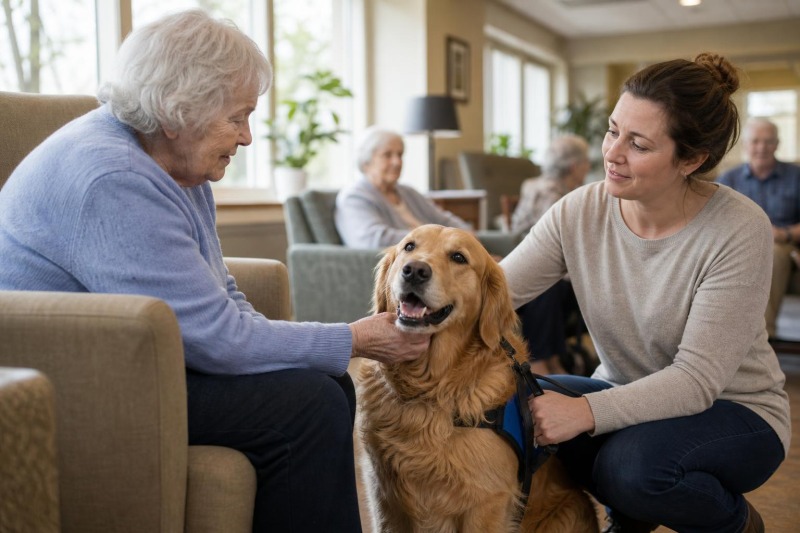
If you are interested in therapy dogs, service dogs, or companion dogs, this is where it helps to understand the difference. A therapy dog is not the same as a service dog. A therapy dog is trained and evaluated to provide comfort and emotional support to other people in places like hospitals, nursing homes, schools, and counseling settings. A service dog, on the other hand, is trained to perform specific tasks for one person with a disability. That distinction matters because the standards, access rights, and training goals are not the same.
Why Rescue Dogs Can Be Excellent Therapy Dogs
There’s something special about a dog that has had to adapt and still chooses trust. Maybe it comes from learning to read people closely. Maybe it comes from finally feeling safe and wanting to give that safety back. Whatever the reason, some rescue dogs carry a quiet empathy that fits therapy work beautifully.
In the field, whether you are working a dog on a cold morning hunt or walking one through a crowded lobby, you learn quickly that temperament outweighs appearances. A therapy dog needs to handle strange sounds, new smells, wheelchairs, medical equipment, awkward petting, and people who move unpredictably. Rescue dogs that are naturally steady and people-oriented can do very well in that setting. In fact, some of them shine because they bond strongly, learn routines eagerly, and seem to understand that their job is to bring calm where it’s needed.
When a dog has been adrift and then lands in a secure home with structure and kindness, that dog often works with heart. You cannot train heart into a dog, but you can recognize it when you see it.
Temperament Matters More Than History
The biggest factor in whether a rescue dog can become a therapy dog is not whether the dog came from a shelter. It is whether the dog has the right disposition. Good therapy dogs are stable, friendly, easy to redirect, and comfortable being touched by strangers. They do not need to be bubbly all the time, but they do need to be safe, tolerant, and predictable.
A dog with severe fear, chronic anxiety, reactivity, or aggression is usually not a good candidate for therapy work. That is not a judgment on the dog. It simply means the work would ask too much of that animal. Therapy visits put dogs in situations where patience and emotional control are essential. If the dog feels overwhelmed or unsafe, that is unfair to everyone involved, especially the dog.
Does the dog recover quickly after a surprise? Can the dog settle after excitement? Does the dog enjoy meeting gentle strangers? Can the dog walk through a new environment without coming unglued? Those are the kinds of questions that tell you more than a sad backstory ever will.
What a Rescue Dog Needs Before Starting Therapy Training
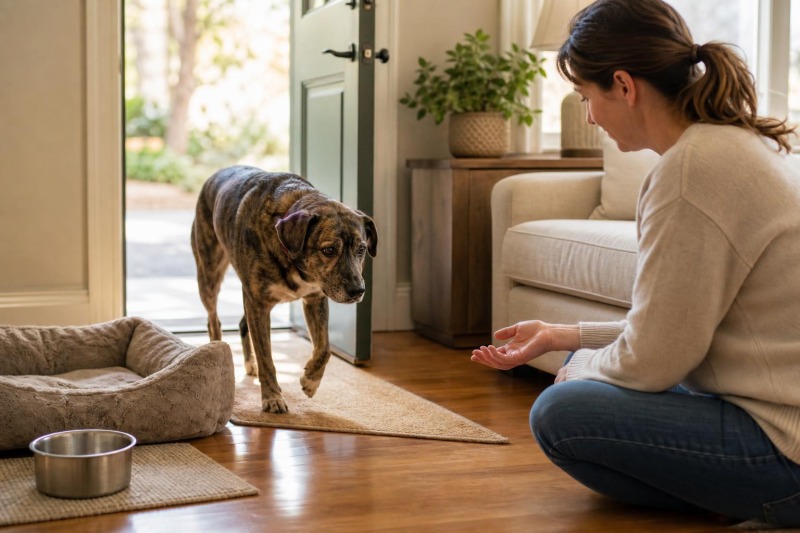
Before any rescue dog heads toward therapy certification, the dog needs time to decompress. This is one of the biggest mistakes eager owners make. They bring home a promising shelter dog, see sweetness right away, and want to jump into classes, outings, and public visits. But a newly adopted dog is still figuring out where it belongs. Even a calm dog needs time to understand the home, trust the owner, and settle into a routine.
Regular meals, walks, rest, gentle exposure, and clear expectations go a long way. Basic obedience should come first. Sit, down, stay, loose-leash walking, recall, and polite greetings are not glamorous, but they form the backbone of therapy work. A dog that cannot stay composed at the end of a leash is not ready to comfort strangers in a hallway full of commotion.
Socialization also matters, though with adult rescue dogs it is less about flooding them with everything at once and more about giving them positive, manageable experiences. A therapy prospect should learn how to move comfortably through different settings without feeling pressured.
Health, Grooming, and Manners Count
Therapy dogs must be physically healthy and clean, because they work around people who may be vulnerable. That means vet care is not optional. A rescue dog with untreated pain, skin issues, digestive trouble, or orthopedic problems may struggle with the demands of visits. Sometimes behavior that looks like anxiety is really discomfort. Rule that out early.
Grooming and handling are equally important. A therapy dog needs to tolerate brushing, nail trims, bathing, and close physical contact. If a dog panics when touched on the ears or feet, that needs patient work before any therapy setting is considered. Good manners are part of safety. No jumping, mouthing, lunging, barking fits, or frantic pulling. Even a loving dog can cause trouble if its enthusiasm runs ahead of its training.
Can Any Breed or Mix Become a Therapy Dog?
Yes, in theory, but not every individual dog will have the right qualities. Breed can influence energy level, sociability, sensitivity, and working style, but it does not seal the outcome. The dog in front of you is what matters.
That said, some breed tendencies can shape the journey. A high-drive dog may need more training to settle. A naturally aloof dog may not enjoy constant interaction with strangers. A sensitive dog may do better in quiet reading programs than busy hospitals. Matching the dog’s nature to the right kind of therapy work is just plain common sense, and common sense with dogs will save you a lot of heartache.
The Path to Becoming a Certified Therapy Dog
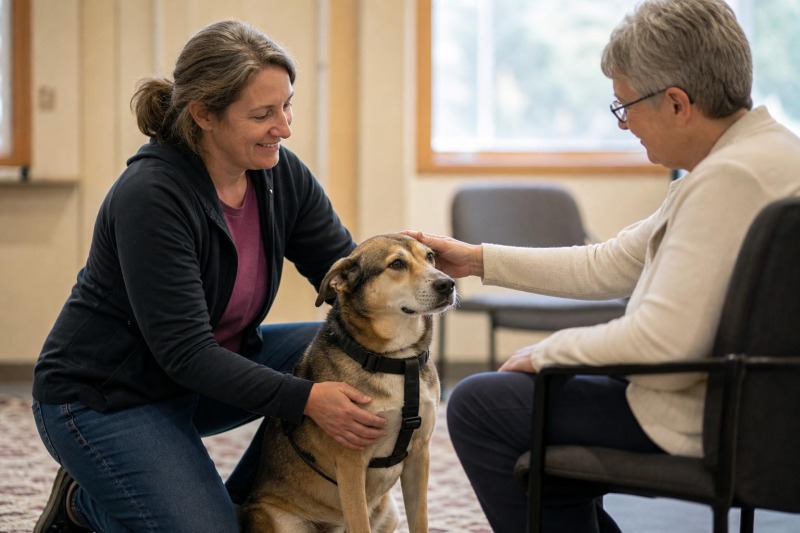
Most therapy dog organizations require a dog to pass temperament and obedience evaluations before participating in visits. The exact process varies, but the idea stays the same. The dog must demonstrate calm behavior around people, other dogs, distractions, and handling. Many groups also want the dog to be at least one year old and to have lived with the owner for a certain period of time.
If your rescue dog shows promise, a good obedience class is the right first step. After that, advanced manners and controlled public exposure help polish the dog’s reliability. From there, you can work toward therapy-specific testing through a recognized organization. It helps to practice real-world scenarios. Crowded entrances, dropped objects, medical smells, walkers, wheelchairs, children with unsteady hands, long periods of lying quietly beside a chair. A therapy dog must be comfortable doing a whole lot of nothing until someone needs everything from it emotionally.
You could tell life had not always treated her gently. But put her in a nursing home room, and it was like watching a seasoned bird dog lock on point. Focused. Calm. Certain. She would rest her head against a veteran’s knee and stay there without fidgeting, as if she knew the silence was the work. Dogs like that remind you that purpose can bloom in unlikely places.
Challenges Rescue Dogs May Face in Therapy Work
Now, honesty matters here. Some rescue dogs carry fears that may never fully fade. Loud noises, men with hats, fast movements, medical equipment, slippery floors, or crowded spaces can stir old stress. That does not mean the dog has failed. It means the handler needs to listen. Therapy work should never be forced. If a dog shows signs of discomfort, the right move is to slow down, reassess, or choose a different path.
There is also the matter of handler expectations. People sometimes want the redemption story so badly that they ignore the dog’s limits. But a rescue dog does not owe anybody a heroic transformation. The best therapy teams are built on trust, not wishful thinking. If your dog is happiest as a beloved companion at home, that is still a fine life and honorable work in its own right.
So, Can Rescue Dogs Become Therapy Dogs?
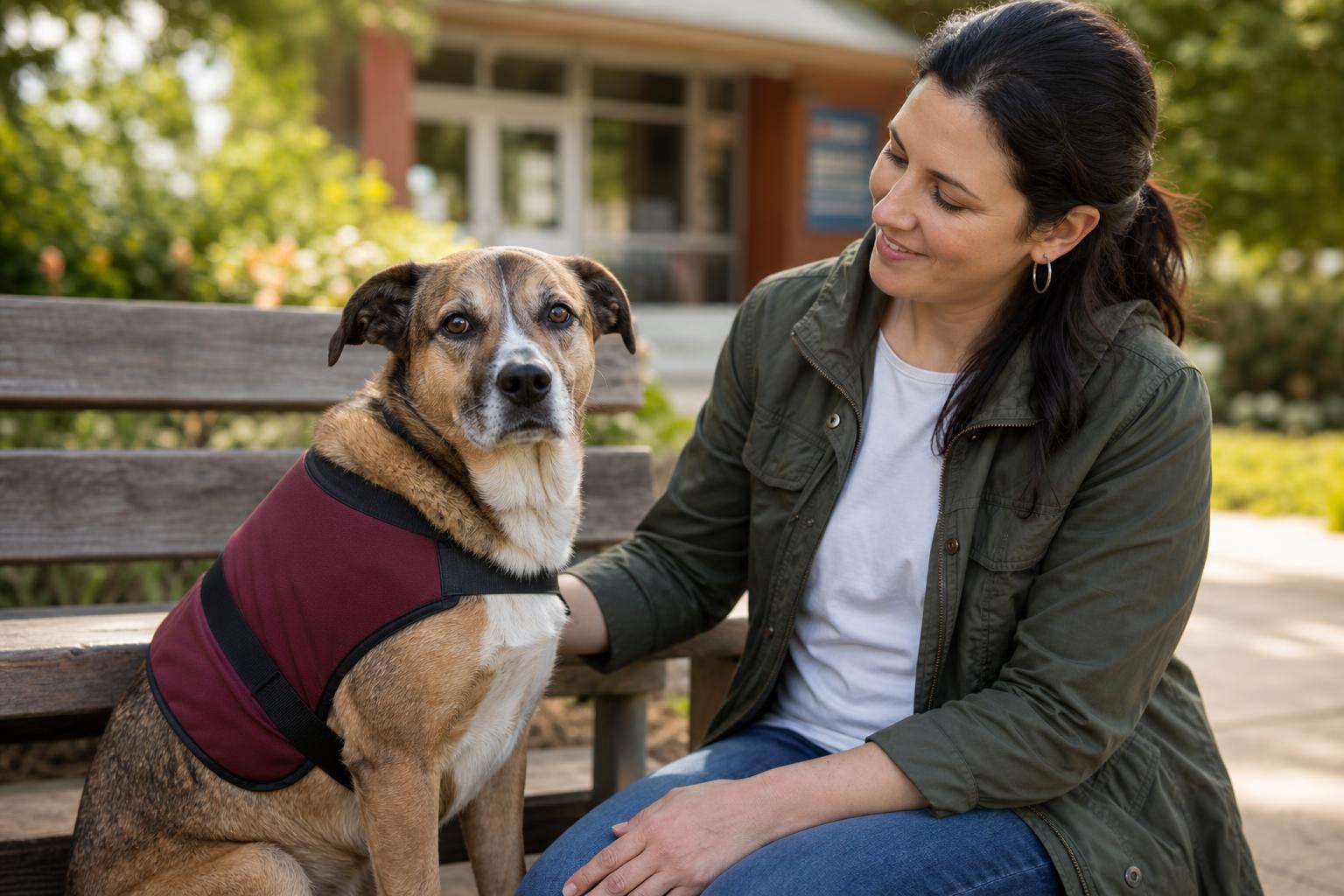
Absolutely they can. Many do, and they do it well. The key is not the label rescue. The key is temperament, health, training, patience, and a handler who respects the dog as an individual. Some rescue dogs are wonderfully suited to therapy work because they are gentle, adaptable, and drawn to people. Others are better suited to life as loyal companion dogs, where their gift is given to one family instead of a wider circle.
If you are considering a rescue dog for therapy work, go in with clear eyes and an open heart. Let the dog settle. Build the basics. Learn what steadies that dog and what unsettles it. Work with experienced trainers. Test the dog’s comfort honestly. If the pieces come together, you may end up with a therapy dog whose presence means the world to people in pain, grief, loneliness, or recovery.
Sometimes the ones who were once overlooked become the very ones who help others feel seen.