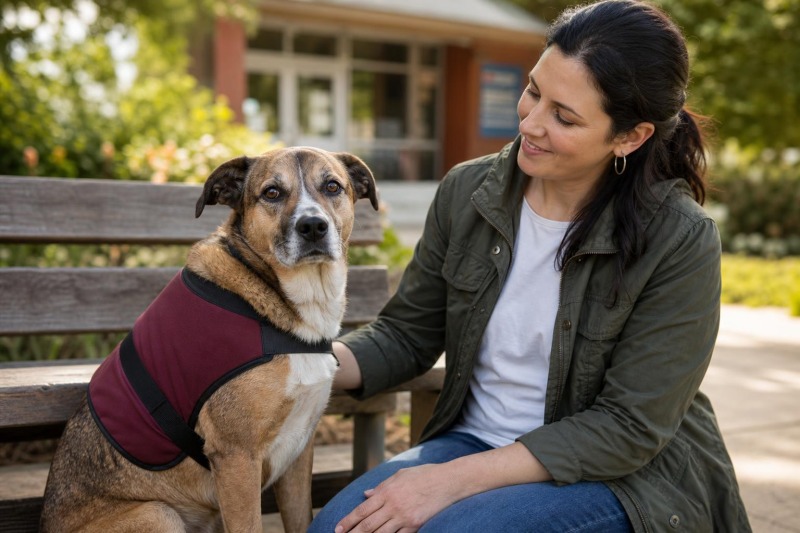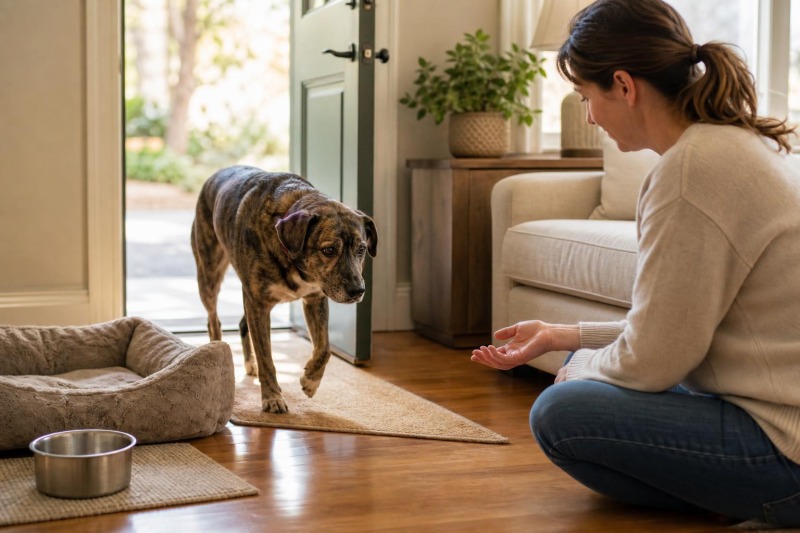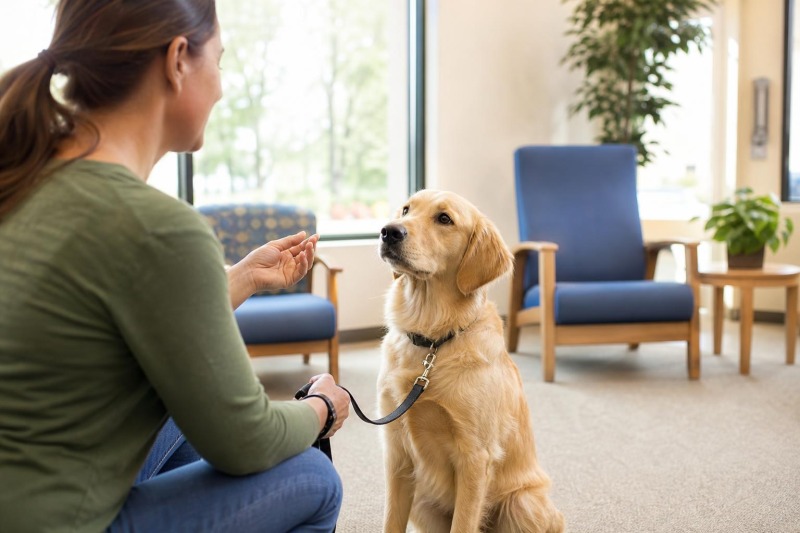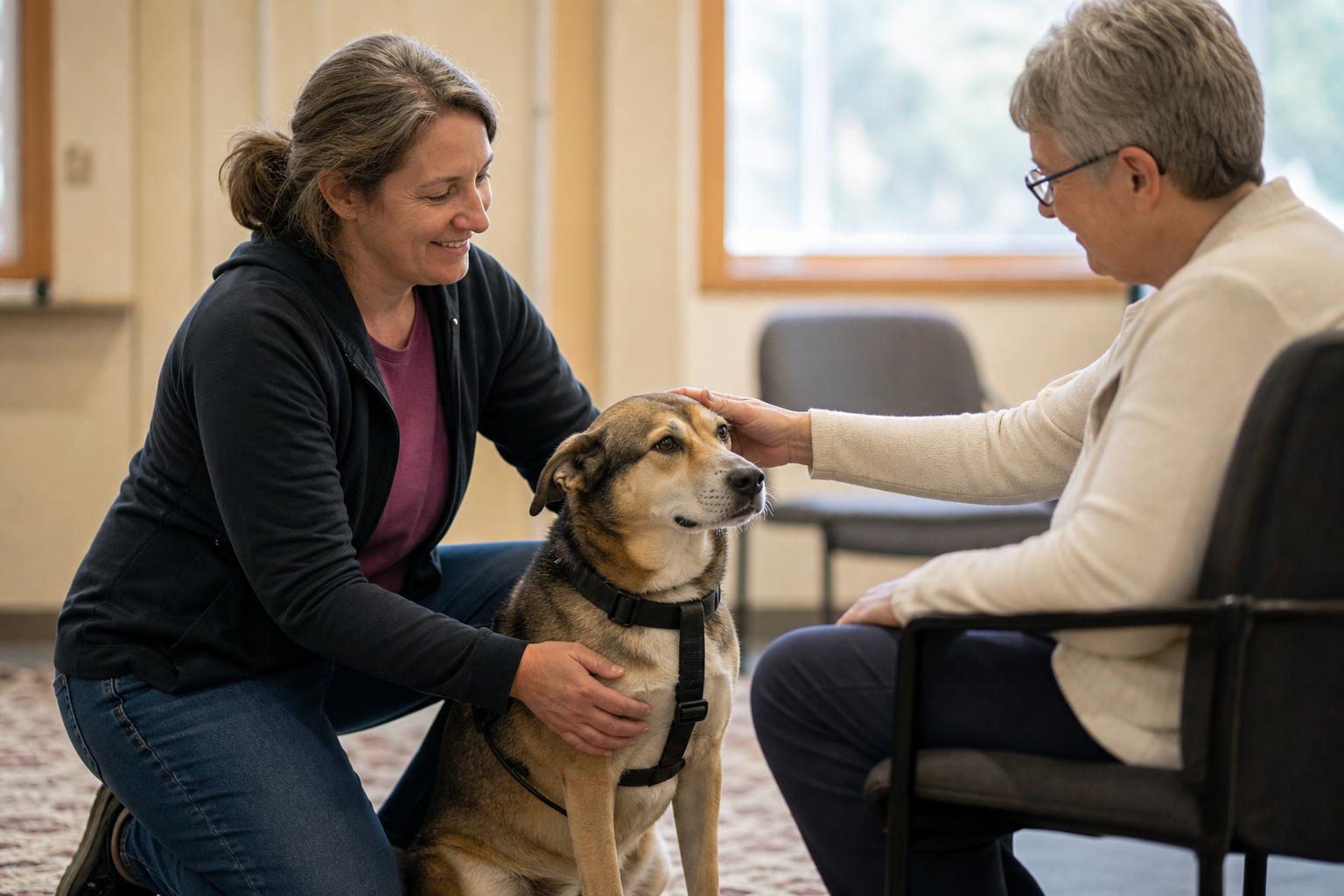
A newly adopted dog needs time for its health and everyday behavior to become understood before therapy work is considered. Start with routine, observation, and low-pressure training.
Therapy work asks a dog to do something remarkable. The dog must stay calm around strangers, handle odd sounds and movements, welcome touch, and move through unfamiliar places without coming undone. That is a tall order for any dog. For a rescue dog, especially one with an unknown past, it takes even more patience and good judgment. Still, some rescue dogs are built for it. They have the right heart, the right steadiness, and the kind of resilience that can turn old hardship into a gentle gift for others.
If you are interested in therapy dogs, service dogs, or companion dogs, it helps to understand one important distinction from the start. A therapy dog offers comfort to many people in places like hospitals, schools, nursing homes, and counseling offices. A service dog, on the other hand, is trained to perform specific tasks for one person with a disability. A companion dog may never enter formal therapy settings, but can still bring daily emotional support and connection at home. Knowing where your rescue dog truly fits is part of being a responsible handler.
Start with the Dog in Front of You
One mistake people make is falling in love with the idea of therapy work before they honestly study the dog. You bring home a rescue, see a soft side emerge, and imagine that dog brightening the day of a child or comforting an older man in rehab. It is a fine hope, but hope is not the same as suitability.
Good therapy dogs tend to share a few traits. They recover quickly from surprises. They show social interest without frantic excitement. They tolerate handling all over the body. They do not guard food, toys, space, or their person. They can settle. That last one matters more than people think. A dog that cannot relax on cue will struggle mightily in therapy settings where calm is the whole trade.
With a rescue dog, the first order of business is observation. Watch how the dog reacts to visitors, noise outside the house, children, men with hats, walkers, wheelchairs, slick floors, loud doors, and sudden movement. Do not stack pressure on top of pressure. Let the dog reveal itself over time. Some dogs bloom in three weeks. Others take months before you see their true nature.
Temperament Matters More Than Sympathy
A dog can be deeply loved, wonderfully improved, and still not be a fit for public emotional work. Fearful dogs, dogs with a bite history, dogs that shut down under stress, or dogs that become overstimulated by strangers are often better suited as beloved companion dogs. There is no shame in that. In fact, placing a dog in the role it can handle with confidence is the kindest thing you can do.
If you have any doubts, bring in a qualified trainer or behavior professional who understands therapy dog standards. A clear-eyed evaluation early on can save everybody heartache later, especially the dog.
Build Trust Before You Build Skills
The same truth holds here. Before a rescue dog can comfort others, it needs to feel safe with you. That means routines that are predictable, handling that is fair, and expectations that do not swing wildly from day to day.
Feed on schedule. Walk on schedule. Rest on schedule. Keep your tone steady. Reward the behaviors you want instead of constantly correcting what you do not. Many rescue dogs come from chaos. Structure feels like relief to them once they understand it is dependable.
Touch work is important too. Therapy dogs must accept hands from many kinds of people, but first they need to trust your hands. Practice gentle brushing, checking ears, touching paws, and brief body handling paired with praise and food rewards. Keep sessions short and successful. You are not just teaching tolerance. You are teaching the dog that calm cooperation leads to safety and good things.
Let the Past Inform You, Not Trap You
Some rescue dogs have obvious baggage. Others carry it in ways that only show up later. A rattling cart, the smell of antiseptic, a raised voice in a hallway, any of these can stir something old. That does not mean the dog is broken. It means you need to proceed like a thoughtful handler, paying attention to patterns. Keep notes if needed. If the dog startles at metal clanging or shrinks from direct eye contact, that information helps you train smarter.
They shape confidence in layers. They give distance, offer rewards, and let the dog process the world at a manageable pace. That kind of patience is worth more than any fancy trick.
Obedience Is the Foundation of Therapy Dog Training
A rescue dog preparing for therapy work does not need circus skills, but it does need reliable basics. Sit, down, stay, come, loose-leash walking, leave it, and settling quietly on a mat are the working tools of a therapy team. In public settings, these commands are not decoration. They are how you keep the dog steady, safe, and polite.
Dogs learn best when they understand exactly what earns success. For a rescue dog, that clarity is doubly valuable because it cuts through uncertainty. Mark the right behavior, reward it, and repeat until the response is dependable even in mildly distracting places. Then build difficulty a little at a time.
One of the finest skills you can teach is a calm greeting. Plenty of friendly dogs fail therapy evaluations because they lean too hard, jump, lick excessively, or surge with excitement when someone approaches. A therapy dog should be inviting but mannerly, the canine equivalent of a firm handshake and kind eyes.
Practice the Art of Doing Nothing
This may sound simple, but it is one of the hardest lessons for many dogs. Therapy work often involves lying quietly while people talk, read, cry, recover, or remember. Teach your rescue dog to settle beside a chair, under a table, or on a portable mat. Reward calm breathing, soft eyes, and stillness. The dog should learn that not every environment calls for action. Sometimes the job is simply to be present.
Socialization for Therapy Work Must Be Thoughtful
When people hear socialization, they often think it means exposing the dog to everything all at once. That is not socialization. That is flooding, and it can set a rescue dog back badly. Real socialization is controlled exposure with enough distance and support for the dog to remain composed.
Take your dog to parking lots, quiet parks, garden centers, pet-friendly stores, and outdoor cafes before you ever consider a hospital or nursing home. Let the dog hear carts rattling, see canes and hats, notice children moving fast, and observe life without being thrust into the middle of it. Reward attention to you. Reward calm observation. Leave while the dog is still successful.
As confidence grows, add more challenging environments. Slick floors deserve practice. Automatic doors deserve practice. Elevators, if your future therapy work may involve them, deserve careful practice too. The goal is not to create a dog that ignores the world entirely. The goal is to create a dog that can notice the world without being ruled by it.
Watch for Stress Signals
Good handlers do not wait for a meltdown. They read the early signs. Lip licking, yawning, pinned ears, whale eye, panting when it is not hot, a tucked tail, refusal of treats, sudden sniffing, or leaning away from people can all indicate discomfort. In therapy work, subtle stress matters. If your rescue dog shows these signs regularly in public, take that information seriously. Back up, lower the difficulty, and rebuild.
Health, Grooming, and Certification Readiness
No dog should enter therapy settings without solid veterinary care. Your dog needs to be healthy, clean, parasite-free, and physically comfortable. Sore hips, itchy skin, ear pain, or dental pain can change behavior fast, and a therapy dog must be safe to handle. Grooming is not just about looking nice either. It helps the dog become accustomed to being touched and keeps visits pleasant for the people you serve.
Once your rescue dog is emotionally ready and obedient in varied environments, look into therapy dog classes or organizations that provide testing and registration. Standards vary, but most evaluations look for friendly demeanor, control around distractions, acceptance of petting, polite leash manners, and the ability to remain composed around medical equipment or unusual situations. Train for the real thing, not just the test. A certificate matters, but the dog’s genuine comfort matters more.
Know When the Dog Is Ready, and When the Dog Is Not
A rescue dog ready for therapy work moves with confidence, accepts attention without strain, recovers quickly from surprise, and checks in with the handler as a steady habit. There is softness in that dog, but also structure. A calm center. You can feel it.
If your dog struggles, that does not mean the journey failed. Some rescue dogs make beautiful companion dogs and never need the burden of public work. Others take a long while and surprise you later. The finest handlers are not the ones who force an outcome. They are the ones who honor the dog’s nature and let that guide the path.
Preparing a rescue dog for therapy work is, in many ways, an act of stewardship. You take a dog with an unfinished story and offer it a chance to write a new chapter. Done right, the work is slow, respectful, and deeply human. And when that dog finally rests its head against someone who needed comfort that day, you will know every careful step was worth it.