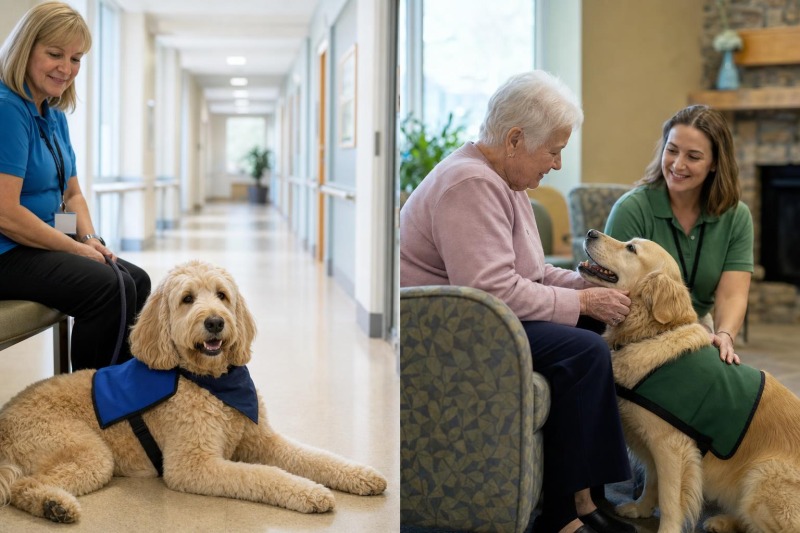
Labradors appear in many therapy-dog programs, but a sociable reputation is only a starting point. Assess the dog's health, comfort, training, and behavior in the actual visiting environment.
Therapy work is not about tricks or titles alone. It is about a dog walking into a room full of tension, grief, loneliness, or uncertainty and bringing the temperature down without saying a word. In hospitals, schools, nursing homes, rehab centers, and counseling offices, that kind of presence matters. Labrador Retrievers often thrive in those settings because they combine a gentle nature with practical trainability. They usually like people, they tend to recover well from surprise, and they are biddable enough to learn the manners required in public spaces.
That does not mean every Lab is cut out for the job. Therapy work is about the individual dog as much as the breed. Still, Labrador Retrievers remain one of the strongest candidates for this kind of service to the community.
What Makes Labrador Retrievers Excellent Therapy Dogs?
The best therapy dogs have a few things in common. They are stable around strangers, comfortable being touched, forgiving of awkward handling, and confident in unfamiliar environments. Labrador Retrievers check many of those boxes naturally when they are well bred, well socialized, and properly trained. Their temperament is one reason they are so often seen in roles that require emotional steadiness.
A Lab that is suited for therapy work usually carries itself with an easy confidence. It does not crumble when a walker rattles nearby or when a child reaches out too fast. It notices, processes, and settles. That recovery matters. In therapy settings, dogs may encounter wheelchairs, IV poles, loud doors, sudden laughter, tears, unusual smells, and unpredictable movement. A Labrador with the right temperament can absorb all that and stay connected to its handler.
There is also the matter of physical style. Labs are sturdy without being intimidating to most people. Their expression is open. Their coat invites touch. Their size is substantial enough to provide comforting presence, yet manageable enough for most handlers to guide safely. A Labrador lying quietly beside a chair or resting its head on a knee can offer the kind of calm reassurance that words sometimes fail to provide.
The Labrador Temperament in Real-World Settings
It was not there to hunt cover or mark a fall, but the same good breeding that produces steadiness in the field can produce steadiness in public. The dog read the room, not by command alone, but by instinct sharpened through training and trust. That is what good Labrador Retriever therapy work looks like. It is composure married to purpose.
Patients and residents often respond to Labradors because the breed feels familiar. Many people have owned one, grown up with one, or known somebody whose old Lab was part of the family. That familiarity lowers barriers. A person who is withdrawn may reach out to a Labrador when they would turn away from conversation. In schools, children often find Labs approachable and reassuring. In elder care, the breed can stir memory and emotion in a way that feels deeply personal.
Therapy Dog Work vs. Service Dog Work
This is a distinction every owner needs to understand. A therapy dog provides comfort and emotional support to many people in shared settings by invitation. A service dog is individually trained to perform specific tasks for a person with a disability and is protected under different access laws. A Labrador can do either kind of work depending on training, temperament, and purpose, but the roles are not the same.
When discussing Labrador Retriever therapy work, we are talking about visits and programs where the dog and handler go together to support others. That may mean reading programs for children, hospital visitation, crisis response support, or visits in assisted living communities. Therapy dogs are not granted universal public access the way service dogs are. They work in approved environments with permission from the facility or organization.
How to Prepare a Labrador for Therapy Work
Good therapy work begins long before a certification test. It starts with foundation manners and clear communication. A Labrador that pulls hard on leash, jumps when excited, or loses focus around new people is not ready yet. The dog needs to be calm, responsive, and comfortable with being handled by strangers. Sit, down, stay, come, leave it, and loose-leash walking are not fancy skills, but they are the bones beneath everything else.
Socialization matters just as much as obedience. Slick floors, automatic doors, elevators, children moving unpredictably, medical equipment, hats, canes, wheelchairs, and unusual noises should all become ordinary through patient practice. A Labrador that learns early how to move through the world without fear has a much stronger chance of succeeding in therapy settings.
Training for Calm Contact and Patience
One thing many first-time handlers underestimate is the amount of stillness therapy work requires. Labs are friendly, and that friendliness can spill over into wiggling, licking, leaning too hard, or trying to greet everybody at once. Therapy dogs must learn that quiet connection is often more valuable than enthusiasm. That means rewarding calm greetings, teaching the dog to settle at your side, and practicing gentle interactions with different kinds of people.
Grooming and physical care are part of the job as well. A therapy Labrador should be clean, well brushed, and pleasant to touch. Nails need to stay trimmed, ears checked, and coat managed. In close-contact settings, details matter. A dog that sheds heavily onto bedding or has an odor can create issues in facilities that already have enough to manage. The more polished and dependable your dog is, the more welcome you and the dog will be.
Does Every Labrador Make a Good Therapy Dog?
No, and it is better to say that plainly than to force a dog into work it does not enjoy. Some Labs are too energetic, too sensitive, too easily startled, or simply not interested in prolonged interaction with strangers. There is no shame in that. A dog can be a wonderful companion without being a therapy dog. In fact, one of the marks of a good handler is knowing the difference.
Look for signs that the dog genuinely enjoys calm social contact. A suitable Labrador should be relaxed meeting new people, willing to be touched, and able to disengage from excitement when asked. It should recover quickly from odd sights and sounds. Most of all, it should not show stress through avoidance, trembling, tucked posture, lip licking, yawning, or frantic behavior in those settings. Therapy work should not drain the dog dry.
Breeding plays a role here. Responsible breeders who prioritize stable temperament give you better odds. Early socialization, health testing, and careful placement all matter.
Certification, Evaluation, and Ongoing Responsibility
Most therapy dog teams work through recognized therapy organizations that require evaluations, health records, and standards for behavior. Those evaluations typically assess obedience, handling, reaction to strangers, and the dog’s ability to remain composed in stimulating environments. Passing a test is important, but it is only the starting gate. Real therapy work requires consistency, humility, and good judgment from the handler every single visit.
Handlers need to read their dog honestly. Even an experienced Labrador can have an off day. Maybe the facility is louder than usual. Maybe the dog is tired. Maybe the environment is asking too much. A good therapy team knows when to shorten a visit, redirect, or head home. The dog’s welfare comes first. That principle should guide every decision.
The Human Side of Labrador Retriever Therapy Work
The reason this work matters is simple: people need comfort they can trust. Those moments are not small. They are the quiet victories that keep therapy work meaningful.
Labrador Retrievers are especially effective in these moments because they bring both warmth and dependability. They are not there to dominate the room. They are there to anchor it. A good Lab does not force interaction. It offers presence, and often that is enough. For people living with stress, loss, illness, or isolation, that presence can become the best part of the day.
Is a Labrador Retriever Right for Therapy Work in Your Life?
If you are considering this path, be honest about both the dog and yourself. Therapy work is not just having a nice dog and enjoying attention. It takes training, scheduling, patience, travel, grooming, and emotional maturity. Your Labrador must be suited to it, and you must be willing to represent the dog well in public. When those pieces fit, it can be one of the most rewarding partnerships you will ever know.
For families searching for a versatile breed, Labrador Retrievers remain a top choice because they can fill many roles with grace. They may be beloved companions at home, trusted support in structured therapy settings, and in some cases even service dogs when specially trained for task work. That kind of versatility is rare, and it is one reason the Labrador has held its place in the hearts of dog people for generations.
Labrador Retriever therapy work is not about perfection. It is about steadiness, kindness, and a willing spirit shaped by training. When you find a Lab with those qualities, you have more than a pleasant pet. You have a dog that can walk into hard places and bring something good with it.