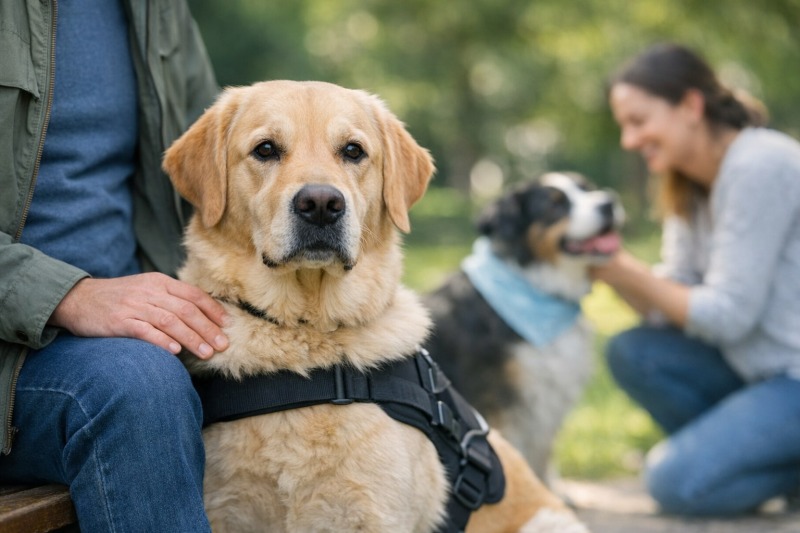
Facility dogs and visiting therapy-dog teams work under different arrangements. Ask who handles the dog, which tasks or activities are involved, and how training, oversight, and welfare are managed.
That matters whether you are simply learning about therapy dogs, considering ownership, or trying to decide what kind of working role might suit your dog. Both kinds of dogs can make a tremendous impact. Dogs have a way of lowering the noise in a room. Still, the kind of therapy work they do depends on structure, purpose, and consistency.
What Is a Visiting Therapy Dog?
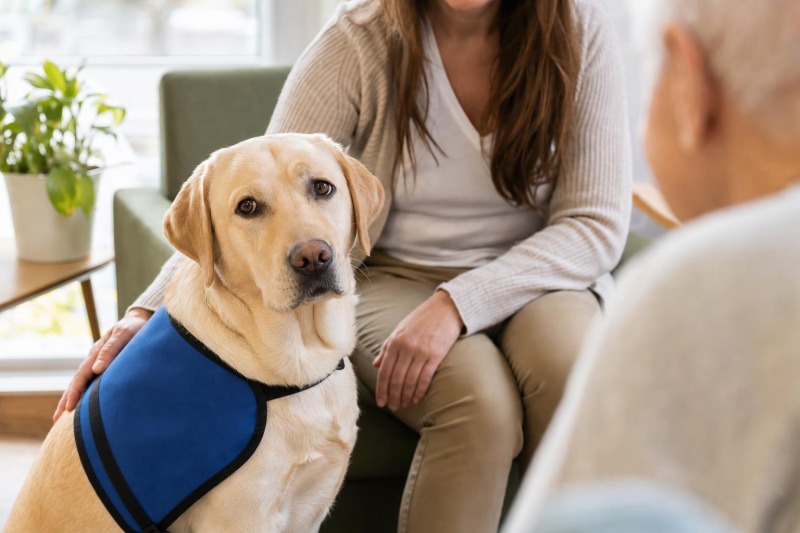
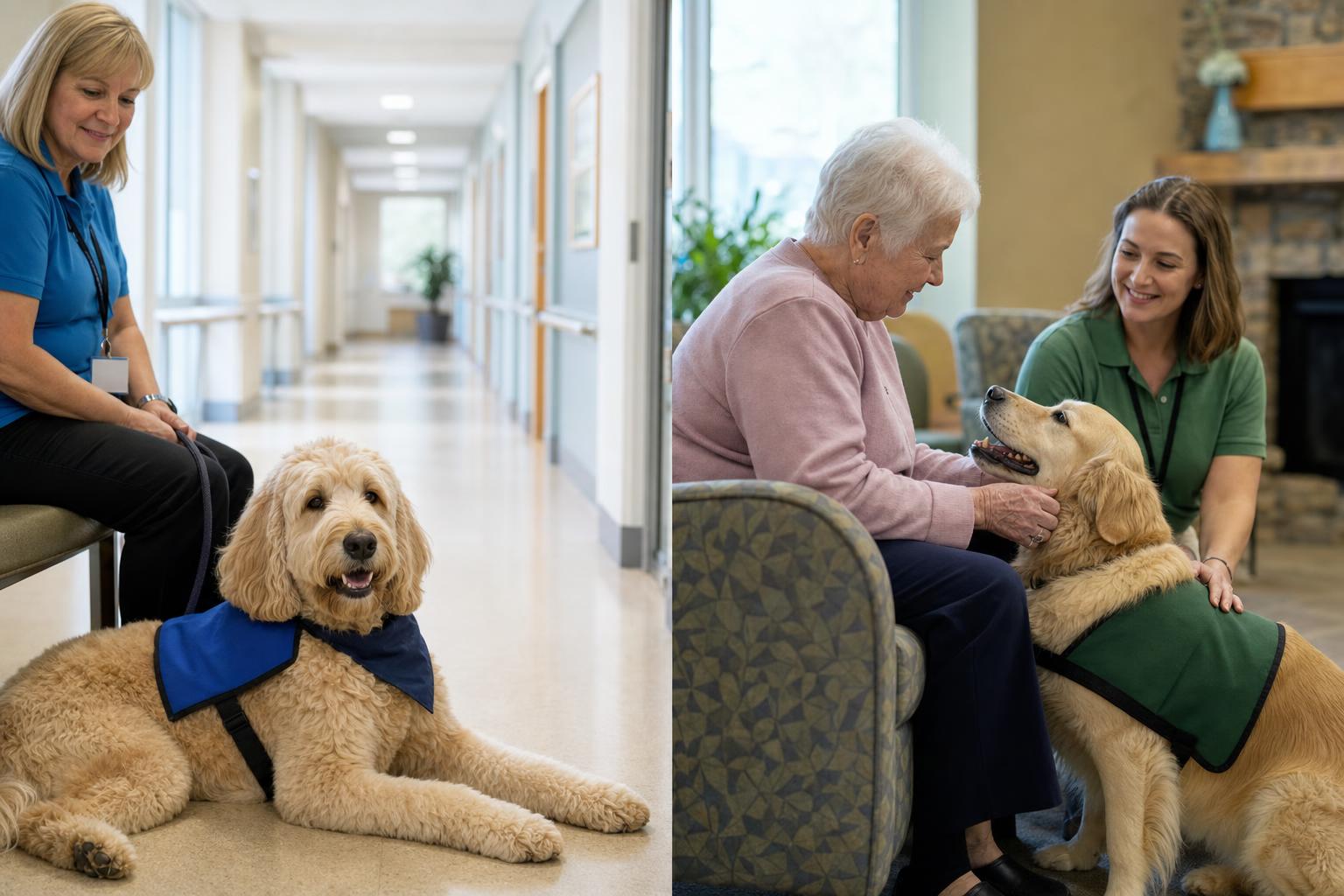
A visiting therapy dog is usually part of a volunteer dog-and-handler team that goes into places like hospitals, nursing homes, rehabilitation centers, schools, libraries, or community programs for scheduled visits. The dog does not belong to the facility itself. Instead, the handler brings the dog in for set periods, often through an organization that evaluates the team and helps coordinate visits.
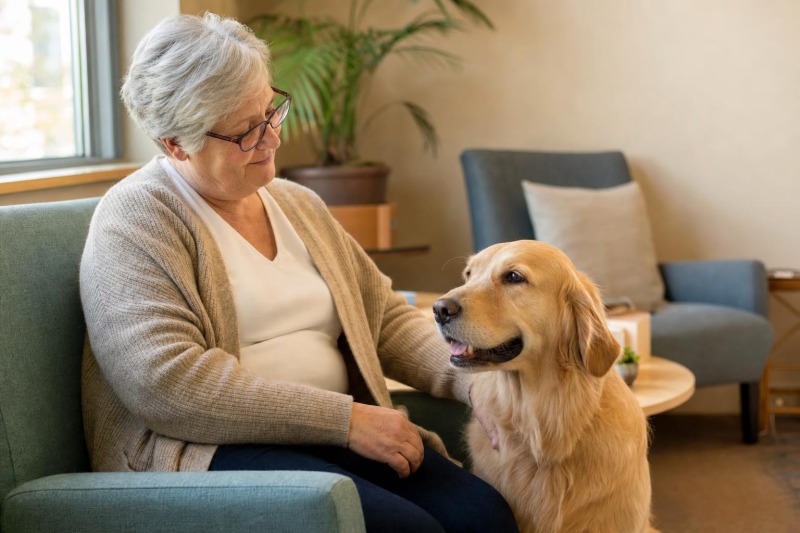
This kind of work is what most people picture when they hear the words therapy dog. The dog greets residents in a senior living center, sits with a child reading aloud, rests its head near a patient in recovery, or simply offers a warm, friendly presence in a setting that can feel clinical or lonely. These visits may happen weekly, monthly, or on a special-event basis. The key point is that the dog is coming into the facility as a guest rather than serving as part of the staff.
Visiting therapy dogs need excellent manners, a friendly nature, and the ability to stay calm in changing environments. Every visit can bring new sounds, new wheelchairs, new smells, new people, and new energy. A dog doing this work must be adaptable and social without becoming pushy. This takes a particular kind of steadiness. A dog can be sweet at home and still not enjoy a crowded hallway, a dropped tray, or a stranger hugging too hard. Good visiting therapy dogs have a soft heart, but they also have the nerve to stay composed.
How Visiting Therapy Dogs Typically Serve
Because they are not assigned full-time to one site, visiting therapy dogs often serve a broad variety of people. One week they may be in a memory care unit, the next in a school reading program, and after that at a college de-stress event during exams. This flexibility is part of their value. They can bring comfort to many corners of the community without being tied to a single institution.
That said, their role is usually limited to the duration and scope of the visit. They are there to comfort, encourage interaction, and brighten the day, but they are not typically embedded in treatment plans the way a facility dog may be. Their work is real and valuable, just different in structure.
What Is a Facility Therapy Dog?
A facility therapy dog, sometimes simply called a facility dog depending on the organization and training path, works in one primary location and is integrated into that setting on an ongoing basis. This dog may work in a school, courthouse, counseling center, hospital unit, rehabilitation clinic, or mental health practice. Unlike a visiting therapy dog, a facility therapy dog is often handled by a professional who works there, such as a counselor, teacher, occupational therapist, psychologist, nurse, or victim advocate.
The dog becomes part of the daily or near-daily operation of that environment. Instead of dropping in for a pleasant visit, the dog may be present during therapy sessions, classroom support, patient care routines, or emotional regulation work. In many cases, the dog is used intentionally to support specific goals. A child may speak more freely in counseling with the dog present. A student may regulate anxiety by brushing or sitting with the dog. A trauma survivor may feel grounded enough to participate in difficult conversation because the dog offers a nonjudgmental anchor.
One is welcome company. The other becomes part of your way of life. Facility therapy dogs are woven into the rhythm of the place they serve.
How Facility Therapy Dogs Typically Serve
Because they work consistently in one setting, facility therapy dogs often have more predictable routines and deeper relationships with the people they help. They may learn the building, the schedule, the staff, and even the emotional tone of different rooms. They are not just charming visitors. They are expected to function reliably as part of a broader support system.
This usually requires not only a stable temperament but also more role-specific training. A facility therapy dog may need to lie quietly through long meetings, navigate tight indoor spaces every day, settle beside medical equipment, ignore frequent distractions, and respond smoothly to the handler in professional contexts. The dog must be comfortable with repetition and consistency, because the job is not occasional. It is a lifestyle.
The Biggest Differences Between Facility Therapy Dogs and Visiting Therapy Dogs
The clearest difference is where and how they work. Visiting therapy dogs travel to different locations for scheduled interactions. Facility therapy dogs are anchored to one primary location and serve there regularly. That difference shapes almost everything else, from training expectations to handler responsibilities.
The handler relationship is another major distinction. A visiting therapy dog is often paired with a volunteer handler whose main role is to bring the dog for visits and supervise interactions. A facility therapy dog is commonly handled by someone whose primary profession is already rooted in the facility, and the dog supports that professional role. In other words, one team visits a workplace, while the other team works there.
There is also a difference in depth of integration. Visiting therapy dogs usually offer comfort, social engagement, and morale support during designated visit times. Facility therapy dogs may be incorporated into educational plans, therapeutic settings, trauma support, or clinical routines depending on the institution and the dog's preparation.
Neither role is automatically better. They simply serve different needs. One reaches broadly across a community. The other works deeply within a single environment.
Temperament Matters More Than Title
If there is one lesson every serious dog person learns, it is that labels do not do the work, dogs do. A dog may have the right breed, the right size, and the prettiest gear in the county, but if that dog startles easily, tires of strangers, or struggles to settle, therapy work may not be the right fit. The best therapy dogs, whether visiting or facility based, tend to share a handful of qualities. They are calm without being dull, social without being overbearing, confident without being sharp, and responsive without needing constant correction.
There is no shame in that. Not every fine dog is built for every fine job. A good handler respects the dog in front of them rather than forcing a role that does not fit. That is especially important in therapy work, where the dog is expected to be emotionally steady around vulnerable people.
Training, Evaluation, and Access
One point that confuses a lot of people is public access. Therapy dogs, whether visiting or facility based, are not the same as service dogs. A service dog is trained to perform tasks for a person with a disability and has specific legal protections. Therapy dogs generally do not receive the same broad public access rights. Their access is usually based on invitation, facility policy, insurance requirements, and organizational approval.
Visiting therapy dogs often go through temperament testing or team evaluations through recognized therapy dog organizations. Facility therapy dogs may go through similar evaluation, but many also need additional preparation tied to the type of work they will do and the standards of the institution they serve. In some cases, the dog may come from a program that specifically develops dogs for facility placement.
The practical takeaway is simple: do not assume a friendly dog can automatically enter hospitals, schools, or clinics because you call it a therapy dog. Real therapy work requires structure, permission, and accountability.
Which Role Is Better for a Dog and Handler Team?
That depends on the dog, the handler, and the goal. If you are a community-minded owner with a stable, affectionate dog and you want to volunteer on a scheduled basis, visiting therapy work may be the best fit. It can be deeply rewarding without requiring the dog to function every day in one professional setting.
If you are a counselor, educator, therapist, advocate, or healthcare professional who wants a dog integrated into your workplace, a facility therapy dog may make more sense. That path usually requires more planning, more institutional support, and a dog with the stamina and consistency for ongoing duty.
Some dogs shine in short, upbeat social visits and fade if asked to hold that composure all day. Others thrive when they know the people, the building, and the job. A good match is rarely flashy. It feels natural, steady, and sustainable.
Both facility therapy dogs and visiting therapy dogs offer something this world can always use more of: calm presence, honest connection, and comfort without pretense. The difference lies in how that comfort is delivered. Visiting therapy dogs bring relief through scheduled outreach across many settings. Facility therapy dogs provide steady support within one established environment.
When you understand that distinction, you can make better choices for your dog, your goals, and the people you hope to serve. Good therapy work is not about putting a vest on a pet and hoping for the best. It is about matching the right dog to the right task with respect for training, temperament, and the human needs at hand. Like choosing the right dog for the right field, the wise decision comes from patience, honest assessment, and a clear eye for what the work really demands.