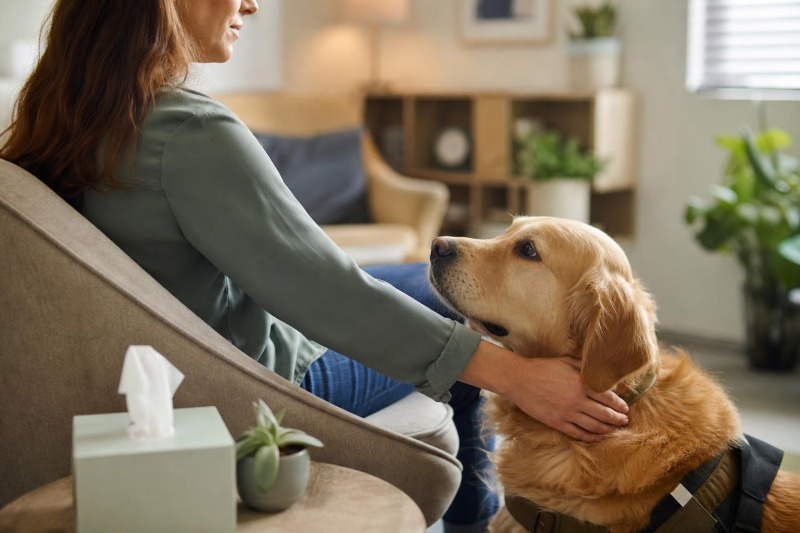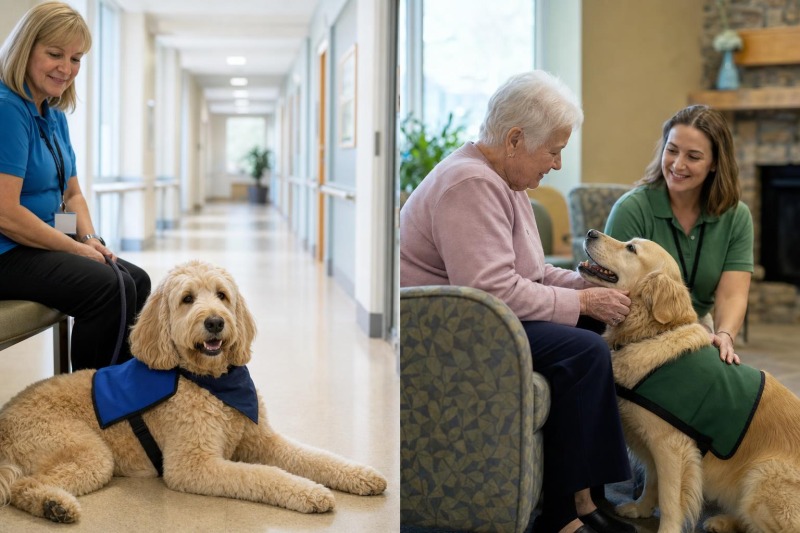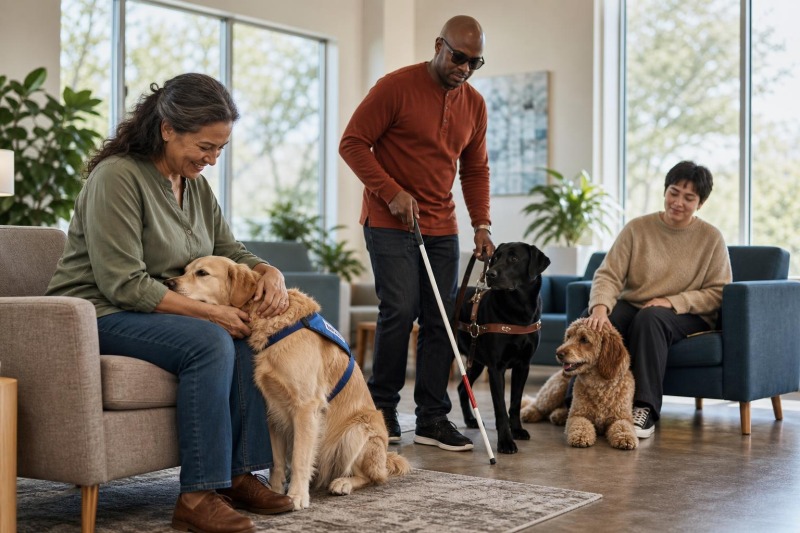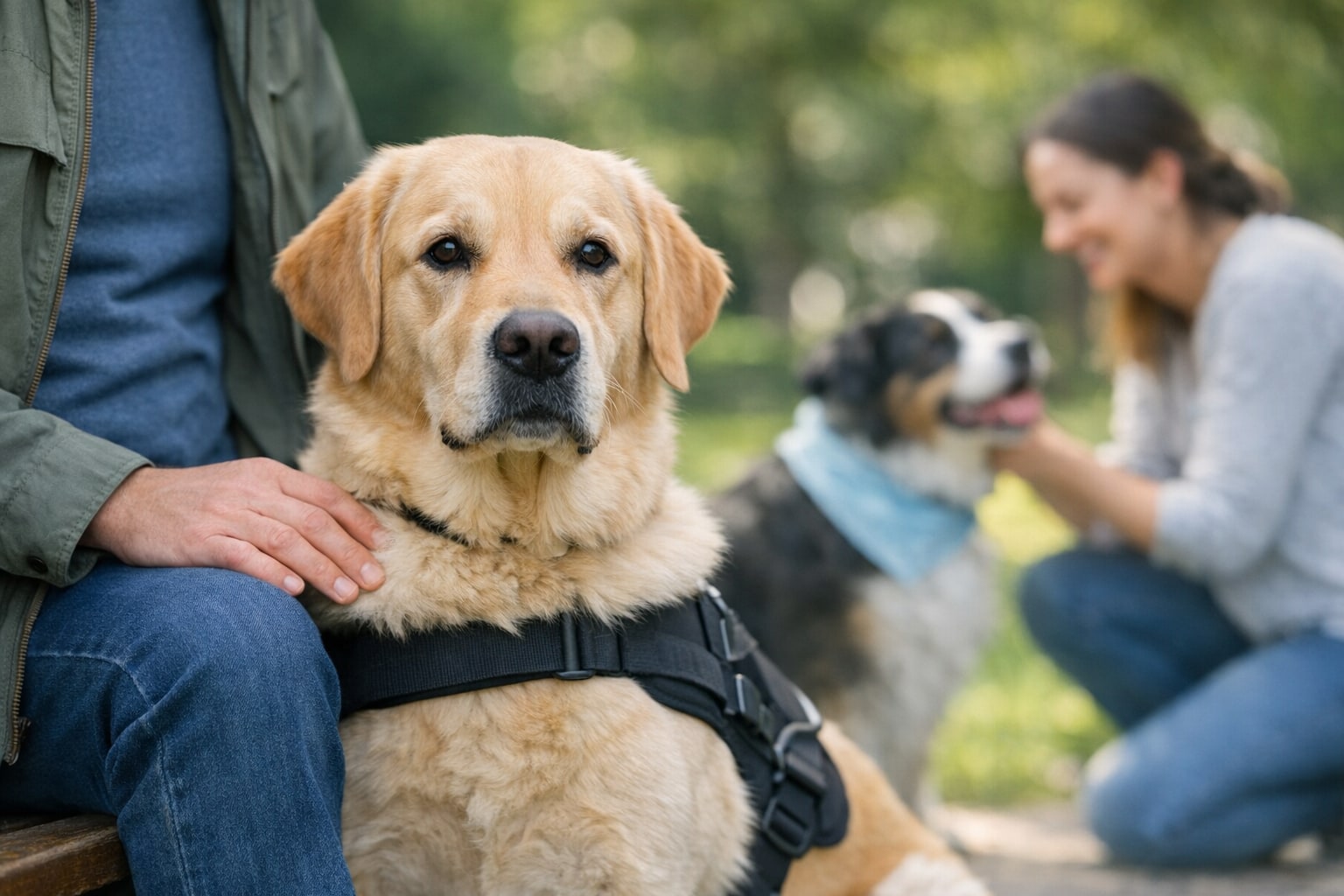
PTSD service dogs and visiting therapy dogs have different jobs. One is trained for an individual's disability-related tasks; the other participates with a handler in an organized visiting setting.
A dog that has been trained to shoulder a serious job carries that responsibility every day, whether the weather is fair or foul. For people living with post-traumatic stress disorder, the right dog can help create breathing room in a life that often feels crowded by triggers, fear, hypervigilance, or panic. Still, not every comforting dog is a service dog, and not every service dog is meant for broad emotional outreach. Understanding where the line is drawn helps protect handlers, dogs, and the public alike.
What Is a PTSD Service Dog?
A PTSD service dog is a specially trained service animal that performs specific tasks for a person with a psychiatric disability, including post-traumatic stress disorder. That task-based training is the heart of the matter. This is not just a calm dog that makes someone feel better by being nearby. A true PTSD service dog is trained to take action when symptoms show up.
That action can look different depending on the handler. One dog may interrupt escalating anxiety by nudging, pawing, or leaning into the handler before a panic spiral takes hold. Another may create space in crowded places by standing behind or in front of the handler. Some are trained to wake a person from nightmares, guide them to an exit during distress, retrieve medication, or conduct a room check so the handler feels safe enough to enter. Those tasks are not casual tricks. They are practical, repeatable behaviors tied directly to a disability.
There is also a legal side to this. Under the Americans with Disabilities Act in the United States, a service dog is allowed public access when it is trained to perform tasks for a person with a disability. That means a PTSD service dog can typically accompany its handler into places where pets and most other dogs cannot go, such as restaurants, stores, and many public facilities. That right exists because the dog is functioning as an essential support tool, not because it is friendly or well loved.
The Work Behind the Vest
People sometimes see a calm dog in a vest and think the whole business starts and ends with gear. It does not. A reliable PTSD service dog is built through steady training, socialization, exposure work, obedience, and task proofing in real environments. The dog must learn how to ignore distractions, stay composed around noise and movement, and still respond cleanly when its handler needs help. That takes time, patience, and a dog with the right temperament from the start.
Not every good dog can do this work. Service work asks for resilience. It asks for steadiness. And it asks for a bond deep enough that the dog can read its person in moments when the rest of the world feels too loud.
What Is a Therapy Dog?
A therapy dog has a different mission entirely. These dogs are trained and temperament-tested to provide comfort and emotional support to many people, not just one handler with a disability. You will often find therapy dogs visiting hospitals, nursing homes, schools, counseling offices, rehabilitation centers, and disaster response settings. Their job is to bring calm, connection, and reassurance where it is needed.
A good therapy dog is social, gentle, and at ease with strangers. It may sit quietly while someone strokes its ears in a hospital room. It may rest its head in a grieving lap after a crisis. It may visit a school where children read aloud to build confidence. A sound therapy dog can soften a hard room faster than most people can. But comfort alone does not make that dog a service dog.
Therapy dogs do not have the same public access rights as service dogs. They are only allowed in facilities or locations that invite or permit them. Even if the dog is certified through a therapy dog organization, that does not grant broad legal access to stores, restaurants, airplanes, or public buildings in the same way a service dog may have.
Comfort for Many, Not Tasks for One
That is the simplest way to frame it. A therapy dog serves groups or communities through comfort and companionship. A PTSD service dog serves one disabled handler through trained tasks. Both roles matter. They are just not interchangeable.
Someone buys or adopts a sweet, affectionate dog and hopes that because it helps them feel calmer at home, it should qualify as a service dog in public. But the law is not built around affection. It is built around disability-related tasks. That distinction protects the integrity of working dogs and keeps expectations honest.
PTSD Service Dogs vs Therapy Dogs: The Biggest Differences
If you are trying to compare PTSD service dogs vs therapy dogs, the biggest differences come down to training, legal protection, and purpose. A PTSD service dog is trained to perform specific tasks that help its handler manage symptoms of PTSD. A therapy dog is trained to provide general comfort and emotional support to others in approved settings.
Another key difference is who benefits. A service dog works for one person. The dog becomes part of that person’s daily functioning. A therapy dog, by contrast, works as a visitor, bringing emotional uplift to whoever needs it in that moment. One is a disability accommodation. The other is a comfort-based outreach role.
There is also the matter of lifestyle. Living with a PTSD service dog means maintaining a high level of training, public manners, handler awareness, and ongoing care. It is a partnership with daily demands. A therapy dog team may have structured visits, volunteer commitments, and regular evaluations, but the dog is not generally expected to accompany the handler into every corner of public life.
Which Dog Is Right for Someone With PTSD?
That depends on the person, the severity of symptoms, and what kind of support is actually needed. If someone has diagnosed PTSD that substantially limits major life activities and they need a dog trained to perform specific tasks, a PTSD service dog may be the right path. If someone mainly benefits from comfort, companionship, and calm presence without needing disability-related tasks in public settings, another option may be more appropriate.
Sometimes what a person truly needs is a well-mannered companion dog at home. Sometimes they benefit from volunteering with a therapy dog or spending time around dogs in therapeutic settings. And sometimes, yes, they need a service dog that can interrupt panic, guide them out of overwhelm, and stand as a dependable partner in places that would otherwise feel impossible.
Look at the day as it really is, not as you wish it might be. Are you needing emotional comfort, or are you needing trained task assistance? Are you prepared for the workload of a service dog? Do you have medical support guiding the decision? Those questions matter more than any label stitched onto a vest.
Temperament Still Comes First
Whether you are talking about a therapy dog, service dog, or companion dog, temperament is the bedrock. A dog can be handsome as a new shotgun and smart as a whip, but if it startles easily, struggles with strangers, or cannot settle under pressure, it may not be suited for demanding work. The right dog is not just trainable. It is stable.
People do best when they stop chasing the romantic idea of a miracle dog and start looking for the practical traits that make real partnership possible. Confidence. Sound nerves. Biddability. Recovery from stress. A willingness to work close and steady. Those qualities are worth their weight in brass.
Misunderstandings That Cause Trouble
One of the biggest problems in this space is mislabeling. When a therapy dog is presented as a service dog, or when an emotional support animal is mistaken for either one, it creates confusion and sometimes public backlash against legitimate working teams. Businesses get wary. Handlers face more questions. Dogs that are not trained for public access end up in situations they cannot handle.
That is unfair to everyone involved, especially the people who truly rely on trained PTSD service dogs to navigate daily life. A service dog should not have to prove itself against the bad behavior of untrained dogs wearing online-bought vests. The way forward is plain dealing, proper training, and using the correct term for the correct role.
At the end of the trail, PTSD service dogs and therapy dogs are both meaningful, but they are built for different jobs. A PTSD service dog is a working partner trained to perform tasks that directly help a person with PTSD manage a disabling condition. A therapy dog is a calm, social animal that offers comfort and connection to many people in approved environments. Neither role is lesser. They are simply different tools for different needs.
If you are considering a dog for PTSD support, take your time. Learn the standards. Be honest about your needs. Seek reputable guidance. A good dog can change the shape of a hard life, but the right match is made with clear eyes and steady hands. That is as true in the dog world as it is anywhere else. And when you get it right, the bond between dog and person is not just helpful. It is something solid enough to lean on when the day gets rough.