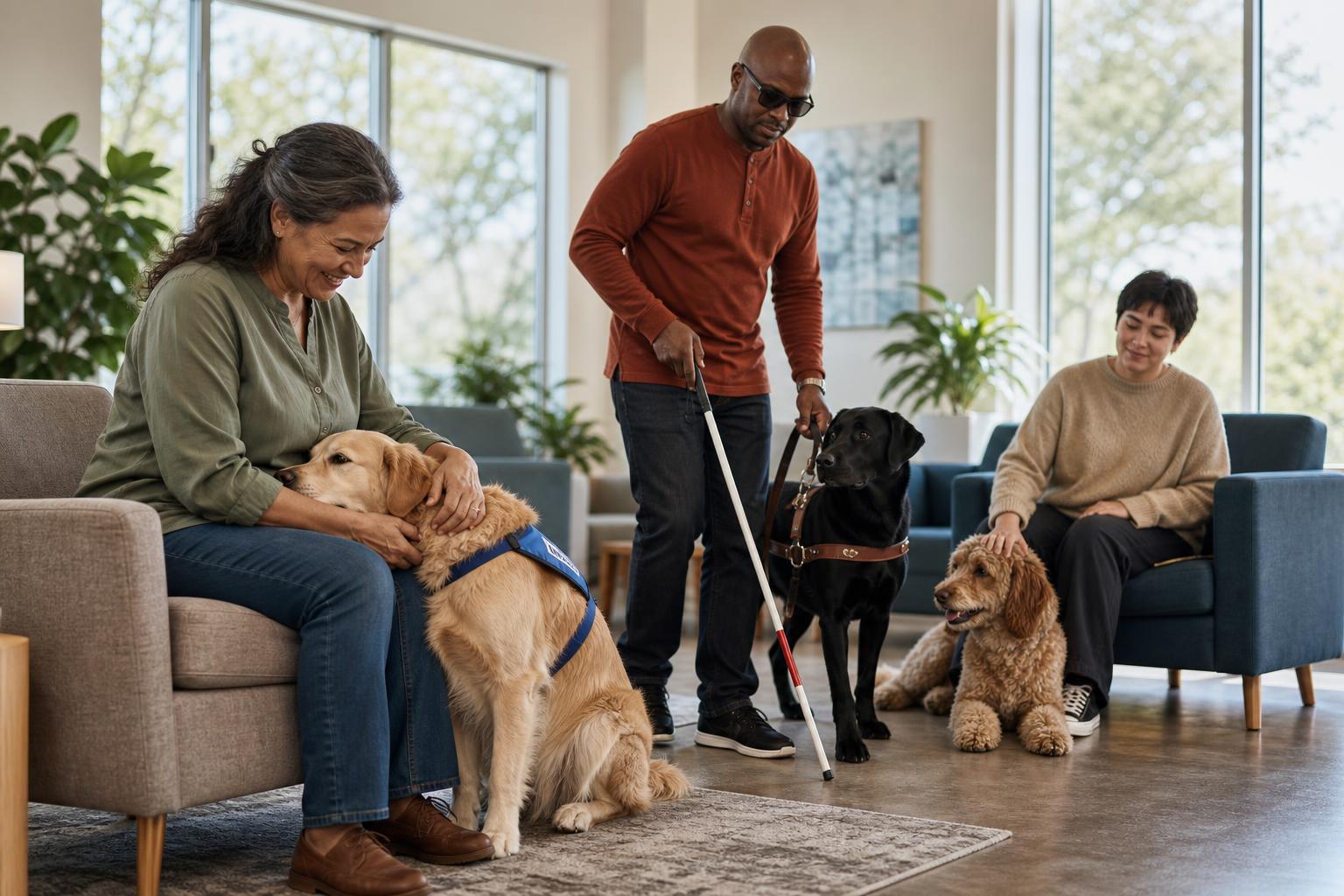
A service dog, a visiting therapy dog, and an emotional support dog can all matter deeply to people, but their roles differ. Start with what the dog does and which setting's rules apply.
If you are trying to figure out whether a therapy dog, service dog, or emotional support dog is right for you, it helps to start with plain talk. These dogs each provide comfort in their own way, but the job, the training, and the access they receive are not the same. Understanding those distinctions can save you frustration and help you choose the right dog for the right purpose.
Why These Terms Get Confused So Often
A lot of the confusion starts because all three types of dogs help people. On the surface, that sounds simple enough. A calm Labrador visiting a nursing home, a Golden Retriever guiding a veteran through a crowded airport, and a little mixed breed easing anxiety at home may all look like loving companion animals. But the law does not define them the same way, and a dog’s daily work can be worlds apart.
Dogs are honest creatures. They will tell you, if you pay attention, whether they were bred and trained for pressure, noise, crowds, and constant public expectations. Not every good dog is meant for every good task.
What Is a Service Dog?
A service dog is a specially trained dog that performs specific tasks for a person with a disability. That is the heart of it. The dog is not there just to be comforting, though comfort often comes with the relationship. The dog is there to do trained work directly connected to the handler’s disability.
That work may include guiding a person who is blind, alerting a person who is deaf, retrieving dropped items, opening doors, bracing for mobility support when appropriate, interrupting psychiatric episodes, or alerting to seizures or changes in blood sugar. A true service dog has a job to do, and it does that job with consistency under distraction.
Service Dog Training and Temperament
Training a service dog is no small undertaking. The dog must be steady in public, responsive to cues, neutral around strangers, and reliable in stressful environments. Think about a busy hospital hallway, a packed grocery store, or the clatter of carts, children, and automatic doors. A service dog cannot melt down, lunge, bark without reason, or lose focus every few minutes.
That kind of stability is part genetics, part early socialization, and part serious training. The best service dogs tend to be clear-headed, biddable, and resilient. They are not just obedient. They are trustworthy. There is a difference.
Legal Rights of Service Dogs
In the United States, service dogs are generally allowed to accompany their handlers into public places under the Americans with Disabilities Act. That includes businesses, restaurants, hotels, and many other spaces where pets are usually not allowed. Housing protections may also apply, and air travel rules have evolved in recent years, so owners should always check current policies before making plans.
What matters most is this: service dog access is tied to disability-related trained tasks, not to a vest, a certificate bought online, or a dog’s friendly nature.
What Is a Therapy Dog?
A therapy dog is trained and temperament-tested to provide comfort and emotional support to other people, usually in structured settings. These dogs visit hospitals, schools, nursing homes, rehabilitation centers, libraries, and crisis response areas. Their role is outward-facing. They are there to benefit groups of people or individuals beyond their owner.
It takes a particular kind of dog to walk into a room full of wheelchairs, medical equipment, strange smells, and anxious hands reaching out, then settle in like it was born for the work. That dog needs patience, confidence, and a gentle spirit that does not sour under pressure.
How Therapy Dogs Are Trained
Therapy dogs usually start as well-mannered companion dogs. From there, they are trained for polite public behavior, calm greetings, and safe interaction with all sorts of people. Many therapy organizations require evaluations or certifications, along with proof that the dog can remain composed around noise, sudden movements, and unfamiliar touch.
Unlike service dogs, therapy dogs do not perform disability-specific tasks for one handler. Their work is broader and often volunteer-based. They bring comfort, lower stress, and offer a reassuring presence in difficult places.
Do Therapy Dogs Have Public Access Rights?
That is where many people get tripped up. Therapy dogs do not have the same public access rights as service dogs. They are allowed into facilities by invitation or arrangement, not by default. A therapy dog may be welcomed into a hospital program or school reading session, but that does not mean the same dog can go everywhere a service dog can go.
That distinction matters for both safety and fairness. A dog visiting on a scheduled therapy call is doing valuable work, but it is not operating under the same legal framework.
What Is an Emotional Support Dog?
An emotional support dog provides comfort simply through companionship. These dogs help people dealing with emotional or psychological challenges, and their presence can be deeply meaningful. Anyone who has sat on a porch with a good dog after a rough season knows that a dog can steady your breathing and quiet a troubled mind without making a sound.
Still, an emotional support dog is not a service dog unless it has been individually trained to perform specific disability-related tasks. Emotional support alone, however real and important, is not the same thing under the law.
Training and Legal Status of Emotional Support Dogs
An emotional support dog does not require specialized task training in the way a service dog does. Of course, every dog should have sound manners, obedience, and safe behavior. But the defining role of an emotional support dog is companionship for its owner, not trained public work or structured visitation for others.
Housing rules may offer some protection in certain situations, though regulations can change and documentation requirements can vary. Public access rights are much more limited than those of service dogs. In most cases, emotional support dogs are treated like pets in public spaces unless a business chooses to allow them.
Therapy Dogs vs Service Dogs vs Emotional Support Dogs: The Real Difference
If you strip the jargon away, the cleanest way to understand it is by asking who the dog serves and how. A service dog works for one person with a disability and performs trained tasks. A therapy dog works with a handler to bring comfort to other people in approved settings. An emotional support dog offers comfort to its owner through companionship alone.
That may sound straightforward, but the practical difference is enormous. One dog needs elite reliability in public and task-specific training. Another needs social steadiness and a welcoming temperament for visits. The third may simply need to be a stable, devoted companion at home. None of those roles is lesser. They are just different jobs requiring different strengths.
Which Dog Is Right for Which Role?
This is where experience with dogs matters. Not every sweet dog can handle therapy work. Not every obedient dog can be a service dog. Not every high-drive, sharp-minded dog makes a good emotional support animal for a quiet household. Matching the dog to the role is as important as matching the role to the person.
Can it settle? Can it recover from surprise? Does it seek guidance from the handler? Is it suspicious, clingy, overexcited, or easily rattled? A dog that startles hard at every new sound may struggle in a hospital. A dog that loves everyone more than its handler may have trouble with precise service work. A dog with too much engine and not enough off-switch can wear out a family looking for calm support at home.
Breed can influence these traits, though individuals always matter more than stereotypes. Retrievers are often favored for service and therapy work because they tend to be biddable, social, and adaptable. Some mixed breeds do beautifully as emotional support dogs and therapy dogs. The key is honest evaluation, not wishful thinking.
A Vest Does Not Make a Dog a Service Dog
This one needs saying plain. Gear does not grant status. A vest may help identify a working dog, but it does not replace training, temperament, or legal criteria.
Comfort Alone Is Not Task Training
A dog that calms you by being near you may be incredibly important in your life, but that alone does not make it a service dog. Service work requires trained actions tied to a disability.
Good Dogs Can Still Be Wrong for Public Work
Some dogs are wonderful at home and poor candidates for crowded public settings. That is not failure. It is simply the truth of the dog in front of you.
Choosing the Best Path for You and Your Dog
If you are living with a disability and need a dog to perform tasks that help you function safely and independently, a service dog may be the right path. If you have a friendly, stable dog and want to volunteer in hospitals or schools, therapy work could be a fine fit. If your dog helps you through the hard miles of life by offering steady companionship at home, emotional support may be exactly the role it already fills.
The wise move is to be realistic. Start with the dog’s temperament, your actual needs, and the standards required for the job. Talk to reputable trainers and organizations. Avoid shortcuts and online promises that sound too easy. They were built on sound dogs, steady handling, and honest training.
A dog does not need the wrong label to be valuable. A companion that keeps you grounded is a blessing. A therapy dog that lifts spirits in dark places is a gift. A service dog that helps a handler navigate daily life is nothing short of remarkable. Call each one what it is, respect the work, and you will be miles ahead of the crowd.