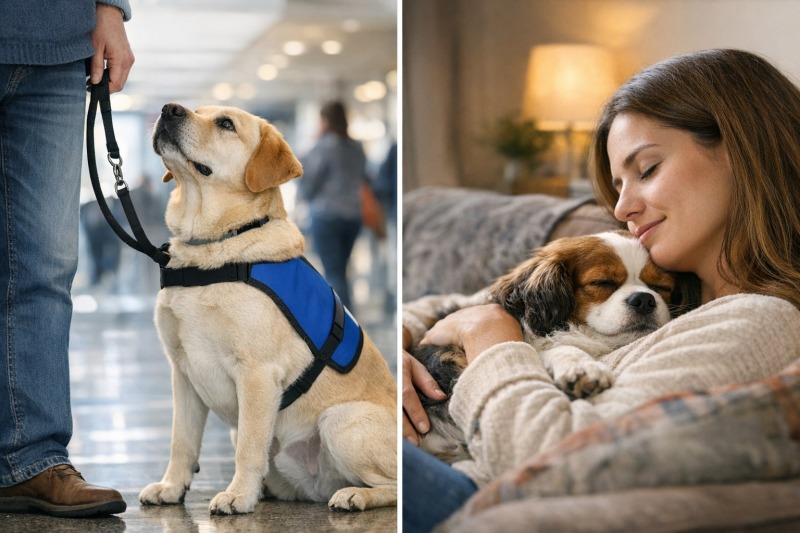
Service-dog access questions depend on the setting and the law that covers it. In U.S. public accommodations, ADA rules distinguish trained disability-related work from companionship or emotional support alone.
For folks trying to understand the rules, the subject can get muddy in a hurry. There is a lot of bad advice floating around online, and it often mixes up service dogs, therapy dogs, and emotional support animals as if they were all the same. They are not. If you are learning about working dogs, considering one for yourself, or simply want to know how public places should respond, it helps to start with the foundation and build from there.
What public access rights for service dogs really mean
In the United States, public access rights for service dogs are largely protected under the Americans with Disabilities Act, often called the ADA. Under that law, a service dog is a dog individually trained to perform tasks or do work for a person with a disability. That definition is the heart of the matter. The dog is not there just to provide comfort by its presence. It is there because it has been trained to take action that directly helps its handler live more safely and independently.
Those rights generally mean a service dog can accompany its handler into public places where the general public is allowed to go. That includes restaurants, hotels, stores, medical offices, government buildings, and many other spaces. If a business opens its doors to the public, a handler with a legitimate service dog is usually entitled to enter with that dog beside them.
Public access is not some blank check for poor behavior. A service dog still has to be under control. It should be house trained, responsive, and able to work without creating a disturbance. Rights and responsibility ride together.
Where service dogs are allowed in public
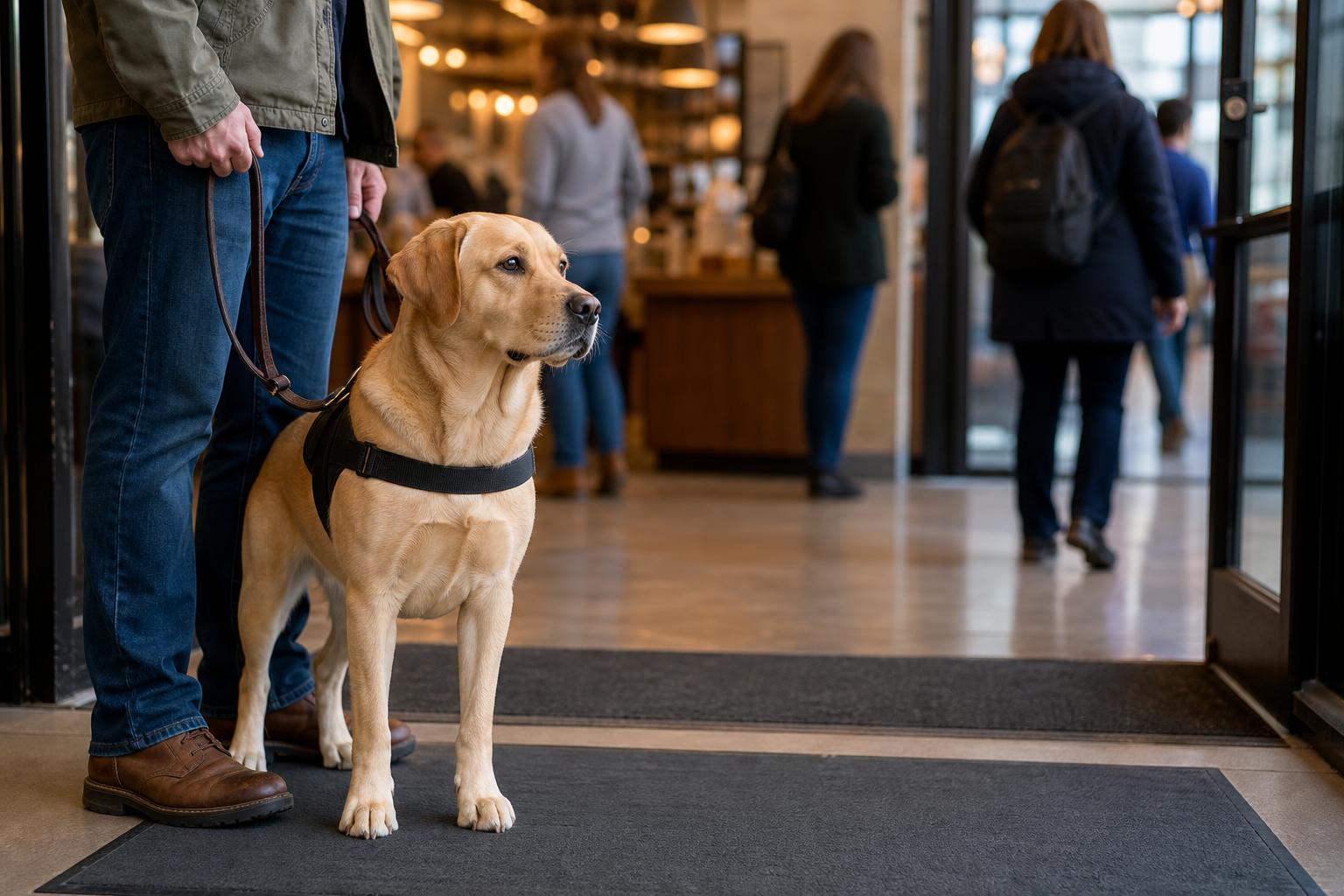
Most of the confusion comes from the question of where service dogs can go. In plain terms, service dogs are generally allowed in public accommodations, even in places where pets are usually forbidden. A restaurant may ban pet dogs and still be required to admit a service dog. A hotel may enforce a no-pets rule and still have to welcome a handler with a service dog. Grocery stores, pharmacies, retail shops, libraries, banks, and similar public-facing businesses all fall into that same basic pattern.
That surprises some people, especially when food service is involved. Folks sometimes assume that if health rules prohibit animals, the service dog must be excluded too. In most cases, that is not how it works. A trained service dog is not treated like a pet under those rules. The handler has the right to dine, shop, and travel with the dog at their side, so long as the dog remains under control.
Transportation is another area where these rights matter. Public transit, ride services, and many travel settings must accommodate service dogs. Air travel has its own rules and paperwork under different federal regulations, so it is wise for handlers to check current airline requirements before a trip. Still, the broader principle remains the same: a service dog is part of the handler’s access to daily life, not an optional extra left behind at the curb.
Places with limited access or special safety concerns
There are, however, some settings where access may be restricted for legitimate safety reasons. A service dog may be excluded from certain sterile environments, parts of a hospital where infection control is critical, or areas where the dog’s presence would fundamentally alter the nature of the service or pose a direct safety threat. Think of spaces like an operating room or a section of a facility where hazardous materials are present. Those are not ordinary denials. They are narrow exceptions tied to real operational concerns.
That is worth emphasizing because some businesses overreach. Being uncomfortable around dogs is not enough. Assuming other customers may complain is not enough. A fear of dogs or allergies does not automatically cancel a handler’s rights. Businesses are expected to find practical ways to accommodate people without denying access outright when the law protects that access.
What businesses can legally ask about a service dog
This is one of the most misunderstood parts of service dog law. When a disability is not obvious, staff may generally ask only two questions. First, is the dog required because of a disability. Second, what work or task has the dog been trained to perform. That is it. They may not demand medical records, require the handler to disclose a diagnosis, or insist on proof in the form of an ID card, vest, or registration certificate.
Those items may make life easier in a casual social setting, but they do not create legal status under the ADA. A real service dog does not become legitimate because of a vest, and an illegitimate dog does not become one because of a laminated card.
Businesses also cannot charge pet fees for a service dog. They cannot isolate the handler from other customers or treat them like a problem to be managed. A service dog team should be welcomed the same as any other patron, with the same basic dignity and access to goods and services.
When a business can ask a service dog to leave
This part matters just as much as access rights. A business can ask a service dog to leave if the dog is out of control and the handler does not take effective action to regain control, or if the dog is not house trained. That standard is practical and fair. If a dog is barking through the meal, lunging at customers, jumping on displays, or relieving itself indoors, the business may have grounds to remove the dog.
Even then, the handler should still be offered the chance to obtain goods or services without the dog present, when that can be done reasonably. The issue is the dog’s behavior, not the person’s disability. That distinction matters.
From a dog owner’s point of view, this is where training and honesty come in. A reliable service dog is not slapped together overnight. It takes time, consistency, exposure, and nerve. In the field, a dog that breaks at the wrong moment can ruin the whole hunt. In public life, a dog that cannot hold itself together can shut doors for the handler and make things harder for every legitimate service dog team that comes after them.
Why fake service dogs create real problems
There is no use dancing around it. Misrepresenting a pet as a service dog causes damage. It puts poorly trained animals into public spaces where they may frighten people, disrupt businesses, or attack genuine working dogs. It also breeds skepticism, and that skepticism lands hardest on disabled handlers who are already navigating enough challenges.
A true service dog team often moves through the world with the kind of quiet discipline that goes unnoticed unless you know what to look for. The dog checks in, stays engaged, and carries itself like it belongs there because it does. A fake service dog usually tells on itself before long, whether through reactivity, wandering, begging, or plain old lack of manners. The law protects service dogs, but it does not protect dishonesty or careless handling.
How handlers can protect their rights in everyday situations
For handlers, confidence often comes from preparation. It helps to know the ADA basics, to stay calm when questions come up, and to answer clearly without oversharing. Most public access conflicts are resolved faster when the handler remains steady and the dog remains even steadier. A dog that holds a down-stay under a restaurant table says more than a fistful of paperwork ever could.
It can also be wise to plan ahead for travel, lodging, and unfamiliar venues. Not every employee has been trained well, and not every manager understands the law. When that happens, a calm explanation can go a long way. If a dispute continues, documenting the encounter and asking for a supervisor is often the next sensible step.
For families researching service dogs, therapy dogs, or companion dogs, this is where expectations need to stay realistic. A service dog’s public access rights come from disability-related task training and lawful status, not from affection, good intentions, or the dog’s sweet nature. Therapy dogs do valuable work in schools, hospitals, and care settings, but they do not have the same blanket public access rights as service dogs. Companion dogs may improve daily life in countless ways, but they are not covered by the same access rules either.
Respect, training, and the road ahead
Public access rights for service dogs rest on a simple principle: disabled people should be able to participate in public life with the trained canine support they depend on. That principle is strong, but it works best when paired with solid training, responsible handling, and a clear understanding of the law.
Whether in thick timber, open country, or a crowded storefront, the finest dogs are the ones that stay true to their purpose. Service dogs do exactly that. They help their handlers navigate a world that is not always easy, and the law recognizes the importance of that bond and that labor.
If you are learning about service dogs for yourself or someone you love, take the time to separate myth from fact. Learn what access rights cover, where the limits are, and why proper training matters so much. A well-trained service dog is more than welcome company. It is a working partner, and in public life, that distinction means everything.