Service dogs and emotional support dogs have different roles under U.S. disability-related rules. The distinction begins with trained disability-related tasks, while housing and travel involve their own requirements.
A good dog can steady a person in ways that are hard to put into words. But comfort alone does not make a dog a service dog. In the same breath, a dog does not need task training to provide honest emotional support. Both roles have value. The key is knowing what each one is, what each one is not, and what kind of help a person truly needs.
What Is a Service Dog?
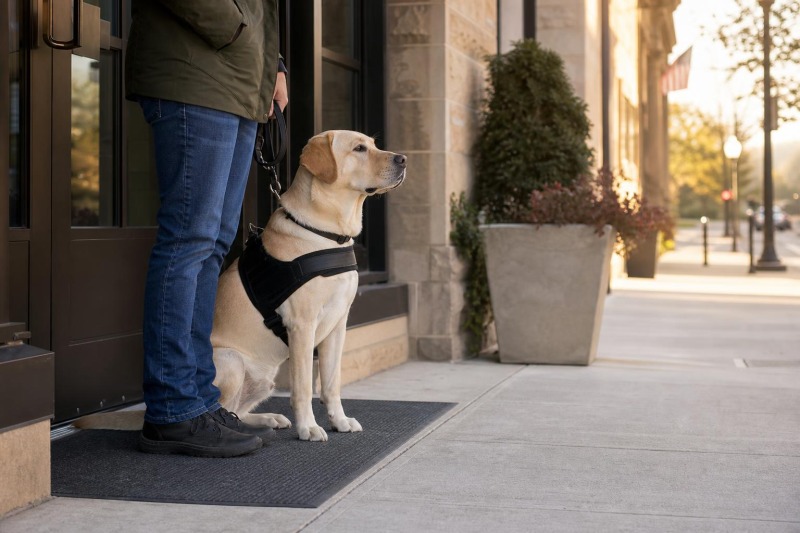
A service dog is a dog individually trained to perform specific tasks for a person with a disability. That is the heart of it. The dog is not there just to provide companionship or make the handler feel better, though that often happens too. The dog is trained to take action that directly helps with the handler’s disability.
Those tasks can vary a great deal. One dog may guide a person who is blind. Another may alert a handler to an oncoming seizure, retrieve dropped items, open doors, interrupt harmful behaviors, provide balance support, or remind a person to take medication. In each case, the dog has a working role. It is not simply present for comfort. It is doing a job.
That training is what separates a service dog from most other support animals. A finished service dog should be steady under pressure, obedient in public, non-reactive around distractions, and reliable enough to work in restaurants, stores, medical settings, transportation hubs, and other busy places. Any dog owner knows that kind of discipline does not happen by accident. It takes time, structure, consistency, and a dog with the right temperament.
Why Service Dog Training Matters So Much
When a dog is expected to work in public, there is little room for guesswork. A dog that startles easily, lunges at strangers, barks in stores, or cannot settle under a table is not ready for service work, no matter how loved it may be at home. A proper service dog must be under control and able to perform trained tasks dependably. That sort of reliability comes from patient repetition and a clear bond between dog and handler.
Folks sometimes underestimate how demanding that standard really is. It is one thing to have a sweet dog on the couch. It is another to have a dog that can stay composed through shopping carts, crying children, automatic doors, and long waits in public without losing focus.
What Is an Emotional Support Dog?
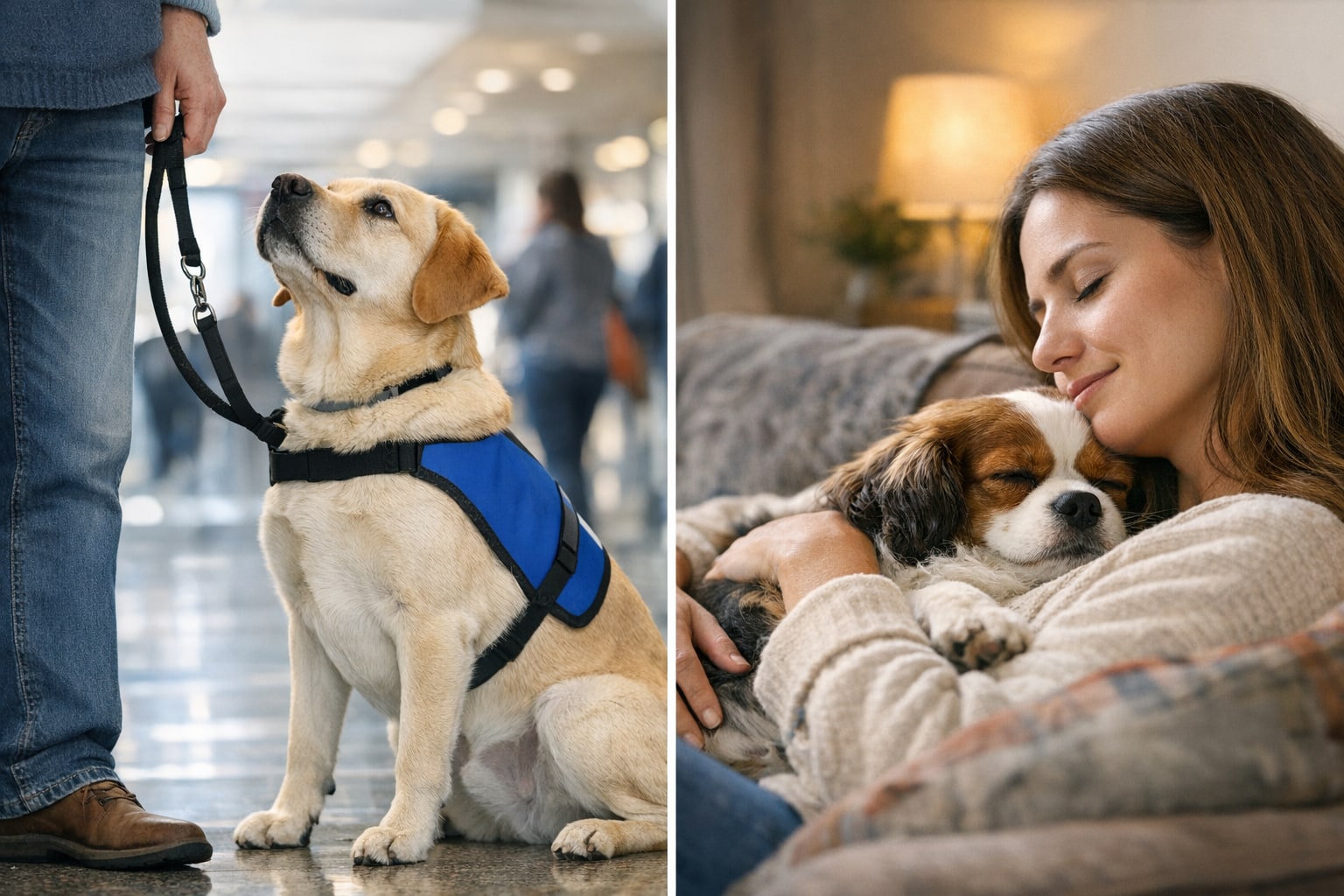
An emotional support dog helps a person by providing comfort, companionship, and a calming presence. That support is real, and for many people it can make everyday life far more manageable. A dog’s steady company can ease anxiety, reduce feelings of isolation, and provide emotional grounding during difficult stretches.
Still, an emotional support dog is not the same as a service dog. The main difference is training for specific disability-related tasks. Emotional support dogs do not need specialized task training to qualify in that role. Their benefit comes through their presence and bond with the owner rather than through trained actions like alerting, guiding, retrieving, or interrupting behavior on command.
That does not mean any ill-mannered dog should be treated casually. A dog offering emotional support should still be well socialized, manageable, and safe. But the legal and functional expectations are different. An emotional support dog may be deeply important to its owner while still not qualifying for the same public access rights as a service dog.
The Comfort Is Real, Even If the Role Is Different
This is where people get their wires crossed. They hear “support” and assume the categories overlap completely. They do not. An emotional support dog can be a lifeline to somebody dealing with anxiety, depression, trauma, or other mental and emotional health challenges. That kind of companionship is no small thing. But from a legal and practical standpoint, comfort by presence is different from trained task work tied to a disability.
Public Access Rights: The Biggest Difference
One of the clearest differences between a service dog and an emotional support dog is public access. In the United States, service dogs are generally allowed to accompany their handlers into public places where pets are not allowed, as long as the dog is under control and the business falls under applicable disability access law. That means many stores, hotels, restaurants, and public facilities must allow a legitimate service dog.
Emotional support dogs do not have that same broad public access right. In most cases, they are treated like pets when it comes to stores, restaurants, and other public businesses. Some housing protections may apply in certain situations, but that does not turn an emotional support dog into a service dog. This is where a lot of frustration starts, especially when people rely on bad information online or from companies selling fake certificates and vests.
A vest, badge, online registration, or laminated card does not magically transform a dog into a service dog. A real working dog is defined by disability-related task training and behavior, not by gear bought off a website. That may sound plainspoken, but plain truth is needed here. Too many honest owners get misled into thinking paperwork alone gives them rights it does not.
Housing and Everyday Living
Housing is often where emotional support dogs come into the conversation. A person with a documented need may, in some cases, qualify for housing-related accommodation for an emotional support animal. The exact rules depend on current law, the type of housing, and proper documentation. Service dogs may also be protected in housing, but again, their role is different and broader because of the trained work they perform.
For everyday life, the right choice comes down to need. If a person needs a dog to perform tasks that reduce the impact of a disability, a service dog may be the right path. If the person benefits from comfort, routine, and companionship that support emotional well-being, an emotional support dog may be the better fit. There is no shame in either role. Trouble only starts when one is misrepresented as the other.
How to Know Which Type of Dog You Need
This question deserves an honest look. Start with what help is actually needed day to day. If a dog must actively perform trained tasks to assist with a disability, you are in service dog territory. If the value comes from calming presence, affection, and emotional steadiness without specialized task work, then emotional support is the more accurate label.
That difference may sound simple on paper, but life is seldom tidy. Some people need a highly trained working dog. Others need a stable companion that gives them a reason to get up, walk, breathe, and stay connected to the world. A dog that keeps a person anchored through dark times is doing meaningful work in its own way. It just may not be service dog work by legal definition.
Temperament Counts More Than Most People Think
Whether you are considering a service dog, emotional support dog, or companion dog, temperament matters. A dog can be beautiful on paper and still be wrong for the job. Nerve, confidence, trainability, patience, and a natural willingness to stay connected to people all carry weight. In hunting dogs, you learn fast that drive without control can become chaos. The same is true here. The best support dogs, especially working service dogs, need a balance of steadiness and responsiveness.
Common Misunderstandings to Avoid
One common mistake is assuming emotional support dogs have automatic access everywhere. They do not. Another is believing a doctor’s note, online certificate, or service vest replaces training. It does not. Another misunderstanding is thinking small dogs cannot be service dogs. They can, depending on the tasks needed. On the other hand, not every smart or affectionate dog is suited for service work, no matter the breed or size.
People also confuse therapy dogs with service dogs and emotional support dogs. Therapy dogs typically visit hospitals, schools, nursing homes, or care settings to provide comfort to many people. They are valuable too, but they serve a different purpose. A therapy dog is not the same as a service dog, and it is not simply an emotional support dog under another name.
At the end of the trail, the difference between a service dog and an emotional support dog comes down to trained task work, legal access, and daily purpose. A service dog is a working dog trained to perform specific tasks for a person with a disability. An emotional support dog provides comfort and companionship that improve emotional well-being, but it does not carry the same training requirements or broad public access rights.
If you are trying to decide what kind of dog support fits your situation, be honest about your needs and careful about your information sources. Good dogs can change lives, but labels matter. The right dog in the right role can bring independence, stability, and peace that is hard to measure. Whether that dog is a service dog, therapy dog, or emotional support dog, respect the work, respect the law, and respect the bond that makes it all possible.