A therapy-dog checklist should help identify skills to practice and situations to assess. Treat it as preparation for a particular program, rather than a guarantee that a dog will enjoy visiting work.
Folks often mix up therapy dogs with service dogs and companion dogs, and that confusion can muddy the water before training even begins. A therapy dog is usually invited into facilities or programs to provide comfort and emotional support to many people. A service dog is trained to perform specific tasks for one person with a disability. A companion dog may offer everyday comfort at home without specialized public-access work. Knowing the difference matters, because your training goals, evaluation standards, and daily routines will reflect the job in front of the dog.
Start With the Right Temperament
Therapy work is not all that different. The first item on any therapy dog training checklist is temperament. Your dog should be social without being pushy, confident without being reckless, and calm enough to recover quickly from surprise.
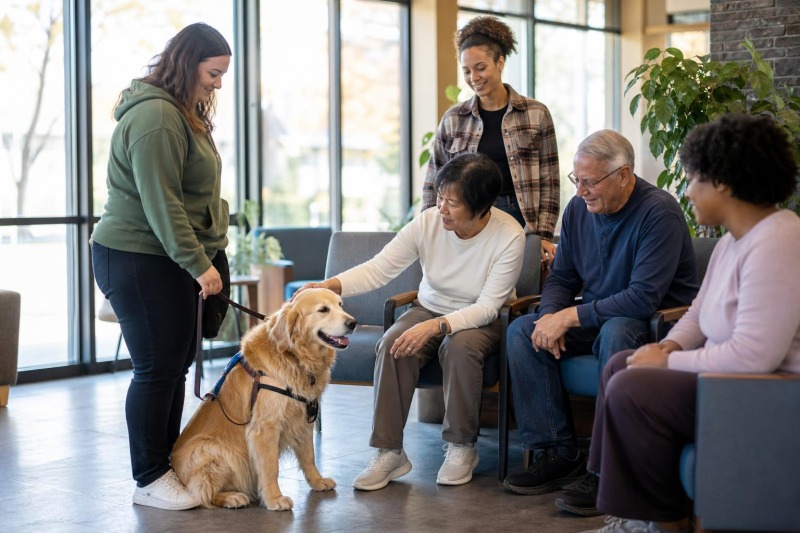
A therapy prospect should accept petting from different people, including children and older adults, without showing fear, avoidance, or overexcitement. He should tolerate odd noises, moving equipment, slick floors, sudden laughter, and unusual clothing. A good therapy dog does not need to love every sound or sight, but he does need to remain composed and look to the handler for guidance. If your dog startles and recovers, that can be worked with. If he panics, stiffens, snaps, or shuts down, that is a warning sign worth taking seriously.
What a Stable Therapy Dog Looks Like
In plain terms, you want a dog who can walk into a room and settle the air instead of stirring it up. He does not drag you to greet everyone. He does not bark because a wheelchair rolls by. He does not melt down when a stranger hugs him awkwardly. He can take affection gently, stand or sit quietly for handling, and move on when asked. That kind of steadiness is the backbone of safe therapy work.
Build Reliable Basic Obedience
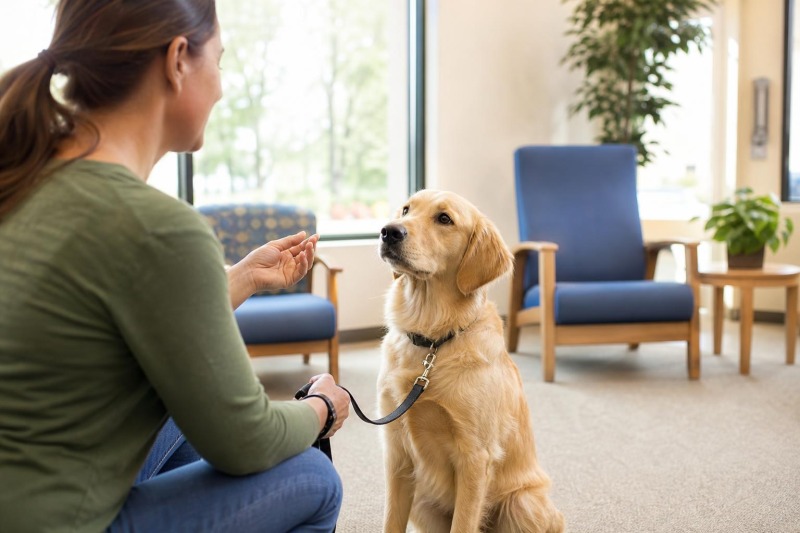
Once temperament passes the smell test, obedience becomes the next priority. Fancy tricks are fine for fun, but therapy dogs make their living on simple, reliable behaviors. Sit, down, stay, come, loose-leash walking, leave it, and polite greetings should be second nature. If a dog cannot hold a stay while someone adjusts a walker or drops a book, he is not ready for real visits.
Training should not look like a tug-of-war. Work these skills in quiet places first, then in busier settings with controlled distractions. Practice near shopping centers, park benches, school grounds, and community events where legal and appropriate. The goal is not perfection in a sterile room. The goal is dependability in the kind of world a therapy dog will actually enter.
Leash Manners Matter More Than People Think
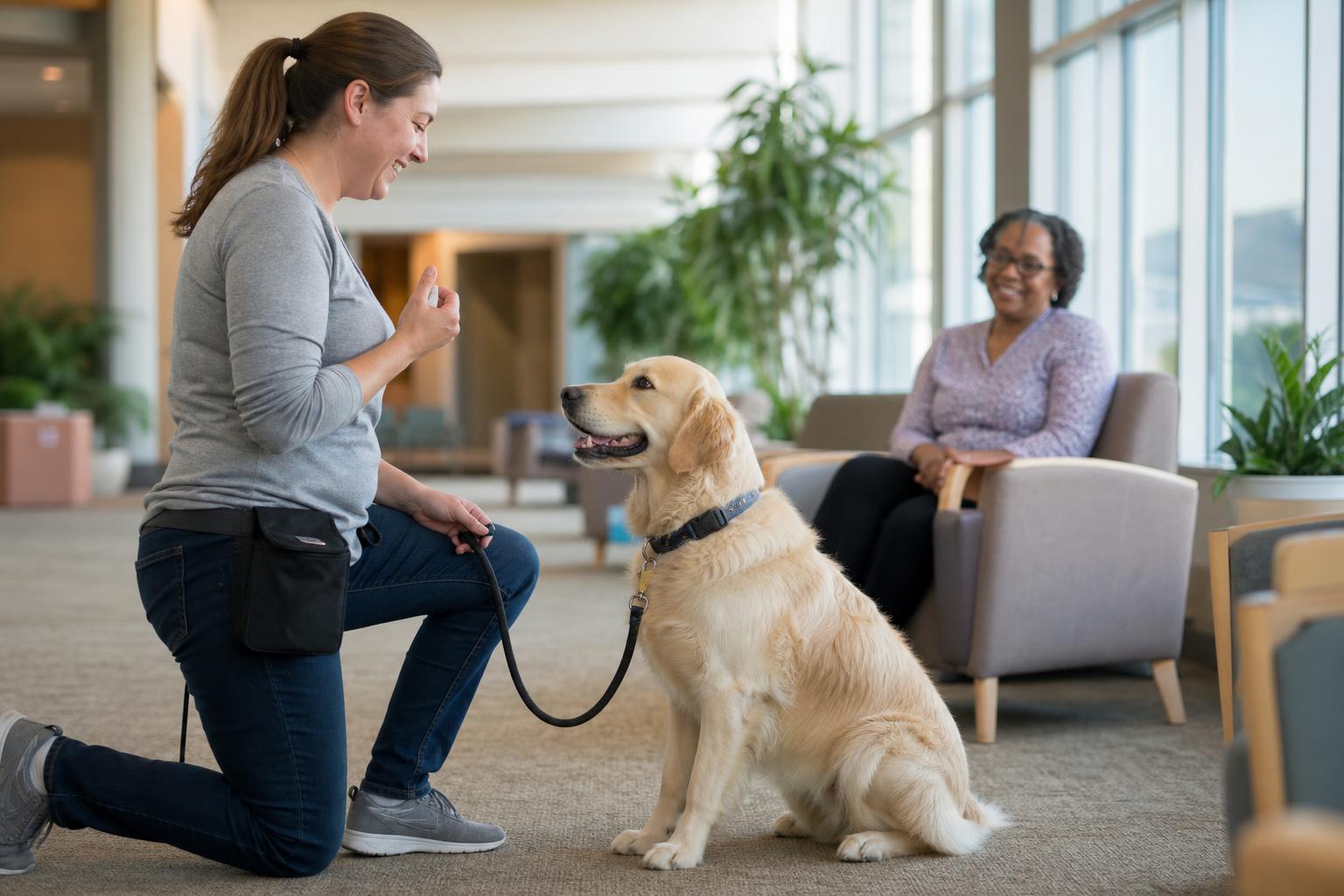
Loose-leash walking deserves special attention. A therapy dog that pulls, circles, tangles, or forges ahead creates stress for the handler and unease for the people around him. In tight hallways and shared spaces, that sort of behavior can turn from nuisance to hazard in a hurry. Your dog should walk beside you with a soft leash, stop when you stop, and turn with you without making a production out of it.
Social Skills in Real-World Environments
Here is where many owners discover the gap between backyard success and public readiness. Dogs do not generalize well on their own. A perfect sit in the kitchen may fall apart in a rehab center lobby full of echoes, smells, and movement. Therapy training needs exposure to many settings, surfaces, and social situations so your dog learns that the rules travel with him.
Work around carts, canes, wheelchairs, crutches, elevators, automatic doors, and crowds. Practice meeting people who speak softly, people who move unpredictably, and people who may touch your dog with shaky hands. A therapy dog must also learn to ignore food on low tables, dropped tissues, open bags, and the general clutter of daily life. Good public manners are not glamorous, but they are the mark of a professional dog.
If you move through training like every challenge is a crisis, the dog often follows suit. If you set things up carefully and keep your head, the dog learns that new situations are just part of the work. That calm leadership is worth as much as any training tool you can buy.
Handling, Grooming, and Physical Tolerance
Therapy dogs are touched often, and not always skillfully. Some people will pat too hard. Some will lean close. Some will stroke ears, paws, or tails without warning. Your dog must be comfortable being handled all over the body and should remain patient during brushing, bathing, nail trims, ear checks, and gentle restraint. Grooming is not an afterthought for therapy work. Clean coat, fresh breath, trimmed nails, and overall hygiene are part of the dog’s presentation and part of keeping visits safe for vulnerable people.
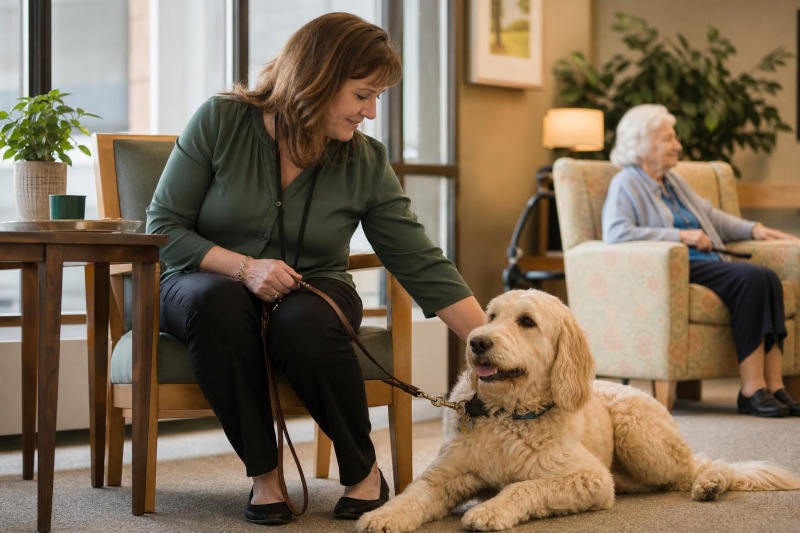
It also helps to teach your dog to settle on cue. A calm down-stay beside a chair or bed is often more valuable than active engagement. In many therapy settings, the best dogs are not the ones putting on a show. They are the ones who can be present, soft-eyed, and steady while someone reaches for comfort.
Health, Readiness, and Handler Responsibility
No therapy dog training checklist is complete without health standards. Your dog should be current on veterinary care, vaccinations as required by the therapy organization or facility, parasite prevention, and routine wellness checks. He should be physically sound enough for visits and emotionally fresh enough to handle them. A dog that is in pain, itchy, tired, or overwhelmed is more likely to react poorly.
The handler carries just as much responsibility as the dog. You need to read stress signals, know when to end a session, and advocate for your dog when someone asks too much. Lip licking, yawning, turning away, pinned ears, whale eye, shaking off, or refusal to approach can all signal stress. A good therapy team knows that successful work sometimes means saying, “That is enough for today.”
Know When a Dog Is Not Suited for Therapy Work
This can be the hardest truth for owners to accept. Some dogs are wonderful companions and still not cut out for therapy work. There is no shame in that. Therapy work asks for unusual tolerance and emotional steadiness. Respecting your dog’s nature is part of being a responsible handler.
Prepare for Evaluation and Certification
Most therapy organizations require testing or evaluation before a team can begin visits. Standards vary, but common areas include obedience, reaction to strangers, tolerance for handling, response to distractions, and overall control in public. Some programs also require supervised visits, background checks, health documentation, and continuing education.
Before scheduling an evaluation, practice the exact skills likely to be tested. Have strangers greet your dog politely. Ask trusted friends to simulate awkward petting. Work around mobility aids. Rehearse entering buildings calmly, waiting quietly, and leaving without excitement. If your dog struggles, that does not mean the door is closed. It usually means more training, slower exposure, and better preparation are needed.
Like breaking in a young dog for the field, timing matters. Push too hard and you can sour a good prospect. Build carefully and you often end up with a partner who carries himself with quiet confidence.
A Simple Therapy Dog Training Checklist to Measure Progress
Your dog should be able to greet people calmly, walk on a loose leash, hold basic obedience under distraction, tolerate full-body handling, remain neutral around equipment and noises, ignore food and clutter, settle on cue, recover quickly from surprises, and maintain composure in new places. He should be healthy, clean, and comfortable working around different types of people. Just as important, you should be able to guide him confidently, recognize stress early, and end a session before your dog becomes overwhelmed.
If one or two areas are weak, that is not failure. It is simply the part of the map that needs more miles on it. Good therapy teams are built through repetition, fair expectations, and honest assessment. You are not trying to create a robot. You are shaping a dog who can offer steady companionship in places where people may need it most.
A dependable therapy dog is one of the finest sights a dog person can witness. There is something powerful about watching a calm dog rest his head beside a hospital bed or stand quietly while a child finds the courage to read aloud. Those moments are not accidents. They are earned through training, patience, and respect for the work.
If you are serious about this path, take your time and build the foundation right. Use this therapy dog training checklist as a working guide, not a race to the finish line. The best teams are not the quickest ones. They are the ones you can trust, visit after visit, to walk in steady and leave folks feeling just a little lighter than before.