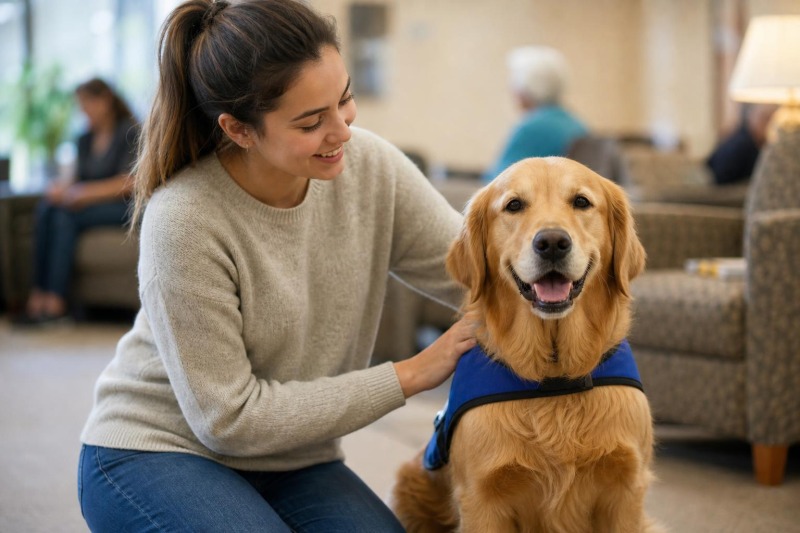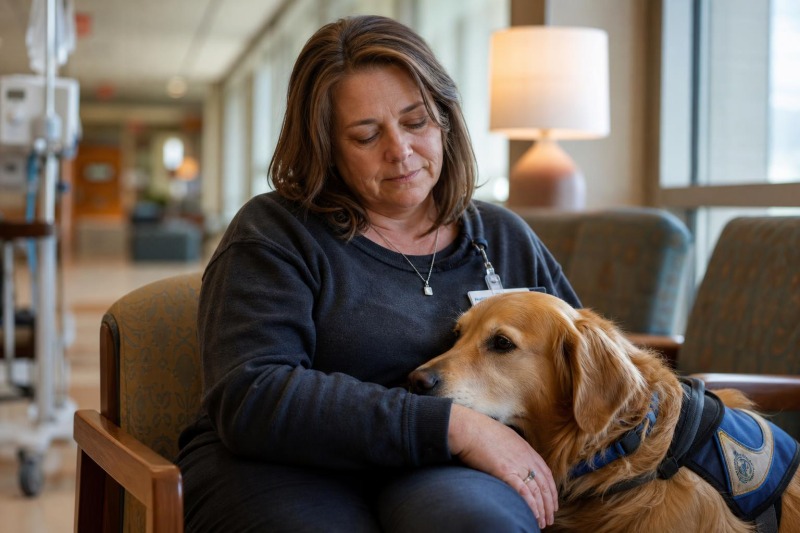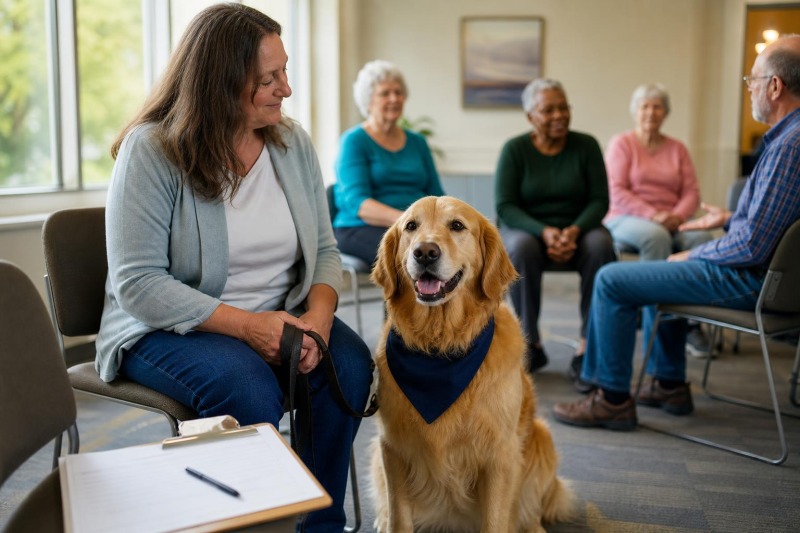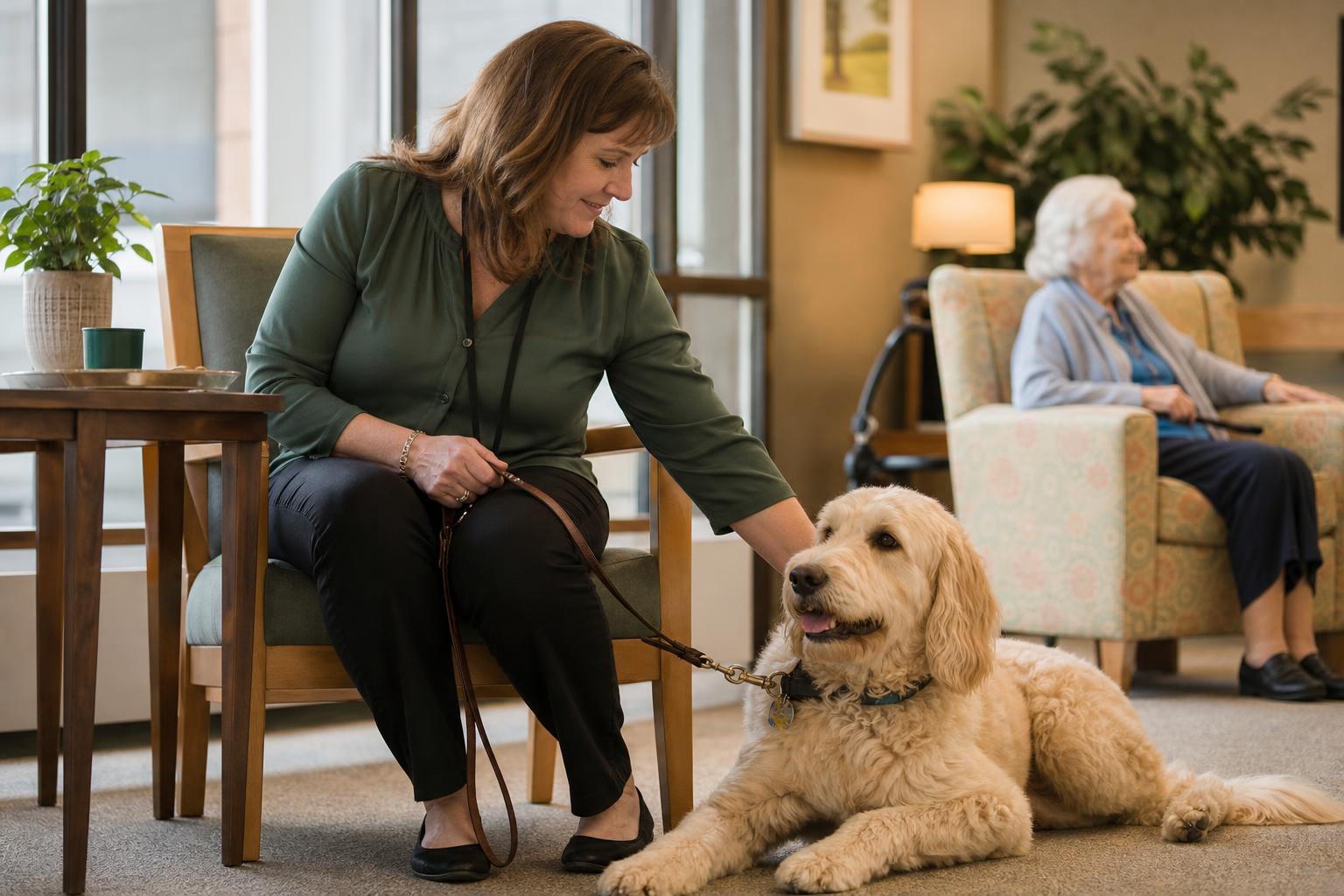
A therapy-dog handler's work includes travel, preparation, communication with staff, and careful observation during visits. Time off and a willingness to end a visit early are part of the responsibility.
You learn to pay attention to what most folks miss. You watch posture, breathing, small changes in the eyes, and the feel of the room. A good therapy dog handler does not barrel forward. They move with intention. They know when to step in, when to let the dog do the work, and when to call it a day. That rhythm becomes the backbone of everyday life.
Starting the Day With Routine and Readiness
A therapy dog’s day usually starts long before any official visit. Mornings are built on routine because dogs thrive when life is steady and predictable. The handler gets up, heads outside for a bathroom break, and often starts with a short walk to loosen the dog up and settle the mind. Some dogs come out of the crate or bed ready to roll, while others need a gentle gear-up. Either way, the handler is already observing. Is the dog eager but calm? Stiff in movement? Distracted? Slightly off feed? Tiny details matter because therapy work asks a dog to be emotionally available and physically comfortable.
Grooming is part of the job, not a cosmetic extra. Clean coat, trimmed nails, brushed teeth, tidy ears, and fresh gear all matter when a dog is working close to patients, students, or residents. A therapy dog may lean against a leg, place a paw softly on a blanket, or be petted by ten different hands in an hour. Cleanliness and presentation reflect professionalism, but more than that, they show respect for the people being visited.
Before leaving the house, many handlers run through the same checklist every time. Water, bowl, leash, backup leash, waste bags, treats if permitted, vaccination records if needed, identification, cleaning supplies, and any facility paperwork. It can feel repetitive, but repetition is what keeps a working team dependable. A therapy dog handler cannot afford to be casual with details.
Training Never Really Stops
Even when there is no formal class on the calendar, training is woven into daily life. A handler may spend ten minutes reinforcing loose-leash walking in the driveway, practicing a steady sit at the front door, or rewarding a calm settle on a mat. Therapy dogs do not need flashy tricks to do meaningful work, but they do need solid manners, emotional stability, and the ability to recover quickly from surprises. A dropped tray, a rolling wheelchair, the beep of medical equipment, or a child hugging too fast can shake an unprepared dog. Good handlers keep skills fresh in small, regular sessions.
That is one thing newcomers often misunderstand. Therapy dog work is not simply the result of a dog being friendly. Plenty of friendly dogs are not suited to it. The work requires self-control, confidence, and a handler who knows how to guide the dog through changing environments without adding pressure. The best teams make it look natural because they have practiced the basics until they are second nature.
Travel, Scheduling, and the Space Between Visits
The middle of the day can be a patchwork of driving, waiting, paperwork, and adaptation. Some handlers volunteer once a week at a nursing home. Others rotate between hospitals, schools, rehab centers, libraries, and crisis response settings. No two schedules look exactly alike, but all of them involve more than the visit itself. There are check-ins at reception desks, sanitation rules, elevator rides, loading and unloading gear, and occasional delays that test patience.
On the road, a seasoned handler thinks ahead like anyone who spends serious time outdoors or moving between changing conditions. You learn to plan for weather, traffic, fatigue, and what your dog will need before the need turns urgent. A dog left too long without a proper break may arrive overstimulated or restless. A handler who rushes because they are late often passes that tension down the leash. Calm starts before the front door of the facility ever opens.
There is also the human side of scheduling. Therapy dog handlers coordinate with staff, honor facility rules, and understand that the day does not revolve around them. In a school, a visit may need to pause for testing or lunch. In a hospital, a patient may be asleep, in treatment, or simply not interested. Good handlers stay flexible. They know this work is not a performance. It is service.
What Happens During a Therapy Dog Visit
Once inside, the real craft of handling begins. The dog may be the one everyone notices, but the handler is quietly doing several jobs at once. They are monitoring the dog’s body language, tracking the emotional tone of each interaction, following facility rules, making conversation when needed, and protecting the dog from being overwhelmed. A therapy visit can look gentle on the surface, yet it requires attention as sharp as a man reading sign on a cold morning trail.
In one room, the dog might sit beside a veteran who has not said much all day, and after a minute or two a hand reaches out, rough and slow, to stroke an ear. In another setting, a child may read aloud to the dog, gaining confidence because the dog does not judge or interrupt. At a senior living center, a resident who rarely engages may brighten at the memory of a dog they once had on a farm decades ago. These moments are not manufactured. They come from trust, patience, and the handler’s ability to set the stage without forcing anything.
Reading the Dog Comes First
A strong handler never gets so caught up in helping people that they forget the dog at the end of the leash. Therapy dogs are generous, but they are still dogs. They get tired. They need water. They need breaks. They may tolerate one enthusiastic greeting just fine and then need a few quiet minutes before the next. A lip lick, a yawn, a head turn, slower response, or a softer tail can all signal that the dog is working hard. The best handlers notice those whispers before they become a louder problem.
Sometimes the right call is to shorten a visit. Sometimes it is to skip a room. Sometimes it is to say, kindly but firmly, that the dog needs space or that petting must be slower and gentler. This is where experience shows. A handler’s first duty is to protect the dog’s well-being, because a dog that feels safe and respected can keep doing meaningful work over the long haul.
The Emotional Weight and Reward of the Work
There is no honest way to talk about the daily life of a therapy dog handler without mentioning the emotional load. Some days are light and cheerful. Others stay with you. A hospital floor can carry a heaviness that clings long after you leave the parking lot. A memory care unit may be full of beautiful moments and heartbreak in the same hour. Schools can bring joy, but also stories of struggle that remind you how much comfort a steady dog can bring to a child who feels lost in the shuffle.
Handlers learn to carry those experiences carefully. They also learn that the dog often helps them process the day, too. After a visit, many teams take time to decompress with a walk, a quiet ride home, or a stretch in the yard. The dog gets to shake off the work and return to being simply a dog. That matters. One of the healthiest habits a handler can build is a clear difference between working time and home life.
And yet, for all the emotional weight, the reward is real. It may be a smile from a patient who had not spoken that morning. It may be the way a child straightens up and reads one more page. They are the kind that keep handlers loading the car again next week.
Life at Home Between Assignments
When the vest comes off, daily life settles back into ordinary dog ownership, and that ordinary life is what supports the work. Therapy dogs still need exercise, play, rest, and the simple freedom to sniff around the yard or nap on the rug. A handler who only thinks about performance and not quality of life will burn a good dog out fast. Balance is everything.
At home, experienced handlers often keep an eye on recovery. Did the dog eat well after the visit? Are they sleeping deeply? Do they seem eager when the therapy bag comes out next time, or hesitant? These little checkpoints help determine whether the dog is truly thriving in the role. Not every dog wants the same workload, and wise handlers adjust before problems build.
The Handler’s Job Is Also Advocacy
Part of the daily life of a therapy dog handler is educating the public. People often confuse therapy dogs with service dogs or assume any calm pet can do the same work. A good handler explains the difference with patience. Therapy dogs provide comfort in approved settings with their handlers present. Service dogs are specially trained to perform tasks for a person with a disability and have very different legal protections. Companion dogs, meanwhile, may offer deep emotional support at home without doing formal public work. Knowing these distinctions helps everyone make better choices and show proper respect.
Handlers also advocate for ethical standards in training, health, and temperament. They know that pushing the wrong dog into therapy work does nobody any favors. The goal is not to create a feel-good image. The goal is to build a reliable team that genuinely enjoys helping people.
A Life Built on Trust
The daily life of a therapy dog handler comes down to trust earned over time. The dog trusts the handler to guide, protect, and understand them. The people being visited trust the team to bring calm rather than chaos. Facilities trust the handler to be prepared, respectful, and professional. None of that happens by accident.
For anyone interested in therapy dogs, service dogs, or companion dogs, it helps to understand that this work is both plain and profound. It is made of leash clips, wiped paws, quiet observation, careful scheduling, and a thousand small choices that keep a dog steady in difficult places. But it is also made of human connection in its simplest form. A warm coat under a searching hand. A gentle nudge that opens a conversation. A steady presence in a room that needed one.
That is the real shape of the work. Not glamorous, not effortless, and not meant for every dog or every person. But for the right team, it is one of the finest partnerships a person can witness. Day by day, visit by visit, a therapy dog handler helps carry a little comfort into places that need it most, and that is honest work by any measure.