Therapy-dog volunteering can become demanding when travel, scheduling, and emotionally difficult visits accumulate. A sustainable schedule includes support, boundaries, and time off for handler and dog.
Whether you are handling a steady companion dog, preparing a service prospect, or working the therapy circuit, your energy matters. Your dog reads you better than most people do. If you are stretched thin, grieving, tired, irritated, or emotionally numb, your dog often feels it long before you admit it to yourself. That is why this conversation matters. A burned-out handler is not just struggling personally. The dog-handler team begins to lose its balance.
Therapy dog work asks for a special kind of generosity. You show up for strangers on hard days. You offer calm in places that can feel heavy with fear, sickness, confusion, or loss. Over time, even the steadiest person can begin to absorb too much. Burnout does not mean you are weak, and it does not mean you are not cut out for the work. More often, it means you have been giving more than you have been restoring.
What Burnout Looks Like in a Therapy Dog Handler
Burnout rarely announces itself in a big dramatic fashion. Most of the time it starts small. You may dread a visit you once looked forward to. You may feel unusually impatient with facility staff, with your dog, or even with the people you are there to help. Some handlers notice they start going through the motions. They still show up, but the heart of the work feels distant. Others begin canceling more often, telling themselves they are just busy, when in truth they are emotionally worn smooth.
There can be physical signs too. Poor sleep, headaches, low motivation, trouble concentrating, and a sense of carrying a load that never quite comes off your shoulders are common. Some handlers feel guilty for needing a break. That guilt can become its own trap. They keep pushing because therapy dog work is meaningful, and because people count on them. But meaning does not cancel exhaustion. If anything, meaningful work can be the very thing people overextend themselves for.
Emotional fatigue and compassion overload
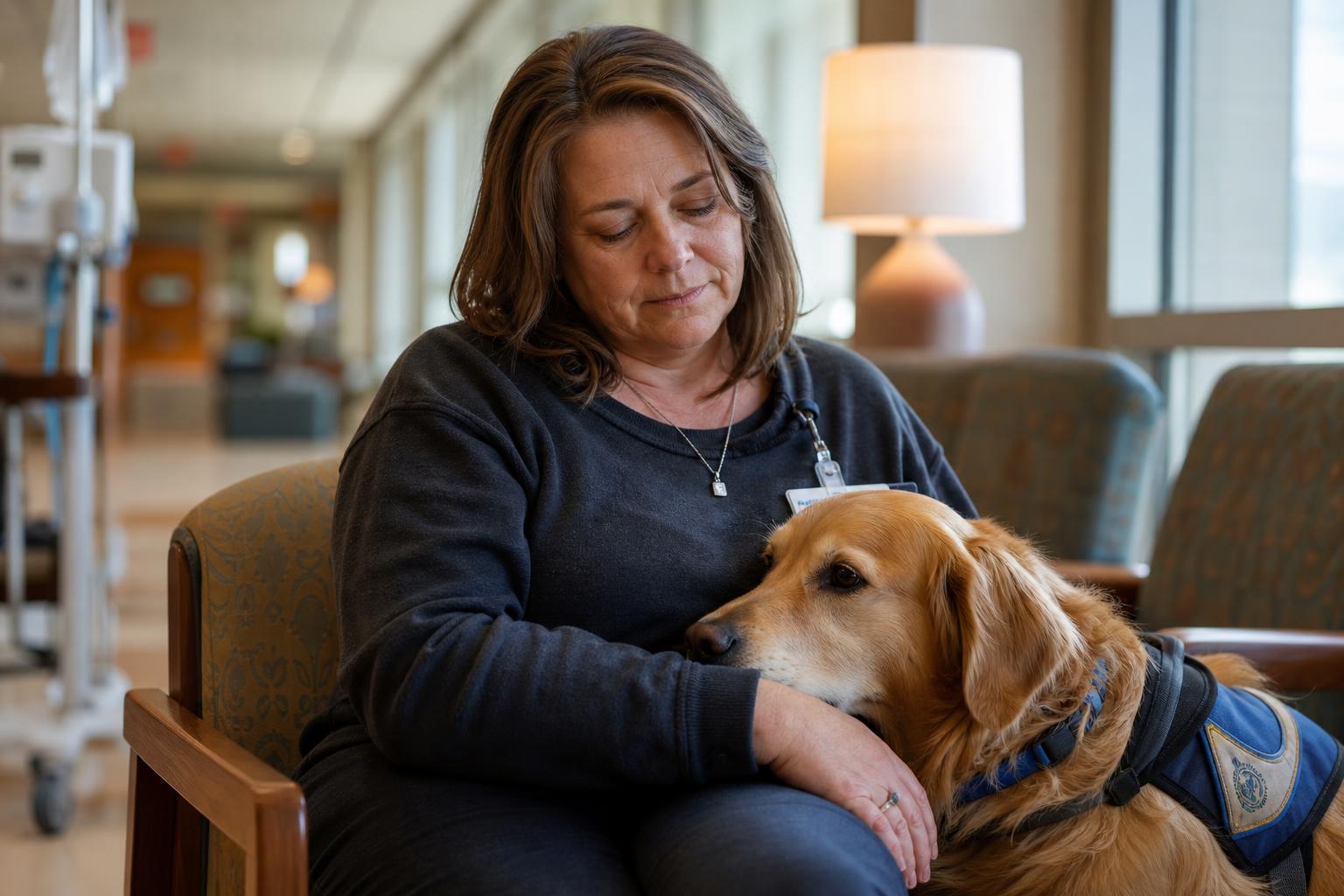
Many therapy dog handlers are compassionate by nature. That is a strength, but it can also leave you wide open to emotional fatigue. Visit after visit, story after story, sorrow can gather in you like wet leaves in a ditch. Maybe you spend time with patients whose health is failing, veterans carrying trauma, or children navigating hard situations at home or school. You may not be the clinician in the room, but you are still a witness. Bearing witness takes energy.
When compassion overload sets in, handlers sometimes feel numb instead of caring. That can be confusing. They may think they have become cold, when really they are overloaded. Numbness can be the mind's way of putting up a fence when too much has been coming through the gate.
Changes in your dog's behavior
One of the surest signs of handler burnout is a change in the dog. A seasoned therapy dog may hesitate to enter a facility, show less enthusiasm during greetings, or need longer recovery after visits. Sometimes the dog is responding to stress in the environment. Sometimes the dog is mirroring the handler's tension. Dogs are honest that way. They tell the truth with posture, pacing, and small shifts in expression. If your dog seems off, it is worth asking whether you are off too.
Why Therapy Dog Handlers Burn Out
There is rarely one single cause. More often, burnout grows from a stack of pressures. Emotional labor sits high on that stack. Therapy dog handlers are expected to be warm, dependable, and present, even when life at home is messy or their own tank is low. Add scheduling demands, travel, volunteer expectations, continuing training, and the responsibility of maintaining a dog's welfare, and it becomes clear how much a handler is carrying.
Some handlers also struggle with role confusion. They want to help so badly that they drift beyond the natural limits of therapy dog work. They start feeling responsible for outcomes they cannot control. If a patient declines, if a child has a hard day, if a facility is understaffed, the handler may internalize those things. That kind of burden is too heavy to drag for long.
We tend to trust grit. We believe in pushing through weather, discomfort, fatigue, and long miles because many working dog pursuits require exactly that. There is value in toughness. But therapy work is not a duck blind where you can muscle through a miserable morning and warm up later by the stove. Emotional strain ignored over time has a way of settling deep.
The pressure to always be the calm one
Handlers often feel they must be composed at all times because the dog depends on them and the people they visit need steadiness. That pressure can lead to emotional suppression. If you never allow yourself to process what you see and feel, stress has nowhere to go. It stays in the body and leaks out as irritability, withdrawal, or exhaustion.
Overcommitting out of kindness
Many burnout cases begin with good hearts and bad boundaries. A handler agrees to one more facility, one more school visit, one more special event. Before long, the calendar is packed tighter than it should be. The dog may still perform well for a while, and the handler may still smile through it, but the cost keeps rising. Just because your dog can do the work does not mean your team should do all the work available.
How to Prevent Burnout Without Walking Away
Preventing burnout in therapy dog handlers is not about becoming less caring. It is about becoming more sustainable. They are the ones that know their rhythm. They work, they recover, and they protect the dog's enjoyment of the job as fiercely as their own peace of mind.
Start with honesty. Take stock of how visits leave you feeling. A good visit can be moving and still be tiring, but there is a difference between healthy fatigue and deep depletion. If each outing leaves you flat for a day or two, your schedule may be too full. If your dog needs more downtime after visits, that matters just as much.
Set clear limits around frequency, duration, and environment. Not every setting suits every team. Some handlers do beautifully in quiet reading programs but feel wrung out in busy medical facilities. Some dogs thrive with gentle one-on-one visits and fade in loud group events. It is better to choose the right work than force the wrong work because you feel obligated.
Build recovery into your routine
Recovery should be part of therapy dog work, not an afterthought. After emotionally heavy visits, give both yourself and your dog a decompression ritual. That might mean a quiet walk in the woods, time in the yard, an easy training session, or simply an evening with no demands. For handlers, it also helps to talk with trusted peers who understand the work. Not every burden needs to be carried alone.
One thing seasoned dog people learn, whether in the field or in public service settings, is that a dog needs a chance to come down after focused work. The same is true for the handler. If you leave a difficult visit and go straight into the next obligation without pausing, stress stacks up fast.
Let your dog's welfare guide your choices
Therapy dogs are generous animals, but they are not machines. If your dog seems less eager, more avoidant, or unusually tired, take it seriously. Sometimes the best way to protect yourself from burnout is to listen to your dog and scale back before both of you hit the wall. A dog that still enjoys the work is worth protecting. Once that joy is worn thin, rebuilding it takes time.
What to Do If You Are Already Burned Out
If you are already in the thick of burnout, the first step is giving yourself permission to acknowledge it. You do not need to earn rest by collapsing. Step back if you need to. Short breaks can preserve long-term involvement. Many handlers fear that pausing means quitting, but often the opposite is true. A thoughtful pause can keep a good team in the game for years.
Consider reducing visit frequency, changing settings, or taking a temporary leave. If a facility or organization responds poorly to healthy boundaries, that tells you something important. Respectful programs understand that a strong therapy dog team depends on the well-being of both dog and handler.
It may also help to reconnect with why you started. Spend time with your dog outside of therapy work. Go for a ramble on a quiet trail. Toss a bumper in the field. Sit on the porch and let the dog be just a dog again. Some of the best healing for a handler comes from removing the vest, loosening the schedule, and remembering the relationship underneath the role.
Seek support before resentment grows
Burnout left untouched can harden into resentment. That resentment may aim at organizations, facilities, other volunteers, or even the work itself. Before it gets that far, talk to someone who understands caregiver fatigue or volunteer stress. Peer support, a mentor, or a mental health professional can help you sort out what belongs to you and what does not. Therapy dog handlers often carry more than they realize.
A Sustainable Future for Therapy Dog Teams
The best therapy dog teams are not built on endless sacrifice. They are built on trust, rhythm, and respect for limits. If you want to serve for the long haul, think like a seasoned outdoorsman planning a full season rather than a single outing. Pace matters. Preparation matters. Rest matters. And knowing when to call it a day is not failure. It is wisdom.
Burnout in therapy dog handlers deserves more attention because the work is valuable and the people doing it matter. So do the dogs. If you are feeling worn down, listen early. Adjust often. Protect the bond that made this work possible in the first place. A therapy dog offers comfort best when the handler at the other end of the leash still has some peace left to give.
At Companion Dog Central, we believe that great dog work starts with healthy partnerships. Whether you are exploring therapy dog training, learning about service dog responsibilities, or choosing the right companion dog for your home, remember this truth: steady teams are built, not squeezed dry. Care for yourself with the same consistency and compassion you offer others, and both you and your dog will be better for it.