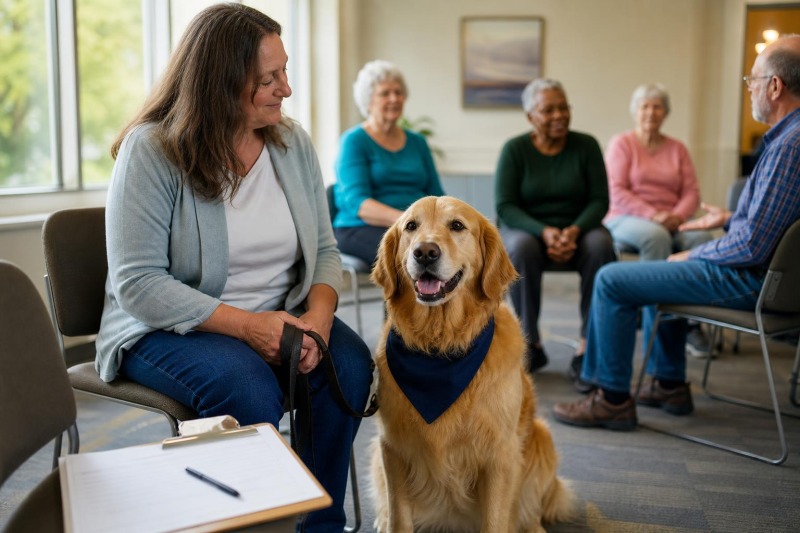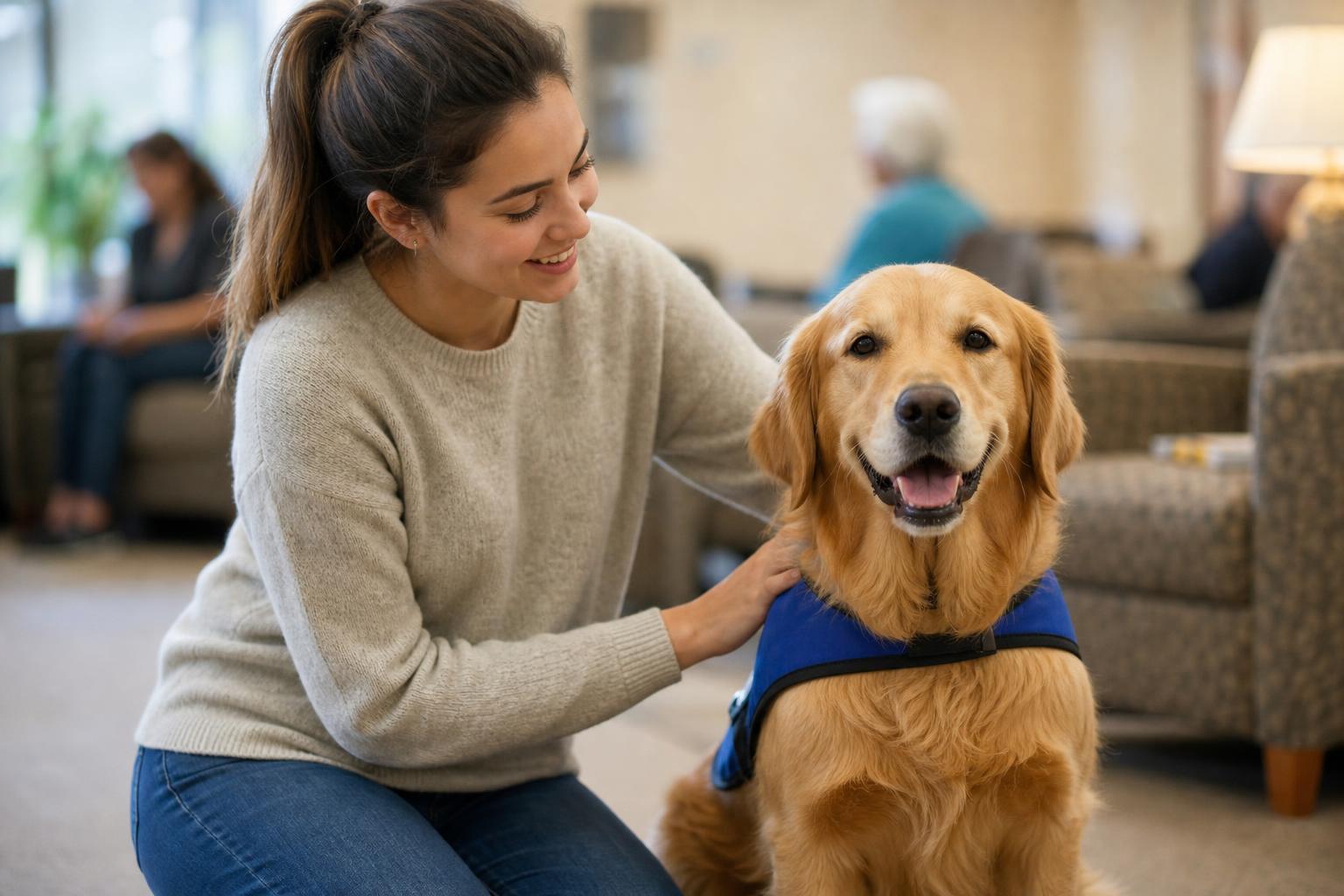
Therapy-dog volunteering starts with finding a reputable organization and understanding its commitments. Ask about evaluation, mentoring, insurance, facility arrangements, and the time required from both handler and dog.
For many people, the idea starts with a simple picture: a calm dog, a smiling child, a quiet visit that leaves both of them better than before. The truth is a little broader and a little richer. Therapy dog volunteering can happen in schools, hospitals, nursing homes, libraries, rehabilitation centers, veteran programs, hospice settings, and community outreach events. The work varies, but the heart of it stays the same. A therapy dog team shows up, offers steadiness, and gives people a reason to soften their shoulders for a spell.
What Therapy Dog Volunteer Work Really Looks Like
A lot of newcomers confuse therapy dogs with service dogs, and it is worth clearing the brush right away. A service dog is trained to perform specific tasks for a person with a disability and has legal access rights tied to that work. A therapy dog, on the other hand, is usually part of a volunteer team that visits others for comfort and emotional support. That means the dog is not there for the handler’s personal disability-related needs. The dog is there to serve the community.
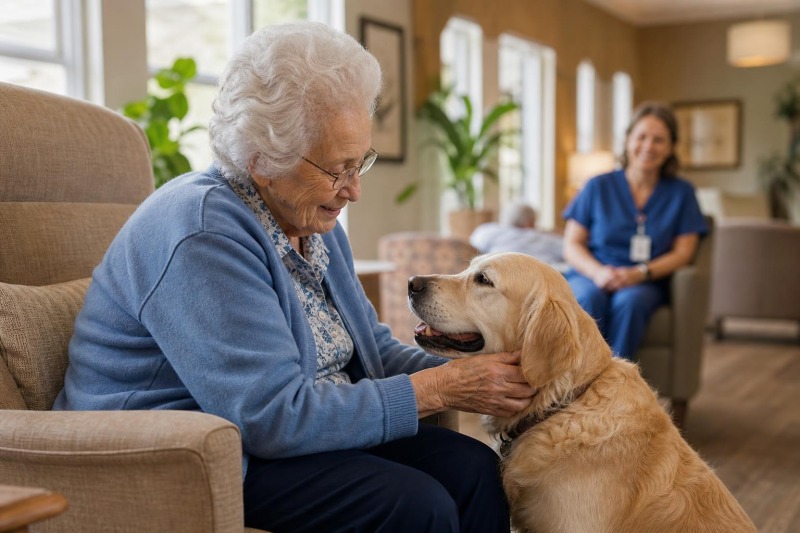
In practice, that volunteer role can look surprisingly diverse. One week a therapy dog may visit a senior living community where residents miss the feel of a dog leaning gently against their knees. Another week that same team may sit beside a young reader in a school library, helping the child practice aloud without fear of being corrected. Some teams work in hospitals where patients need a break from treatment routines. Others support counseling centers, college stress-relief events, or rehabilitation programs where motivation can run low and a dog’s quiet attention gives people a reason to engage again.
That is one reason so many handlers stay with it for years. It is not just volunteering. It is showing up where human need is plain to see, and letting a well-mannered dog do what good dogs have always done best: connect.
Hospitals and Medical Facilities
Hospitals are one of the best-known places for therapy dog visits, but they are not the easiest starting point. These environments can be busy, noisy, and full of unfamiliar smells. Elevators ding, carts rattle down halls, and people may approach from odd angles. A dog that thrives here usually has a steady temperament and a handler who can read the room as well as the dog. For the right team, though, hospital visits can be powerful. Patients dealing with surgery, long stays, or painful treatment often respond to the simple presence of a calm dog more quickly than they do to conversation alone.
Nursing Homes and Assisted Living Communities
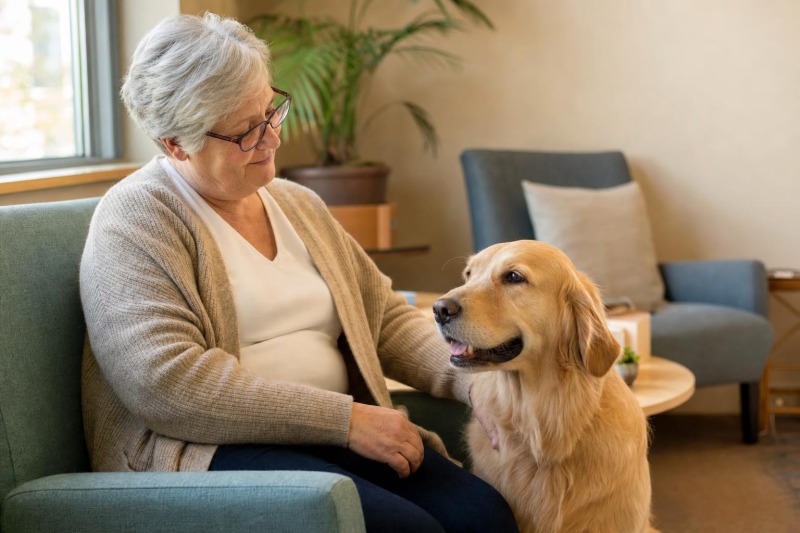
This is often a fine place for newer teams to begin. Residents are usually eager for visits, and the pace tends to be slower than in acute care settings. Memory can ride in on a dog’s fur. So can comfort. For handlers who value patient conversation and repeated relationships, senior communities offer some of the most meaningful therapy dog volunteer opportunities available.
Schools, Libraries, and Reading Programs
Children often find dogs easier to trust than adults, especially when they are nervous about reading or overwhelmed at school. Reading-to-dogs programs work because dogs do not judge, interrupt, or rush. A child can stumble over a word, start again, and keep going with a dog listening like every sentence matters. Therapy dog teams also serve in counseling offices, special education settings, and campus wellness events. In these spaces, the dog becomes a calming bridge that helps a child settle enough to learn, speak, or simply breathe easier.
Veteran, Crisis, and Community Support Programs
Some organizations bring therapy dogs to support veterans, first responders, or people affected by difficult events. Others appear at court support programs, disaster recovery centers, or community gatherings after tragedy. This work calls for a dog with uncommon stability and a handler with good judgment. It is not glamorous, and it should never be approached lightly. But for teams with the right training and support, these settings show just how far a therapy dog’s reach can extend.
How to Know If Your Dog Is Suited for Volunteer Work
Not every friendly dog is cut out for therapy work, and that is not a knock on the dog. Some are wonderful companion dogs at home and would rather not be hugged by strangers, touched unexpectedly, or guided through slick hallways and crowded lobbies. A therapy dog should be social without being pushy, calm without shutting down, and responsive to the handler even when distractions stack up. Manners matter. So does resilience.
A dog may sit, stay, and heel in the backyard but still struggle when a walker rolls by, a child squeals nearby, or a resident reaches with trembling hands. Good therapy dogs tolerate odd movement, medical equipment, varying voices, and long pauses. They do not need to be flashy.
The handler matters just as much. Volunteer organizations are not only evaluating the dog. They are looking at whether you can advocate for your dog, follow facility rules, keep visits appropriate, and end an interaction when your dog needs a break. The best teams work like a pair of seasoned hunters crossing rough ground together, each aware of the other and moving with purpose.
Training, Evaluation, and Registration
Most volunteer opportunities with therapy dogs require some combination of obedience training, temperament evaluation, health documentation, and registration through a recognized therapy dog organization. Facilities often want proof of vaccinations, regular veterinary care, grooming standards, and liability coverage through the registering group. Some locations also require background checks for handlers and orientation sessions before visits begin.
If you are just starting out, focus on reliable manners in real-world settings. Practice loose-leash walking, polite greetings, calm settling on cue, and comfortable handling by different people. Expose your dog gradually to wheelchairs, canes, elevators, slippery floors, and unusual noises if those things are likely to appear in your target volunteer setting. A therapy dog should not be surprised by the world every time it opens up around them.
Matching the Dog to the Mission
A small, gentle dog may shine in one-on-one reading visits or memory care settings. A larger dog with a rock-steady presence may be ideal for college de-stress events or rehabilitation centers. Some dogs love the close attention of seated visits, while others are happier in open community spaces with brief interactions. The smartest move is not to force a dog into a prestigious placement. It is to find the post where the dog can succeed and the people served truly benefit.
What Makes a Volunteer Team Valuable
The finest therapy dog teams are not there to perform tricks or become the center of attention. They bring consistency, patience, and emotional steadiness. They respect boundaries. They understand infection control policies. They know that some people want to talk at length and others only want to touch a dog’s shoulder for three seconds before turning away. Volunteer work is not about proving your dog is special. It is about making room for someone else’s need.
That humble mindset is what keeps teams welcome in facilities for the long haul. Staff members notice the handlers who arrive on time, clean and prepared, who read subtle signals, and who do not overstay. They remember the dog that lies quietly by a hospital bed instead of lunging for treats, and the handler who gently redirects a rough interaction before it turns stressful. Professionalism may sound like a stiff word in work built around comfort, but it matters. Good intentions open the gate. Reliability keeps it open.
The Rewards of Volunteering with a Therapy Dog
There is a certain kind of satisfaction in seeing your dog do something useful in the world. Not flashy. Not loud. Useful. A child reads a full page without freezing. A resident who has not spoken much that week shares a memory. A patient headed into treatment smiles for the first time that morning. These moments do not always look big from the outside, but if you have spent enough time around dogs and people, you learn that the smallest turns in a hard day can matter plenty.
For many handlers, therapy dog volunteering also deepens the bond they share with their dog. You begin to work as a team under pressure, in unfamiliar places, with a purpose beyond yourselves. That kind of partnership builds trust. And if you are the sort who values a dog for more than pedigree papers or polished commands, there is real pride in seeing your animal bring calm where it is needed most.
Choosing the Best Next Step
If this path appeals to you, start local. Look for therapy dog organizations and community programs in your area, then ask what facilities they serve and what standards they require. Be honest about your dog’s temperament, your own schedule, and the settings that feel like a good fit. A strong beginning is worth more than a rushed one.
Volunteer opportunities with therapy dogs continue to grow because people need connection, and dogs have a way of offering it clean and direct. If your dog has the right temperament and you are willing to prepare properly, this can become one of the most worthwhile commitments you ever make together. A fine dog by your side and a chance to help someone who needs it—that is good ground to walk.