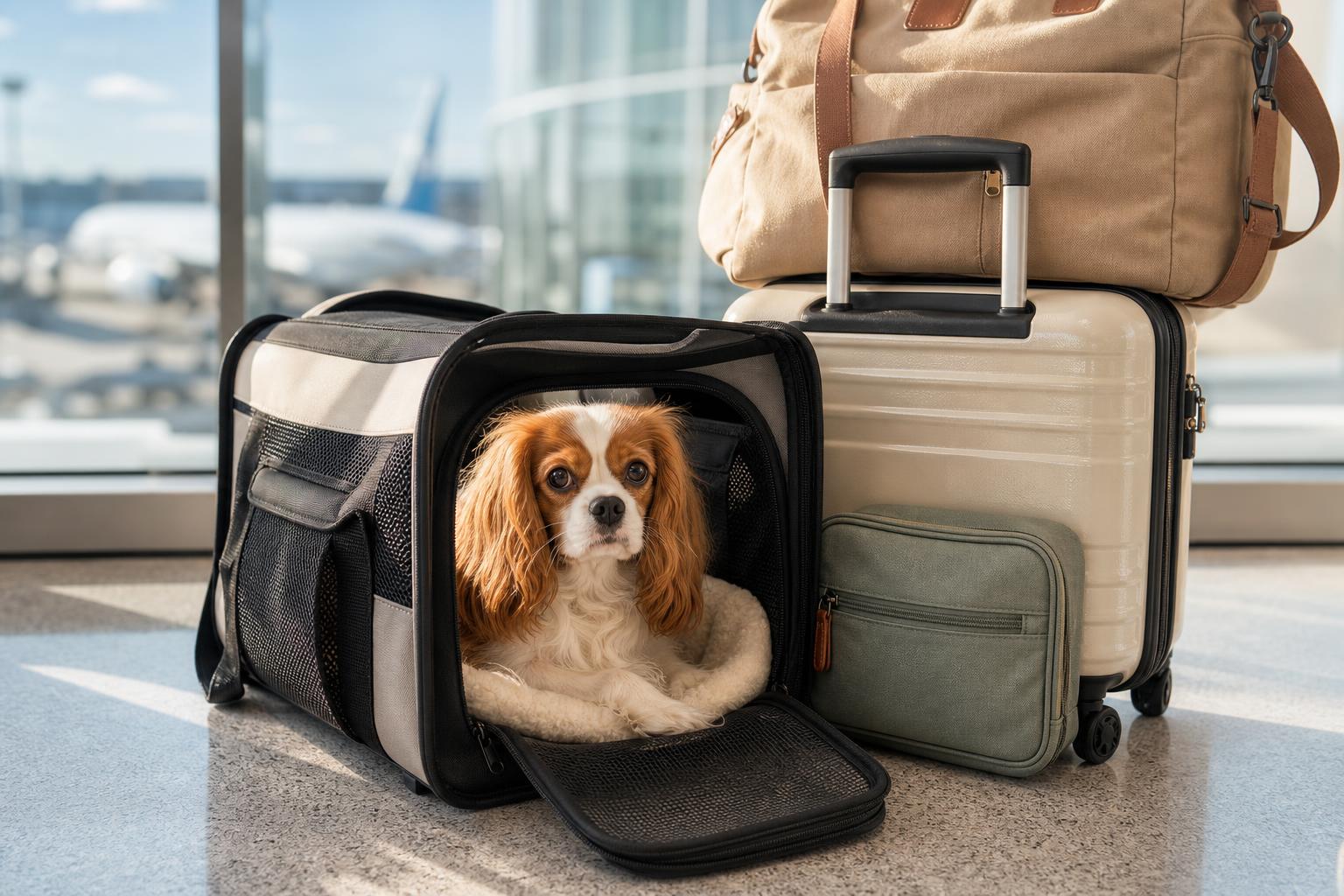
Travel with a small dog goes more smoothly when restraint, breaks, accommodation, and familiar supplies are planned ahead. Practice with the carrier or vehicle setup before the first long trip.
A small dog can become a wonderful travel partner because it is portable, adaptable, and often deeply bonded to its person. That makes companion dogs especially well suited for trips, and with the right training, some therapy dogs and service dogs can travel with remarkable calm. Still, little dogs have their own needs. They chill faster, dehydrate quicker, can be stepped on in busy places, and may feel overwhelmed by noise, strange floors, elevators, luggage carts, and crowds.
The good news is that traveling with small dogs does not have to be stressful. If you put in the work before the trip and keep your dog’s comfort in mind once you are moving, a little dog can learn to travel like an old hand.
Why Small Dogs Travel Differently
A small dog experiences the world close to the ground. That matters more than many owners realize. A slick hotel lobby floor can feel as uncertain as ice. A rumbling truck stop can sound like thunder rolling overhead. Even a friendly stranger reaching down too fast can seem like a hawk dropping from the sky. Small dogs do not just travel in a smaller body. They process travel with a different sense of vulnerability.
That is especially important for companion dogs whose main job is emotional closeness, for therapy dogs expected to remain gentle and composed around new people, and for service dogs that must stay steady under pressure. Traveling exposes every crack in a dog’s confidence. If your dog startles easily at carts, loudspeakers, automatic doors, or unfamiliar handling, a trip will magnify that.
So the first rule is simple: never mistake small size for easy temperament. Build confidence before you ask for endurance.
Start Training Before the Trip
The best travel day is usually won a week, a month, or even a season before you leave. Let your dog practice short car rides that end somewhere pleasant. Visit a pet-friendly store. Walk through a parking lot. Sit near traffic at a safe distance. Let your dog spend time in the carrier at home with the door open before you ever zip it up and head out. If your dog is meant to work as a therapy dog or service dog, this kind of steady exposure is part of building reliability, not just convenience.
You do not throw them straight into the hard stuff and expect composure. You introduce the world in manageable doses until strange things become ordinary.
Preparing for a Road Trip with a Small Dog
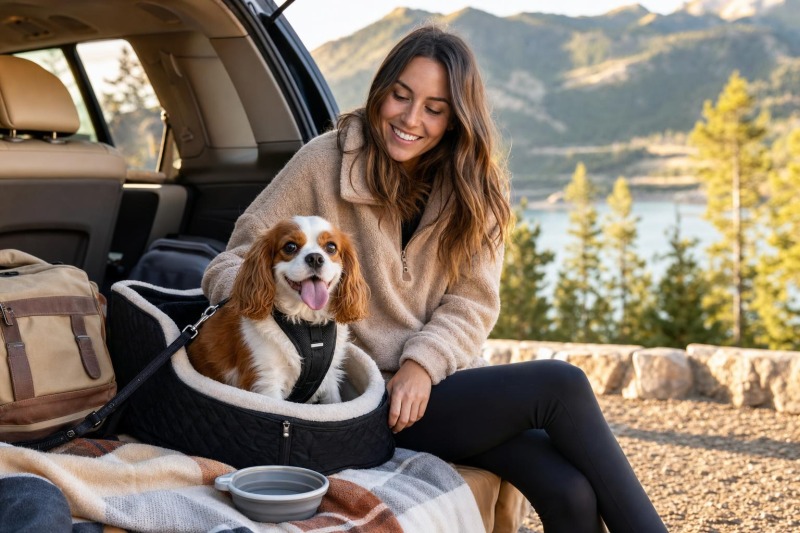
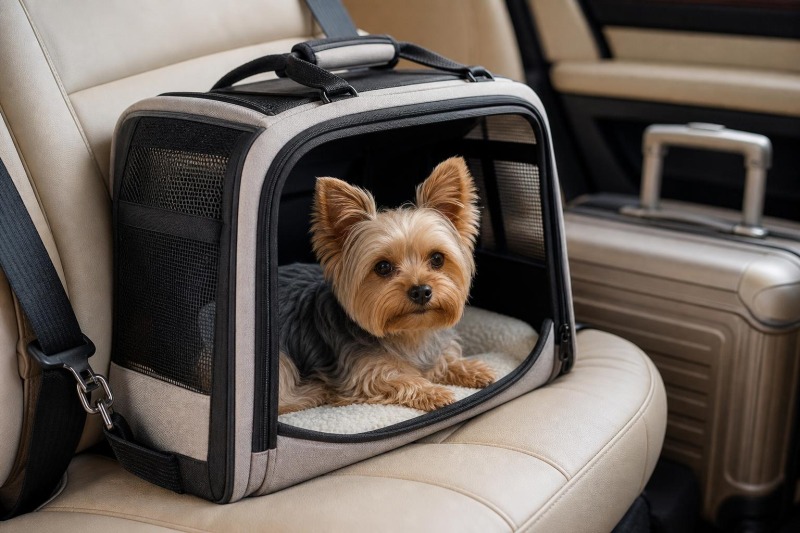
Road travel is often the easiest way to bring a small dog because you control the pace, the temperature, and the number of stops. Even so, a loose little dog in a moving vehicle is not safe. In a sudden stop, that dog can be thrown, crushed, or injured in ways that happen too fast to prevent. A secured travel crate or a properly fitted dog car seat system is the smarter choice.
Many small dogs settle best when the carrier feels like a den. Put in a familiar blanket that smells like home, but do not overstuff the space with bedding if your dog runs warm or tends to chew when anxious. Keep water available at stops, and do not wait until your dog looks distressed before offering a break. Small dogs can go from comfortable to worn out in a hurry, especially in heat.
Feed lightly before a long drive if your dog gets motion sick. If your small dog drools, yawns excessively, licks lips, or seems glassy-eyed in the car, talk to your veterinarian before a big trip. There are safe ways to help, and they are far better than hoping the dog simply toughs it out.
Managing Rest Stops and Outdoor Breaks
Never assume a rest area is safe just because it has a patch of grass. Small dogs should stay leashed every time the car door opens. They can slip under benches, dart after birds, or vanish under a neighboring truck in a blink.
Choose your break spots with a hunter’s eye. Scan the ground, check the edges, listen for traffic, and watch for larger loose dogs. At dawn and dusk, stay alert in rural areas where wildlife may move close to roadsides. What looks like a peaceful stretch of grass can hold all kinds of distraction and danger for a little dog with a quick nose and no sense of scale.
Flying with Small Dogs
Air travel takes more planning and less guesswork. If your small dog will fly in cabin, confirm the airline’s carrier size rules, health requirements, and pet policies well in advance. Do not trust old information or hearsay. Airline rules change, and what was acceptable one season may not be accepted the next.
A small dog that flies well is usually a dog that has already learned to rest quietly in a carrier. That is the heart of it. If the carrier only appears on stressful days, your dog will read it as a warning sign. If it is part of daily life at home, it becomes familiar ground. Practice longer periods in the carrier, short trips to busy environments, and calm exits and entries.
For service dogs, airline travel involves different expectations and legal considerations than pet travel, so owners should stay current on regulations and documentation needs where applicable. For therapy dogs and companion dogs traveling as pets, comfort and compliance should both be priorities. A tired dog that has had a chance to relieve itself and settle before boarding is often much easier to manage than a keyed-up dog carried straight from the chaos of check-in.
Keeping Stress Low in Airports and Hotels
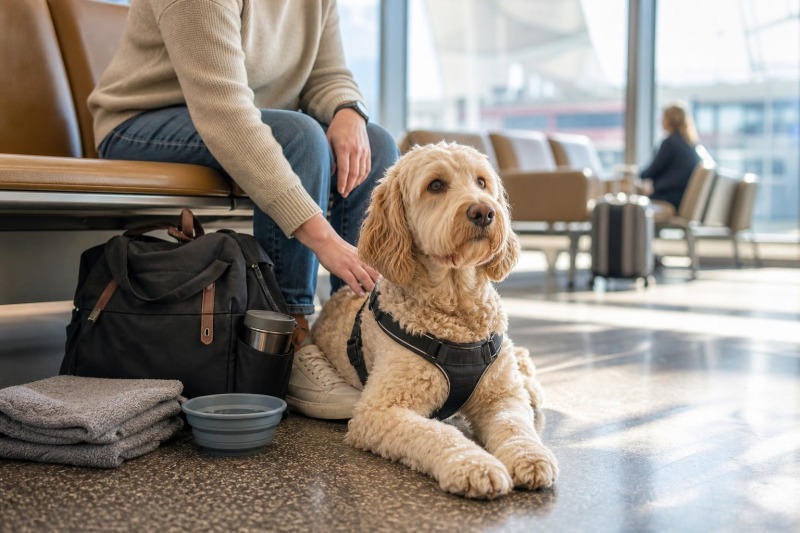
Airports can overwhelm small dogs because everything happens at once. Wheels clatter, announcements echo, crowds squeeze together, and strangers move unpredictably. Your job is to act like steady ground. Keep your own pace calm. Do not fuss over every little reaction. Quiet reassurance and clear handling help more than nervous chatter.
Hotels are another kind of challenge. A small dog may hear doors slam, footsteps pass, ice machines hum, and voices drift under the door all night long. Bring one or two familiar items from home, keep your evening routine as normal as possible, and give your dog a moment to inspect the room before asking for complete calm.
Health, Safety, and Comfort on the Move
Traveling with small dogs means thinking ahead about temperature, fatigue, and stress. Little dogs can overheat fast in warm cars and become chilled fast in cold weather. Never leave a dog unattended in a vehicle when temperatures are risky, even for a short errand. That risk climbs faster than most people believe.
Carry your dog’s vaccination records, identification tags, and microchip information. Pack enough food for the full trip instead of assuming you can buy the same brand on the road. Sudden food changes can upset the stomach, and that is the kind of problem no traveler wants halfway through a long day.
If your dog takes medication, bring more than you think you will need and store it where it is easy to reach. For therapy dogs and service dogs in particular, maintaining health and routine is part of keeping behavior dependable. A dog that is hungry, uncomfortable, or off schedule will not perform at its best.
Helping Nervous Small Dogs Build Confidence
Some small dogs are born bold, but many need patient handling to become comfortable travelers. If your dog trembles, pants heavily, refuses food, or clings tightly in new places, do not label it stubbornness. More often than not, that dog is telling you the world feels too big. Slow down. Shorten the trip. Lower the difficulty. Reward calm behavior. Let confidence grow in layers.
That kind of patience pays off for every type of dog, but especially for companion dogs that provide emotional support through closeness, therapy dogs that visit unfamiliar settings, and service dogs that must remain steady no matter where the day leads. Travel confidence is not built through force. It is built through repetition, trust, and fair expectations.
Making Travel Enjoyable for You and Your Dog
The finest trips with a small dog do not happen because everything goes perfectly. They happen because the dog trusts you, the routine is solid, and small problems stay small. Maybe your hotel check-in runs late. Maybe the rain starts just as you stop for a break. Maybe the dog barks once at a hallway sound and then settles back into its blanket. Those are ordinary travel moments. What matters is that your dog knows how to recover.
There is a particular satisfaction in seeing a little dog learn the rhythm of the road. At first they watch every passing truck and every opening door. Then, after enough miles and enough calm handling, they begin to understand. This is just another day with you. Another stop. Another path to walk. Another place to rest. That is when traveling with small dogs becomes less of a chore and more of a pleasure.
Whether you are raising a devoted companion dog, preparing a therapy dog for broader experiences, or supporting the work of a service dog, the same truth applies: good travel comes from preparation, steadiness, and respect for the dog in front of you. Small dogs may be little, but when handled well, they can travel with the grit and grace of partners twice their size.