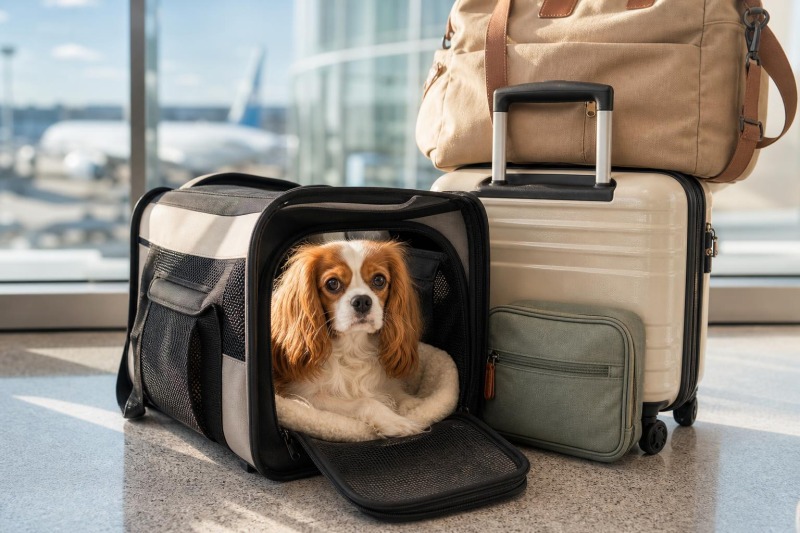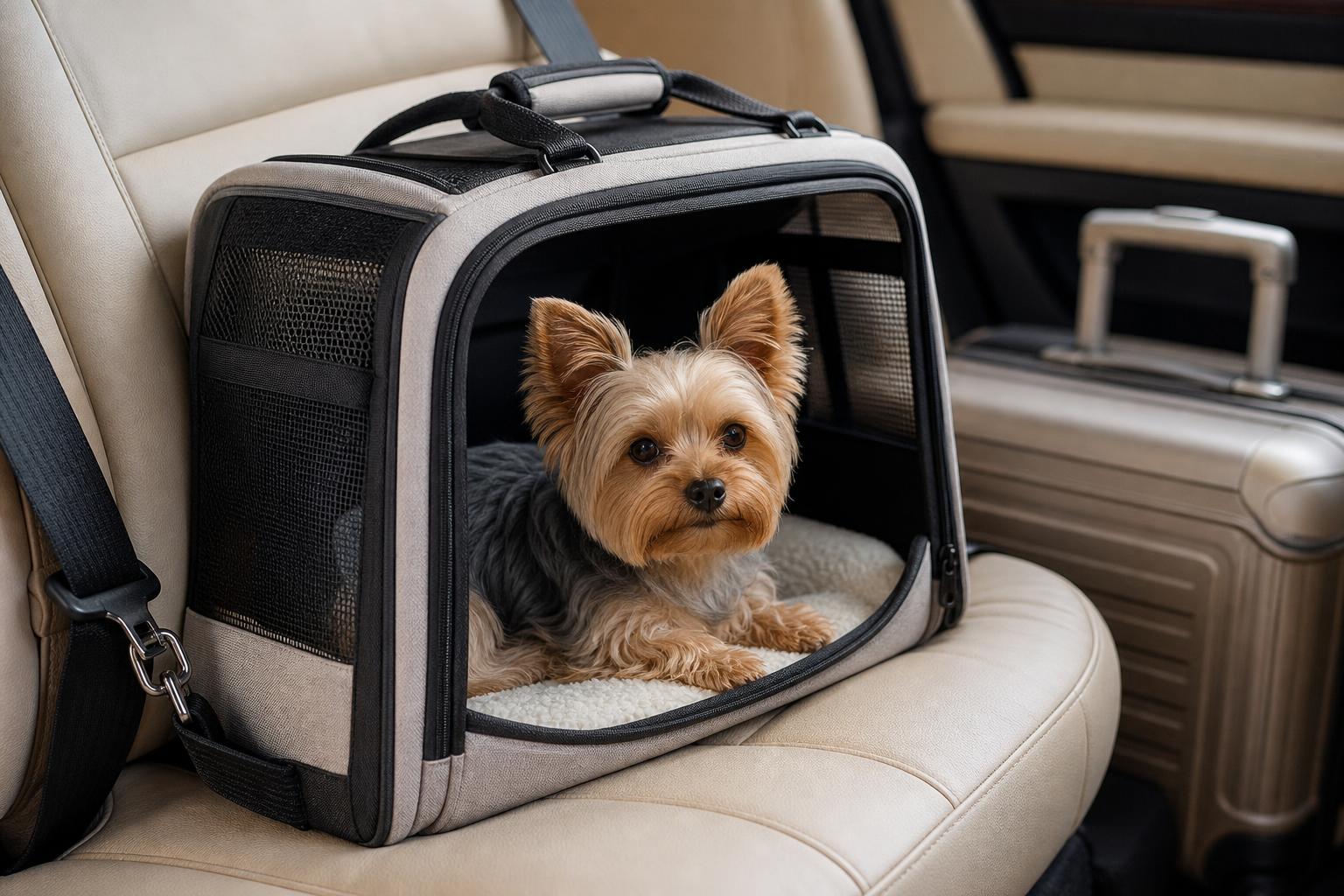
A carrier needs to fit both the dog and the journey. Check ventilation, stability, access, and the transport provider's requirements, then introduce the carrier gradually at home.
Whether you share your life with a Chihuahua, Yorkshire Terrier, Maltese, Pomeranian, Toy Poodle, Papillon, or another small companion dog, choosing the right travel carrier matters. It matters even more when the dog is involved in therapy visits, public outings, or service-related support work where stability, safety, and predictable handling are part of daily life. A tiny dog may be light enough to tuck under one arm, but that does not mean they should be carried around loose. A proper carrier gives structure, security, and a place where the dog can settle instead of brace.
Why the Right Carrier Matters for Toy Breeds
Toy breeds are small, but they are not fragile ornaments. They are real dogs with real needs, and their size changes how travel affects them. A bump in the road feels bigger. Sudden stops can shift their whole body. Too much room inside a carrier lets them slide and scramble, while too little room leaves them cramped and anxious. Their tracheas can be delicate, their joints can be fine-boned, and their body temperature can shift quicker than larger dogs. That means a carrier for a toy breed needs to balance support, airflow, warmth, and restraint without overdoing any one part.
Out in the field, that kind of thinking gets corrected fast. A dog who gets tossed around in a too-large setup is not comfortable. The same holds true in travel. A good carrier should let your dog stand, turn, and lie down naturally, but not leave them rolling around every time you set the bag down or change direction. A snug, well-designed space often helps a toy breed relax because it feels like a den, not a drifting box.
Comfort and security go hand in hand
Many toy breeds bond tightly to their people. That makes them wonderful companion dogs, and in the right situation, excellent therapy dogs too. It also means they may feel stress when the environment gets loud, crowded, or unfamiliar. The right carrier helps soften that pressure. Good mesh panels allow the dog to smell and see enough to stay oriented without feeling exposed from every angle. Soft but supportive bedding cushions the body. A stable base keeps the carrier from sagging like a hammock. Those little design details matter more than brand names and trendy colors.
What to Look for in a Travel Carrier
Start with size. Measure your dog from chest to rear, and from floor to top of the shoulders while standing. Then compare those measurements to the actual interior dimensions, not just the label on the tag. Many carriers claim to fit small dogs, but toy breeds vary more than people think. A dainty six-pound dog with long legs needs a different fit than a round-bodied seven-pound dog with a compact frame.
Ventilation is the next piece of the puzzle. Mesh windows on multiple sides help with airflow and prevent that closed-in feeling. Still, too much open mesh can make a nervous dog feel overexposed. If the bottom caves in when you lift it, move on. A toy breed needs a flat, supported base that keeps the spine and joints in a natural position.
Pay close attention to closures and restraint points. Strong zippers, locking clips, and an interior safety tether attached to a harness can prevent a bad surprise at the worst moment. Do not clip a safety tether to a collar in a moving carrier. Tiny necks and delicate airways are not built for that kind of pressure. A soft, well-fitted harness spreads force more safely.
Soft-sided vs. hard-sided carriers
For most everyday travel, soft-sided carriers work well for toy breeds. They are lighter, easier to store, and often more comfortable to carry through waiting rooms, hotels, and airports. Many are designed to fit under an airline seat, which matters if you plan to fly. Hard-sided carriers can be a good choice for car travel or situations where extra impact protection matters, but they are bulkier and less forgiving in tight spaces. There is no universal winner. The best choice depends on how you actually travel, not how you imagine you might once a year.
Best Uses for Different Travel Situations
A toy breed headed to a therapy visit at a nursing home has different needs than one taking a cross-country flight. In the car, you want a carrier that can be secured and that does not tip when you turn or brake. Loose dogs in vehicles are unsafe, and that goes double for little ones. In a crowded public setting, you may want quieter sides, easier top access, and pockets for wipes, medical paperwork, and a collapsible water dish. For airline travel, always check the carrier dimensions allowed by the specific airline, because rules can change and they are not all singing from the same hymn book.
If your dog works as a service dog in a legitimate, task-trained role and is small enough to be carried during parts of travel, the carrier still needs to allow quick, calm access without creating confusion. A carrier should support the dog’s job and well-being, not get in the way of it. If your dog is primarily a companion or therapy dog, the goal is just as important: keep the dog steady, comfortable, and able to recover from environmental stress instead of stacking anxiety from one outing to the next.
Carrier Features That Make Life Easier
A washable liner is worth its weight in gold. Small dogs can get motion sick, have accidents under stress, or track in mess you did not see coming. Exterior pockets are useful, but they should not make the carrier lopsided when loaded. Shoulder straps should be padded, and if the carrier is marketed as hands-free, it ought to sit level against your body rather than swinging around like a game bag on rough ground.
Top-loading access can be especially helpful with toy breeds who do not enjoy being pushed headfirst into a narrow opening. A side opening is still useful, but a carrier that gives you both options makes transitions smoother. Some dogs prefer to walk in and turn around on their own. Others settle better when you can gently lower them in while supporting the body. Knowing your dog’s temperament should guide what features matter most.
Do not ignore the dog’s coat and climate needs
Long-coated toy breeds can overheat faster than their owners realize, especially inside heavily padded carriers. On the other hand, fine-coated little dogs can get chilled in air conditioning or winter weather. You need a carrier that works with the season and the dog in front of you. Sometimes that means a breathable design and a cooling mat. Sometimes it means a cozy liner and less open exposure. Tiny dogs do not have much room for environmental extremes, so common sense counts for plenty.
Training Your Toy Breed to Love the Carrier
The best carrier in the world is no good if your dog sees it and heads for the hills. Acclimation should begin at home, long before a big trip. Set the carrier out in a quiet room with the door open. Let your dog investigate it at their own pace. Place a familiar blanket inside, add a few treats, and reward calm entry. Feed meals near it, then inside it. Build positive associations before you ever zip the door.
Once the dog is comfortable resting inside, begin with short lifts and short walks around the house. Then move to brief car rides that do not end at the vet. That part matters. If every carrier trip leads to poking, prodding, and strange smells, many dogs will sour on the whole setup. A trip to a park bench, a friend’s house, or a quiet errand can help the dog learn that the carrier predicts many different outcomes, not just stressful ones.
Common Mistakes to Avoid
One of the most common mistakes is buying for appearance instead of function. Another is assuming a tiny dog does not need structured support because you can simply hold them. A nervous toy breed that is constantly passed from arm to arm, exposed to every face and sound, often becomes more tense, not less. The carrier should be a refuge, not a last-minute container.
It is also a mistake to leave a dog in a carrier too long without breaks, especially during long travel days. Even small dogs need chances to stretch, hydrate, and reset in a safe area. And finally, never wait until departure day to test the carrier. Check the zippers, straps, base, and fit well ahead of time. A failure in the driveway is inconvenient. A failure in a terminal, parking lot, or clinic is something else entirely.
Traveling with a toy breed is a little like carrying fine gear through rough country. You do not choose equipment by looks alone. You choose what holds up, what protects what matters, and what performs when conditions are less than perfect. The right travel carrier should make your dog feel safe, support healthy posture, allow proper airflow, and fit your routine whether you are heading across town or across state lines.
For companion dogs, therapy dogs, and small service dogs alike, a quality carrier is part of responsible care. It keeps your little partner close without putting them at risk. When you choose well and train patiently, the carrier becomes more than luggage. It becomes familiar ground your dog can trust, and that kind of confidence travels a long way.