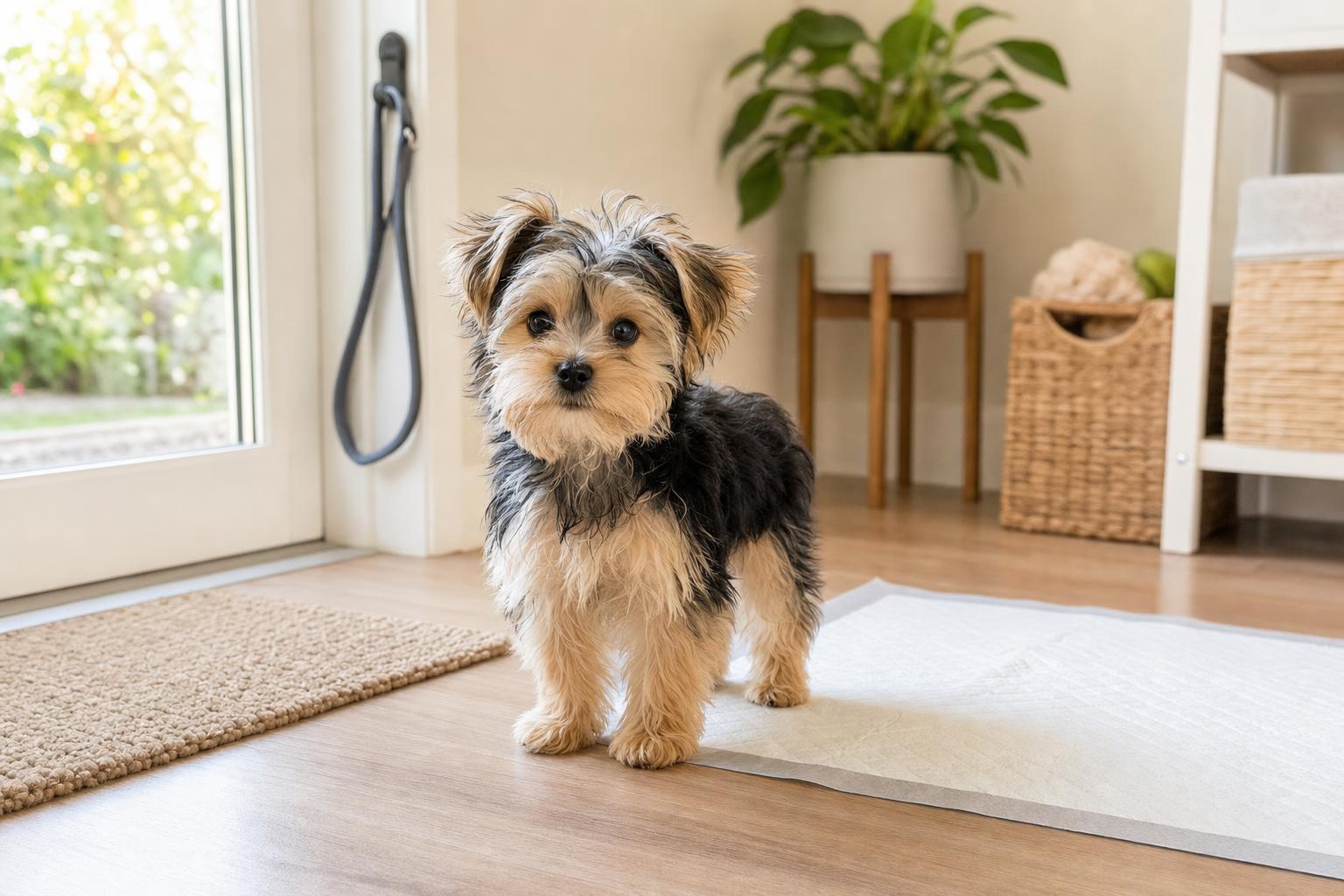
House training a toy dog requires frequent opportunities, predictable routines, and rewards for using the chosen location. Sudden setbacks or changes in toileting may need veterinary assessment.
If you are bringing home a toy breed as a companion dog, a future therapy dog, or simply a faithful little shadow for your daily life, solid house manners matter. Clean habits build confidence in the dog and peace in the home. More than that, reliable house training lays the groundwork for every other kind of stability. A dog that understands routine, timing, reward, and clear expectations is better prepared for public work, social visits, and calm living indoors.
Why House Training Toy Breeds Can Be More Challenging
Toy breeds often learn quickly, but they also need quicker turnaround from their handlers. A Chihuahua, Maltese, Yorkie, Pomeranian, Toy Poodle, or Papillon does not have much room for delay once the urge hits. When folks say their tiny dog has accidents “out of nowhere,” what usually happened is they missed a small window. Larger dogs often buy you more time. Toy breeds generally do not.
There is also the issue of visibility. A big retriever circles, paces, and stands out when he is looking for a place to relieve himself. A toy dog may give a subtle glance, a little drift toward a rug, or one fast sniff near the table leg, and if you are making coffee or checking your phone, that moment is gone.
Another common problem is inconsistency. Because toy breeds are easy to pick up, easy to carry, and easy to forgive, owners sometimes relax the rules. They allow the pup to roam too early, skip outdoor trips in bad weather, or laugh off accidents because the mess is small. Small mess or not, the lesson to the dog is still the same. If the habit is practiced, the habit gets stronger.
Start With a Tight Routine
If you want a toy breed to become dependable, routine is your best friend. Dogs learn house training fastest when food, water, movement, rest, and potty trips happen in a predictable pattern. In the first weeks, take the dog out first thing in the morning, after meals, after naps, after play sessions, after drinking, and right before bed. For very young puppies, you may also need one nighttime trip for a while.
Think like a woodsman tracking sign. You are not guessing. You are observing patterns. Feed at set times instead of free feeding. Watch how long after meals the puppy typically needs to go. Notice whether excitement triggers urination. Pay attention to weather, too. Some toy breeds dislike cold ground, wet grass, or wind. That does not excuse accidents, but it does tell you what kind of setup you need to make success more likely.
Use the same potty area each time when possible. Familiar scent helps a dog understand the purpose of the trip. Stand still, keep the outing businesslike, and give the pup a cue you use every time. Once the dog goes, reward immediately with praise and a small treat. The timing matters. Rewarding a minute later back in the kitchen is like congratulating a hunter after the truck is loaded and the birds are cleaned. The dog needs to know exactly what earned the reward.
How Often Should a Toy Breed Puppy Go Out?
In the early stage, more often than most people expect. Very young toy breed puppies may need a break every hour or two when awake. Some can hold it a bit longer, some cannot. Age, size, diet, activity, stress, and health all play a role. The mistake is waiting for the dog to prove it can hold it. Early on, your job is to prevent mistakes, not test endurance.
Crate Training and Confinement Done Right
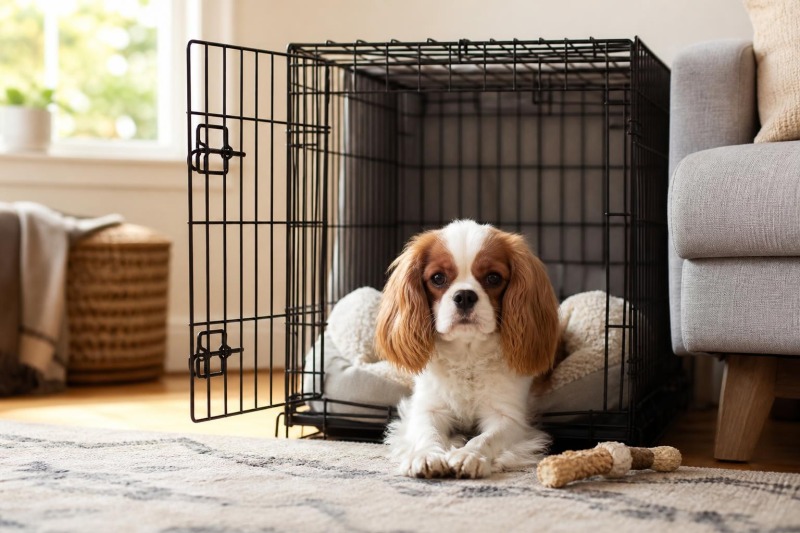
A crate can be a mighty useful tool, but only when it is used with sense. The crate should be large enough for the dog to stand, turn, and rest comfortably, but not so roomy that one end becomes a toilet. Most dogs naturally try to keep their sleeping area clean, and that instinct can help you during training. Still, a toy breed puppy cannot be left in a crate too long and expected to succeed just because the crate is there.
When you cannot supervise, use a crate or a small exercise pen with a clearly defined resting space. For some owners, especially those living in apartments or dealing with harsh weather, a pen setup with an indoor potty option may be part of the plan. If you choose that route, be clear and consistent. Do not teach the dog that any soft surface in the house might count. Give one legal spot and manage the rest of the environment carefully.
Confinement is not punishment. It is management. Good dog men have always known that management prevents bad habits from taking root. Freedom should be earned in stages. A toy dog that has stayed clean in one room for a couple of weeks may graduate to two rooms, then more. Letting a new puppy wander the whole house is like dropping a green dog in thick cover and expecting polished work. It is too much, too soon.
Accidents: What They Mean and How to Handle Them
Accidents are information. They tell you the routine is not tight enough, supervision slipped, the dog was given too much space, or there may be a medical issue. They are not a reason to scold, rub a dog’s nose in the mess, or act like the puppy has betrayed you. Harsh correction around pottying often creates sneaky behavior, and sneaky behavior is the last thing you want in a future therapy or service prospect.
If you catch the dog in the act, interrupt gently and move quickly to the proper potty spot. If the dog finishes there, reward. If you find the mess later, clean it thoroughly with an enzymatic cleaner and move on. Dogs return to places that smell like bathrooms. If the scent remains, your floor keeps calling them back.
Usually that dog either has too much freedom or has learned a texture preference. Grass outside feels one way, but carpet indoors may feel close enough. In those cases, removing tempting surfaces for a while and going back to stricter supervision often tightens the screws back down.
When to Suspect a Health Problem
If a toy breed is urinating unusually often, struggling to hold it despite a solid routine, dribbling, having diarrhea, or suddenly regressing after doing well, speak with your veterinarian. Urinary tract infections, parasites, digestive upset, and other medical issues can wreck house training progress. Tiny dogs can also be more sensitive to dietary changes and stress than many owners realize.
Indoor Potty Options: Helpful Tool or Risky Shortcut?
This is where honest talk matters. Indoor potty systems can be useful for some toy breed homes, especially for elderly owners, high-rise living, severe climates, or dogs with physical limitations. They can also become a crutch if used carelessly. The trouble comes when the dog is not clearly taught the difference between the designated potty area and the rest of the home.
If you use pads, trays, or a grass patch, keep them in one consistent location and train to that spot with the same seriousness you would use for outdoor toileting. Do not scatter pads around the house. That only blurs the picture. Predictability matters in public-facing dogs.
House Training and the Companion, Therapy, or Service Dog Path
A house-trained dog is easier to live with, but the value goes deeper than convenience. Companion dogs need trust inside the home. Therapy dogs must be stable, clean, and comfortable with routine. Service dogs require precision in nearly every part of life, including toileting on cue and staying composed in unfamiliar environments. House training teaches self-control, handler awareness, and consistency from the beginning.
That does not mean every toy breed is destined for advanced work, but every toy breed benefits from the same careful foundation. A little dog with reliable bathroom habits can travel more easily, settle in other homes more gracefully, and handle changes with less stress. Those are no small things.
Common Mistakes Owners Make With Toy Breeds
The biggest mistake is assuming small means easy. The second is giving freedom before the dog has earned it. The third is inconsistency in timing and reward. Add in weak cleaning of accident spots, too little supervision, and mixed rules between family members, and you have the recipe for a dog that never becomes truly dependable.
Another mistake is carrying the dog outside, setting it down, then immediately chatting with a neighbor or scrolling through messages while the puppy gets distracted. A potty trip should have a purpose. Quiet, focused, direct. Give the cue, wait the dog out, reward success, and then move on with the day. The clearer you are, the faster the dog learns.
Patience Wins the Long Game
It rarely happens in one straight line. There may be setbacks during teething, weather changes, travel, schedule disruptions, or growth stages. That is normal. Good training is less about dramatic breakthroughs and more about handling the ordinary days well.
When you house train a toy breed properly, you are doing more than keeping rugs clean. You are teaching the dog how to live alongside people with clarity and confidence. For a companion dog, that means a calmer home. For a therapy dog prospect, it means better reliability in places where manners matter. For a service dog candidate, it supports the disciplined routine that working life demands.
These tiny dogs are not too delicate to learn, and they are not too stubborn to succeed. They simply require close handling and fair expectations. Keep your routine steady, your eyes open, and your timing sharp. Do that, and even the smallest dog in the house can grow into a dependable partner with clean habits and a settled mind.