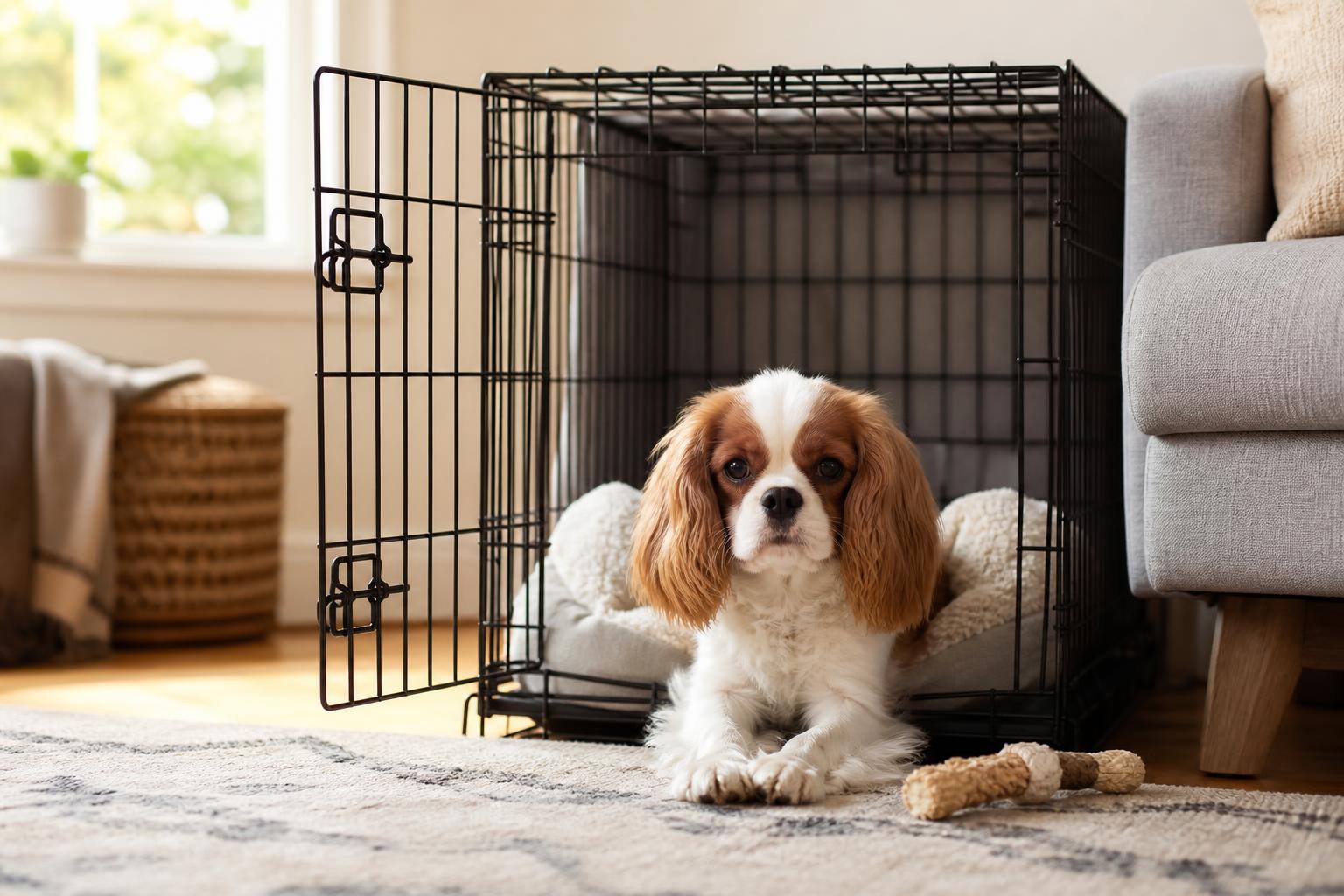
A crate can be a resting and management tool when a small dog has learned to feel comfortable inside it. Introduce it gradually and keep confinement appropriate to the dog's needs.
Small dogs especially need that steady foundation. They are easier to scoop up, easier to spoil, and too often people forget they still need structure. A little dog may ride in your arms instead of in the back of a truck, but his mind works the same way. He needs clear expectations, a safe routine, and a place he can call his own.
Why Crate Training Small Dogs Matters
For a small dog, the crate can serve a whole string of purposes. It helps with house training because dogs naturally avoid soiling the place where they sleep. It protects curious pups from getting into cords, medicine, shoes, and the thousand other things scattered around a home. It also teaches emotional control. That matters whether you are raising a family companion, preparing a therapy prospect, or building the calm routines a service dog needs to succeed in public and at home.
Folks carried them everywhere, let them nap on a lap every hour of the day, and then wondered why the dog panicked when life required a little separation. A crate, used properly, helps prevent that. It teaches a dog that being alone does not mean being abandoned. It means rest. It means quiet. It means the world is still safe even when you are not right there.
Choosing the Right Crate for a Small Dog
The best crate for a small dog is one that feels secure without being cramped. Your dog should be able to stand, turn around, and lie down comfortably. For many toy and small breeds, that means avoiding oversized crates. Too much extra room can make house training harder and can leave a nervous little dog feeling exposed instead of protected.
Wire crates work well for airflow and visibility, while hard-sided crates can feel more den-like, especially for timid dogs. Small dogs can chew, scratch, and panic just as hard as a big one if they are not ready. Tucked away completely can make a pup feel isolated, but planted in the middle of a chaotic hallway can keep him from ever truly settling.
What to Put Inside the Crate
Keep the setup simple at first. A washable crate pad or folded blanket is often enough, though some pups do better with less bedding if they chew. A safe chew can help create a positive association. Water depends on the dog, the duration, and the stage of training. For short sessions, most healthy pups do fine without it. For longer periods, especially in warm conditions, attach a spill-resistant bowl if your dog can handle it calmly.
This is a training tool and a resting place, not a toy chest. Too many items create mess, distraction, and risk. The goal is comfort and calm, not stimulation.
How to Introduce the Crate Without Stress
The first introduction should feel easy. Set the crate up with the door open and let your small dog explore it on his own. Toss a few treats just inside, then deeper toward the back. Feed a meal near the crate, then inside it if the dog is comfortable. Let curiosity do some of the work. The first lesson is not “stay in there.” The first lesson is “good things happen here.”
If you pushed too much, he shut down. So we slowed everything down. We fed him beside the crate for a day, then just inside the threshold, then all the way in. By the third evening, he was walking in on his own to check for supper and curling up there after. No battle, no drama, no force. That is how you want it.
Once your dog is entering willingly, close the door for a few seconds while he enjoys a treat or meal, then open it before he worries. Gradually lengthen the time. The secret is to build confidence in layers. If you rush and the dog starts barking, pawing, or panicking, you may need to back up a step.
Crate Training Small Dogs at Night
Nighttime can make new owners nervous, especially with a tiny puppy. The easiest path is to keep the crate near your bed at first. Your small dog can smell you, hear you breathe, and learn that nighttime means sleep, not isolation. If the puppy wakes and fusses, take him out calmly for a bathroom break, then return him to the crate with as little excitement as possible.
Do not turn every nighttime outing into playtime. Keep lights low, your voice soft, and your pace steady. A lot of folks accidentally teach a puppy that crying at 2 a.m. earns cuddles, treats, and a living room party. Then they wonder why the pattern keeps repeating. You want the dog to learn the difference between a real bathroom need and simple protest.
Small dogs often have small bladders, so age matters. Young puppies cannot hold it all night. Expect to get up, and do it without resentment. You are not losing a contest. You are laying down habits that pay off for years.
When Crying Should and Should Not Be Ignored
This is where common sense matters. If a puppy has been asleep for a few hours and wakes up whining, he may truly need to relieve himself. If he was just placed in the crate after exercise, potty time, and a calm routine, and immediately starts protesting, that is different. You do not want to reward noise, but you also do not want to ignore genuine needs. Experienced dog owners learn to read the difference in tone, timing, and pattern.
A sharp, frantic cry in a very young puppy may call for a quick potty trip. Rhythmic complaining five seconds after the door closes usually calls for patience. Wait for a brief pause before opening the crate so the dog does not learn that noise opens doors.
Using the Crate for House Training
Crate training and house training go together like boots and dry ground. When your small dog is not loose in the house under supervision, he can rest safely in the crate for short periods. Then when he comes out, take him straight to the potty area. Praise success warmly and consistently. That rhythm teaches the dog to hold it indoors and go in the right place outside.
With little dogs, people sometimes get sloppy. An accident from a Chihuahua or Maltese seems less serious than one from a Lab, so they let things slide. That is a mistake. Small dogs deserve the same standard and are fully capable of learning it. The key is consistency. If your dog has too much freedom too soon, he will find a corner, a rug, or a quiet room and make poor choices before you can stop him.
Keep a regular schedule for meals, potty trips, naps, and bedtime. Dogs learn patterns faster than speeches. A dependable rhythm gives them something steady to lean on.
Common Crate Training Mistakes
The biggest mistake is using the crate only when you leave the house. If the crate always predicts isolation, the dog starts dreading it. Instead, work crate time into normal daily life. Short sessions while you read, answer emails, cook dinner, or sweep the floor teach your dog that the crate is part of an ordinary routine.
Another mistake is asking for too much too soon. A small dog that has never spent ten quiet minutes in a crate is not ready for three hours alone. Stretching duration should be gradual. One more mistake is letting the dog out while he is in the middle of a fit. If you repeatedly open the door during barking and scratching, you train a louder, more determined dog.
And then there is inconsistency, the oldest trap in the book. If one day the crate is a calm resting place and the next day it is where the dog gets shoved when company arrives, your training will wobble. Dogs read patterns better than intentions.
Crate Training for Therapy and Service Dog Prospects
For therapy and service dog homes, crate training is more than convenience. It helps build a dog that can regulate itself. These dogs must learn how to settle in unfamiliar places, wait quietly, recover from stimulation, and rest between tasks. A crate can support all of that by teaching the dog how to relax instead of constantly scanning for action.
That does not mean the crate does the training for you. It means the crate supports the bigger picture. A dog who can settle at home often transitions more smoothly to mats, place work, car travel, veterinary visits, grooming appointments, and overnight stays away from home. Those are all valuable life skills, especially for dogs expected to be emotionally steady around people who depend on them.
Making the Crate a Lifelong Safe Place
The best outcome is not simply a dog who tolerates a crate. It is a dog who chooses it. That tells me the lesson took hold. The crate became a shelter, not a sentence.
If you stay patient, keep sessions fair, and pay attention to the dog in front of you, crate training small dogs becomes far less complicated than people make it. You are not trying to win a standoff. You are building trust. Some dogs learn in a couple of days, others take a couple of weeks, but the road is the same. Move steady, reward calm, and do not let your own frustration set the pace.
A crate is just a tool. Like any tool, it can be used well or poorly. Use it with kindness and common sense, and it becomes one of the most useful pieces of dog training you will ever put your hands on. For a small companion dog, a future therapy dog, or a service dog in training, that little den can become the first place they truly learn how to rest easy in the world.