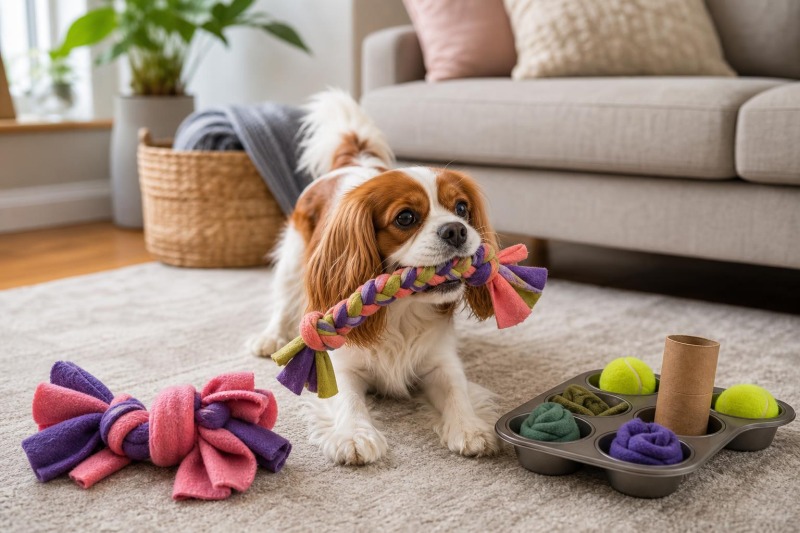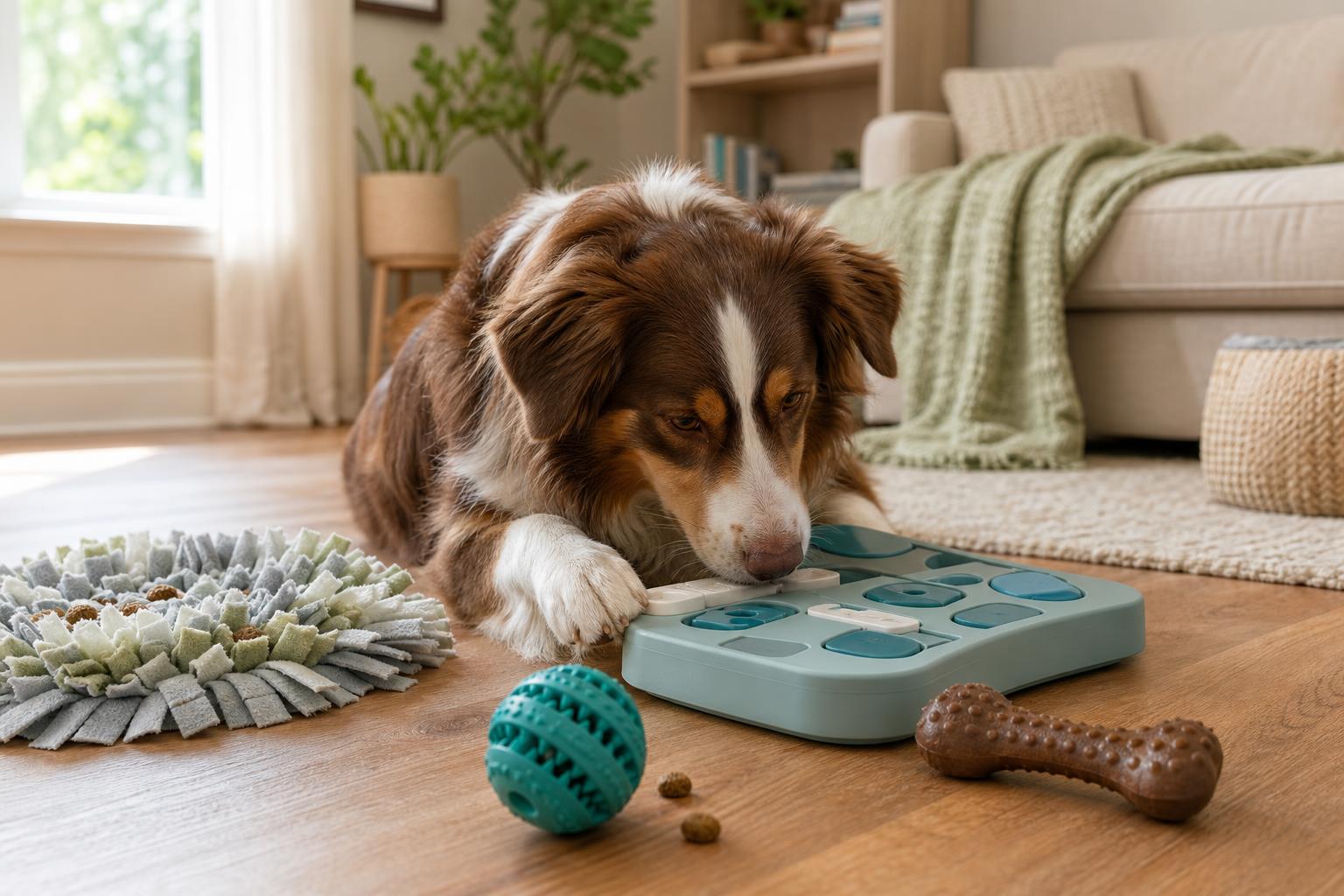
Food puzzles, scent games, and suitable toys can add variety to a dog's day. Choose a manageable challenge and observe the dog instead of assuming a more difficult toy is better.
Good toys for mental stimulation do more than keep a dog busy. They ask him to solve problems, use his nose, manage frustration, and stay engaged. That kind of play builds the sort of confidence and self-control you can’t always get from a plain game of fetch. A dog that learns how to work through a puzzle, search out a reward, or manipulate a toy with purpose often carries that calmer, more thoughtful attitude into the rest of life.
That same drive lives in the dogs curled up at our feet in the living room. When we give them the right outlets, we see fewer bad habits and more of the focused, balanced behavior we want.
What Mental Stimulation Toys Actually Do for Dogs
Mental stimulation toys tap into natural canine behaviors. Dogs are built to sniff, search, lick, chew, paw, carry, and work for resources. When a toy encourages those actions in a healthy way, it gives the dog a job. Dogs, whether they serve in public, comfort patients, or simply keep company at home, usually do better when they feel they have a purpose.
For companion dogs, these toys can cut down on boredom and separation-related mischief. For therapy dogs, mental games can help maintain emotional balance and improve adaptability in new environments. For service dogs, thoughtful enrichment supports problem-solving and focus, both of which matter when the dog is expected to perform dependable tasks in distracting situations.
There’s also a practical side to it. A mentally satisfied dog often settles faster after activity, handles downtime better, and is less likely to invent his own entertainment by emptying a laundry basket or tearing at the edge of a rug. That alone is worth paying attention to.
Puzzle Toys Build Patience and Problem-Solving
Puzzle toys are often the first thing folks think of when they hear mental stimulation, and for good reason. These toys ask a dog to slide, nudge, lift, spin, or nose pieces around to reach food or treats. The best ones create a challenge without tipping over into frustration. You want your dog thinking, not quitting.
A young companion dog with energy to burn may do well with a beginner puzzle that rewards simple actions quickly. A seasoned dog that catches on fast may need more layers to keep him interested. Other dogs need a slower introduction, and there’s no shame in that. The goal is progress and engagement, not speed.
For therapy and service dogs, puzzle toys can be especially useful during off-hours. They provide a controlled challenge that exercises the mind without winding the dog up too high. That balance matters. You want alertness and satisfaction, not frantic excitement.
Snuffle Mats and Scent Toys Let Dogs Use Their Nose
A dog experiences the world nose-first. Snuffle mats, scent boxes, and hide-and-seek toys let him do what comes naturally: hunt for what he wants. There’s something deeply satisfying to a dog about working out a scent trail, even if the prize is just a bit of kibble tucked into felt strips on the kitchen floor.
Instead of rushing straight to the reward, he has to search, sort, and stay with the task. That can be a blessing for excitable dogs and younger dogs still learning how to channel their energy. It also gives shy or sensitive dogs a low-pressure way to build confidence. Every successful find teaches them they can solve a problem on their own.
For households with therapy dogs, nose work style play can be a wonderful indoor option on bad-weather days. For service dogs in training, it can support concentration while giving them a break from formal work.
Food-Dispensing Toys: Turning Meals into Enrichment
One of the simplest ways to increase mental stimulation is to stop serving every meal from a plain bowl. Food-dispensing toys, treat balls, wobble feeders, and stuffable rubber toys turn eating into an activity. Rather than inhaling breakfast in thirty seconds, the dog has to lick, roll, chew, or manipulate the toy to earn each bite.
It doesn’t have to be complicated. A stuffed toy with part of the dog’s dinner mixed inside can buy you quiet time while also exercising the mind. Freeze it, and the challenge lasts even longer. That’s especially useful for companion dogs left alone for stretches, or for service dogs who need a calm outlet after a demanding day in public.
Licking itself can have a soothing effect for many dogs. That’s why stuffable toys and lick mats can be a good fit for dogs that need help settling. Used properly, they can turn a restless evening into a quiet one.
Chew Toys Can Be Mental Tools Too
Folks often think of chew toys as only a way to save furniture, but the right chew item can support mental well-being too. Chewing is natural, regulating, and satisfying. A durable chew toy gives a dog a legal outlet for tension and a task that helps him unwind.
This matters with dogs that carry a heavy load mentally, especially service dogs that spend long stretches working around distractions and expectations. It also matters for companion dogs that may not always understand why the family leaves or why the house goes quiet in the afternoon. A good chew can occupy the mouth, calm the nerves, and prevent destructive habits from taking root.
The key is choosing safe, size-appropriate options and paying attention to how your dog chews. Power chewers need tougher materials. Older dogs or dogs with dental sensitivities may need something softer.
Choosing the Right Mental Stimulation Toy for Your Dog
Not every toy fits every dog. Breed tendencies, age, confidence level, health, and training all matter. A bold, high-drive dog may thrive on a complicated puzzle or a challenging scent game. A nervous dog may do better with an easier toy that lets him win quickly and build momentum. Puppies need simple, safe options that encourage exploration without overwhelming them. Senior dogs often appreciate enrichment that keeps the mind active but is gentler on the body and teeth.
These dogs need steady nerves and a soft edge in public. For companion dogs, the ideal mix often includes a little of everything: scent play, chew time, food puzzles, and interactive toys rotated through the week.
Rotation is important, by the way. Even a fine toy can lose its shine if it’s always available. Put a few away, bring others back out, and your dog will often act like he’s just been handed something new.
How to Introduce Dog Enrichment Toys the Right Way
Introductions matter. Start easy. Let the dog see success early. Smear a little soft food near the opening of a stuffable toy. Leave treats partly exposed in a puzzle. Make the first round simple enough that the dog learns the point.
Once the dog understands how the toy works, you can raise the difficulty. Hide rewards deeper. Freeze fillings. Add more compartments. The climb should feel fair. If your dog gets frustrated and walks away, back up a step. Building interest is better than forcing the issue.
Supervision is also part of the job, especially at first. Some dogs are problem solvers. Others are wrecking crews in fur coats. You need to know which one you’re dealing with before leaving certain toys unattended.
Common Mistakes Dog Owners Make
The biggest mistake is thinking mental stimulation is optional. A lot of behavior issues that get labeled stubbornness are plain boredom. Another mistake is choosing toys based on what looks clever to the owner rather than what fits the dog. Fancy doesn’t always mean effective.
Some people also overdo it and create a dog that expects constant entertainment. Enrichment should improve a dog’s life, not make him unable to settle without a challenge in front of him. A good dog needs all of it.
And of course, safety can’t be ignored. Inspect toys often, remove broken pieces, and avoid anything that can be swallowed, splintered, or easily torn apart by your dog’s chewing style.
Why Mental Stimulation Supports Better Working and Family Dogs
Not just exercised. Not just fed well. Engaged. Their minds were given something useful to do, and because of that, they carried themselves better. They were steadier, more responsive, and easier to live with.
Mental stimulation toys are not a shortcut or a gimmick. They’re tools. Used well, they help shape a dog that can think, adapt, and relax. That’s what most of us want, whether we’re choosing a family companion, preparing a therapy dog to bring comfort, or supporting a service dog with a serious job to do.
If you start small, watch your dog closely, and choose toys that match his needs, you’ll likely see the difference before long. A dog with a worked mind tends to rest deeper, listen better, and carry a kind of quiet satisfaction that can’t be faked.