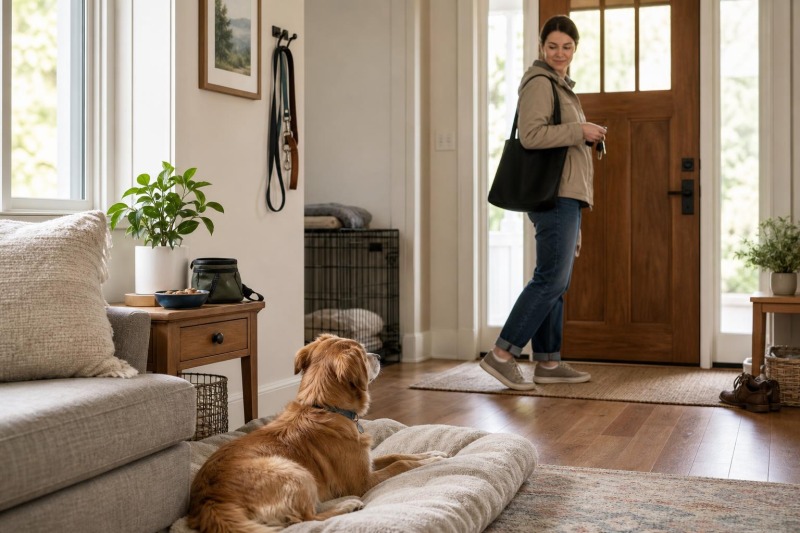
A full-time job leaves a real daily care schedule to solve. Work out toilet breaks, exercise, supervision, and backup arrangements before deciding whether a particular dog fits the household.
Folks sometimes imagine that a dog needs constant entertainment to be happy. That is not true. A healthy dog does not need chaos or nonstop attention. A healthy dog needs security, exercise, training, rest, and a home where expectations are clear. Time matters, sure, but the quality of that time matters just as much.
Can You Work Full-Time and Still Be a Good Dog Owner?
The short answer is yes. A full-time schedule does not automatically make someone a poor dog owner. Still, it does place limits on what kind of dog will fit your life and how much management you need to put in place. A young puppy with no bladder control is different from a mature adult dog with a settled temperament. A high-drive working breed is different from an older companion dog content with a slower pace. A service dog has different responsibilities from a therapy prospect, and both differ from a family companion whose main job is sharing the home and keeping you company.
If you are gone ten hours a day with a long commute and no midday help, you need to be honest with yourself. That may mean choosing an adult dog instead of a puppy. It may mean paying for a reliable dog walker, arranging doggy daycare a few days a week, or adjusting your work schedule. A dog can adapt to a workday, but asking one to hold its bladder too long, live in constant boredom, or burn with unused energy is where trouble starts. That is when you see nuisance barking, chewing, pacing, anxiety, and house training problems.
Choosing the Right Dog for a Full-Time Working Home
They show up in the house just as surely as they show up in the field, the training hall, or the neighborhood walk. If you work full-time, temperament and energy level should carry more weight than color, coat, or trend.
A companion dog for a working household often does best when it has an off switch. That means a dog that can enjoy exercise and engagement but also settle when the day slows down. Therapy dog prospects need stable nerves, friendliness without chaos, and the ability to handle different environments. Service dogs, of course, need exceptional temperament, resilience, and task-focused training, and many owners working full-time will need to think carefully about whether they are raising a prospect from puppyhood or partnering with a dog that already has substantial training.
Age matters too. A mature dog can be a fine choice for someone with a job because what you see is often what you get. Puppies are wonderful, but they are a serious time commitment. They need frequent potty trips, short training sessions, socialization, supervision, and patience in heavy supply. If your work keeps you out of the house for long stretches, puppy raising will require backup help. There is no shame in admitting that an adult dog better suits your life.
Building a Routine That Actually Works
Dogs do well when life has a rhythm. They were the ones that understood the routine. Home life works the same way. If you work full-time, your dog should know when it is time to go out, when it is time to eat, when it is time to move, and when it is time to settle.
A strong morning routine can carry more weight than people realize. A rushed trip to the yard is rarely enough, especially for younger or more energetic dogs. A proper morning walk, a little training, and a few minutes of engagement can make the difference between a dog that sleeps through the day and one that spends hours inventing bad ideas. Some dogs also benefit from breakfast served through a puzzle feeder or snuffle mat so their brain gets some work before you head out the door.
Evenings matter just as much. After a full workday, your dog needs more than a quick loop around the block. That does not mean every night has to be a grand adventure, but there should be meaningful connection. Walks with purpose, obedience work, retrieval games, scent games, calm handling, or simply time spent together all help. Dogs are social animals. They do not just need activity. They need contact and shared routine.
What a Healthy Workday Looks Like for a Dog
In a well-managed home, a dog’s day includes rest, a chance to relieve itself at reasonable intervals, some mental enrichment, and enough exercise on either side of the workday. For many adult dogs, that may be manageable with a solid morning outing and a midday break from a walker or trusted family member. Others may do best with daycare once or twice a week, especially social dogs that enjoy it and recover well afterward. The key is not copying what somebody online says worked for their dog. The key is reading your own dog honestly.
If your dog comes unglued every evening, cannot settle, or develops destructive habits, that is information. If your dog is content, healthy, responsive, and relaxed, that is information too. Good ownership requires observation, not wishful thinking.
Companion Dogs, Therapy Dogs, and Service Dogs Have Different Needs
For a companion dog, the goal is usually balance. You want a dog that can enjoy your company, live politely in the home, and adapt to a normal household schedule. That often means prioritizing manners, house training, loose-leash walking, confidence, and a reliable settle. These dogs do not need to perform advanced work, but they absolutely benefit from training because training creates clarity.
Therapy dogs need all that and more. If your hope is to visit hospitals, schools, nursing homes, or community programs, your dog must be comfortable with handling, unpredictable sounds, mobility equipment, and unfamiliar people. A full-time worker can absolutely prepare a therapy dog, but training cannot be left to chance. Exposure needs to be intentional and gradual, and the dog must enjoy the work. A therapy dog should not merely tolerate human contact. It should remain steady and willing in those environments.
Service dogs live in a different category altogether. A legitimate service dog is trained to perform tasks that mitigate a handler’s disability. If you already rely on a working service dog, your full-time employment may involve navigating workplace access, daily task reliability, fatigue management, and regular maintenance training. If you are raising a service dog prospect while working full-time, be prepared for a demanding schedule. Socialization, public access foundations, obedience, and task work all take time, consistency, and often professional guidance. It can be done, but it should be approached with open eyes.
Preventing Separation Problems and Boredom
Some dogs come by it naturally, while others need to be taught that being alone is normal and safe. If every departure is emotional and every return is a celebration, some dogs begin to view your absence as a crisis. That can snowball into separation-related behaviors fast.
Practice low-drama departures. Teach your dog how to settle in a crate, on a bed, or in a safe room. Leave enrichment that is appropriate and safe for the individual dog. Rotate toys so they do not lose all novelty. Keep the house environment predictable. White noise, blinds adjusted for light control, and a consistent pre-departure routine can all help. If your dog shows true distress such as drooling, frantic pacing, escape attempts, or nonstop vocalizing, do not brush it off as stubbornness. That may require a more thoughtful training plan and, in some cases, help from a qualified trainer or veterinary behavior professional.
The Truth About Exercise
There is a saying among dog folks that a tired dog is a good dog, and there is some truth there, but it is incomplete. A dog can be physically worn down and still mentally restless. For owners working full-time, that means exercise should not be measured only by distance or minutes. Sniffing, obedience drills, problem-solving games, retrieve work, place training, and calm public outings all count.
Think in terms of total fulfillment. Some dogs need a brisk walk and a short training session. Others need more intensive outlets such as running, scent detection games, structured play, or advanced obedience. The answer depends on the dog’s breed tendencies, age, health, and temperament. A senior companion dog may be perfectly content with moderate daily walks and close companionship, while a young sporting or herding dog may need significantly more thoughtful work.
When Full-Time Work Is Not the Problem
Sometimes people blame their job when the real issue is inconsistency. Dogs struggle when rules change every day, when exercise comes in random bursts, or when no one has taught the basics. The dog learned where to rest, how to wait, when to expect activity, and what behavior earned attention. Stability is powerful.
That matters for first-time dog owners especially. If you are interested in a therapy dog, service dog, or companion dog and you also work full-time, do not let guilt make your choices for you. Let practicality do it. Choose a dog that fits your life. Invest in training early. Build a dependable schedule. Get help when you need it. Most of all, remember that dogs are adaptable creatures when we guide them fairly.
A good dog life is not built out of wishful thinking. It is built out of ordinary days handled well. A morning walk before the sun gets high, a midday break arranged by someone you trust, an evening session that gives the dog both movement and purpose, and steady expectations inside the home can carry a dog a long way. That is true for a cherished companion dog, a therapy dog in training, and, with proper planning and support, even a service dog team.
If you work full-time and want a dog, be honest, be prepared, and be consistent. A dog does not need perfection. It needs a person who pays attention. That counts for more than fancy gear, social media advice, or grand promises ever will. Give a dog structure, fairness, and enough of your real time, and many of them will meet you there with steady loyalty.