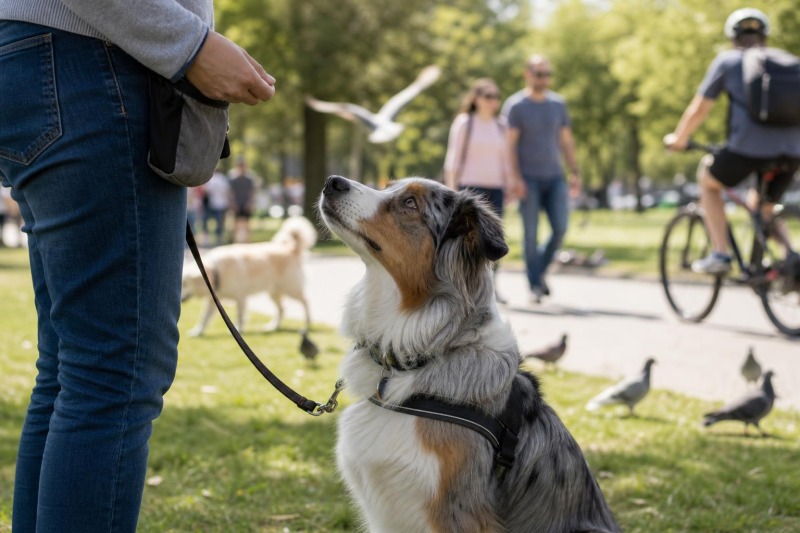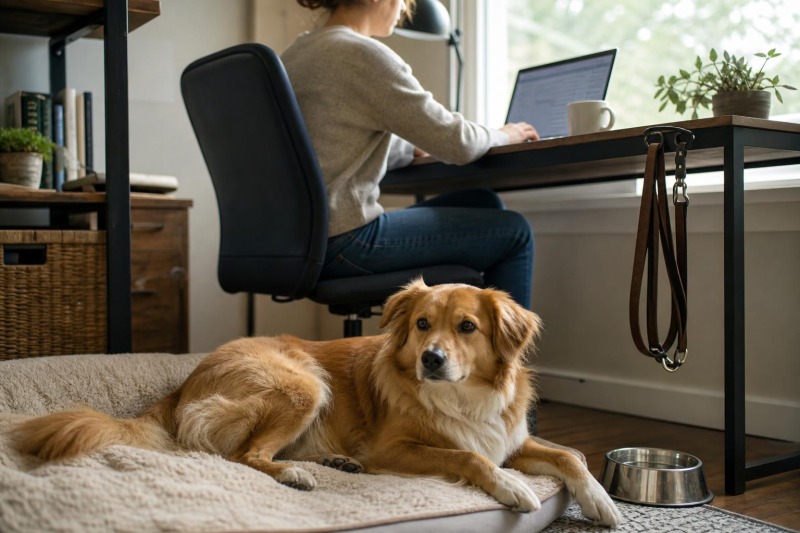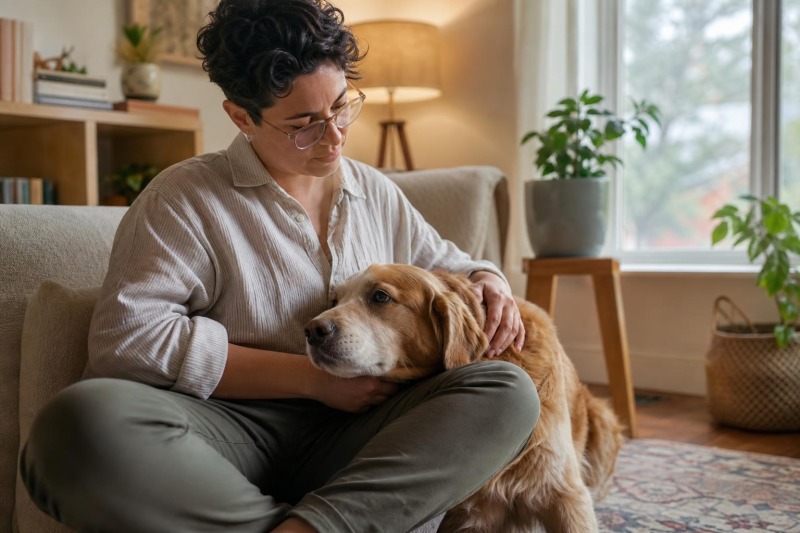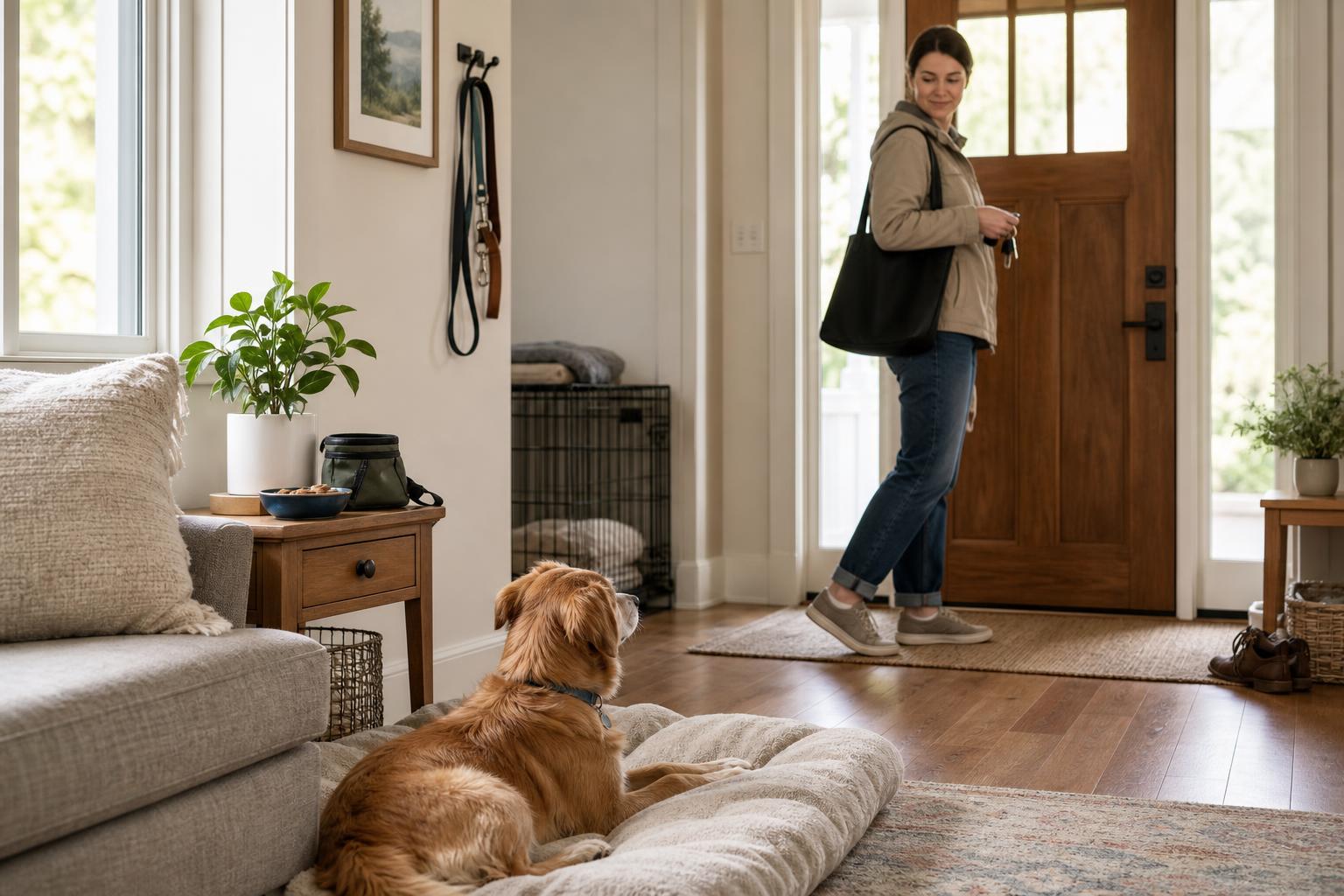
Distress during separation deserves careful assessment, rather than an assumption that the dog is being difficult. Record what happens around departures and discuss a suitable plan with a veterinarian or qualified behavior professional.
Whether you are raising a companion dog, preparing a therapy dog, or relying on a service dog as part of daily life, separation anxiety can interfere with trust, training, and peace in the home. The good news is that this problem can often be managed, and many dogs improve greatly when their owners understand what is really going on.
What Separation Anxiety Looks Like
A dog with separation anxiety is not being stubborn or spiteful. He is in distress. That is the first thing to understand. The behavior may show up as barking, howling, destructive chewing, digging at doors, accidents in the house, drooling, pacing, panting, or desperate shadowing before you leave. Some dogs stop eating when alone. Others injure themselves trying to escape a crate, room, or yard. In a working dog, the signs can be more subtle at first. You may notice clinginess, inability to settle, or a rising panic the moment your leaving routine begins.
In therapy and service dogs, this issue deserves special attention. These dogs are often bred, selected, or trained for strong human connection. That bond is a gift, but if independence is not built carefully, it can become a fault line. A dog that cannot tolerate separation cannot perform reliably in every setting, and that is a serious concern for handlers who depend on calm, stable behavior.
Normal Attachment vs. True Anxiety
Plenty of dogs prefer company. That alone is not separation anxiety. A healthy dog may watch you leave, circle once or twice, then lie down and wait. An anxious dog escalates. His body and mind go into overdrive. If your neighbors report nonstop barking, if your dog damages doors or windows, or if you come home to a house that looks like a storm rolled through it, you are likely beyond simple boredom.
Why Dogs Develop Separation Anxiety
There is rarely one clean cause. Some dogs are naturally more sensitive. Some have a history that makes being alone feel unsafe. A move, a new baby, a change in work schedule, illness, loss of another pet, or even a period where the dog had round-the-clock company can all set the stage.
Working dogs can be especially vulnerable if every waking hour is spent in contact with their person and no one intentionally teaches them how to rest apart. The irony is plain enough. We praise close partnership, then are surprised when the dog believes separation is a crisis. Good dogmanship means building both connection and confidence.
Medical Issues Must Be Ruled Out
Before calling it separation anxiety, make sure there is not a physical reason behind the behavior. Pain, digestive upset, urinary issues, cognitive decline, and some neurological problems can mimic anxiety or make it worse. If the behavior is sudden, severe, or paired with changes in appetite, sleep, mobility, or house training, a veterinary check is the first step. A dog cannot learn well when discomfort is riding him hard.
How to Start Managing Separation Anxiety
The first rule is not to punish it. Scolding a dog for panic is like punishing a thunderstorm. He will not connect your anger to the act of being alone in a useful way. More often, punishment adds another layer of stress and teaches him that your return is unpredictable too. What helps is structure, gradual exposure, and a clear routine that lowers the dog’s sense of danger.
Start by studying the pattern. Does your dog panic when you put on boots, pick up your purse, or step toward the garage? Those pre-departure signals often become loaded triggers. A wise handler learns to break that chain. Pick up your keys and sit back down. Put on your coat and make coffee. Open the door, step outside for a second, then come right back before anxiety rises. The goal is to drain the meaning out of those cues until they stop predicting disaster in the dog’s mind.
Then work on very short absences. That may mean five seconds at first. It may mean less. Leave, return calmly, and repeat often enough that success becomes familiar. Build from there in tiny increments, always staying below the level where the dog tips into panic. This is not glamorous work. It is steady, patient work, the kind that wins more often than force ever will.
Create a Calm Departure Routine
Dogs read patterns better than most folks give them credit for. If every departure is rushed, emotional, and full of dramatic goodbyes, some dogs begin to feed on that energy. Keep your exits plain and your returns quiet. There is no need to sneak off like a thief, but there is also no reason to turn leaving into a ceremony.
Before leaving, give the dog a chance to empty out, stretch his legs, and use his brain. A brisk walk, a little obedience work, scent games, or structured play can help take the edge off. A dog that has worked his body and mind is often better prepared to rest. That said, exercise alone will not cure separation anxiety. It is a support tool, not the whole answer.
Building Independence Without Breaking Trust
One of the best things you can teach any dog is how to settle without constant contact. That lesson matters for family pets and working dogs alike. Start in the home while you are still present. Teach the dog to relax on a bed or mat a short distance away. Reward quiet, loose-bodied calm. Move around the room. Step briefly out of sight and return before worry starts to build. Little by little, the dog learns that distance does not mean abandonment.
For companion dogs, this can be woven into everyday life. Let the dog spend short periods behind a baby gate with a chew while you move through the house. For therapy dogs, calm independence is part of emotional steadiness. For service dogs, it can support better self-control during off-duty moments and transitions. The aim is not emotional coldness. It is resilience.
The Role of Safe Spaces
Some dogs do well with crates. Some do far better in an open room or gated area. This is where owners need to watch the dog in front of them instead of clinging to one method. A crate can be a den for one dog and a trap for another. If the dog is bending bars, breaking nails, or injuring himself trying to get out, confinement may be making the panic worse. A safe space should reduce distress, not magnify it.
Soft bedding, white noise, familiar scents, and a long-lasting food toy may help create a more restful environment. Keep expectations realistic, though. If the dog is truly panicked, a stuffed toy alone will not convince him that all is well. It works best as part of a broader plan.
When Professional Help Makes the Difference
There are cases where home training is not enough by itself. If your dog is harming himself, destroying property, vocalizing for long stretches, or failing to improve with gradual work, bring in a qualified professional. Look for a trainer or behavior consultant with direct experience in separation anxiety, and stay wary of anyone who promises a fast fix through intimidation or harsh correction. This is a behavior rooted in fear, and fear handled poorly tends to dig deeper.
Your veterinarian may also discuss medication in moderate or severe cases. Some owners resist that idea, but there is no shame in using the right tool when a dog’s nervous system is too stirred up to learn. Medication does not replace training. It can, however, lower the volume of panic enough for training to take hold. Used wisely, it can be part of compassionate, effective care.
Special Considerations for Therapy and Service Dogs
Dogs that work around vulnerable people must be emotionally sound. A therapy dog that melts down when separated from one handler may struggle with transitions between visits, transport, and rest periods. A service dog that cannot relax off-duty may become exhausted, overdependent, or less adaptable in public life. That does not mean these dogs are failures. It means their training plan must include independence as a real skill, not an afterthought.
He is composed. He can be close when needed and calm when apart. That balance is what allows him to serve well over the long haul. If separation anxiety shows up in a working prospect, deal with it early and honestly. You are not doing the dog or the handler any favors by hoping it fades on its own.
Patience Wins More Than Pressure
Managing separation anxiety is rarely a straight trail. Some days the dog will handle ten minutes with ease, and the next day two minutes may feel hard. That does not mean the process is broken. Progress in behavior work often comes like a winding creek, not a fence line. What matters is consistency, observation, and the willingness to slow down when the dog tells you he is struggling.
Not because somebody dominated them into silence, but because someone took the time to show them, over and over, that being alone was safe. That kind of trust is built in small pieces. A calm departure. A manageable absence. A quiet return. A dog that learns he can endure and settle. Piece by piece, that old panic can lose its grip.
If you are living with a dog who fears being left behind, do not lose heart. Start where the dog is, not where you wish he was. Keep the routine steady, keep your expectations fair, and ask for help when you need it. A dependable companion, therapy dog, or service dog is not made through pressure alone. He is shaped through patience, clarity, and the kind of practical care that holds steady when things get rough.