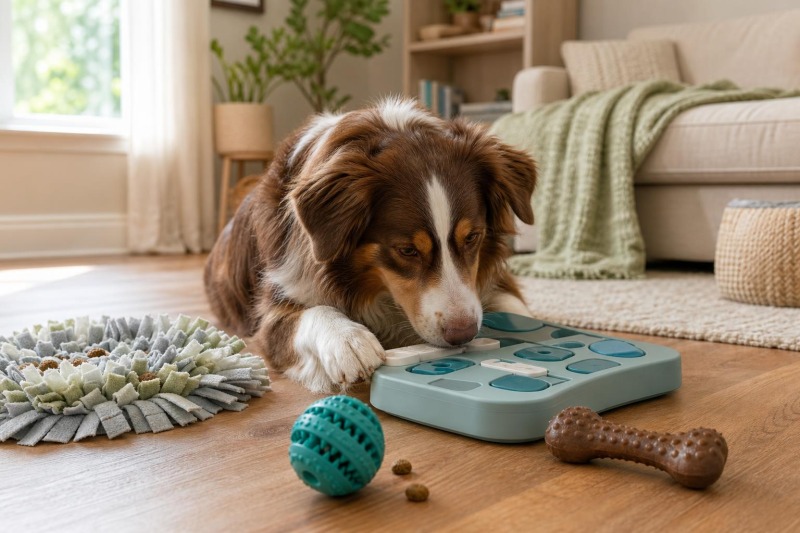
Homemade toys need careful selection of materials and supervision during use. Match the activity to the dog's chewing style, and remove anything that frays, breaks, or can be swallowed.
For folks raising a companion dog, preparing a therapy dog, or supporting a service dog in training, enrichment is not some extra luxury. It is part of building a steady, healthy dog. A good DIY toy can help burn nervous energy, encourage problem solving, support confidence, and give your dog a lawful outlet for chewing and play. It can also save money, which matters to most families, especially when you are already investing in food, grooming, vet care, and training.
The trick is not just making any toy. The trick is making the right toy for a small dog’s body, mouth, and temperament. A toy that suits a Labrador may be too heavy, too rough, or too risky for a Yorkie, Maltese, toy poodle, cavalier, or Chihuahua mix. Small dogs need toys scaled to their jaw strength and neck size, but they still need a challenge. Size does not cancel instinct. It just changes the equipment.
Why DIY Dog Toys Work So Well for Small Breeds
Store-bought toys have their place, and some are excellent, but homemade toys let you tailor the experience. That matters when you know your dog well. Some small dogs are soft-mouthed and cautious. Others are tenacious little grinders that can unravel a seam before your coffee cools. A DIY toy lets you control texture, size, difficulty, and scent. You can make it easier for a shy dog, more stimulating for a bright one, or more purposeful for a dog learning to settle and focus.
That flexibility is especially useful for therapy dog and service dog households. These dogs often need a balance between engagement and calm. You do not always want a toy that whips a dog into a frenzy. Sometimes you want a toy that rewards licking, sniffing, gentle tugging, or patient problem solving. Those quiet forms of enrichment can be worth their weight in gold for dogs learning emotional steadiness and task readiness.
DIY toys can also help strengthen your relationship with your dog. When you make something with your own hands and then use it in short, thoughtful play sessions, the dog learns to look to you as the source of fun and guidance. That bond is the backbone of every good companion dog, and it is downright essential in therapy and service work.
Safety Comes First
Before getting into ideas, a word from plain experience: never trust a homemade toy just because it is cheap or convenient. Watch for loose strings, buttons, hard shards, stuffing, staples, toxic glue, and anything small enough to swallow. Small dogs can get into trouble faster than people think. Their airways are smaller, their mouths are smaller, and what seems harmless on the kitchen table can turn dangerous in a hurry.
Choose soft but durable materials, supervise new toys, and retire anything that starts coming apart. If your dog is an aggressive chewer, keep homemade toys simple and use them only under supervision. Good judgment beats clever crafting every time.
The Towel Treat Roll
One of the best homemade toys is also one of the easiest. Take a small hand towel, lay a few treats across it, then roll it snug and tuck the ends loosely under. Your dog has to sniff, paw, and nose it open to find the reward. This works beautifully for small dogs because it does not strain the jaw or neck, and it taps into natural foraging behavior. It teaches patience and use of the nose.
For therapy dogs or service dogs in training, this kind of puzzle can be a fine way to encourage calm concentration. You are not just tiring the body. You are settling the mind.
The Sock-and-Bottle Crinkle Toy
Take a clean sock and slide in an empty plastic water bottle with the cap, ring, and label removed. Tie a secure knot in the open end, or fold and stitch it shut if you are handy. The crinkle sound draws many small dogs in right away. It gives them novelty without requiring a hard grip.
This toy is best for supervised play, especially if your dog likes to tear fabric. Still, for a dog that loves noise and movement, it can be an easy winner. Some little companion dogs that seem lazy indoors wake right up when they hear that crackle, tail going like a metronome.
The Braided Fleece Tug
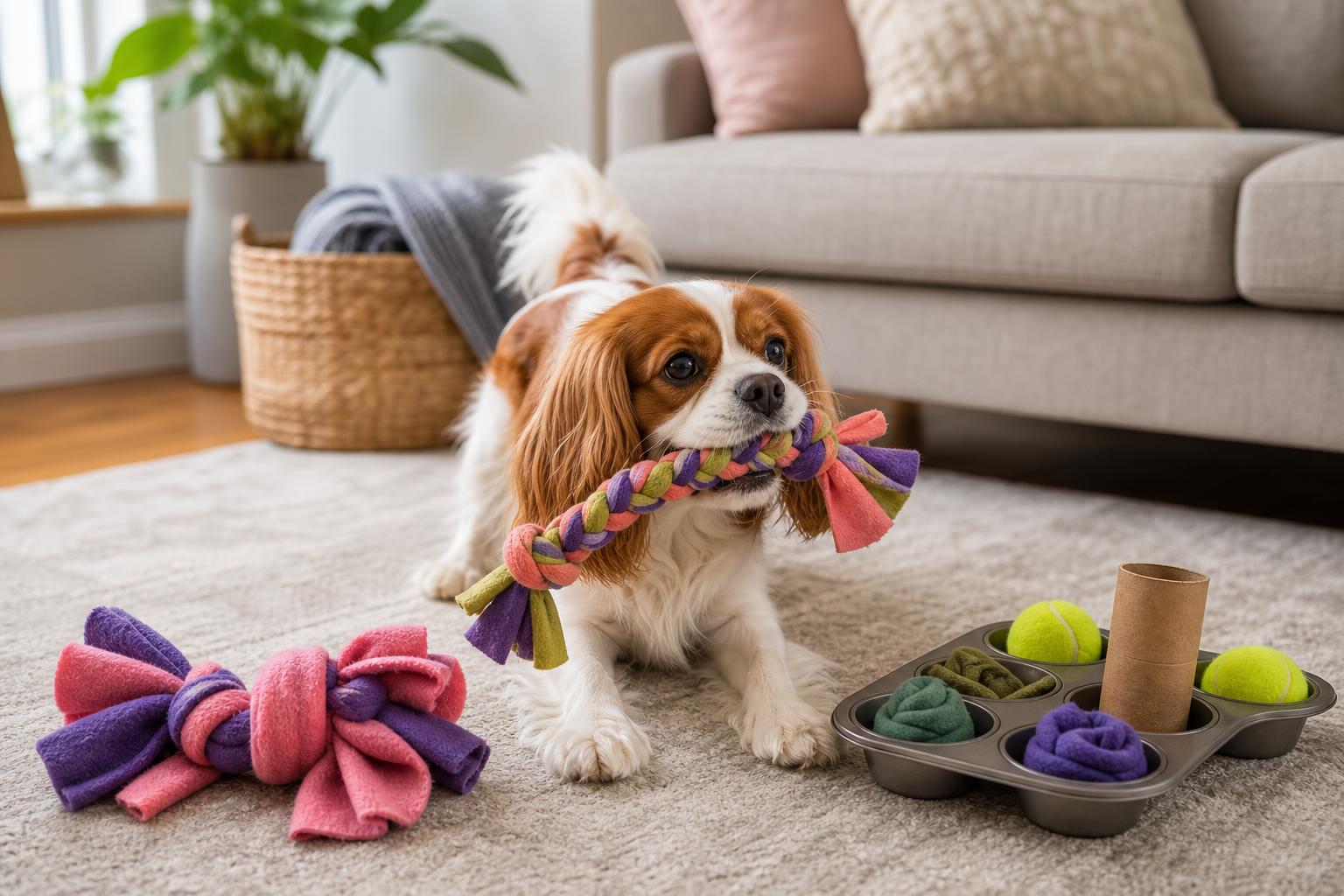
Cut strips of fleece and braid them into a short, lightweight tug toy. Fleece is softer on small mouths than rope, and when braided tightly it holds up fairly well. Keep the toy short and light so it does not whip your dog’s head around. Tug, when done properly, can be a fine game for small dogs. It builds engagement, confidence, and impulse control when paired with cues like take it, wait, and drop.
For service dog prospects, this can even become a foundation game for toy rewards, controlled arousal, and switching cleanly from work mode to play mode. The key is structure. Let the game be lively, but not wild.
The Muffin Tin Puzzle
If you have a muffin tin and a few tennis balls sized for small dogs, you can make a quick enrichment puzzle. Drop treats into several muffin cups and place a ball over each one. Your dog must remove the ball to get the reward. This game develops problem solving and persistence without much physical strain.
Dogs differ in how they approach it. Some will paw. Some will nose. Some will stand back and study it like an old tracker reading sign in mud. They show you how a dog thinks.
DIY Toys That Support Training and Emotional Balance
Not every toy should be about high energy. In many homes, especially those with therapy or service dogs, the most useful toys are the ones that help a dog regulate. Lick-based enrichment is excellent for this. You can spread a thin layer of dog-safe peanut butter, pumpkin, or wet food on a silicone mat or inside a shallow feeder and freeze it. That is not a toy in the old-fashioned sense, but it serves the same purpose. It gives the dog a job, encourages calm, and can make transitions easier during grooming, crate time, or rest after training.
Another smart option is the cardboard treat box. Use a small box, fold treats inside a few layers of paper, and let the dog work through it under supervision. This is best for dogs that enjoy shredding but do not eat cardboard. For some small dogs, especially clever companion breeds, this kind of controlled destruction is deeply satisfying. Better the box on your terms than the corner of a package that came in the mail.
Rotating Toys Keeps Them Fresh
One mistake people make is leaving every toy out all the time. Dogs get stale on toys just as hunters grow blind to the same patch of woods walked too often. Rotation keeps interest alive. Put a few toys away and bring them back later. A simple fleece tug that was ignored last week may feel brand new after a few days out of sight.
This matters for busy households and for dogs that spend time alone between walks, training sessions, or visits. Novelty, used wisely, stretches the value of simple homemade toys.
Matching the Toy to the Dog
A toy should fit the dog in front of you, not some generic idea of a breed. A confident terrier-type small dog may love a challenge and rougher interactive play. A sensitive therapy dog prospect may do better with quiet sniffing games and soft textures. An older companion dog may prefer gentle chew alternatives and easy food puzzles rather than vigorous tug. Service dogs in training often need a thoughtful mix of stimulation and decompression so they do not tip into overexcitement.
Watch how your dog carries a toy, how long interest lasts, whether frustration comes too quickly, and whether the game leaves the dog settled or spun up. Those details tell you more than any package label ever will. Good dog people learn to observe. That skill serves you whether you are running dogs outdoors, working obedience in a store parking lot, or helping a companion dog settle under a café table.
Common DIY Toy Mistakes to Avoid
The biggest mistake is making toys too large or too tough. Small dogs should not have to wrestle with weight. Another mistake is using old household items that carry strong detergent, chemical, or food residue. Keep materials clean and simple. Avoid anything with beads, zippers, metal parts, or foam. And do not mistake frantic chewing for healthy enrichment. Good play should leave your dog engaged, not overstimulated and edgy.
There is also a tendency to think homemade means disposable and therefore unimportant. A homemade toy can be one of the best tools in your routine if you use it with purpose. It is not about crafting for the sake of crafting. It is about giving a small dog a job that suits the body, feeds the mind, and supports the kind of partner you want that dog to become.
Small dogs deserve more credit than they get. They can be sharp, brave, funny, deeply loyal, and wonderfully capable in companion, therapy, and service roles. But they need outlets that respect their size and challenge their brains. Homemade toys, when made safely and used thoughtfully, can meet that need better than many flashy products on a shelf.
A DIY toy may seem like a small thing, but often that is how trust and steadiness are built: one short game, one solved puzzle, one happy tail thumping against the floor while a little dog figures out the world.
On Companion Dog Central, the goal is not just to help you own a dog. It is to help you understand one. And when you understand what drives your small dog, you can turn a towel, a sock, a strip of fleece, or a box from the pantry into something far more useful than a toy. You can turn it into meaningful work, and dogs of every size thrive on that.