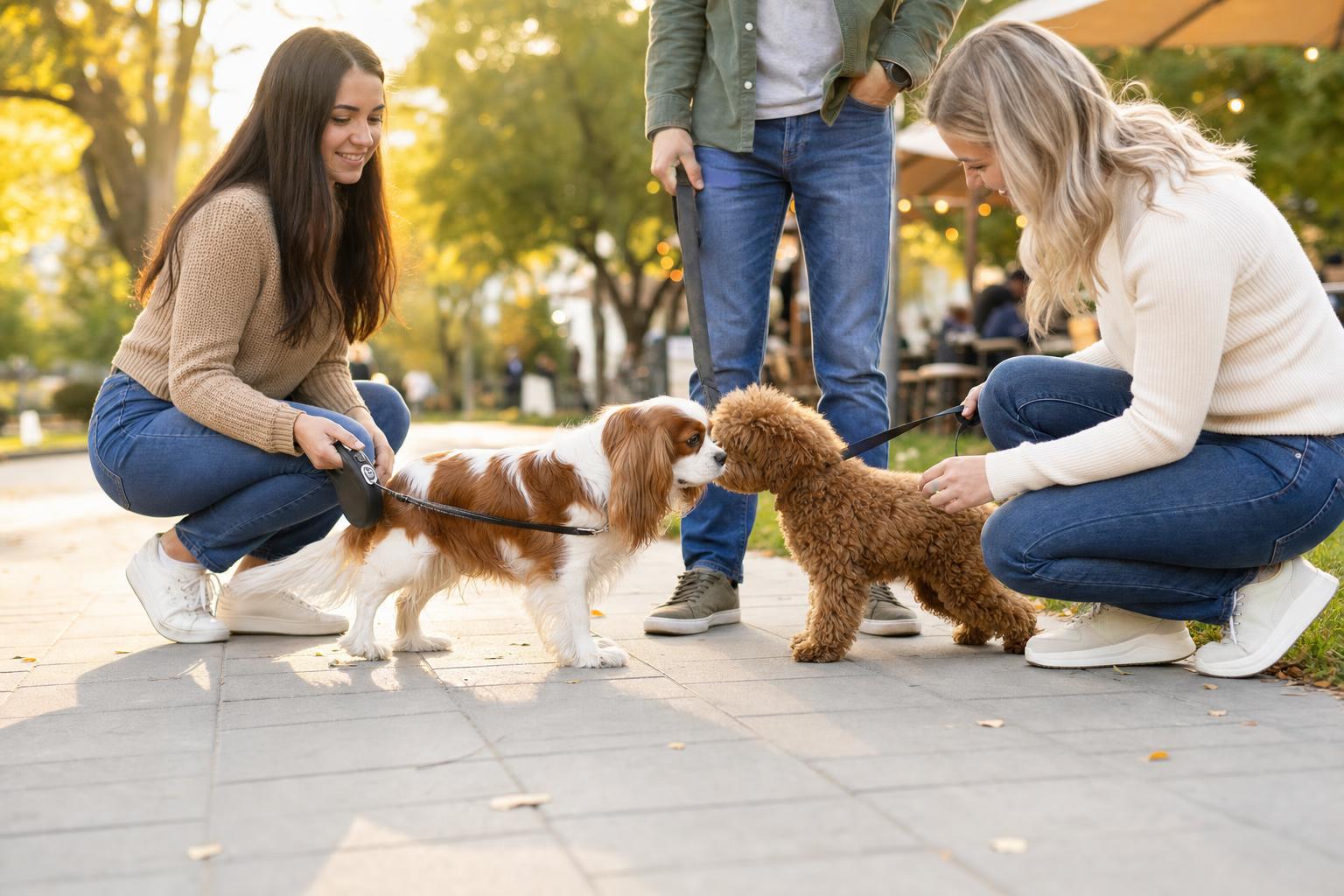
Socialization should help a toy dog feel comfortable with ordinary life, rather than require contact with everyone. Offer distance, choice, and brief positive experiences at a pace the dog can handle.
Too many people make the mistake of thinking socializing toy breeds simply means passing the puppy around or taking a few cute photos at a coffee shop. That is not the kind of foundation that holds when a cart rattles past in a store, when a stranger leans too fast, or when a child squeals and reaches with both hands. Real socialization is about building confidence without flooding the dog. It is about teaching a small dog that new sights, sounds, surfaces, people, and routines are things to understand rather than fear.
Why socializing toy breeds matters so much
Toy breeds live close to the ground, and that changes how they experience the world. Boots thunder overhead. Vacuum cleaners seem twice their size. A friendly Labrador can feel like a moving wall of muscle.
That matters even more if you are raising a dog for emotional support work, therapy visits, or service training. A good companion dog should settle well and recover quickly from surprises. A therapy dog needs to greet people with softness and composure. A service dog prospect must be especially steady around crowds, medical equipment, traffic sounds, changing floors, and unfamiliar handling. Toy breeds can excel in these roles when they are selected well and brought along with patience, but they do not get there by accident.
Start early, but do not rush the dog
The best time to begin socialization is during puppyhood, when the mind is open and curiosity often comes easier than caution. Still, early does not mean careless. You show it enough to spark confidence, then you let that lesson settle.
For toy breeds, those first lessons may be simple. Let the puppy walk on grass, gravel, slick floors, rugs, wooden porches, and concrete. Let it hear doorbells, distant traffic, kitchen noise, and the ordinary clatter of daily life. Invite calm adults to offer gentle attention. Introduce kind, dog-savvy children only when you can control the pace. A small dog that learns to stand steady through these experiences is laying down the same kind of nerve you want later in a reliable therapy or service companion.
Watch the dog in front of you
Some toy breed puppies move through life like they own the place. Others weigh every new thing before they step toward it. Neither type should be pushed beyond what it can handle. When socialization is going right, you see interest, recovery, and growing ease. When it is going wrong, you see tucked posture, lip licking, refusal to take food, frantic movement, or a dog that goes stiff and silent. Those are signs to create more distance, lower the pressure, and try again in a way the dog can actually absorb.
Safe exposure beats overwhelming exposure
One of the biggest mistakes owners make with toy breeds is assuming they need to “get over it” by being placed in the middle of chaos. That is a good way to create lasting fear. Better to work from the edges. Sit with your puppy at a comfortable distance from a playground. Let it watch shopping carts from outside the flow of foot traffic. Visit pet-friendly stores during quieter hours before you ever attempt a busier time of day.
Bright dog, sweet nature, but every loud bang sent her trembling. Her owner had done plenty of outings, but all of them were too much, too soon. We backed up and started in calmer places where she could notice the world without being swallowed by it. Within weeks, she was checking in, taking treats, and walking with a looser body. The dog had not needed more pressure. She had needed better timing.
Handling matters more with small dogs
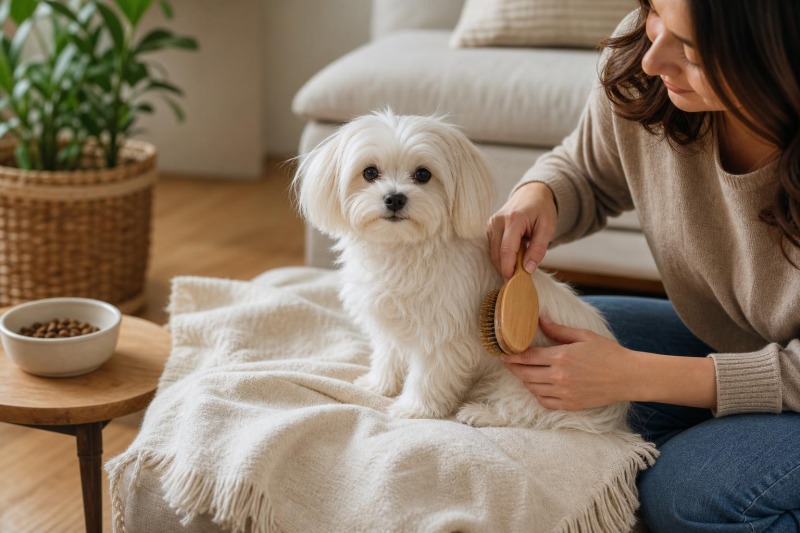
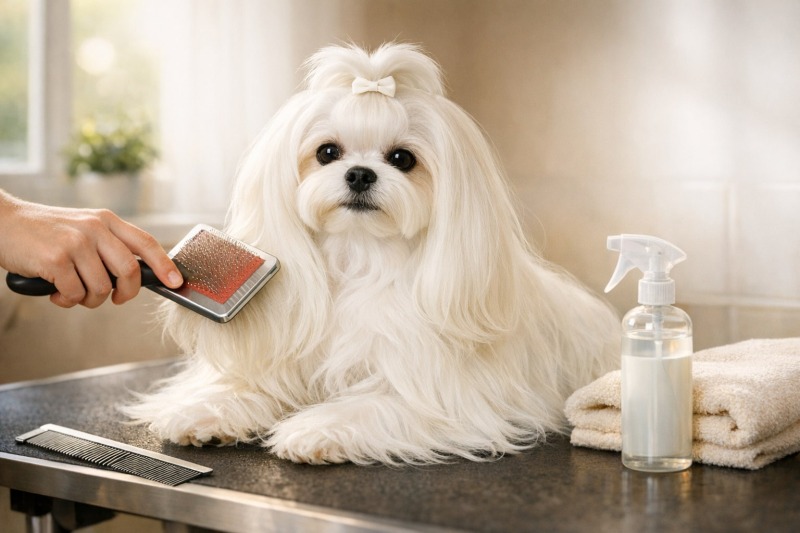
Toy breeds are touched, lifted, restrained, and fussed over more than larger dogs. That alone makes handling a major part of socialization. A future companion or therapy dog should be comfortable with gentle grooming, nail care, harnessing, being examined by a veterinarian, and being touched by respectful strangers when appropriate. A service dog prospect may need even greater tolerance for close handling in public settings.
Teach these things in short, calm moments. Touch the paws and reward. Lift briefly and reward. Brush one section and reward. Open the door to pleasant outcomes instead of wrestling the dog through discomfort. If your toy breed learns early that hands are predictable and safe, you will head off a good many problems before they start.
Do not create a dog that only feels safe in your arms
Small dogs are easy to scoop up, and sometimes that is necessary for safety. But if every uncertain moment ends with the dog being carried, the dog never learns to process the environment with four feet on the ground. Use your judgment, of course, but whenever it is safe, let the dog observe, sniff, pause, and work through mild uncertainty while you provide calm support beside it.
People, dogs, and everyday life
Socializing toy breeds should include many kinds of people: men with deep voices, older adults with walkers, children under supervision, folks in hats, sunglasses, uniforms, or bulky coats. The goal is not that the dog must greet everyone. The goal is that the dog can notice different people without falling apart or acting defensive. Neutrality is often more valuable than forced friendliness, especially for service and therapy training foundations.
The same goes for other dogs. A toy breed does not need to play with every dog it sees. In truth, some of the steadiest small dogs are the ones that learned calm coexistence instead of constant rough-and-tumble interaction. Choose stable adult dogs and well-run puppy experiences over chaotic dog parks.
Then there is everyday life, which is where the real work happens. Ride in the car. Sit outside a hardware store. Walk past bicycles. Hear a train at a distance. Stand near a bench while people pass. Visit a friend’s house. Rest quietly on a mat in a waiting room if allowed. These ordinary moments are what teach a toy breed how to be part of the world rather than sheltered from it.
Socialization for therapy, service, and companion roles
Anyone looking at a toy breed for a companion dog should prioritize confidence, adaptability, and a soft response to daily handling. If your interest leans toward therapy work, your dog must be able to remain composed around wheelchairs, medical smells, sudden movement, and people who may pet awkwardly or speak loudly. If you are considering a toy breed for service work, choose with great care and understand that the demands are high. Not every small dog, even a lovely one, has the nerve and resilience for that role.
Still, size alone does not disqualify a dog from meaningful work. Some toy breeds are deeply attentive, intuitive, and remarkably portable for the right tasks. What they need is not coddling but thoughtful preparation. The stronger the social foundation, the more clearly you can later judge whether the dog truly enjoys the work or is merely enduring it.
Confidence is quieter than many people think
A well-socialized toy breed is not necessarily the boldest dog in the room. Often it is the one that can take things in stride. It notices, processes, and settles. It does not have to rush every stranger or bark at every passing sound.
Common mistakes to avoid
Owners often delay socialization because they worry about disease before vaccinations are complete. Caution is wise, but isolation is not. You can safely expose a puppy to the world by carrying it in clean locations, using controlled environments, inviting healthy vaccinated dogs to your home, and focusing on sights and sounds before feet ever touch risky ground. Another common mistake is laughing off fearful behavior because the dog is tiny. Fear in a toy breed is still fear, and if it is ignored long enough, it often hardens into reactivity.
The other trap is inconsistency. A weekend outing here and there will not do the whole job. Socialization works best when it becomes part of regular life. Short, successful sessions repeated often beat long stressful adventures every time. Keep it steady. Keep it fair. Let the dog build a history of winning.
The long view on raising a steady little dog
There is a kind of pleasure in watching a toy breed grow from a cautious pup into a dog that carries itself with quiet assurance. You see it in the way the dog steps onto a new floor without hesitation, glances at a stranger and then back to you, or settles at your feet while the world goes on around it. That sort of confidence does not come from luck. It comes from patient exposure, kind handling, and the good sense to know when to press forward and when to back off.
If you are exploring life with a companion dog, therapy dog, or service dog prospect, remember this: socializing toy breeds is not about making them fearless. It is about making them capable. A capable little dog can travel farther, handle more, and live with greater ease. And when you do that work right, you do not just end up with a pleasant pet. You end up with a small dog fit to share your days in a big world.