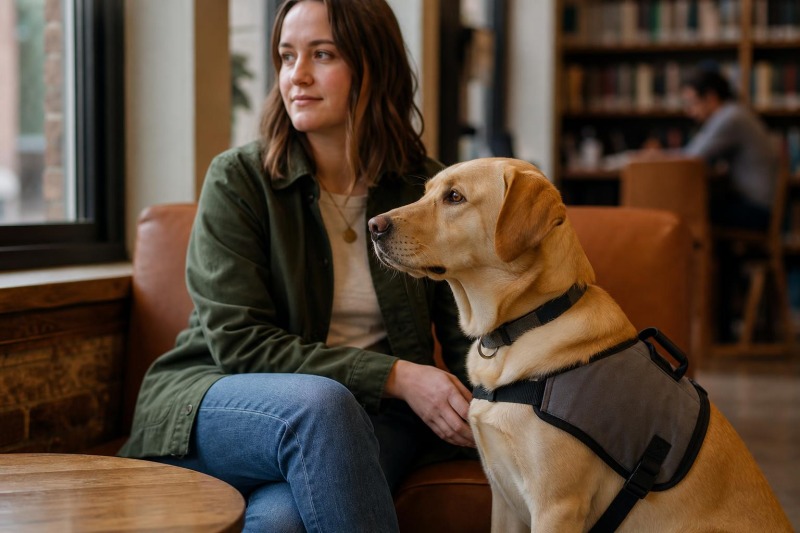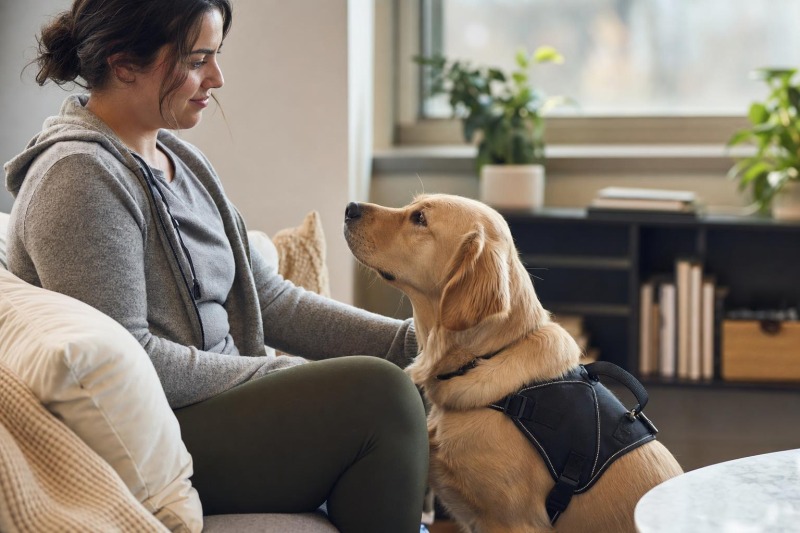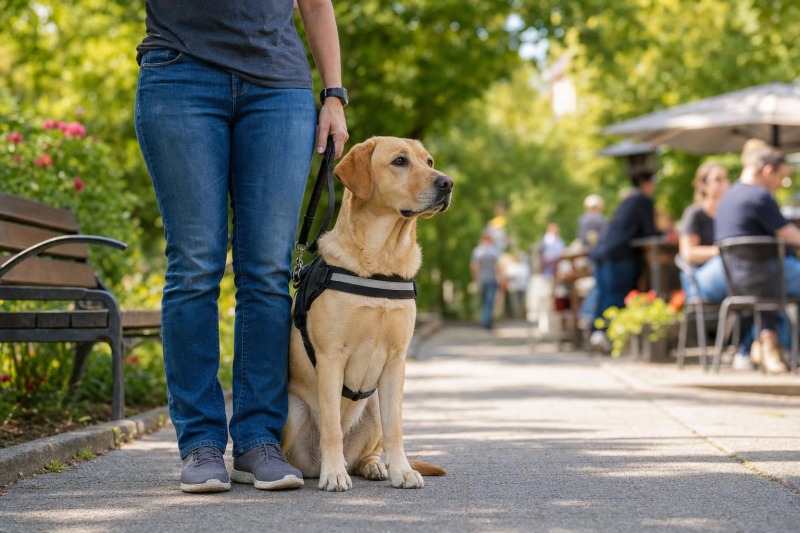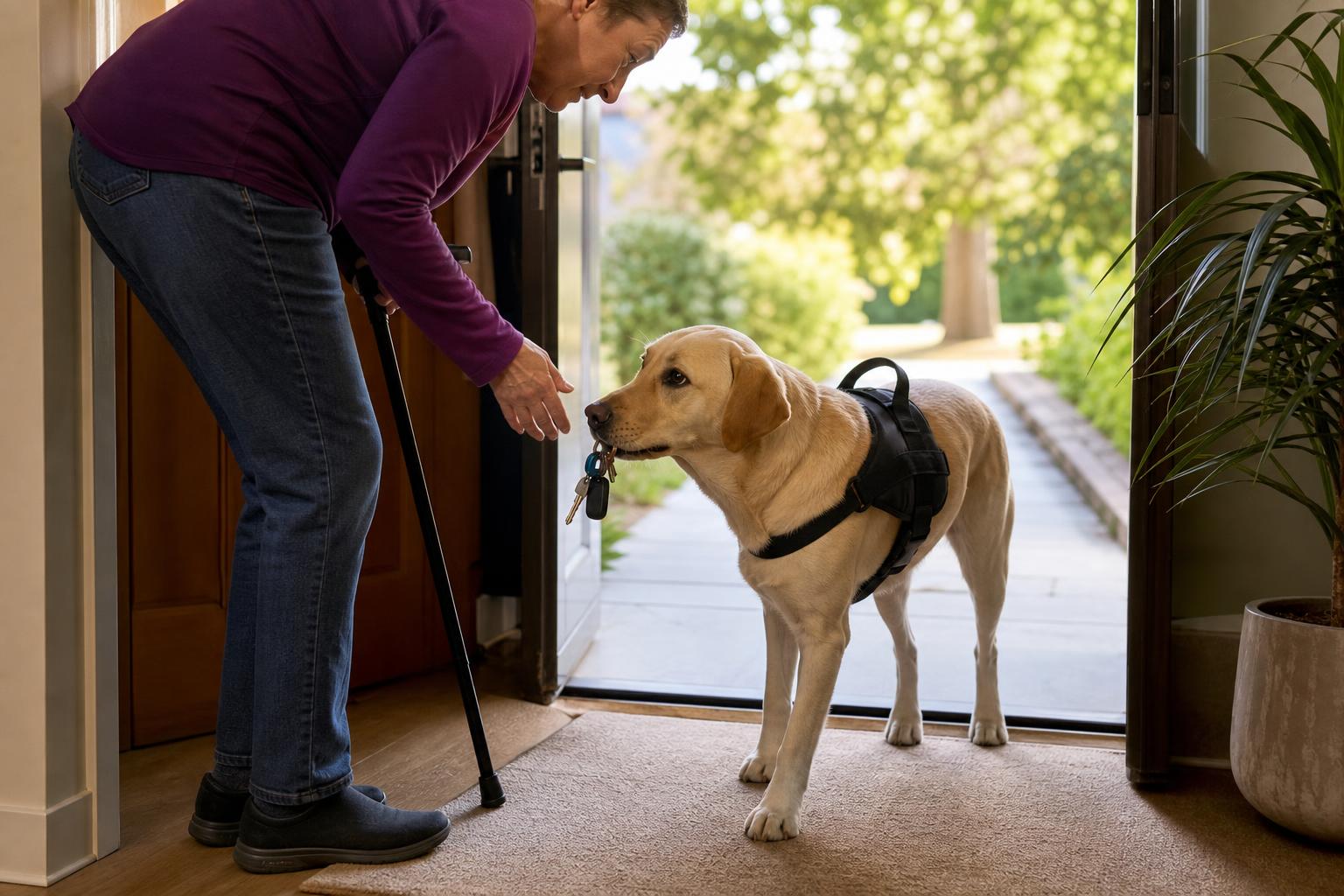
A useful service-dog task has a clear purpose tied to the handler's disability-related needs. Training should define the action, the cue or trigger, and how reliability will be assessed.
For folks trying to learn the difference between companion dogs, therapy dogs, and service dogs, task training is where the line gets clear. A companion dog offers comfort by presence. A therapy dog brings calm and support to others in places like hospitals or schools. A service dog, though, is trained to take direct action for one person with a disability. That action is the heart of the dog’s purpose, and it is what gives the work legal and practical meaning.
What Counts as a Service Dog Task?
A service dog task is not just a trick, and it is not general obedience. Sit, down, heel, and stay are useful foundations, but they are building blocks, not the finished cabin. A true task must be trained to help with a handler’s disability in a specific way. That may mean guiding a blind handler around obstacles, alerting a deaf handler to a smoke alarm, retrieving dropped medication, interrupting harmful behavior, or bracing long enough to help with balance during a controlled movement.
That distinction matters because plenty of dogs can learn fancy behaviors. The challenge with service dog training is proofing those behaviors in real life, in stores, sidewalks, parking lots, doctor’s offices, and loud, unpredictable settings. A dog that can retrieve keys in a quiet living room still has a long road ahead if it cannot do the same thing while shopping carts rattle past and strangers crowd the aisle.
Obedience Comes First, but It Is Not the Finish Line
Before a dog learns disability-related tasks, it needs a rock-solid foundation in manners, impulse control, and public behavior. You do not start with the hard stuff. You start by teaching the dog how to settle, how to pay attention, how to ignore distractions, and how to move through the world without causing trouble.
That means loose-leash walking, calm behavior around people and other animals, a dependable recall, and the ability to remain neutral in stimulating environments. Service dogs must be steady. They cannot lunge, bark, scavenge, beg, or seek attention from every hand that reaches their way. Temperament is just as important as trainability. A dog may be bright and eager, but if it is too reactive, too soft-nerved, or too restless, the work may not suit it.
Common Training Tasks for Service Dogs
The tasks a service dog learns depend entirely on the handler’s needs. There is no single master list that fits every team, because disability affects people in different ways. Still, some task categories come up often and help people understand what these dogs are truly trained to do.
Mobility Support Tasks
Some service dogs are trained to assist handlers with mobility limitations. That can include retrieving dropped objects, carrying small items, opening or closing doors, tugging drawers, pressing accessible buttons, or helping a handler maintain balance during certain movements. The key here is precision. The dog must understand exactly what is being asked and perform it without panic or roughness.
Retrieval work is often one of the most practical tasks. A dog might pick up a phone, bring a cane, fetch medication, or deliver a wallet from another room. It sounds simple on paper, but the training takes repetition, patience, and careful shaping. The dog has to learn hold, carry, release, and location cues, all while staying calm and accurate.
Medical Alert and Response Tasks
Some service dogs are trained to recognize changes in a handler’s body and respond before things get dangerous. These dogs may alert to blood sugar changes, oncoming seizures, or other medical events, depending on the handler and the dog’s capabilities. Other dogs are trained in response tasks rather than prediction, such as bringing emergency supplies, seeking help, activating a medical alert system, or positioning themselves to offer support after an episode.
This kind of work demands close observation and consistency. There is a lot of misunderstanding in the public about medical alert dogs, and not every dog is suited for it. Some alerts appear naturally and are then reinforced through training. Others rely more on response behaviors once a handler shows signs of distress. Either way, reliability matters more than wishful thinking.
Psychiatric Service Dog Tasks
Psychiatric service dogs are often misunderstood, but the work they do is very real. These dogs are not simply there to provide comfort. They perform trained tasks that help handlers manage disabling psychiatric conditions. That may include interrupting self-harming behavior, waking a handler from night terrors, reminding a handler to take medication, creating space in crowded areas, room checking, or guiding a handler out of an overwhelming environment.
It takes more than obedience. It takes a dog with a settled mind, good judgment, and the ability to respond to subtle changes in the handler. In many cases, the dog becomes a steadying force, trained to interrupt spirals before they deepen.
Hearing and Guide Tasks
For handlers with hearing loss, a service dog may alert to doorbells, alarms, crying babies, timers, or someone calling the handler’s name. The dog learns to recognize the sound, make contact with the handler, and lead them toward the source. The work is deliberate and practical, not dramatic.
Guide dogs for handlers with visual impairments perform some of the most advanced service dog tasks in the world. They navigate obstacles, stop at curbs, avoid hazards, and follow directional cues while practicing what trainers call intelligent disobedience. That means the dog may refuse a command if obeying it would place the handler in danger. You do not get that kind of judgment overnight. It is earned through extensive training and a very special dog.
How Service Dog Task Training Is Built
Most service dog tasks are taught in small layers. A trainer starts with the simplest part of a behavior and rewards the dog for each correct step. Over time, those steps are linked together until the full task is reliable. That process can take months or longer, depending on the dog, the complexity of the task, and the environments where it must work.
Proofing is where many teams either become dependable or come apart. A dog might perform beautifully at home, then struggle in public if the training has not been generalized. Good service dog training moves from quiet places to harder ones, from familiar routines to messy real-world situations. The dog must learn that the job stays the same whether the floor is slick, a child is crying nearby, or a cart slams into a shelf.
Handlers also need training. That part gets overlooked. A service dog is not a machine you switch on and off. The handler has to read the dog, maintain the training, reinforce the right behavior, and understand the dog’s limits. The strongest teams are built like old hunting partnerships, where man and dog know each other so well that a glance carries meaning.
Choosing the Right Dog for Service Work
Not every good dog is fit for service work, and that truth saves people heartache if they hear it early. The best prospects usually show confidence, environmental stability, focus, biddability, and a calm response to stress. They need enough drive to work but not so much edge that they become difficult to settle. They must also be physically sound for the tasks required.
Breed can matter, but individual temperament matters more. Labrador Retrievers, Golden Retrievers, Poodles, and some purpose-bred mixes are common for a reason. They often bring the right balance of trainability, steadiness, and social neutrality. Still, no breed guarantees success.
Why Public Access Behavior Is Essential
Even the best task-trained dog is not ready for service work if it cannot behave in public. A service dog should move quietly, settle under a table, ignore food on the ground, and remain focused on the handler. That kind of public access training protects the handler, the dog, and everyone around them.
It also protects the reputation of real working teams. Poorly trained dogs wearing service gear cause confusion and sometimes real danger. For that reason, responsible training is not just a personal matter. It serves the larger community of handlers who depend on skilled, legitimate service dogs every day.
If you are considering a service dog, or simply trying to understand what these remarkable animals do, remember this: service work is built on task training, not sentiment. These dogs change lives because they do specific jobs with consistency and calm. The bond between handler and dog runs deep, but the work itself is practical, disciplined, and earned one repetition at a time.
There is beauty in that kind of partnership. It reminds me of watching a seasoned dog work with purpose, not for applause, but because it knows the job and trusts the person at the other end of the lead. A true service dog is not there to impress a crowd. It is there to help its handler live with more safety, freedom, and confidence. That is honest work, and there is nothing small about it.