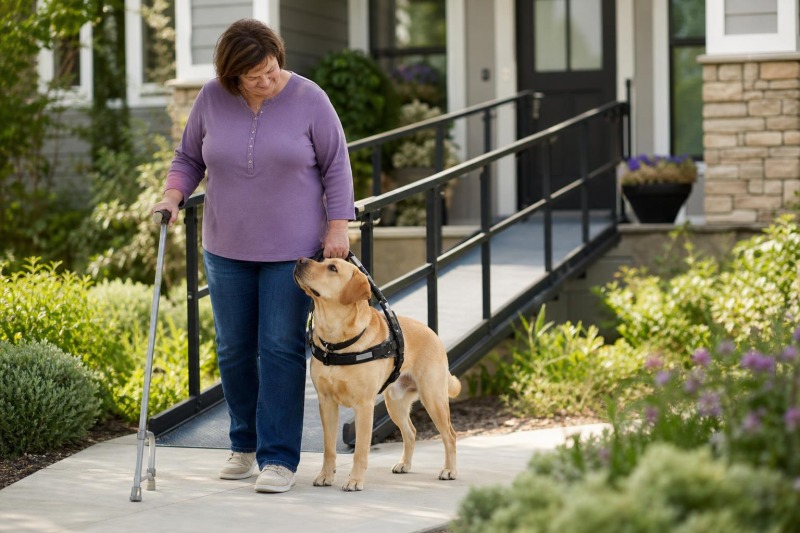
Service-dog roles are defined by trained work that addresses a handler's disability-related needs. The familiar labels describe different tasks; they do not establish a universal training program or eligibility pathway.
For folks trying to understand the different types of service dogs, the landscape can feel muddy. Terms get tossed around loosely, and plenty of people confuse service dogs with therapy dogs or emotional support animals. The truth is simpler and more meaningful than the noise makes it sound. A service dog is trained to perform specific tasks for a person with a disability. Those tasks are not just comforting or convenient. They are practical actions that help a handler navigate daily life with greater safety and independence.
On a site like Companion Dog Central, where people come to learn about therapy dogs, service dogs, and companion dogs, it helps to start with firm footing. Once you understand what service dogs are trained to do, the different categories begin to make good, honest sense.
What Makes a Dog a Service Dog?
A service dog is defined by its work. The dog must be individually trained to perform tasks directly related to a handler’s disability. That disability may be physical, psychiatric, sensory, neurological, or medical. Some tasks are easy to spot, like guiding a blind handler through a crowded store. Others are nearly invisible to the outside eye, such as alerting to blood sugar changes or interrupting self-harming behavior.
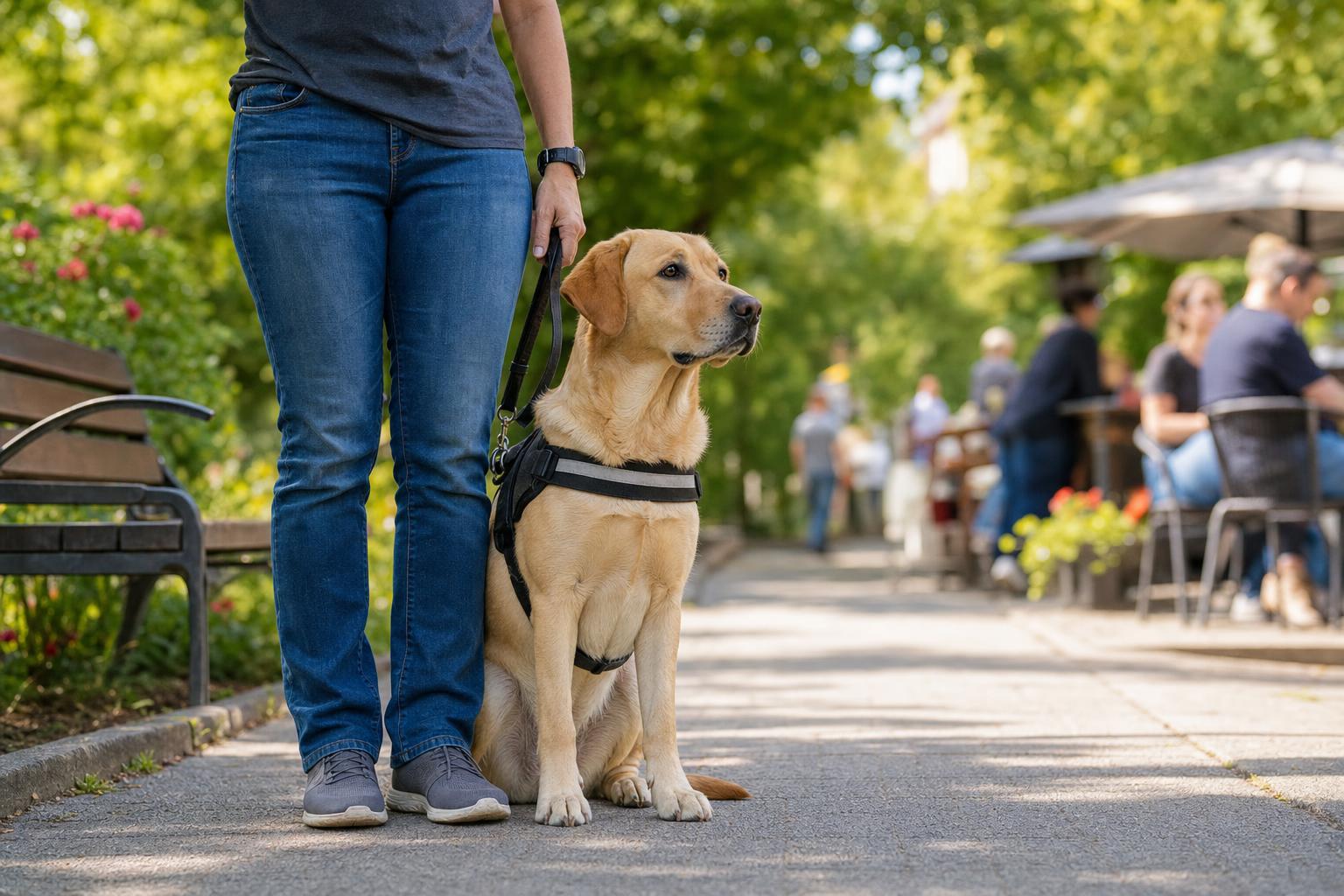
This is where many people get turned around. A dog that provides comfort by its presence alone may be wonderful, but comfort by itself does not make a dog a service dog. Training does. Task work does. Reliability under pressure does. A true service dog can settle in public, ignore distractions, and go to work when needed, whether that need comes in a grocery aisle, a school hallway, or in the quiet middle of the night.
Guide Dogs for Visual Impairments
Guide dogs are among the oldest and most recognized types of service dogs. Their job is to help handlers who are blind or visually impaired move through the world safely. That means avoiding obstacles, stopping at curbs, navigating doors, and helping their handler maintain a steady route through public spaces.
A good guide dog is a marvel of judgment. These dogs are not simply following commands like a machine. They are trained to practice what is often called intelligent disobedience, which means refusing a command when obeying it would place the handler in danger. That kind of decision-making takes serious training, a sound temperament, and a strong bond between dog and handler.
The Kind of Work Guide Dogs Perform
Guide dogs help their handlers locate entrances, avoid low-hanging branches, maneuver around crowds, and stop before hazards. In busy environments, they offer a kind of calm precision that can be hard to describe unless you have seen it firsthand. They move with steadiness, almost like a seasoned bird dog working scent in rough cover, all attention fixed on the job in front of them.
Hearing Dogs for Sound Alerts
Hearing dogs assist people who are deaf or hard of hearing by alerting them to important sounds. These might include doorbells, smoke alarms, alarm clocks, crying babies, ringing phones, or someone calling their name from another room. The dog hears the sound, gets the handler’s attention, and leads them toward the source or signals that something needs immediate notice.
These dogs may not draw the same public attention as guide dogs, but their work changes lives in practical ways. When a person can trust that their dog will alert them to a fire alarm or someone at the door, home becomes a safer and less isolating place.
Mobility Assistance Dogs
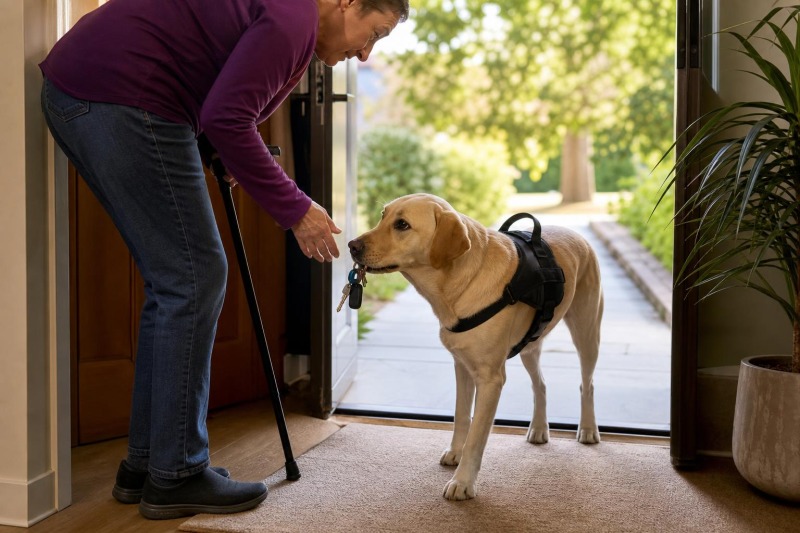
Mobility service dogs help people with physical disabilities that affect balance, movement, strength, or coordination. Some handlers use wheelchairs. Others live with conditions that make walking unstable or exhausting. In either case, the dog is trained to perform tasks that support movement and reduce risk.
A mobility dog may retrieve dropped items, open or close doors, pull a wheelchair in limited situations, carry small objects, turn light switches on and off, or provide bracing support if specifically trained and medically appropriate. These dogs often become an extra set of hands and, in some moments, a line of safety between the handler and a bad fall.
Why Size and Structure Matter
Not every dog is built for mobility work. Structure, health, and sound movement matter a great deal. A dog asked to do physical tasks must be selected carefully and trained responsibly. This is one place where experience matters, because asking the wrong dog to do the wrong work can shorten its career and hurt the dog in the process.
Medical Alert and Medical Response Dogs
Some of the most fascinating service dogs are those trained for medical alert and response. These dogs assist handlers with conditions such as diabetes, seizure disorders, severe allergies, cardiac conditions, or other health issues that may require warning or quick intervention.
Diabetic alert dogs can be trained to detect changes in blood sugar through scent and alert their handler before things become dangerous. Seizure response dogs may be trained to stay with a person during a seizure, retrieve medication, activate an alert system, or seek help. Some dogs alert to oncoming migraines or changes in heart rate. In the field, a hunter learns to trust a dog’s nose because a dog often catches what the human misses. Medical alert work taps into that same astonishing canine awareness, only here the stakes are deeply personal and often life-changing.
Alert Dogs Versus Response Dogs
There is an important difference between a dog that alerts before an event and one that responds during or after it. Some dogs do both. An alert dog gives warning. A response dog takes action once the medical event occurs. Both are service dogs when they are trained to perform tasks tied directly to a disability.
Psychiatric Service Dogs
Psychiatric service dogs help people with mental health disabilities such as post-traumatic stress disorder, severe anxiety disorders, depression, or other psychiatric conditions that substantially limit daily life. These dogs are often misunderstood because their disabilities may not be visible, but the work they do is real and task-based.
A psychiatric service dog may interrupt panic attacks, wake a handler from night terrors, remind them to take medication, create space in crowded settings, guide them out of overwhelming environments, or perform grounding behaviors during dissociation. This is not the same as offering general comfort. The difference lies in specific training and repeatable task work.
Psychiatric service dogs need that same deep steadiness. They work in moments when their handler may feel flooded, fearful, or disconnected, and they do it with a calm confidence that can bring someone back to solid ground.
Autism Service Dogs
Autism service dogs can assist both children and adults on the autism spectrum. Their tasks vary widely based on the needs of the handler. Some dogs help reduce bolting behaviors, provide deep pressure therapy, interrupt repetitive behaviors, support transitions, or offer grounding in overstimulating places.
For families, these dogs can bring a degree of order to situations that once felt chaotic. For adult handlers, they may offer practical support that makes work, travel, or community life more manageable. As with any service dog, the key is individual training matched to real need, not a one-size-fits-all label.
Service Dogs for Multiple Disabilities
Many handlers do not fit neatly into one category, and neither do their dogs. A single service dog may perform mobility tasks, medical alerts, and psychiatric support tasks for one handler. Life is rarely tidy, and disability is no exception. The best service dog teams are built around the person, their daily routines, their risks, and the tasks that truly improve their independence.
That is why broad labels only take you so far. When people ask what type of service dog someone has, the better question is often this: what work does the dog do? That answer tells you far more than a category ever could.
How Service Dogs Differ From Therapy Dogs and Companion Dogs
This confusion comes up often, especially among people just beginning their research. A therapy dog is usually trained to provide comfort and emotional support to many people in settings like hospitals, schools, or nursing homes. A companion dog is primarily there for friendship, daily comfort, and shared life at home. Both can be valuable in ways that are hard to measure.
But a service dog is different because it is trained to perform tasks for one specific handler with a disability. That distinction affects public access, training standards, and the role the dog plays each day. In simple terms, therapy dogs help many, companion dogs enrich the home, and service dogs work as disability-support partners for one person.
Choosing the Right Service Dog Starts With the Right Questions
If you are exploring whether a service dog might be right for you or a loved one, begin with honesty. What disability-related challenges need support? What tasks would make daily life safer or more manageable? Does the person have the time, energy, and resources required to live and work with a highly trained dog?
A service dog can be life-changing, but it is not a shortcut or a trend. It is a serious working relationship built on training, consistency, and responsibility. The right dog, matched to the right person, can open doors that once felt shut tight. The wrong expectations can create frustration for both human and dog.
When you strip away the confusion, the types of service dogs are best understood by the tasks they perform. Some guide, some alert, some retrieve, some steady, and some bring a handler back from the edge of a medical or psychiatric crisis. Different jobs, same purpose: helping a person live with greater confidence and independence.
That is what makes service dogs so remarkable. They meet people where life is hardest and go to work without fuss. No grandstanding, no nonsense, just loyalty paired with skill. If you are learning the difference between service dogs, therapy dogs, and companion dogs, keep your eye on the work. A dog’s job tells the story better than the vest ever will.