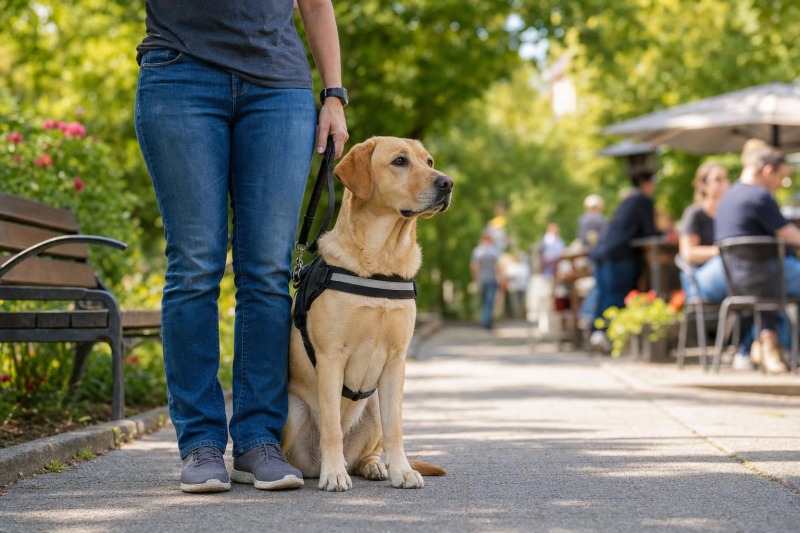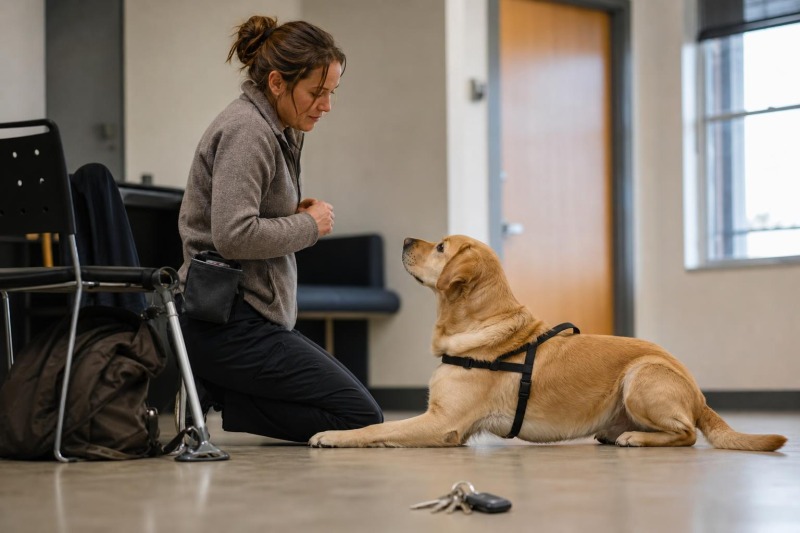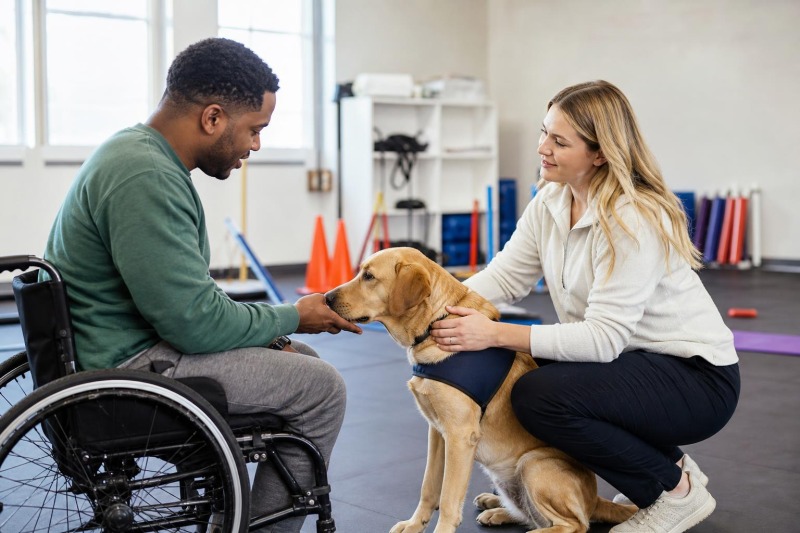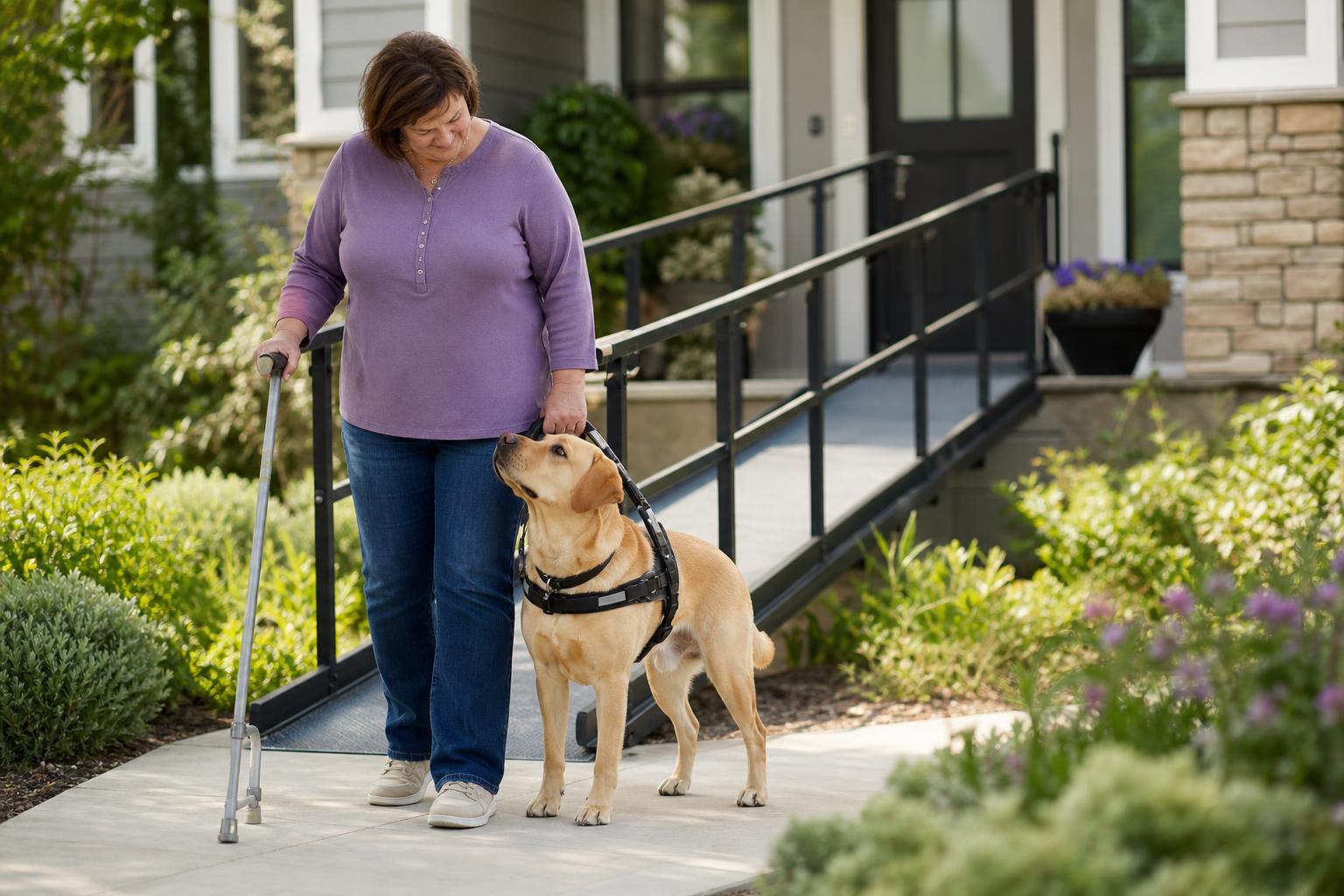
Mobility-assistance planning should begin with the person's needs and the safety of the dog. Retrieving items or opening a door involves different considerations from activities that place physical load on the animal.
For folks trying to understand what a mobility assistance dog really does, there is plenty of confusion out there. The term gets used loosely, and a lot of people mix up service dogs, therapy dogs, and emotional support animals. A true mobility service dog is task-trained to assist a person with a physical disability. That may mean picking up dropped keys, tugging open a door, bringing a phone, helping with wheelchair access, or providing carefully trained support during certain movements. Done right, this work is precise, steady, and built around safety.
What Is a Mobility Assistance Service Dog?
A mobility assistance service dog is a service dog trained to help an individual with physical limitations affecting movement, balance, strength, or coordination. Some handlers live with multiple sclerosis, cerebral palsy, spinal cord injuries, muscular dystrophy, arthritis, Ehlers-Danlos syndrome, or neurological conditions that make everyday tasks harder than they look from the outside. Others need support after injury or illness. The dog is trained around those needs, and that is what separates a real service dog from a well-behaved pet.
A green dog may have heart, but heart alone does not make a dependable worker. A finished dog knows the job, keeps a level head under pressure, and does not quit when the terrain turns rough. Mobility service dogs are much the same. They need a calm temperament, excellent obedience, strong environmental stability, and the kind of patience that cannot be faked.
How Service Dogs for Mobility Assistance Help in Daily Life
The public often pictures one narrow role, but mobility assistance work covers a wide patch of ground. Many handlers rely on their dogs for retrieval tasks. A dropped wallet, medication bag, cane, phone, or set of keys may be easy enough for one person to pick up and nearly impossible for another. A trained dog can bridge that gap in a matter of seconds, saving pain, frustration, and risk of falls.
Door work is another common task. A dog may learn to pull open accessible doors with a tug strap, push a button for automatic access, or close cabinets and drawers after the handler has used them. In the home, those little jobs add up. So do tasks like carrying light items, bringing slippers, fetching a brace, or finding another family member when help is needed.
Some mobility service dogs are trained to assist with wheelchair users by pulling short distances in controlled settings, retrieving objects from shelves, or helping create more efficient movement through a home or public space. Others support handlers who are ambulatory but have poor balance or fatigue. In those cases, the dog may be trained for counterbalance under professional guidance. That work must be approached carefully, with the right dog, the right body structure, and the right training team, because safety comes first for both handler and dog.
Balance, Bracing, and Safety Considerations
This is an area where plain talk matters. Not every large dog should do brace work, and not every handler who wants physical support should use a dog that way. Ethical trainers and responsible programs look hard at orthopedic health, structure, age, and veterinary clearance. They also assess whether the task itself is appropriate. There is no sense asking a dog to carry a burden it should not bear. A sound mobility service dog is a worker, not a piece of equipment.
That is why quality training programs focus on tasks the dog can perform safely and consistently. Retrieval, item delivery, door access, light carry tasks, and emergency response support are often excellent roles. Stability, confidence, and handler-specific task work matter a lot more than flashy tricks.
Best Dog Types for Mobility Assistance Work
There is no single perfect breed for every handler, but some breeds show up often for a reason. Labrador Retrievers are favorites because they tend to be biddable, people-focused, physically capable, and steady in public. Golden Retrievers are also common thanks to their trainability and gentle nature. Standard Poodles can be strong candidates as well, especially for handlers needing a low-shedding coat, though coat maintenance is a real consideration and should not be brushed aside.
Now and then, a mixed breed with the right build and temperament turns out to be exactly the dog a handler needs. Still, mobility work is demanding, and breeding, health testing, and structure matter. A dog with weak nerves, poor joints, or a soft work ethic is going to struggle no matter how much love you pour into it.
Temperament Matters More Than Looks
A good mobility service prospect should be calm without being dull, attentive without being clingy, and resilient in public. Busy stores, medical offices, sidewalks, elevators, and parking lots can rattle an unstable dog. The best workers take information in stride. They do not spook easy, they recover fast, and they keep their head when the world gets noisy. That kind of temperament is worth more than color, trend, or size alone.
Training a Service Dog for Mobility Assistance
Training starts with the same foundation every serious working dog needs. House manners, leash control, neutrality around people and dogs, recall, duration stays, and calm settling in public all come before advanced task work. If the dog cannot hold itself together in a grocery line or under a restaurant table, it is not ready to serve a handler in the real world.
From there, the work becomes specific. Retrieval training is shaped with care so the dog picks up items gently and places them reliably in hand. Door work is built step by step. Item identification, object targeting, and task chains take repetition. Public access work must be proofed across surfaces, sounds, weather, and distractions. That kind of polish does not come overnight. Most reliable service dogs have months, and often years, of training behind them.
Some handlers work with established service dog programs, while others owner-train with the support of professional service dog trainers. Both routes can succeed, but neither is easy. A service dog that will share your life and support your physical safety must be more than eager. It must be consistent.
Who Can Benefit From a Mobility Service Dog?
People living with limited mobility, chronic pain, weakness, joint instability, paralysis, or neurological disorders may benefit from a trained service dog if the dog can perform tasks directly related to their disability. The right match can reduce dependence on others for routine tasks and restore a sense of confidence that is hard to measure from the outside. Sometimes it is the simple dignity of picking up what you dropped without asking a stranger. Sometimes it is moving through a long day with less fatigue and more certainty.
That said, not every person with mobility challenges is best served by a dog. Dogs require care, exercise, veterinary attention, grooming, and daily handling. They are a commitment with fur on it, not a shortcut. A trustworthy program or trainer will be honest about whether a dog fits your lifestyle, physical needs, and support system.
Cost, Time, and the Reality of Ownership
Folks are often surprised by the cost of a finished mobility assistance dog. Between breeding, puppy raising, health testing, task training, public access work, and placement support, professionally trained service dogs can cost a significant amount. Even owner-trained dogs involve gear, trainer fees, veterinary care, food, travel, and lost time when a prospect washes out. That is not said to discourage anybody. It is simply the truth of building a dependable working partner.
Then comes the daily reality. A mobility service dog still needs to be a dog. It needs rest, play, decompression, and clear handling. They protect the dog’s body, maintain training, and keep the relationship healthy. A dog that is overworked, under-exercised, or poorly managed will not stay sound in mind or body.
Service Dogs, Therapy Dogs, and Companion Dogs: Know the Difference
Because this site serves readers interested in companion dogs, therapy dogs, and service dogs, this part matters. A service dog is individually trained to perform tasks for a person with a disability and is generally granted public access protections under applicable law. A therapy dog offers comfort to others in settings like hospitals or schools but does not have the same public access rights. A companion dog may provide emotional closeness and routine, which is valuable in its own right, but companionship alone does not make a dog a service animal.
The distinction is important not just legally, but ethically. Mobility assistance work requires a level of training and responsibility that should be respected.
Choosing the Right Path
If you are considering a service dog for mobility assistance, start with honesty. Look hard at your needs, your home, your budget, and your long-term ability to care for a working dog. Talk with medical professionals when appropriate. Speak with reputable service dog organizations or trainers who understand mobility work specifically, not just obedience in general. Ask about health standards, task suitability, and what happens if a dog is not cut out for the work.
A good mobility service dog can change the shape of a person’s day. It can turn struggle into rhythm, hesitation into confidence, and isolation into movement. But that outcome comes from careful selection, sound training, and respect for the dog’s limits. Like any fine working partner, these dogs earn their place through steadiness, intelligence, and grit.
When it all comes together, the partnership is something worth admiring. Not because it looks noble from across a parking lot, but because of the quiet practical ways it helps a person live more fully.