A service-dog match involves the handler's tasks, daily environment, and ability to care for the dog. Programs also assess the dog's skills, health, preferences, and comfort with the proposed work.
At Companion Dog Central, it helps to understand that service dogs are not chosen for looks or charm alone. They are matched with owners through a process that weighs health, temperament, task ability, home routine, energy level, and the owner’s specific disability-related needs. It is part science, part experience, and part reading the little signs dogs give off when they settle into a job they were meant to do.
What a service dog match is really about
A service dog is trained to perform specific tasks that help a person with a disability live more safely and independently. That means the dog cannot simply be friendly or obedient. The dog must be capable of doing particular work under stress, in public, in quiet spaces, in crowded stores, and on long ordinary days when nothing exciting happens at all. Matching is about function first. Personality matters, but only after the dog can meet the practical demands of the handler’s life.
That kind of natural steadiness cannot be faked for long. Trainers look for it because it holds up over time.
Why no two handlers need the exact same dog
One owner may need help with mobility and balance. Another may need medical alert work, psychiatric support tasks, or help retrieving dropped items. A veteran living in a rural setting may need a dog comfortable around trucks, open land, and long uneven walks. A college student in the city may need a dog that can ride elevators, ignore commotion, and settle under a lecture hall desk. The disability may shape the tasks, but lifestyle shapes the match just as much.
That is why reputable programs spend so much time learning about the person, not just the diagnosis. They want to know how the owner lives, where they go, how active they are, whether they have other pets, what kind of home they keep, and what sort of support system surrounds them. A good match is built for everyday life, not for a brochure photo.
How service dogs are chosen before matching even begins
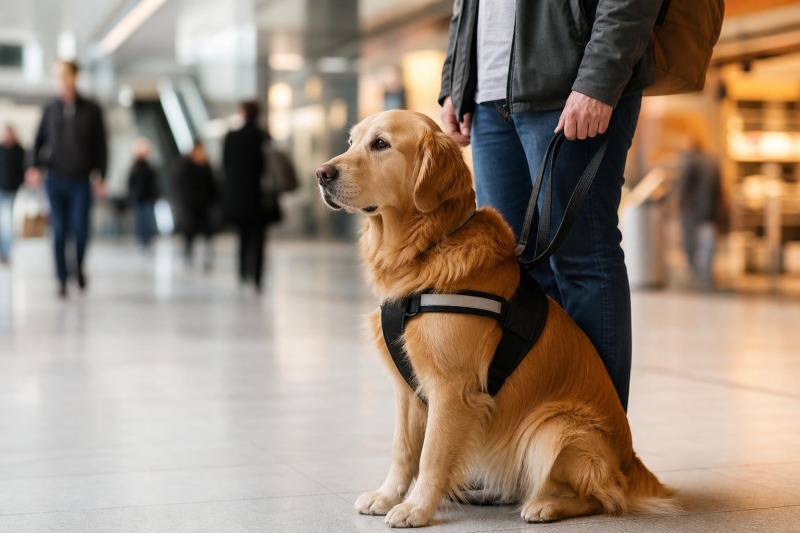
Long before a service dog is paired with an owner, there is selection. Not every dog has the nerves, health, or work ethic for service work. In truth, many do not. Good programs know this and test carefully. They look at soundness of body, confidence in new places, recovery after surprises, sociability without overexcitement, trainability, food motivation, and the ability to settle. A dog that startles at every slammed door or locks onto every passing squirrel is not likely to thrive in demanding public work.
Breed can influence the process, but temperament is still king. Labrador Retrievers, Golden Retrievers, and Standard Poodles are often used because they tend to bring a workable blend of intelligence, stability, and handler focus. Still, no breed gets a free pass. Every individual dog must prove it has the right stuff. In the same way a man would never choose a hunting dog based on color alone, a service program does not choose workers by appearance. They choose for sound mind and dependable habits.
Temperament testing and early training
Puppies and young dogs are watched closely from the start. Trainers note how they handle noise, new surfaces, unfamiliar people, and frustration. They watch whether the dog bounces back after a surprise or carries the worry too long. They study whether the dog can focus, whether it likes to work with people, and whether it can be redirected without melting down. These little details matter more than most people realize.
Then comes foundational training. The dog learns obedience, public access manners, leash behavior, impulse control, and the beginnings of task work. As training deepens, the program gets a clearer picture of what the dog truly enjoys and where it struggles. Some dogs excel at retrieval. Some are naturally gifted at scent-based medical alert work. Others carry themselves with the physical steadiness needed for certain mobility tasks. Matching begins to take shape here, well before the owner and dog ever meet.
How owners are evaluated for the right match
The owner side of the process is just as important. A program will usually gather medical documentation, conduct interviews, and talk through expectations. This is not done to make life difficult. It is done because a service dog is not a gadget you switch on and off. It is a living partner that needs structure, handling, care, and daily reinforcement. A dog may be highly trained, but the owner still needs the ability and support to maintain the team.
Programs often ask detailed questions about the owner’s daily routine, living space, travel habits, family members, work or school environment, and previous dog experience. They may want to know whether the owner prefers a more outgoing dog or one with a quieter style. They may ask what situations are hardest to manage alone. Those answers help narrow down what kind of dog will not only perform tasks, but also fit naturally into the owner’s world.
Matching tasks to real-life needs
This is where the process gets practical. If an owner needs help with opening doors, retrieving medication, interrupting harmful behaviors, grounding during anxiety episodes, or alerting to a medical event, the dog must already show the aptitude and training for that work. A mismatch in task ability is not a small oversight. It can make the partnership unsafe or ineffective.
At the same time, programs look beyond the checklist. A handler with limited strength may need a dog that responds to the lightest cue. Someone with a chaotic household may need a dog with exceptional environmental stability. An owner who tires easily may need a dog with an easy off-switch, one that can work when asked but rest without fuss. These are the sorts of details seasoned trainers weigh heavily.
The moment of matching and team training
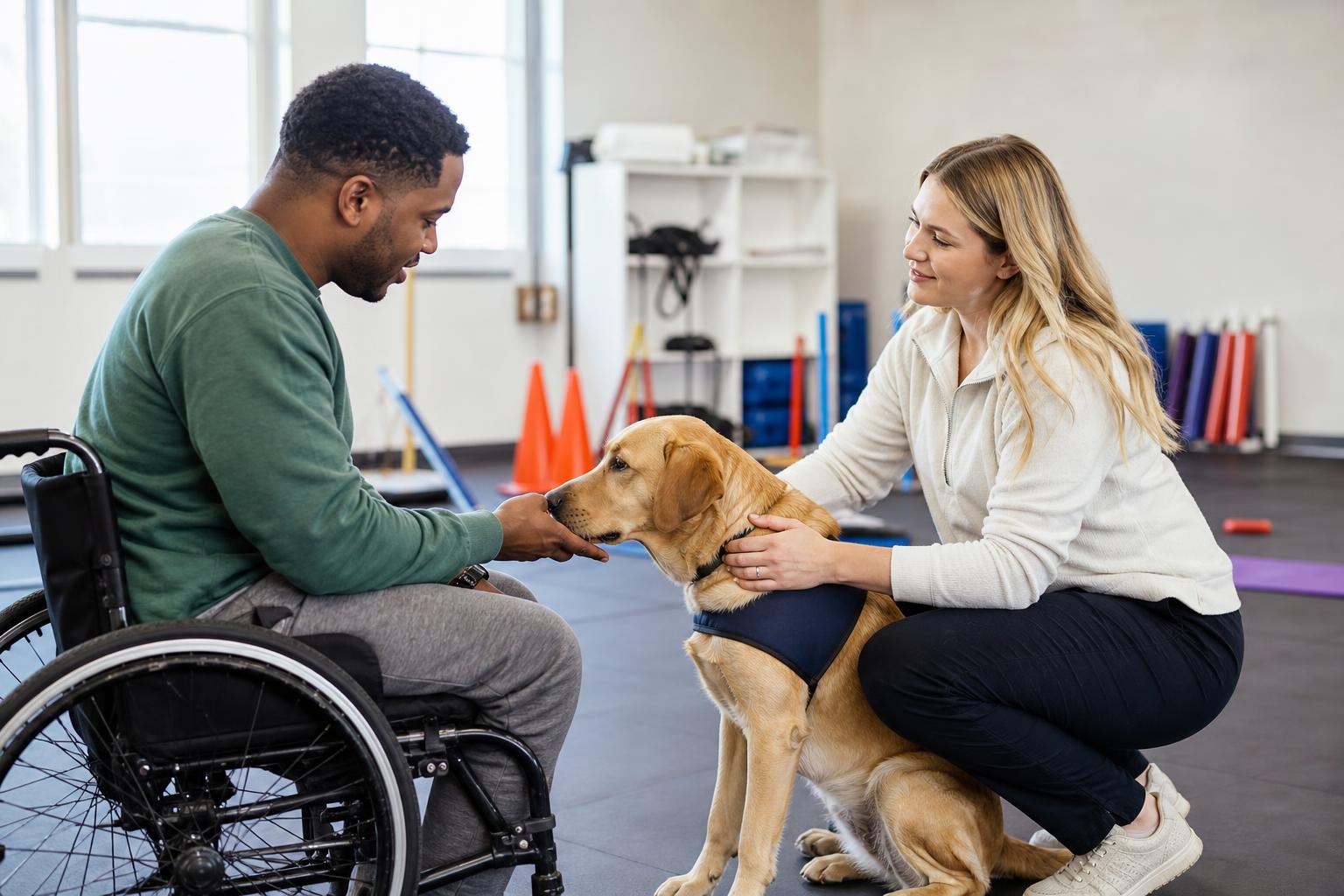
Once a likely match is identified, many programs move into team training. That may happen at a facility, in the owner’s home, or through a combination of both. This stage is where the dog and handler learn each other’s timing, body language, pace, and routines. It is not enough for the dog to know the task. The team has to learn how to move together with confidence.
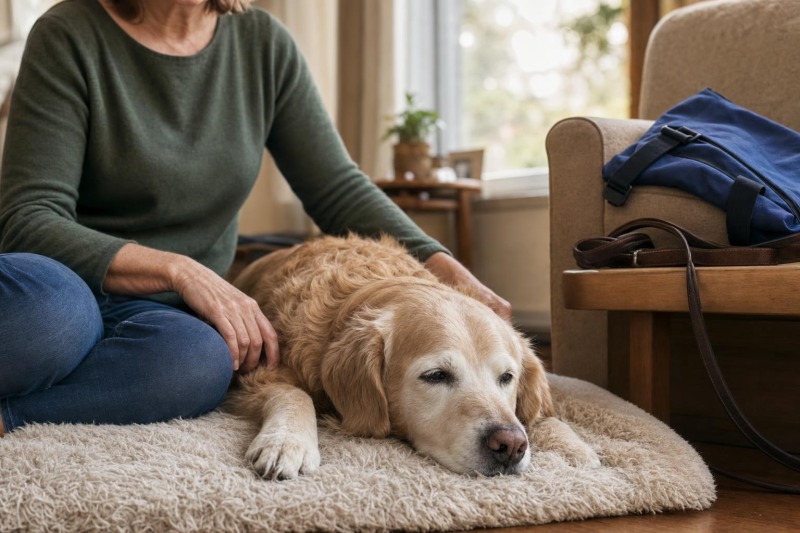
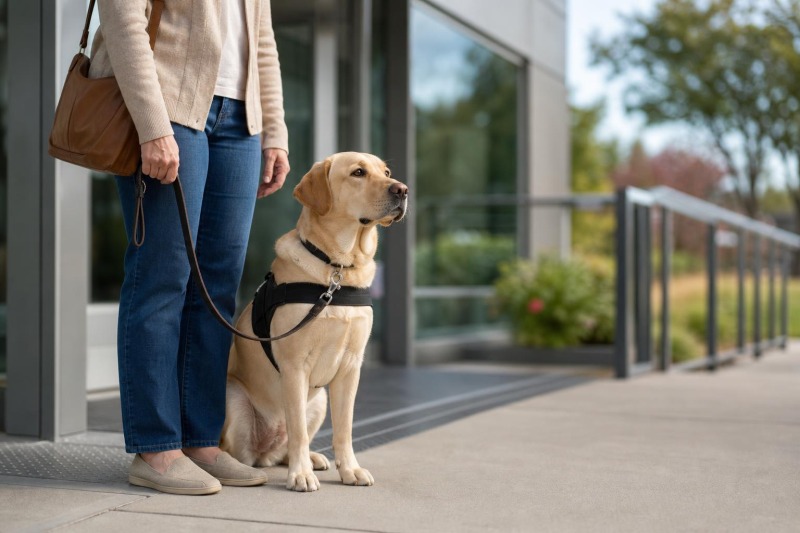
At first there is a touch of uncertainty, a lot of looking, a lot of figuring. Then, if the match is right, the edges soften. The owner’s hand reaches with more confidence. The dog starts checking in at the right moments without being asked twice. The leash hangs with a little more slack. What looked mechanical becomes natural. That is a sign the partnership is taking root.
During team training, instructors watch closely for signs of success or strain. Does the owner feel comfortable handling the dog in public? Does the dog remain attentive under the owner’s cueing style? Are tasks being performed accurately where they matter most? This period allows adjustments before the placement is finalized.
Why bonding matters, but is not the whole story
People often talk about bonding as if it is the main ingredient. Bonding matters, certainly, but service dog matching is not based on chemistry alone. A strong emotional connection without working compatibility can leave both dog and owner frustrated. On the other hand, many excellent teams grow into deep trust through consistent work, shared routine, and quiet success.
Trust in a service dog is earned in the small moments. It is built when the dog alerts correctly at the right time, retrieves the item that matters, blocks out distractions, and settles calmly when the world gets noisy. For the owner, confidence grows every time the dog shows up and does its job. That kind of trust runs deeper than first impressions.
When a match is not right
Good programs know that not every proposed match should move forward. Sometimes the dog is too intense, too soft, too driven, or simply wrong for the owner’s pace of life. Sometimes the owner’s needs change. Sometimes team training reveals problems that were not visible on paper. Turning away from a poor match is not failure. It is responsible placement.
The best organizations protect both the dog and the handler by being honest early. A service dog should never be forced into a role it cannot handle, and an owner should not be asked to adapt to a dog that makes daily life harder. Solid matching is about long-term success, not short-term emotion.
What happens after placement
The matching process does not end when the dog goes home. Reputable service dog programs provide follow-up support, refresher training, and guidance as the team settles into real life. This matters because life changes. Routines shift. Health needs evolve. Dogs mature. A good program stays invested in the team’s success.
Owners also carry responsibility after placement. They must maintain the dog’s training, keep up with veterinary care, protect the dog’s physical and emotional well-being, and continue practicing the tasks that make the partnership effective. Even the best service dog needs regular reinforcement. A working dog is much like any other skilled partner. Leave the tools sitting in the shed too long, and they lose their edge.
Finding the right service dog program
If you are looking into getting a service dog, choose a program that takes matching seriously. Look for transparency, thorough application steps, clear task training standards, health testing, and structured team training. Be wary of any place that promises a near-instant match or treats every applicant as if the same dog would suit them all. Real service dog matching takes time because it should.
For anyone interested in therapy dogs, service dogs, or companion dogs, understanding this process can save heartache and help set honest expectations. The right service dog is not just trained. The right service dog is fitted to the person’s life with care, like selecting the proper horse for rough country or the proper hunting dog for hard cover. When the match is done well, the team moves through the world with a quiet kind of certainty that is hard to miss.
That is the heart of it. Service dogs are matched with owners through evaluation, temperament testing, task training, lifestyle review, team training, and ongoing support. It is careful work, and it ought to be. When a dog’s ability meets a handler’s real needs, the result is more than assistance. It is partnership built to last.