Service-dog retirement is a transition in care, routine, and the handler's support arrangements. Planning ahead allows decisions to reflect the dog's health and comfort rather than an unexpected deadline.
At Companion Dog Central, folks often ask what service dog retirement actually looks like. Do dogs stay with their handlers? Do they move in with family? Can they still help at home, even if they are no longer working in public? The honest answer is that retirement can take several forms, but the best outcomes all begin with the same idea: the dog’s well-being comes first.
When Is It Time for a Service Dog to Retire?
A seasoned service dog does not usually wake up one morning and simply quit. More often, retirement is a gradual decision shaped by age, health, stress, and changing performance. Some dogs work comfortably into their later years, while others start showing signs sooner. Arthritis, vision changes, hearing loss, slower recovery after activity, and increased anxiety in busy environments can all point toward the need for a lighter load.
That is one of the hardest moments for any handler. A dog may still try to push through discomfort because that is what well-trained, devoted animals do. They lean into duty. It falls on the human to notice the small changes: hesitation at stairs, reluctance to load into the car, panting sooner than normal, or a general dullness where there once was eager focus. A retired service dog is not a failed one. Retirement is often a reward for years of faithful work.
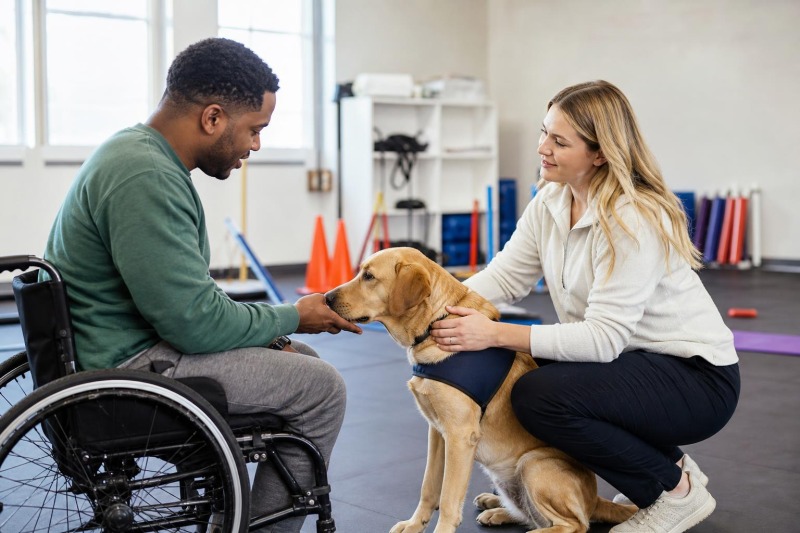
Veterinarians, trainers, and handlers should all play a part in the decision. In many cases, a dog can shift into semi-retirement before fully stepping away. That may mean fewer outings, shorter working periods, or staying home during demanding public trips. For some teams, this middle ground gives everyone time to adjust.
What Happens After a Service Dog Retires?
Most retired service dogs remain where they belong best: with the people they know and trust. For many handlers, the dog has been more than assistance. It has been partner, steady company, and often the one creature in the room that understood trouble before anyone else did. Keeping that dog at home as a beloved companion is usually the smoothest path, provided the handler can still meet the dog’s needs.
Still, every situation is different. Some handlers bring in a successor service dog and keep the retired dog as part of the household. Others place the retired dog with trusted family or close friends if finances, housing, or medical realities make dual-dog life too difficult. Occasionally, the dog returns to a puppy raiser or a known caregiver. Good retirement plans are not built around convenience alone. They are built around stability, comfort, and the least amount of upheaval for the dog.
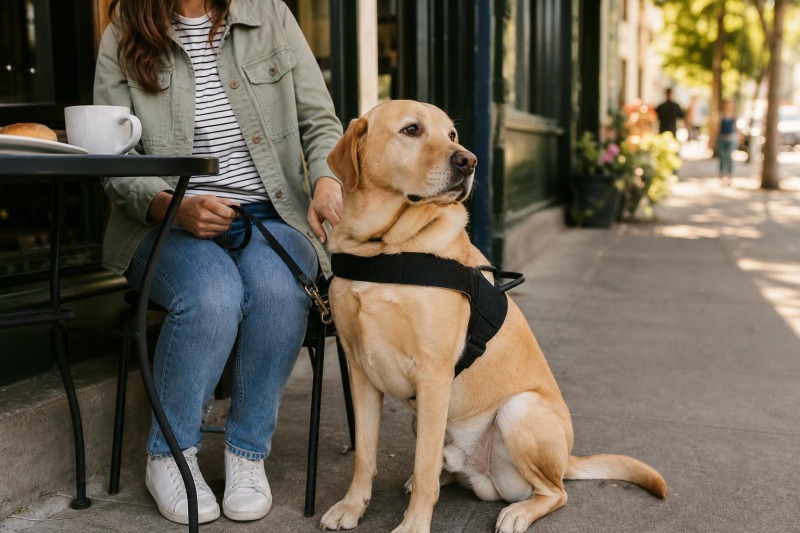
The dog’s daily rhythm changes fast once the vest comes off for good. No more constant public access work. No more long periods of alert focus in crowded stores, medical offices, airports, or school buildings. At first, some dogs settle into retirement like an old hound finding a sunny patch on the porch. Others seem restless. They wait by the door, watch for gear, or perk up when they hear familiar work cues. That is normal. Work gave structure to their days, and structure matters to dogs.
The Emotional Side of Retirement
People sometimes underestimate how emotional service dog retirement can be. The handler may feel guilt, grief, relief, gratitude, and fear all at once. There can be worry about losing independence, concern over the dog’s happiness, and sadness over closing a chapter that carried both of them through difficult years. That emotional weight is real, and it deserves room.
Dogs feel the shift too, though not in the same human way. They notice changes in routine, expectations, and energy. A dog that once had clear tasks may need help learning that rest is now part of the assignment. Some retired service dogs become clingier for a while. Others sleep more deeply than they have in years. A few seem almost relieved, as if they have been waiting for permission to lay the burden down.
How to Help a Service Dog Transition into Retirement
A thoughtful transition is better than an abrupt cutoff whenever possible. Dogs thrive on pattern, so replacing work structure with home structure helps. Keep regular mealtimes, walks, grooming, and play sessions. Continue gentle training games if the dog enjoys them. Simple cues, scent games, puzzle toys, and calm outings can keep the mind active without demanding full-duty performance.
Exercise should match the dog’s age and condition. An older service dog may no longer be fit for long, punishing days, but that does not mean life should become idle. Easy walks, safe yard time, swimming where appropriate, and low-impact movement can preserve muscle tone and support joint health. A retired dog still needs purpose, even if that purpose is as modest as greeting the morning, sniffing along a fence line, and resting by your chair in the evening.
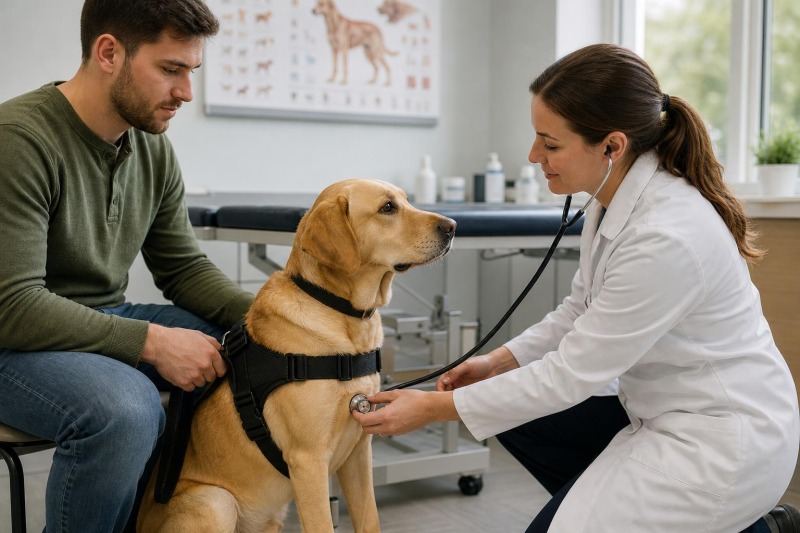
Medical care often becomes more important after retirement, not less. Senior bloodwork, joint support, dental care, weight management, and pain monitoring all matter. Plenty of working dogs hide discomfort while on duty. Retirement can make certain problems more obvious because the dog finally stops masking them. In that sense, retirement is a chance to pay close attention and give back some of the care the dog has spent years giving out.
Can a Retired Service Dog Still Help at Home?
Sometimes, yes. Retirement does not always mean a dog never performs a learned behavior again. Many retired service dogs still naturally offer comfort, grounding, or simple assistance around the house. The difference is that these actions are no longer expected under pressure or in demanding public settings. If the dog chooses to nudge, retrieve, or stay close during difficult moments, that can remain part of life. What matters is that the dog is no longer carrying the full responsibility of formal work.
That line can be hard to hold. Handlers must guard against leaning too heavily on a retired dog out of habit. If the dog is slowing down, sore, confused, or avoiding tasks, that is important information. Retirement only works when it is respected.
What If a New Service Dog Is Coming In?
One of the trickiest seasons comes when a retiring service dog shares a home with a younger replacement. This can go smoothly, but it needs management. The retired dog may still feel possessive of routines, spaces, or the handler’s attention. The younger dog may be energetic and still learning manners. Introductions should be calm, gradual, and supervised, with each dog given separate rest time and clear boundaries.
There is also a human adjustment here. It is tempting to compare the new dog to the old veteran. That rarely helps anyone. The retiring dog earned trust over years. The new dog will need time to build its own working relationship. Meanwhile, the older dog deserves to step back without feeling pushed aside. You do not forget that kind of service.
Who Pays for a Retired Service Dog’s Care?
This is one of the most practical questions, and it should be asked plainly. In most cases, once a service dog retires, ongoing food, veterinary care, medications, and comfort expenses become the responsibility of the handler or whoever adopts the dog. Some organizations offer limited support or guidance, but many do not cover lifetime retirement costs. That means retirement planning should begin well before the dog is finished working.
Budgeting for senior care is wise. Older dogs may need orthopedic beds, supplements, prescription diets, more frequent exams, or medications for pain and chronic conditions. Families considering a service dog should understand this from the start. The working years are only part of the commitment. Retirement is part of the promise too.
Honoring the Dog Behind the Job
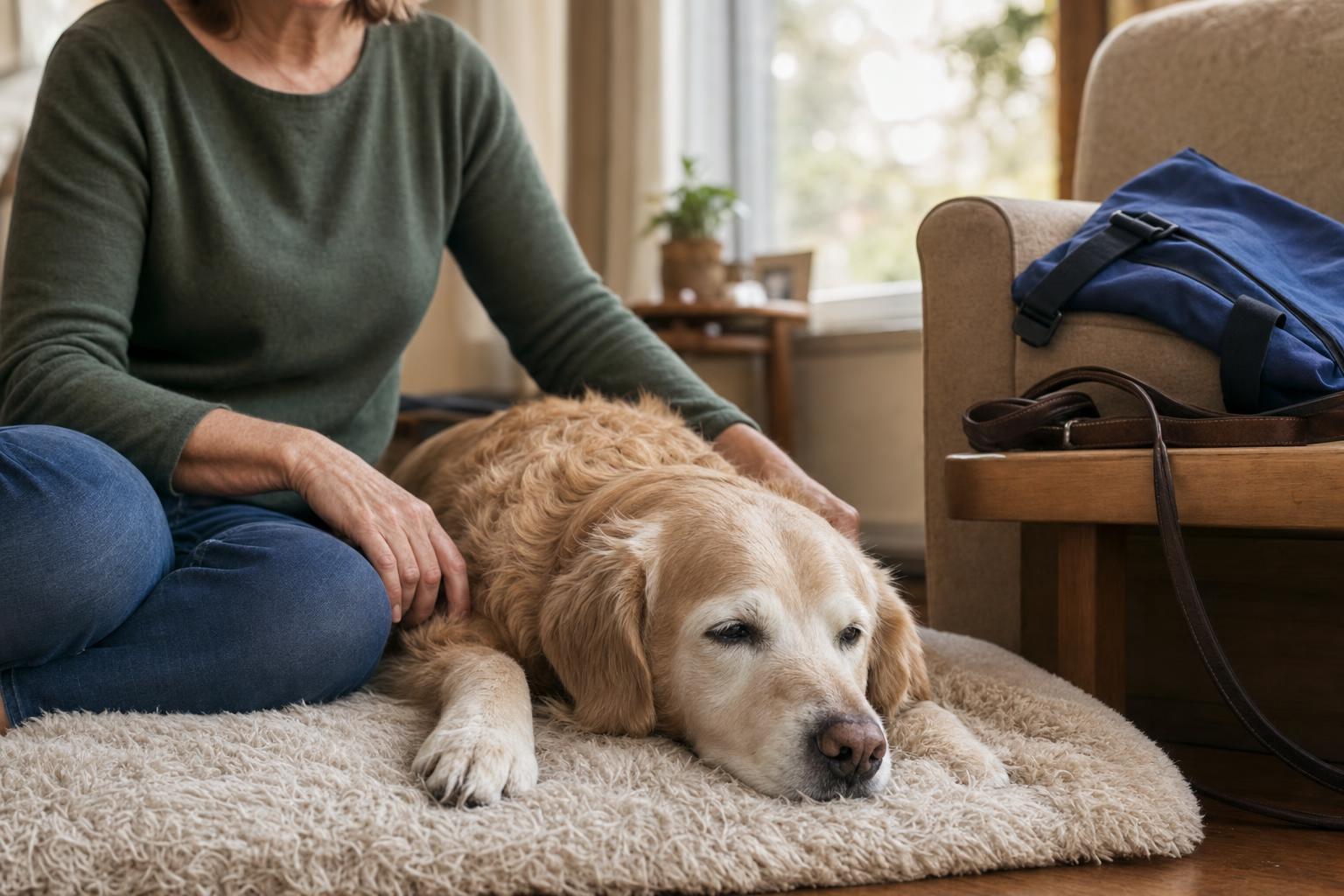
There is something humbling about watching a retired service dog settle into ordinary life. The same dog that once scanned crowds, interrupted panic, guided movement, or responded to medical changes may now spend the afternoon snoring under a window. To an outsider, that may look like a quiet end. To those who know better, it is earned peace.
The best service dog retirement is not defined by ceremony, though some folks mark the moment with a special collar, photographs, or a last day in vest. It is defined by dignity. It means the dog is safe, understood, and allowed to age without being asked for more than it can give. It means the handler can look at that gray muzzle and know the debt can never be fully repaid, but care, comfort, and loyalty are a fine start.
If you are preparing for this stage now, do not wait for a crisis. Talk with your veterinarian. Speak with your training program if one is involved. Watch your dog honestly. Plan for housing, cost, exercise, and what daily life will look like after work ends. Most of all, remember that a service dog is first a dog. Under the gear, under the tasks, under all the remarkable discipline, there is a living creature that deserves a soft landing.
And when retirement finally comes, what happens next should be simple at heart. The pace eases. The expectations lighten. The bond remains. The dog that gave its best years in service gets the chance to rest close to the people it served, and that is as it ought to be.