Living with a service dog includes ordinary dog care alongside task practice and access planning. Rest, veterinary care, and arrangements for days when the dog cannot work remain essential.
Service dogs are impressive, no doubt about it, but the heart of the matter is not the vest or the public attention. It is the daily partnership. It is the way a dog learns its handler’s rhythm, catches changes in movement or breathing, and steps in with practiced calm. For anyone interested in service dogs, therapy dogs, or companion dogs, it helps to understand what that daily life actually looks like beyond the polished pictures.
The Morning Routine Sets the Tone
Most service dog teams begin the day with structure. That matters more than many outsiders realize. A working dog thrives on clarity. Morning usually starts with a bathroom break, a little movement, feeding, grooming, and then a transition into work mode. Some dogs are naturally quick to switch on, while others need a few minutes to settle into the day, same as people do.
When you live with a service dog, you learn that even simple moments carry purpose. The dog is not just stretching its legs in the yard or waiting for breakfast. It is watching, checking in, and reading its handler from the start. A dog trained for mobility support, medical alert, psychiatric assistance, or another task may already be picking up subtle cues before the coffee has even cooled. That early connection can shape the whole day.
There is also a practical side to mornings that does not get enough attention. A service dog still needs the basics every dog needs: clean water, proper nutrition, grooming, exercise, and regular health care. Working ability depends on good condition. You would not take a hunting dog into rough country without checking its feet, coat, and stamina, and the same common sense applies here. Sound body, sound work.
Work Mode and Home Mode
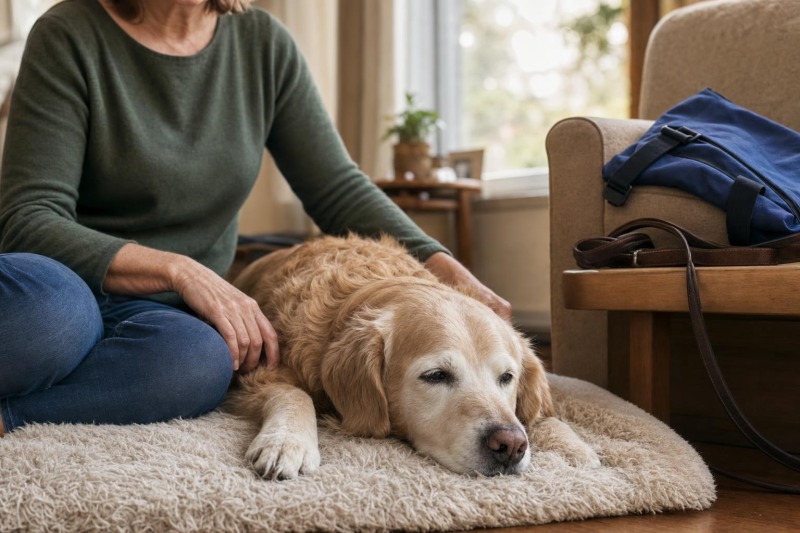
One of the finest things a service dog learns is the difference between being on duty and being off duty. In harness or vest, the dog may be focused, measured, and highly responsive. At home, given the chance to relax, many of these same dogs will sprawl on the floor, chew a toy, or lean into their person for affection. That balance matters. A dog that works hard also needs room to simply be a dog.
People sometimes make the mistake of believing a service dog must always be serious. That is not healthy and it is not realistic. Good handlers understand that rest and decompression protect the dog’s mental state. A reliable worker is usually built on a foundation of confidence, not pressure.
Navigating Public Spaces with a Service Dog
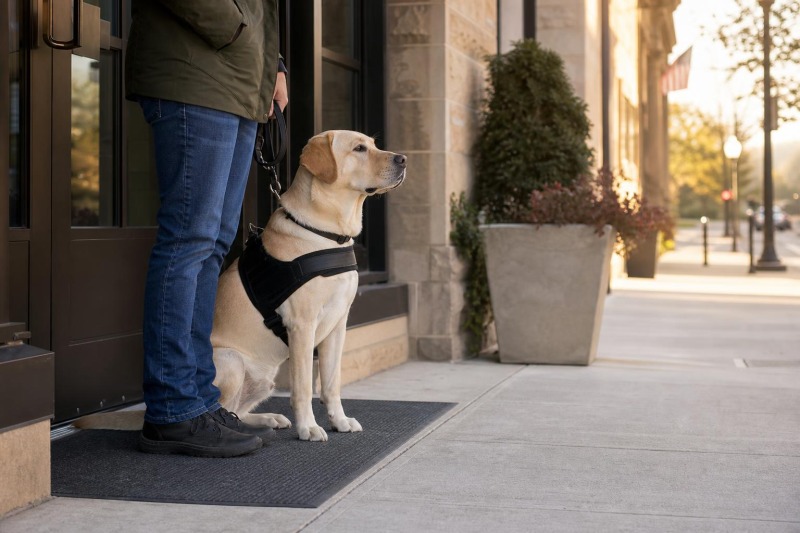
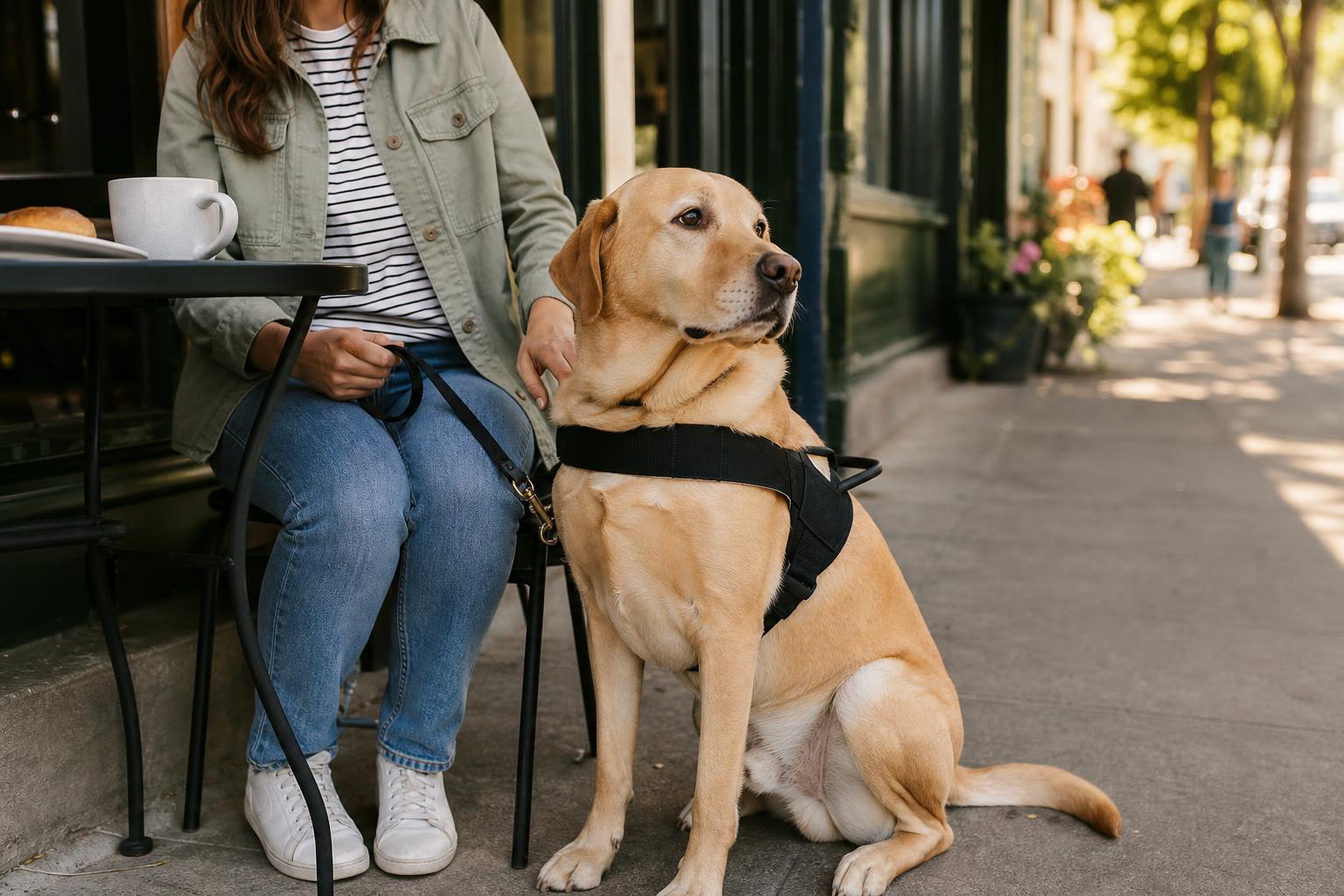
Public life is where the partnership becomes plain to see. A service dog may go into grocery stores, medical offices, workplaces, schools, and other public settings depending on the handler’s needs and legal access. To a passerby, the dog may look calm and simple enough, just walking at heel or lying under a chair. What they do not see is the concentration under that quiet surface.
A strong service dog team moves almost like water through a crowded place. The handler is aware of the dog, and the dog is aware of the handler, each adjusting to the other. They avoid shopping carts, door swings, dropped food, children who move unpredictably, and adults who should know better but still reach out a hand without asking. A well-trained dog ignores distractions not because it was born indifferent, but because that self-control has been built carefully over time.
There can be strain in public, too. Strangers ask personal questions. Some challenge access. Others speak to the dog instead of the handler. It takes patience to manage that over and over again. The public often sees only the dog’s composure, but there is often a great deal of preparation holding that moment together.
Handling Attention and Misunderstanding
This may be one of the hardest parts of daily life with a service dog. Attention follows a working dog almost everywhere. Some of it is friendly, some ignorant, and some downright disruptive. Even well-meaning people can interfere with a dog’s job by calling to it, trying to pet it, or making a scene over how beautiful it is.
That may sound harmless until you understand the stakes. If a dog is monitoring a medical condition, guiding through a tense environment, or helping interrupt a psychiatric episode, distraction is not just inconvenient. It can undercut the work. Handlers often have to advocate for themselves while also maintaining the dog’s focus, and that can be tiring by day’s end.
Training Never Really Ends
It is a way of living together. Service dogs may complete formal training programs, but the daily reinforcement continues for years. Manners, task work, public behavior, and confidence all need upkeep. Skills sharpen with use and dull with neglect.
That means daily life includes little corrections and quiet praise tucked into ordinary moments. A smooth down-stay under a restaurant table, a clean tuck beside a chair, a focused response during a stressful moment, these are not accidents. They are the result of repetition and trust. Handlers often become excellent observers because they must notice small changes in behavior before they become problems.
Some days the work is polished and easy. Some days the dog is a touch distracted, tired, or sensitive to the environment, and the handler has to adjust. That is not failure. It is part of living with a real animal. The best teams are not flawless; they are adaptable.
The Importance of Bond and Trust
A service dog can be trained to perform tasks, but true partnership runs deeper than obedience. Trust is the backbone. The handler must trust the dog to respond when it matters. The dog must trust the handler to be clear, fair, and steady. That kind of bond is built in the dull stretches as much as the hard ones, in morning walks, quiet waiting, repeated patterns, and the confidence that comes from being understood.
They know tension in the shoulders, uncertainty in the stride, and emotion in the voice. A service dog that is handled with consistency often becomes a remarkable reader of human state. That is part of what makes daily life with one feel so personal. The dog is not just present. It is tuned in.
Life at Home Is Still Part of the Job
People often focus on public access, but home life matters just as much. Many service dogs perform crucial tasks in private, where nobody sees them. Some alert to medical changes during the night. Some retrieve items, open or close doors, interrupt harmful behaviors, provide grounding, or assist with movement around the house. The work does not only happen in public view.
At the same time, home should be a place where the dog can exhale. A comfortable bed, clear boundaries, a chance to play, and predictable routines all support long-term success. Service dogs are workers, but they are also living creatures with personalities, preferences, and limits. Respecting those limits is part of ethical handling.
There is a rhythm to home life that deepens the bond. Maybe the dog settles in the kitchen doorway while supper cooks. Maybe it follows close during chores, not clingy, just aware. Maybe it dozes with one ear tuned for its person. Those are small things, but they tell the truth of the relationship better than any polished training video ever could.
The Emotional Reality of the Partnership
Anyone who has leaned on a good animal knows the steadiness they bring. For many handlers, a service dog provides not only task-based help but also confidence to move through the world. The dog may help make outings possible, reduce isolation, and create a sense of safety in situations that once felt unmanageable.
Still, it is important not to romanticize the role. Living with a service dog comes with responsibility, cost, scheduling, maintenance training, veterinary care, grooming, and constant awareness of the dog’s welfare. Travel takes planning. Illness or injury in the dog can disrupt daily life. Retirement eventually comes, and that chapter can be emotional in ways hard to explain to someone who has never depended on a dog’s work.
But for many teams, the rewards run deep. There is something powerful about that silent understanding when a dog responds before words are needed. It is not magic. It is training, instinct, and partnership meeting in one moment. Even so, it can feel mighty close to grace.
Service Dogs, Therapy Dogs, and Companion Dogs Are Not the Same
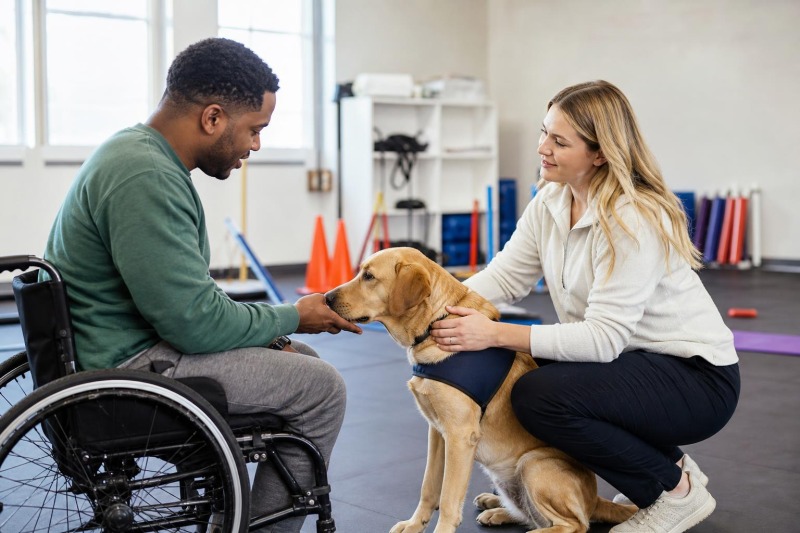
Since many readers are still learning the differences, this is worth saying plainly. A service dog is individually trained to perform tasks that mitigate a handler’s disability. A therapy dog offers comfort and support to other people in places like schools, hospitals, or care facilities, usually with a handler present. A companion dog provides friendship and emotional closeness at home, but does not have the legal role or specialized task training of a service dog.
All three can be valuable. All three can improve lives. But daily life with a service dog is shaped by working responsibility in a way the other roles are not. Understanding that distinction helps people make wise decisions when considering what kind of dog fits their needs.
What Daily Life Teaches You
If you live long enough with a good service dog, you learn patience, humility, and observation. You learn that strength is not always loud. Sometimes it walks quietly at your side, pauses when you pause, and watches the world with calm eyes while staying ready to do its job. That is the real shape of daily life with a service dog. Not a performance. Not a novelty. A partnership built one ordinary day at a time.
For people exploring the world of service dogs, therapy dogs, or companion dogs, it helps to look past appearances and see the work for what it is. Behind every dependable team is a long road of training, care, adjustment, and trust. And when it all comes together, it is a fine thing to witness. Steady, useful, and honest, much like any good dog worth following.