Vests, certificates, and breed stereotypes often distract from what service dogs actually do. Understanding trained tasks and the rules for a particular setting helps clear up the common misconceptions.
That confusion is not harmless. It affects handlers who depend on their service dogs to move through the world safely. It also creates unrealistic expectations for families looking into therapy dogs, companion dogs, or service dogs for the first time. If you are trying to learn what is true and what is not, it helps to strip things down and look at the most common misconceptions one by one.
Why Service Dog Misunderstandings Are So Common
Part of the trouble is that people use the terms service dog, therapy dog, emotional support animal, and companion dog like they all mean the same thing. They do not. A service dog is trained to perform specific tasks for a person with a disability. That training is not casual, and the work is not symbolic. These dogs are doing real, practical jobs that help their handlers live more independently.
Therapy dogs, by contrast, are usually brought into schools, hospitals, nursing homes, and other settings to provide comfort to many people. Companion dogs offer love, routine, and emotional steadiness at home, but they are not automatically granted the same legal access as service dogs. Once those categories get blurred, the rest of the conversation tends to slide downhill in a hurry.
Misconception #1: Any Well-Behaved Dog Can Be a Service Dog
This is one of the most common myths out there. A calm dog with good manners is a wonderful thing, but good behavior alone does not make a service dog. A true service dog must be trained to perform specific tasks directly related to its handler’s disability. That could include guiding a visually impaired person, alerting to an oncoming medical episode, retrieving dropped items, interrupting psychiatric distress behaviors, or helping with balance and mobility tasks when appropriate.
Those are admirable traits. Still, temperament and obedience are only the foundation. Service work calls for a dog that can handle pressure, ignore distractions, stay focused in strange environments, and complete trained tasks with consistency. Not every dog is built for that kind of duty, no matter how sweet or obedient it may be.
Temperament Matters, but Training Seals the Deal
The best service dogs are selected carefully and trained thoroughly. They need sound nerves, social stability, trainability, and the physical ability to perform the work asked of them. A dog that startles easily, gets overwhelmed in crowds, or struggles to stay engaged may be a beloved pet and still not be suitable for service work. That is not a failure. It is simply the truth of working-dog standards.
Misconception #2: Service Dogs and Therapy Dogs Are Basically the Same
They are not the same, and mixing them up causes real trouble. A therapy dog provides comfort to groups of people in structured settings. A service dog is trained to assist one handler with disability-related tasks. A companion dog may offer daily emotional support just by being present in the home. All three roles have value, but they serve different purposes and operate under different expectations.
Think of it like tools in a workshop. A hunting knife, a skinning blade, and a camp axe all have their uses, but you do not call them the same thing just because they are all tools. In the same way, therapy dogs, service dogs, and companion dogs each have a place. Trouble starts when people try to stretch one role into another without understanding the standards involved.
Misconception #3: Service Dogs Must Wear a Vest or ID at All Times
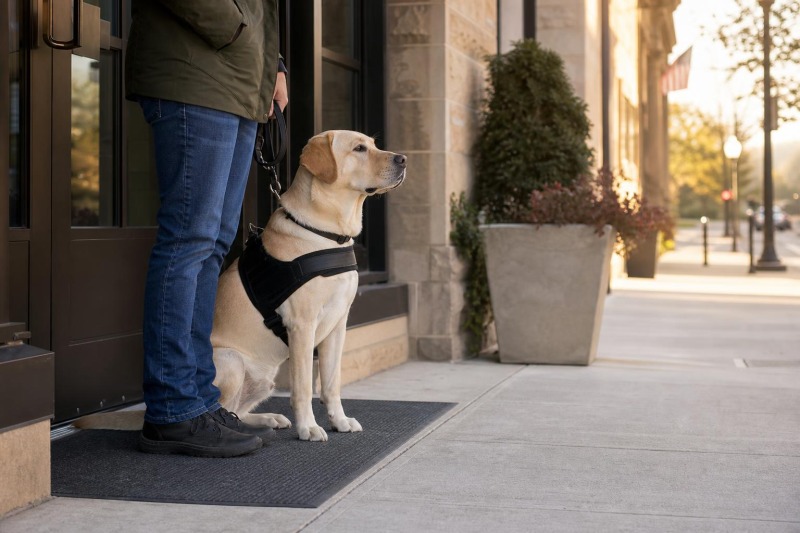
A lot of people assume that if a dog is not wearing a vest, harness patch, or identification card, then it cannot be a legitimate service dog. That is not necessarily true. In many cases, service dogs do wear gear because it helps signal to the public that the dog is working. It can cut down on interruptions, petting, and uninvited attention. But a vest is not what makes the dog a service dog.
The dog’s training and task work are what matter. Some handlers use simple gear. Others use specialized harnesses. Some may not use a marked vest at all, depending on the dog’s work and the handler’s needs. People often want easy visual proof, but working reality is not always that tidy.
Misconception #4: Service Dogs Can Go Anywhere Without Rules
This one needs a little plain talk. Service dogs do have broad public access protections in many settings, but that does not mean there are no standards for behavior. A legitimate service dog must be under control. It should not be lunging, barking repeatedly, soiling indoor spaces, stealing food, or creating a safety issue. Businesses may have limited grounds to ask a disruptive dog to leave, even if the handler has a disability.
That point often gets lost. Public access is not a free pass for chaos. A true service dog is expected to behave like a trained working animal in public. When people drag untrained dogs into stores and call them service dogs, it creates suspicion that falls on legitimate handlers. That is unfair to the people who genuinely depend on these dogs day in and day out.
Public Access Depends on Conduct
Well-trained service dogs are taught to settle quietly, ignore food and distractions, and remain focused on the handler. That steady behavior is not an extra feature. It is part of what makes public access possible. Good handlers know they are responsible for the dog’s care, control, and cleanliness wherever they go.
Misconception #5: You Can Always Tell a Disabled Person by Looking at Them
This may be one of the most damaging assumptions of all. Not every disability is visible. A handler may look healthy to a stranger and still rely on a service dog for serious medical, neurological, psychiatric, or mobility-related support. Too many people think they are fit to judge whether someone “really needs” a service dog based on appearance alone.
That kind of thinking leads to rude comments, invasive questions, and needless confrontation. Usually they do not. A person’s private medical life is not open for public inspection just because they are walking through a store with a working dog.
Misconception #6: Service Dogs Are Just for Blind People
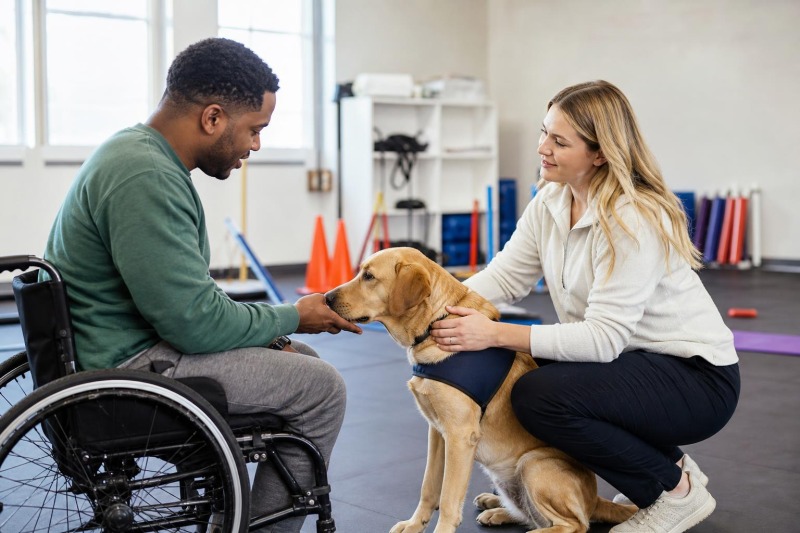
Guide dogs for people with visual impairments are often the most recognized type of service dog, and for good reason. Their work is remarkable. But service dogs can assist with far more than guiding. Some alert to seizures or blood sugar changes. Some help with mobility support tasks. Some retrieve medication, open doors, press buttons, wake a handler from night terrors, or interrupt escalating psychiatric episodes.
The range of service work is broader than many people realize. A trained service dog may be helping with conditions that are not obvious from a quick glance, and the dog’s job may only become visible when a task is needed. Until then, the dog may simply look calm and quiet, which is exactly what good training often looks like.
Misconception #7: Service Dogs Are Always Golden Retrievers or Labradors
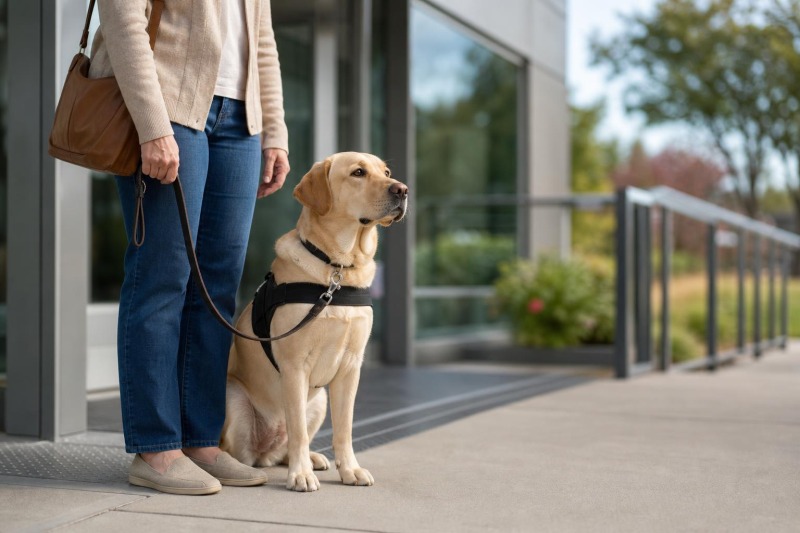
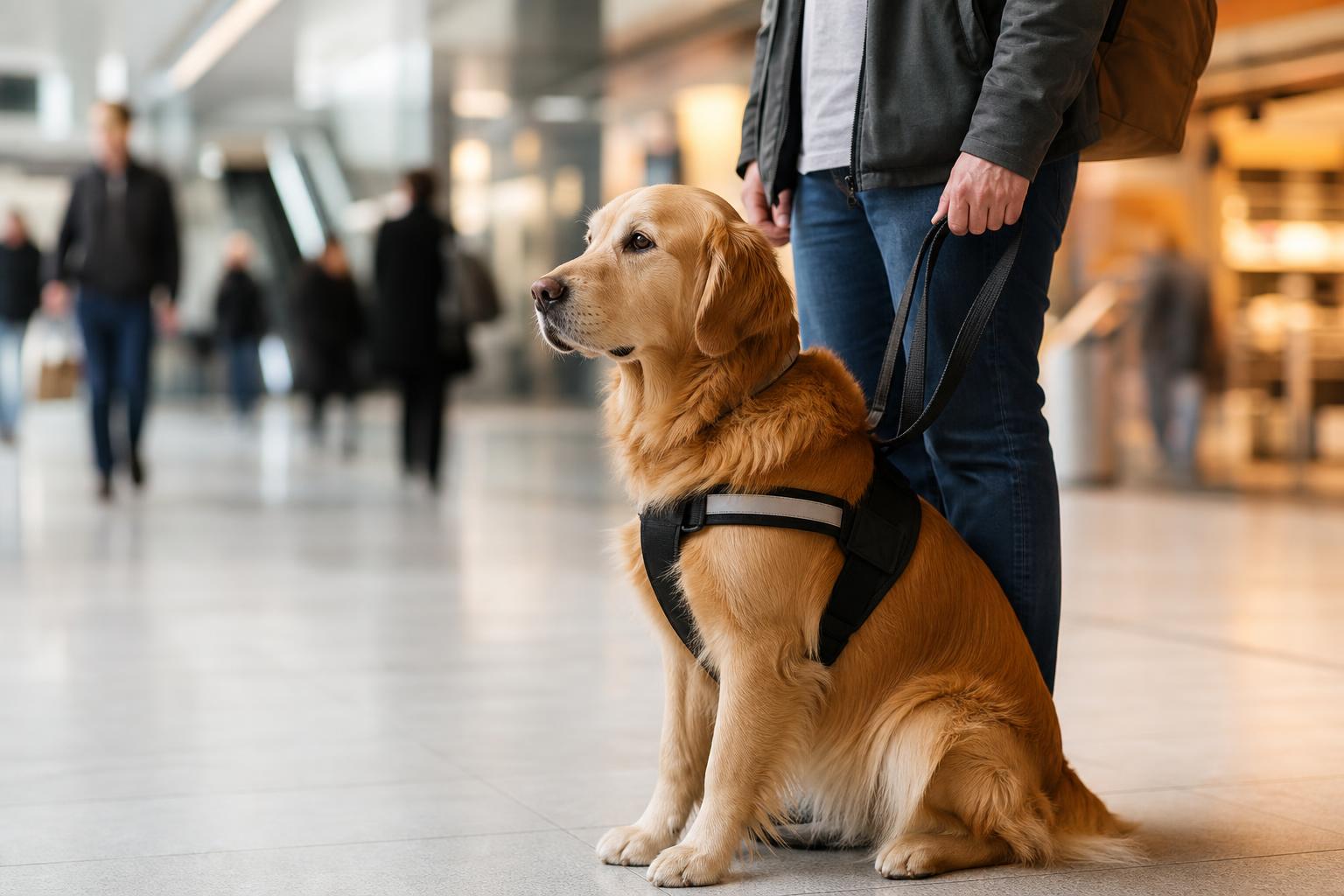
Those breeds are popular for service work because they often bring trainability, stable temperament, and physical suitability to the table. Still, they are not the only breeds that can succeed. Depending on the handler’s needs, other breeds or even mixed-breed dogs may be appropriate if they have the right temperament, health, and tasking ability.
That said, not every breed is equally suited to every kind of service work. Folks sometimes get attached to the idea that any dog can do any job if you love it enough. Experience says otherwise. A dog has to match the work. Energy level, structure, resilience, size, social tolerance, and instinct all matter. The goal is not to force a dog into a role. The goal is to find the right dog for the right task.
Misconception #8: It Is Fine to Pet or Talk to a Service Dog if It Looks Friendly
This happens all the time, and it is one of the quickest ways the public interferes with a working team. A service dog may look gentle and approachable, but when that dog is on duty, attention from strangers can distract it from the handler. In some cases, that distraction is merely annoying. In others, it can be dangerous.
If you see a service dog in public, the safest rule is simple: do not pet, call, whistle at, or otherwise try to engage the dog unless the handler clearly invites it. Respect first, curiosity second.
What People Should Understand Before Getting Any Working or Support Dog
For families researching a therapy dog, service dog, or companion dog, the biggest lesson is this: the label matters because the training, expectations, and legal realities matter. A dog can enrich your life without being a service dog. A dog can be deeply comforting without having public access rights. And a service dog can be life-changing, but only when the dog is properly trained, matched to the handler, and supported with ongoing care.
There is a tendency nowadays to chase titles before understanding responsibility. Working dogs are not accessories, and they are not shortcuts. They are living partners that require training, structure, patience, expense, and honest evaluation. If a person starts with that mindset, they are already on steadier ground than most.
The Truth About Service Dogs Deserves Respect
Service dogs are not defined by internet arguments, store confrontations, or clever gear. They are defined by skilled task work, dependable training, and the bond they build with the person who relies on them. When the public understands that, life gets easier for everyone involved.
If you are learning about service dogs for the first time, take the time to separate myth from reality. It will help you ask better questions, make better decisions, and show better respect to the handlers and dogs you meet. That kind of plain understanding goes a long way. Just like in the field, the truth is usually a whole lot more useful than talk.