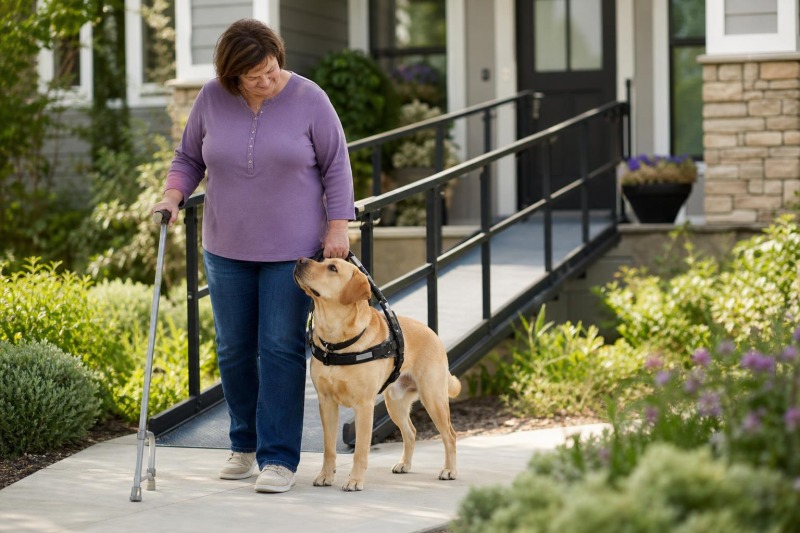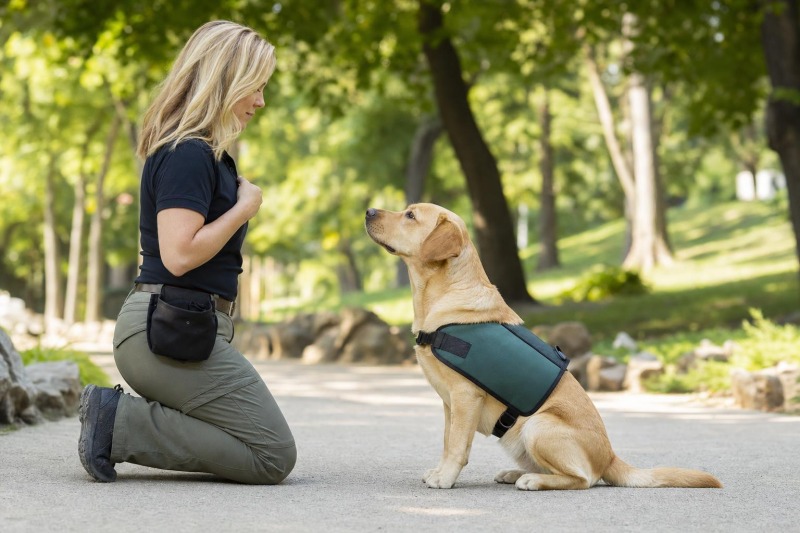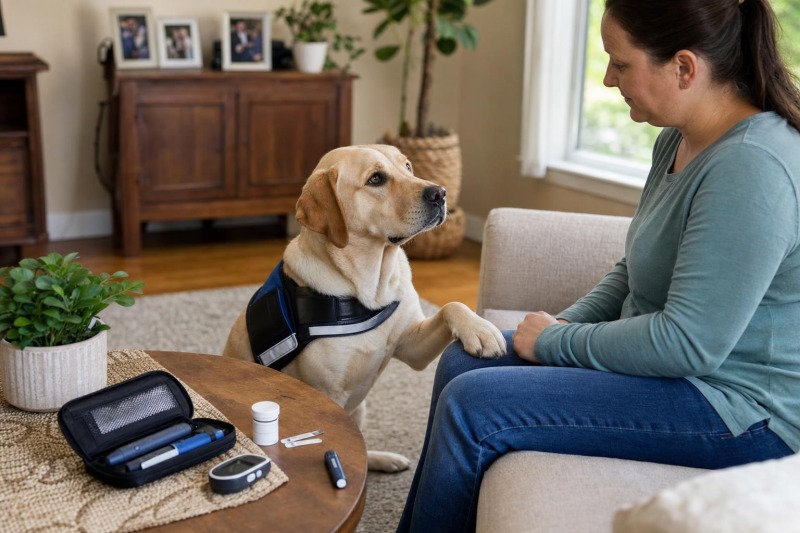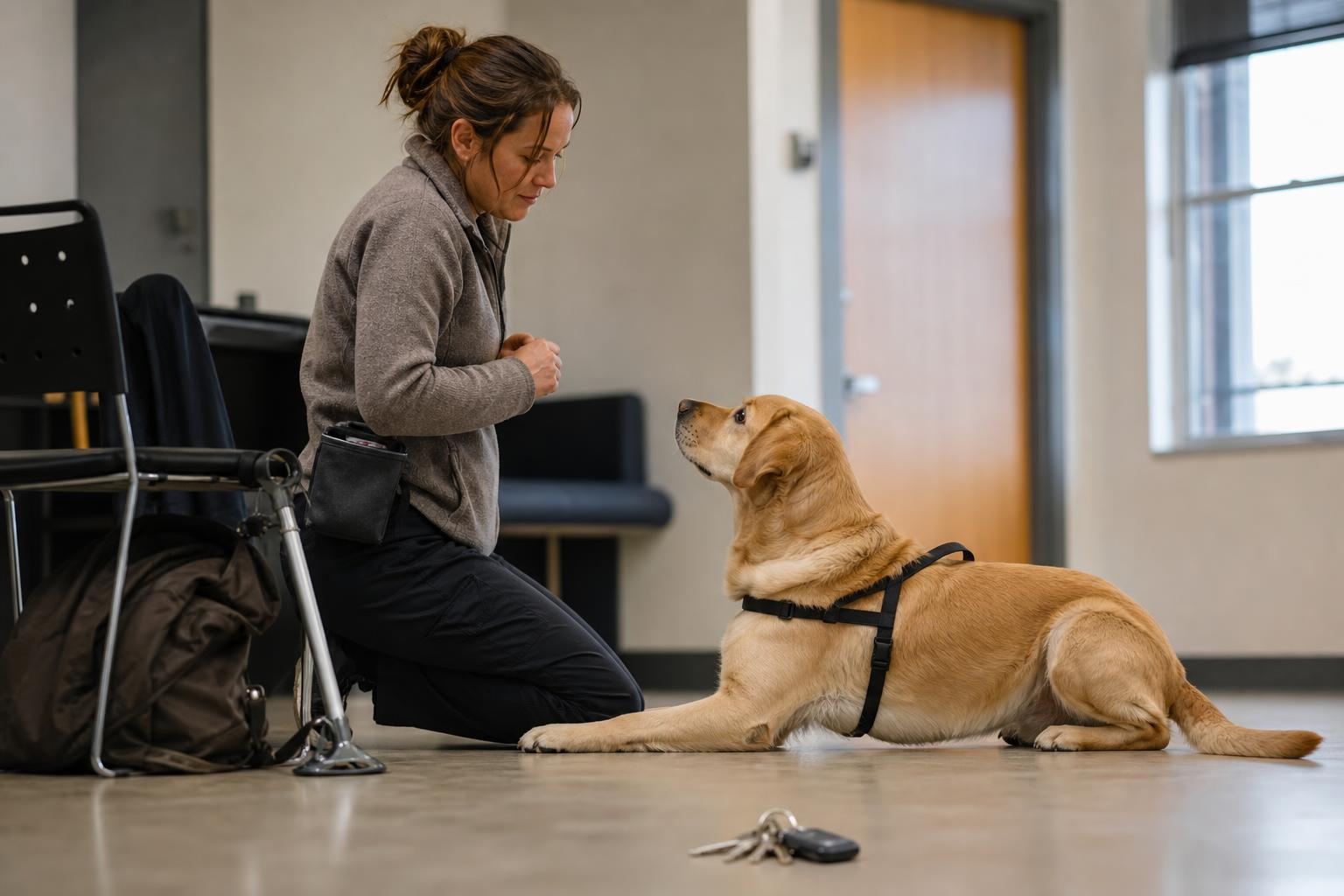
Owner training and working with a professional program each involve substantial commitments. Compare support, costs, experience, training plans, and what happens if the dog proves unsuitable before choosing a route.
Both paths can lead to an excellent working dog. Both paths can also lead to frustration if the dog, the handler, or the expectations are not a good match. If you are trying to figure out whether to train your own service dog or work with a professional program or trainer, it helps to look at the matter with clear eyes. This is not simply about money or convenience. It is about lifestyle, disability-related needs, dog temperament, and whether you can realistically carry the training load day after day.
What an Owner-Trained Service Dog Really Means
An owner-trained service dog does not mean the dog learns a few tricks at home and throws on a vest. A true service dog, regardless of who trains it, must perform specific tasks that mitigate a handler’s disability and must behave safely and reliably in public. That standard does not bend just because the handler did the training personally.
For some people, owner training makes perfect sense. It can allow a handler to shape the dog around very specific needs from the start. It can also deepen the bond in a way that feels natural and strong. Like bringing along a young dog in the woods, there is something powerful about building that teamwork with your own hands. You learn to read each other long before the pressure is on.
Still, owner training demands much more than affection and determination. It takes timing, consistency, patience, and an honest eye for whether the dog is truly suited to the job. A handler may need to work through obedience, public access manners, distraction proofing, and task training over many months or even years. If the dog washes out, the emotional cost can hit hard because the bond is already there.
The Strengths of Owner Training
The biggest advantage is customization. If your disability presents in a unique way, owner training can allow you to tailor tasks with precision. The second advantage is cost flexibility. While owner training is not cheap, it can spread expenses over time instead of requiring a large upfront payment for a fully trained dog. The third advantage is that the handler becomes deeply involved in maintaining standards from day one, which can make the team feel more connected and responsive over time.
There is also a practical side that often gets overlooked. Some people simply do better learning alongside their dog. If you are hands-on, observant, and committed to daily training, the process itself can become part of preparing for life with a service animal.
The Challenges of Owner Training
The hard truth is that not every good dog can become a service dog. In fact, many cannot. Temperament, health, confidence, focus, and environmental stability all matter. A dog may do beautifully at home and still fall apart in a crowded parking lot, a noisy waiting room, or a grocery aisle full of dropped food and curious strangers.
Owner training also requires access to knowledgeable support. Even if you plan to do much of the work yourself, it is wise to have a professional trainer evaluate the dog and help troubleshoot. Bad habits set in quietly. Public access mistakes can become dangerous. And task work, especially for medical or mobility support, must be trained carefully and ethically.
Then there is the issue of time. Not spare-time-on-weekends time, but steady, structured, repetitive work. Rainy day, busy week, low energy, rough morning; the dog still needs training. A service dog cannot rely on good intentions. It relies on standards.
What a Professionally Trained Service Dog Offers
A professionally trained service dog usually comes from a trainer or program with experience selecting, raising, and preparing dogs for work. In the best cases, that means the dog has already been screened for health, temperament, and trainability, and has spent months learning obedience, public access manners, and specific tasks before placement.
For handlers who need reliability as quickly as possible, this route can be a lifeline. There is comfort in working with people who have seen hundreds of dogs and know what tends to succeed or fail. A seasoned trainer can often spot weak nerves, poor recovery, or unsuitable drive before a first-time owner ever notices the signs.
It reminds me of the difference between starting a pup yourself and hunting behind a finished dog from a respected kennel. Starting your own has its pride, no doubt. But a finished dog lets you step into the field with a greater margin for confidence. The same idea applies here. A professionally trained service dog may not remove every challenge, but it often reduces the guesswork.
The Strengths of Professional Training
The clearest advantage is structure. Good programs have a proven process for evaluating dogs, building foundational skills, and preparing them for real-world environments. That can save a handler from investing months in a dog that was never suitable in the first place. It can also reduce stress for people whose disability makes intensive training difficult or inconsistent.
Another benefit is accountability. Reputable trainers can document progress, explain methods, and provide transition support when the dog is placed. That handoff matters. Even a fully trained service dog still needs a handler who understands upkeep, reinforcement, and communication. The dog may know the work, but the team still has to be built.
Professional training can also be the better option for complex tasks. Some forms of medical alert, advanced psychiatric response work, or mobility-related assistance require experienced guidance. Precision matters, and so does safety.
The Challenges of Professional Training
The most obvious hurdle is cost. Professionally trained service dogs can be expensive, and program waitlists can be long. For many families, the price alone makes this route difficult. Beyond cost, there is also the matter of fit. A dog trained well by someone else still has to transfer that work to you. Some dogs adjust smoothly. Others need time to settle into a new handler’s rhythm, voice, pace, and household.
Not every trainer or program is equal, either. The service dog world includes excellent professionals and some who promise much more than they can deliver. A polished website is not proof of ethical breeding, sound training, or honest placement standards. Handlers should ask hard questions and look for transparency.
Cost, Time, and Long-Term Reality
People often frame this decision as money versus effort, but in truth both paths require both. Owner training may lower the upfront cost, yet veterinary care, equipment, classes, private sessions, travel for socialization, and the risk of a washout add up. Professional training may cost more from the start, but it can save time and reduce uncertainty if the program is reputable.
Long-term reality matters just as much. A service dog is not a machine you purchase and forget about. Every working dog needs ongoing reinforcement, daily management, exercise, and care. Whether the dog was owner-trained or professionally trained, the handler must remain engaged. Skills get rusty. Confidence can wobble after a bad experience. Public manners need maintenance. The dog is alive, not assembled.
How to Decide Which Path Is Right for You
The best choice depends on a few plain questions. Do you have the physical, emotional, and mental bandwidth to train consistently? Do you have access to a dog with the right health and temperament? Can you handle the possibility that your dog may not make it? Are your needs straightforward enough for guided owner training, or would they be better served by an established professional?
If you are the sort who studies, practices, keeps notes, and stays steady when progress feels slow, owner training may be a strong option, especially with professional support in your corner. If your disability makes that level of daily training unrealistic, or if you need a dog with a more advanced and reliable foundation sooner, professional training may be the wiser road.
There is no shame in either answer. A man choosing a trail dog for steep country does not prove anything by picking the hardest route; he chooses the dog and the preparation that get him home safely. Service dog work deserves that same honesty.
One Path Is Not More Legitimate Than the Other
This is a point worth saying clearly. An owner-trained service dog is not automatically less valid than a professionally trained one, and a professionally trained dog is not automatically better just because money changed hands. What matters is whether the dog is task-trained, stable, safe, and genuinely helpful to the handler’s disability-related needs.
They were defined by steadiness. The dog knew its job. The handler knew the dog. They moved through the world with quiet confidence, not showmanship. That kind of team is built on honest assessment, good preparation, and daily follow-through.
If you are weighing owner-trained vs professionally trained service dogs, resist the urge to chase the simplest answer. Look instead for the truest one. Think about your health, your schedule, your budget, your support system, and the quality of dog available to you. Be realistic, not discouraged. The right service dog path is the one that gives you the best chance at a safe, dependable partnership for years to come.
At Companion Dog Central, the goal is not to push folks into one camp or the other. It is to help people understand the work behind the result. A service dog can be life-changing, but only when the training, temperament, and handler needs line up. Choose with patience. Train with purpose. And remember that the finest dogs, whether started at home or by a seasoned professional, earn their place one solid day at a time.