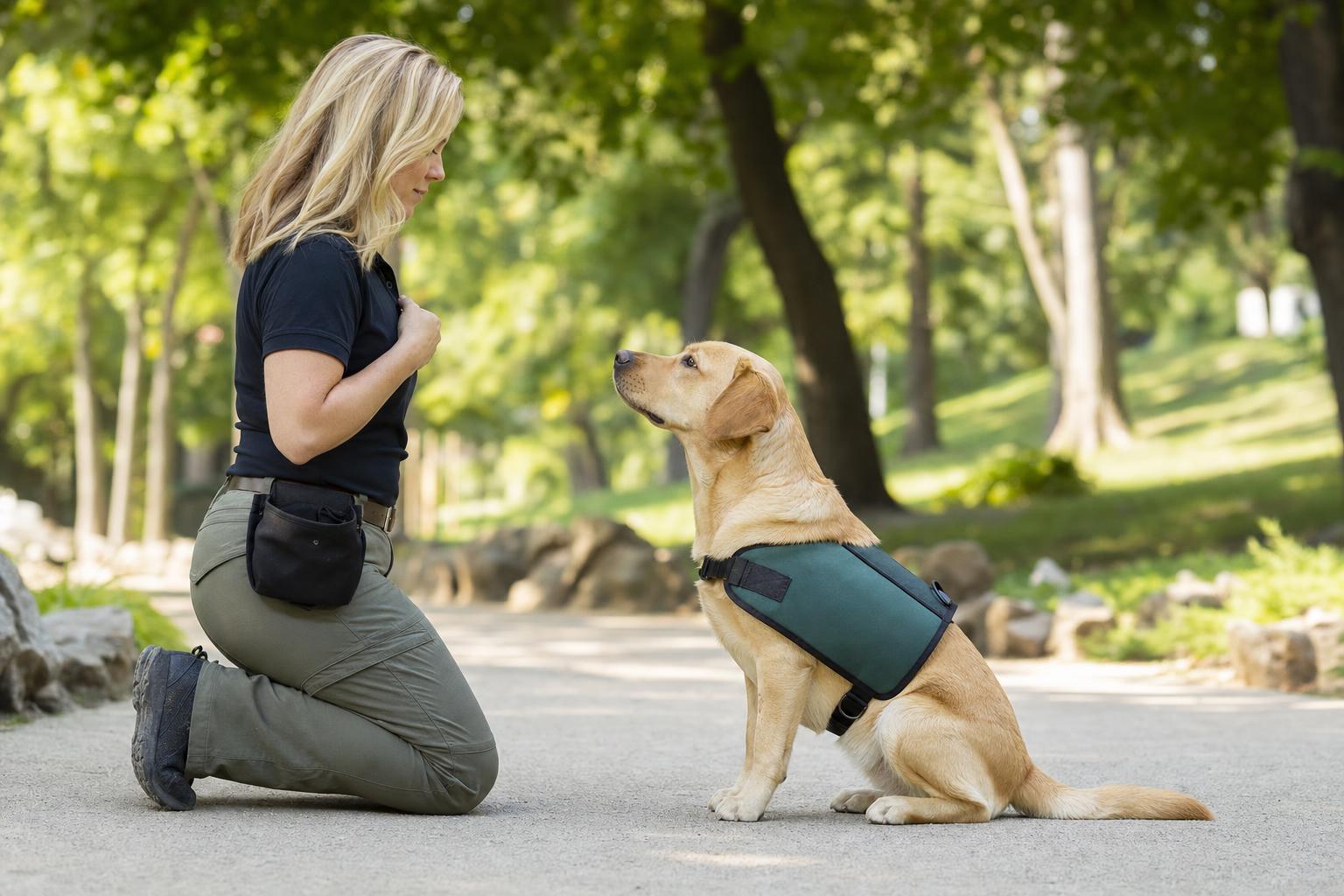
Service-dog preparation combines appropriate task training with the behavior needed for the handler's daily life. Assessment continues throughout the process; some dogs will be better suited to another role.
The service dog training process is a long trail, and like any trail worth walking, every step matters. A dog must have the right mind, the right health, and the right training to work calmly in the middle of real life. Grocery stores, hospital hallways, school campuses, airports, sidewalks slick with rain, and busy waiting rooms all put pressure on a dog. The best service dogs are not only skilled. They are steady. They can ignore noise, strange people, food on the floor, another barking dog across the room, and still listen for the person they serve. That level of dependability comes from structure, patience, and a whole lot of repetition done right.
Starting With the Right Dog
Before any serious task training begins, the first question is whether the dog is suited for the work. This part gets skipped far too often. Folks fall in love with a face, a breed, or a rescue story and assume heart will make up the difference. Sometimes that works out. More often, it does not. A service dog needs a stable temperament, sound health, willingness to work, confidence in new environments, and the ability to recover quickly from surprise. If a dog startles and stays rattled, is suspicious of strangers, highly reactive, or shuts down under pressure, the job may simply ask too much of that dog.
That does not mean the dog is bad. It just means the role is wrong. The selection stage matters because training cannot fully erase weak nerves or poor health. It can polish natural ability, but it cannot manufacture a suitable foundation where there is none.
Temperament and Health Come First
A proper evaluation usually looks at confidence, sociability, resilience, food and toy motivation, focus, and general trainability. Health screening matters just as much. Hips, elbows, eyes, heart, and breed-specific concerns should be considered before investing months or years into training. A dog that cannot physically handle the work or whose future health is uncertain may not be a wise candidate. It is a hard truth, but an honest one.
Building the Foundation at Home
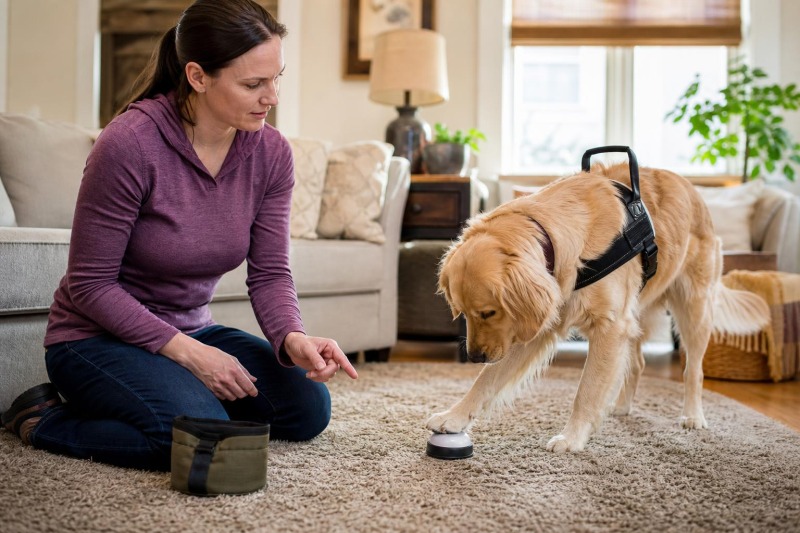
Once the right dog is chosen, the first stage of training starts where all good dog work starts: at home, in quiet spaces, with simple expectations. Sit, down, stay, recall, leash manners, settling on a mat, polite greetings, and calm handling all sound basic, but this foundation is the backbone of everything that follows. If a dog cannot remain settled in a living room, it will not magically become composed in a noisy pharmacy.
At this stage, handlers shape focus and communication. The dog learns that paying attention is rewarding, that cues mean something every time, and that self-control opens doors. One of the biggest differences between a pet dog and a working service dog is not intelligence but discipline. A service dog learns not just what to do, but when not to do anything at all. That kind of stillness is hard work for many dogs, especially young ones with energy to burn.
You do not begin in chaos. You begin with repetition, timing, and trust. You teach the dog how to learn before asking for hard jobs in big environments.
Socialization Without Flooding
Good socialization is not about letting a pup charge at every person, dog, and shopping cart in town. It is about calm exposure. The dog should experience different floors, sounds, smells, traffic patterns, doorways, elevators, children, mobility equipment, and public noises without becoming overwhelmed. The aim is confidence, not excitement.
This is where many green handlers accidentally create trouble. They mistake friendliness for readiness. A service dog does not need to greet everybody. In fact, the dog must learn that most of the world is background noise. That takes slow, thoughtful exposure and enough distance to keep the dog successful. If the dog is pushed too fast, fear and reactivity can creep in. If training is too soft and sheltered, the dog may struggle once real distractions arrive.
Teaching Neutrality in Public
Neutrality is a fine word for a mighty important skill. A service dog should walk past other dogs without pulling, ignore dropped food, remain composed when someone speaks in a high voice, and settle quietly under a table. That does not happen by accident. It is practiced over and over until calm behavior becomes habit. Neutrality is what makes a service dog safe, welcome, and effective in public spaces.
Public Access Training
After solid obedience and steady socialization, the dog begins public access work in earnest. This is the stage where training leaves the backyard and meets the real world head-on. The dog learns to enter buildings politely, ride elevators, hold position beside a wheelchair or shopping cart, tuck under chairs, and remain composed through all the strange little moments daily life throws around. Automatic doors whoosh open, toddlers squeal, dishes clatter, and somebody always drops a sandwich at the worst possible time.
Public access training is about reliability under distraction. The dog must stay attentive to the handler while moving through environments that tempt, confuse, or challenge. Good trainers do not rush this part. They start in easier locations, then add difficulty as the dog proves ready. A quiet hardware store aisle is different from a packed grocery on Saturday morning. A calm lobby is different from an emergency clinic waiting room. Step-by-step progress protects the dog’s confidence and sharpens performance.
This is also where the handler’s consistency matters a great deal. Dogs learn patterns. If standards change from one day to the next, the dog becomes uncertain. Clear expectations produce clear behavior.
Task Training: The Heart of Service Work
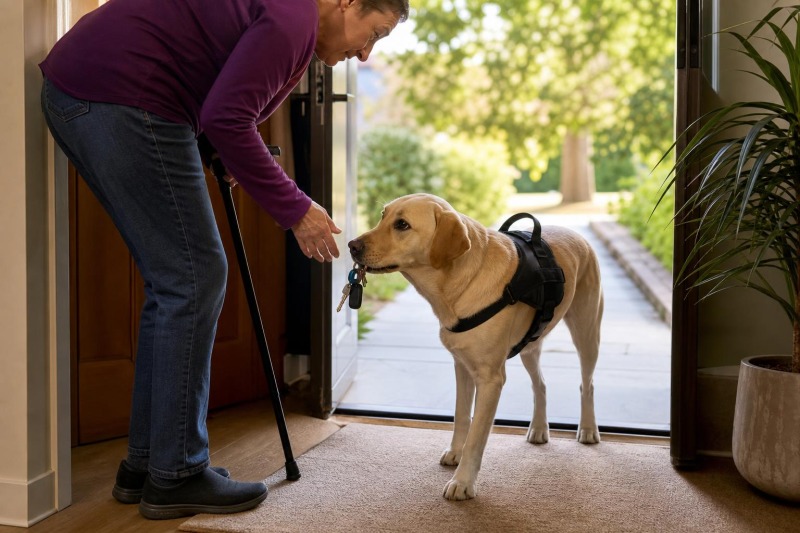
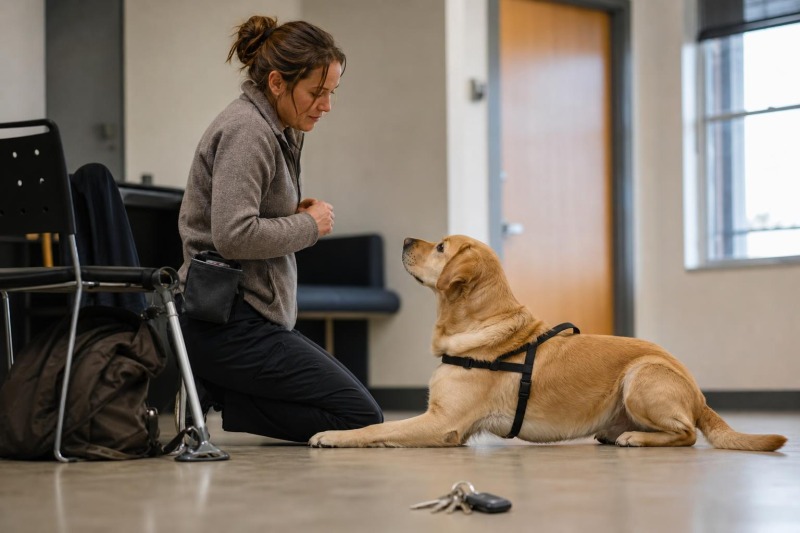
Here is the dividing line that sets a service dog apart. A service dog is trained to perform specific tasks that directly help a person with a disability. These tasks vary depending on the handler’s needs. One dog may retrieve dropped items, open doors, and bring medication. Another may alert to changes in blood sugar, interrupt harmful behaviors, guide around obstacles, or provide trained mobility support where appropriate and safe.
Task training is precise work. It is not enough for a dog to be comforting, affectionate, or calming by presence alone. The dog must learn a repeatable behavior tied to a real need. That behavior has to function outside the training room, in daily life, when the handler truly needs it. This takes shaping, reward timing, proofing, and many repetitions in different settings.
A real service task must hold up when the day is long, the weather is ugly, and distractions are stacked high. Field truth matters. Fancy practice means little if the dog cannot perform when it counts.
Proofing Tasks for Real Life
Proofing means the dog can perform the task in different places, with different levels of distraction, and under ordinary daily stress. A retrieve in the kitchen is one thing. A retrieve in a crowded lobby is another. An alert in a calm room is not the same as an alert during travel or after a tiring day. Reliability is built by carefully broadening the conditions in which the dog succeeds. That is how training becomes usable, not theoretical.
Handler Training and Team Bond
A service dog is never the whole story. The handler must learn how to read the dog, maintain training, reward correctly, prevent burnout, and respond when a session is slipping downhill. Even a gifted dog can falter in inexperienced hands. That is why team training matters so much. The dog and person have to learn one another’s rhythm.
Trust grows through repetition. The dog learns that the handler is fair, predictable, and worth following. The handler learns the dog’s stress signals, strengths, and working style. The best teams do not look dramatic. They look smooth. Quiet cues, calm movement, and mutual confidence tell the story better than any patch on a vest.
Testing, Maintenance, and Working Life
By the time a service dog is functioning reliably, training is not over. It has simply entered a maintenance phase. Skills need refreshing. Public manners need reinforcement. Tasks must remain sharp. Dogs are living beings, not machines, and they can have off days, age-related changes, or stress from life events. A strong team keeps working on the basics long after the dog is considered finished.
Many programs and trainers use public access tests or internal benchmarks to measure readiness. While standards may vary, the spirit remains the same: the dog should be safe, calm, controllable, and task-capable in public. If cracks show up, the answer is not denial. It is more training, more structure, or in some cases, an honest reassessment of fit.
That honesty is part of responsible service dog work. Not every dog finishes. Some wash out for health reasons, maturity changes, anxiety, or lack of consistency under pressure. It is disappointing when it happens, but forcing the wrong dog through the process helps nobody. A washed-out service prospect can still live a fine life as a beloved companion, and there is no shame in that.
The True Measure of a Service Dog
When people ask about the service dog training process step-by-step, they often want a quick map. The map is simple enough: choose the right dog, build obedience, create calm social exposure, train public access, teach specific tasks, strengthen the team bond, and maintain the work for the long haul. Living it out is the hard part. It takes time, patience, humility, and a willingness to go back and fix weak spots before they turn into big trouble.
A good service dog is one of the finest working partners a person can know. There is grit in that kind of dog, but there is also steadiness, kindness, and discipline. It reminds me of any honest work done well out in the world. Flash does not matter much. Reliability does. And when you see a true service dog move through a crowded place with quiet purpose, helping its handler without fuss or show, you are looking at the result of hundreds of small lessons done right.
If you are considering a service dog, buying a trained dog, or learning the differences between service, therapy, and companion roles, take your time and learn the process. The best outcomes come from clear expectations and respect for the work. That is what this path asks for most: a sound dog, a steady hand, and the patience to build something real.