Home practice can support service-task training when the task is clearly defined and appropriate for the handler's needs. Seek qualified help for complex tasks, safety concerns, or public-access preparation.
A service dog is not simply a well-behaved companion. A service dog is trained to perform specific tasks that mitigate a person’s disability. That distinction is important, and it should shape how you approach training from the very start. At home, you can lay a strong foundation, teach useful task components, and build consistency in the environments your dog knows best. What you cannot do successfully is skip the basics and hope the dog will somehow rise to the occasion later. Like a fine retriever or a dependable stock dog, a service dog needs clear communication, repetition, and a handler who knows when to press and when to quit for the day.
Start with Foundation Before Fancy Tasks
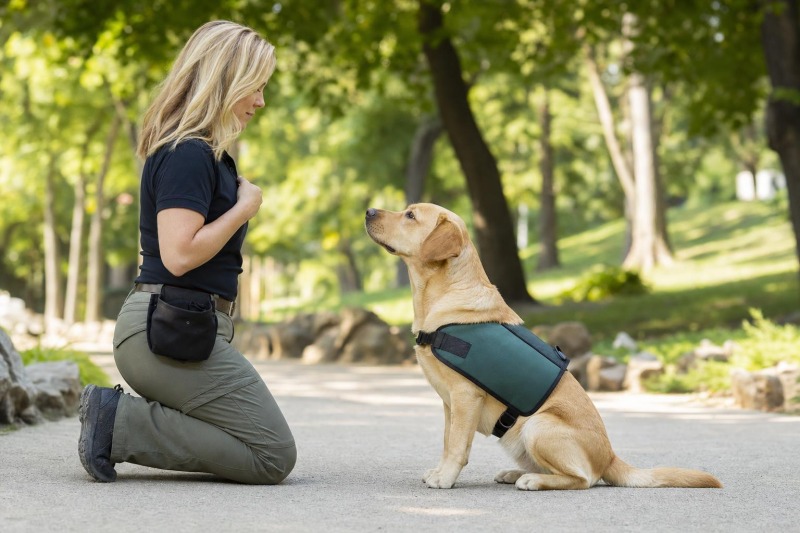
Before a dog can retrieve medication, interrupt a repetitive behavior, or brace against the rush of a chaotic environment, that dog needs stable fundamentals. If your dog cannot settle on a mat, come when called, leave distractions alone, walk with control, and focus on you for more than a few seconds, then task training is going to feel like building a cabin on wet ground.
The home is a good place to begin because it offers manageable distractions. You can teach attention around the kitchen, the hallway, the living room, and the front porch before asking for that same attention in a store parking lot or a doctor’s office. Keep sessions short and clear. Five good minutes can do more than twenty sloppy ones. Dogs learn best when the picture is easy to understand, and that means your timing, rewards, and expectations should stay consistent.
Reward-based training is especially useful for service dog work because it encourages accuracy, confidence, and problem-solving. A dog that is afraid to make a mistake often becomes sticky and uncertain. A dog that understands how to earn reinforcement will offer behaviors with more confidence and hold onto them longer. That does not mean permissive training. It means fair training. A service dog needs both trust and standards.
Choose Tasks That Match Real Need
Good service dog training begins with the handler’s actual needs. If the dog needs to retrieve dropped items, open a cabinet, alert to a sound, provide deep pressure therapy, or interrupt escalating symptoms, then those are the skills worth building. Start with function, not spectacle.
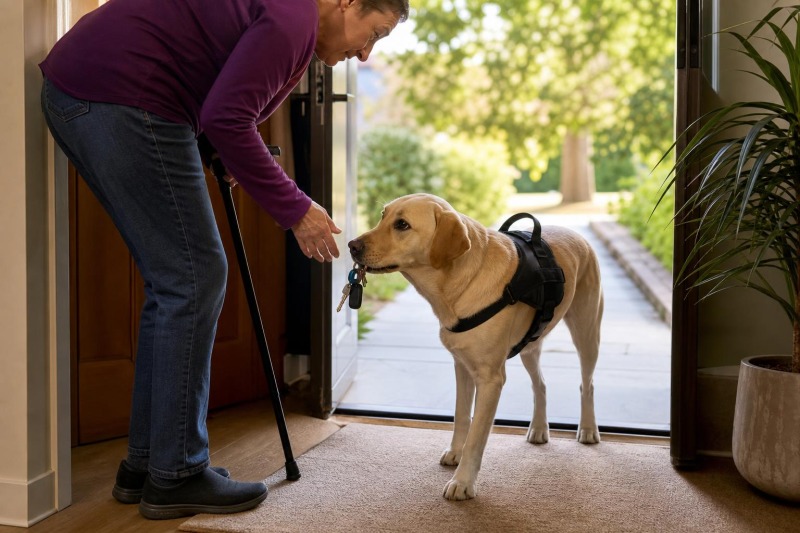
Each task can be broken into small pieces. Retrieval begins with picking up an item, holding it calmly, moving toward you, and placing it in hand. Deep pressure work begins with targeting a position, settling weight gently, and remaining still until released. Interruptions for repetitive or anxious behaviors begin with noticing a cue, approaching reliably, and performing a trained nudge or paw touch. When you think in parts, the work becomes much easier to teach at home.
How to Teach Service Dog Tasks Step by Step
There is no shame in slow progress. In fact, slow progress tends to hold up better. That may be a nose target to the hand, a chin rest on the lap, a paw touch to the leg, or a hold on a soft training dummy.
Take retrieval as an example. Start by rewarding interest in the object. Then reward the dog for mouthing it, then for lifting it, then for holding it a second longer, then for turning toward you with it. In the beginning, it may not look pretty. That is all right. You are sketching the outline before painting the details. As the dog gains confidence, ask for cleaner holds, straighter delivery, and a calm release into your hand. Keep your criteria fair. If you move too fast, the dog will start guessing.
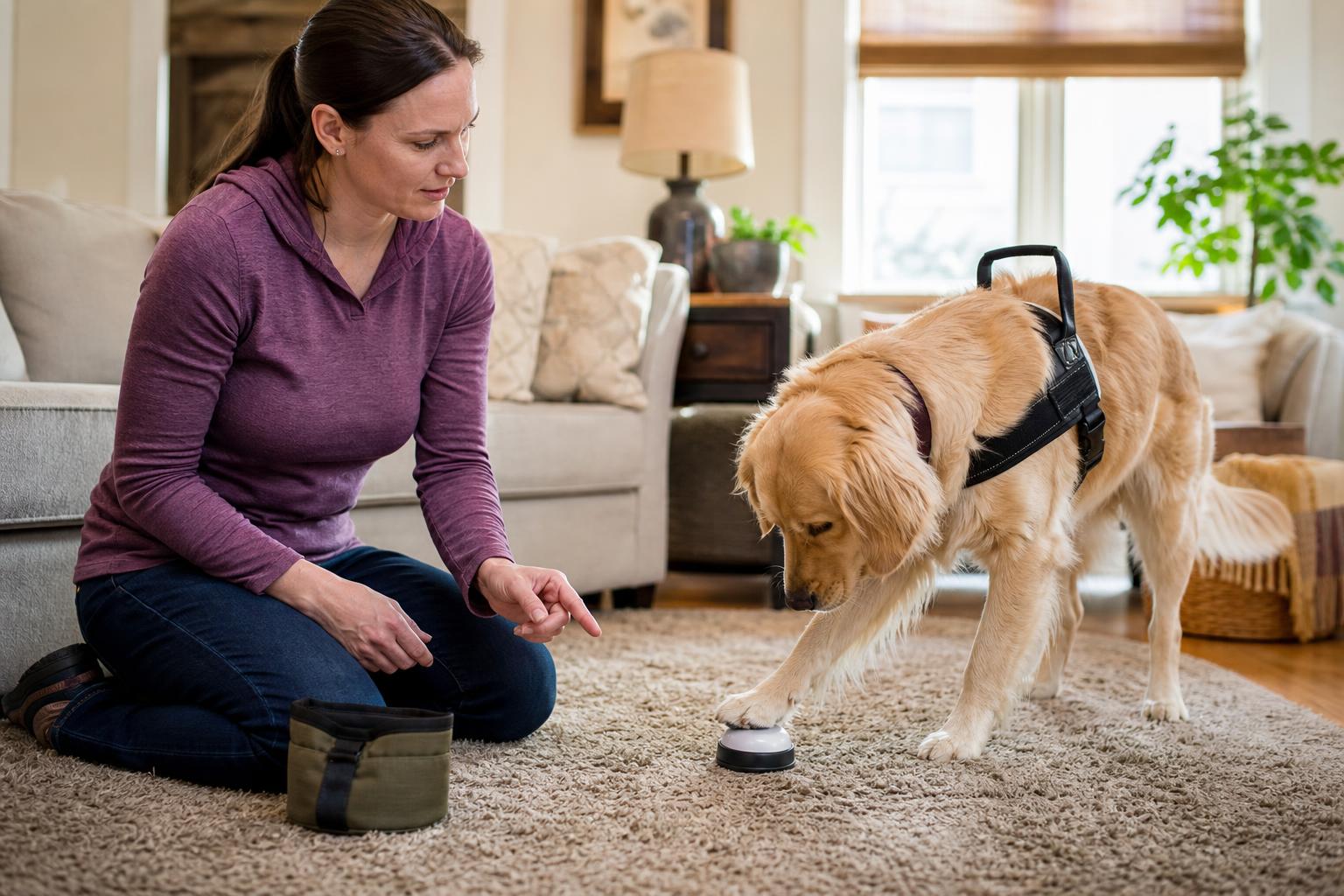
Targeting can carry you a long way in service dog training. A nose target can teach a dog to close a door, press an accessible button, or alert by touching your hand or leg. A paw target can become a light switch behavior or an interruption cue. A chin rest can become a grounding behavior that is quiet, steady, and deeply reassuring for many handlers. At home, these are easy to practice in little slices throughout the day, which helps the dog understand that work can happen in ordinary life, not just during a formal session.
Build Duration, Distance, and Distraction
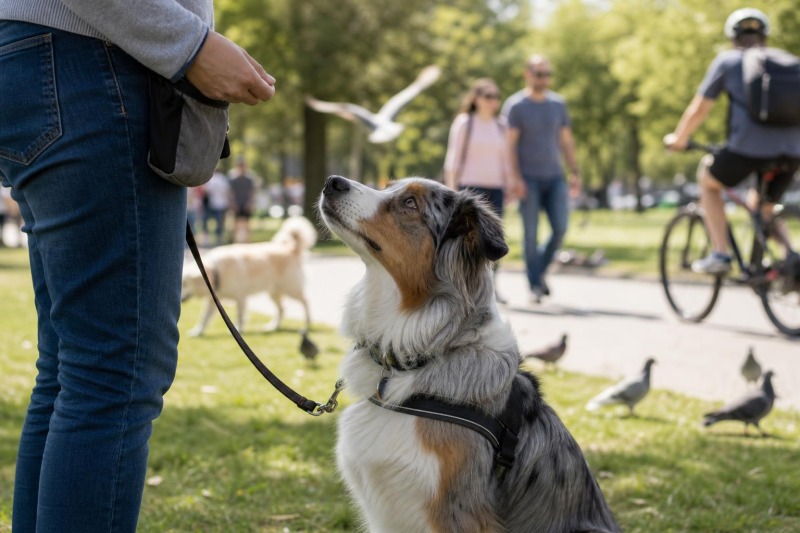
Once a dog can perform a task in the quiet of home, the next job is proofing. This is the stage many people underestimate. A behavior is not finished because the dog did it three times in the den. It is finished when the dog can do it while the dryer hums, while someone knocks at the door, while dinner is cooking, and while the handler is tired, moving slowly, or emotionally strained. Real life is the test.
First you teach the line. Then you add wind, scent, distance, cover, and temptation. Same dog, same lesson, just more truth in the picture. For service dog tasks at home, that means asking for the behavior in different rooms, at different times of day, with small distractions added on purpose. Do not add all three challenges at once. If you increase distraction, lower duration. If you increase distance, simplify the environment. Let the dog win often enough to stay eager.
Reading the Dog in Front of You
A seasoned handler learns to watch the dog, not just the training plan. Some dogs are bold and quick to offer behavior. Others are sensitive and need gentler pacing. Some dogs love shaping games. Others do best with luring for the first few repetitions before you fade the help. The dog in front of you tells you how to teach if you are quiet enough to notice.
Watch for signs of stress or confusion. Lip licking, yawning outside of fatigue, sniffing off, turning away, scratching, slowing down, or becoming frantic can all mean your criteria are muddy or too high. Service dog work demands emotional steadiness, so training should not become a pressure cooker. If the dog starts to unravel, make the exercise easier and finish on something clean. There is wisdom in ending a session before frustration settles in.
Motivation matters too. Some dogs will work hard for food. Others light up for a tug, a tossed toy, or warm praise and physical affection. A useful reward is one the dog truly values in that moment. You want enthusiasm without chaos.
Making Tasks Reliable in Daily Life
The true measure of a service dog task is not whether it can be performed in practice, but whether it shows up when needed. That is where cue transfer and contextual training come into play. Once the dog knows the mechanics of a task, you begin teaching when that task should happen. Sometimes that means a verbal cue. Sometimes it means a physical cue or a recurring pattern in the handler’s movement, breathing, or posture. In some cases, particularly with alerts and interruptions, the task becomes connected to a recognizable condition or behavior.
Reliability grows when the dog rehearses the task in realistic moments. If you are teaching a dog to bring medication pouch or phone, practice from the places where those items would actually be stored. If you are teaching deep pressure therapy, practice in the spots where the handler would truly need it, whether that is the couch, bedside, or floor. If the dog is learning to interrupt a repetitive behavior, rehearse the early stages of that behavior with timing that makes sense to the dog. Generalization does not happen by magic. You have to show the dog the many versions of the same picture.
Do Not Ignore Public Access Foundations
Even if your focus is teaching service dog tasks at home, task work alone is not enough for a dog that may eventually work in public. Calm leash manners, neutrality around people and other dogs, confidence on different surfaces, controlled entrances and exits, and the ability to settle quietly for extended periods are all part of the larger picture. A dog may know a dozen tasks and still be unfit for service work if temperament and public behavior are not solid.
This is where honesty is worth more than hope. Not every good dog is suited for service work. Some make wonderful companion dogs or therapy dogs but do not have the nerve, stamina, or neutrality required for the demands of full service work. There is no disgrace in that. The goal is to match the dog to the job, not force the dog into a role it cannot carry comfortably.
When to Get Professional Help
Home training can take you far, but there are times when a professional trainer with service dog experience is the right call. If the dog shows fear, reactivity, stress around routine environments, weak recovery after distraction, or confusion about task chains, outside guidance can save months of backtracking. A good trainer helps sharpen timing, improve structure, and spot problems before they harden into habits.
A humble handler learns quicker. If you need help, get it early. The dog will thank you for the clarity.
Teaching service dog tasks at home is honest work. It is not flashy most days. It looks like repetition in the hallway, patient shaping in the kitchen, and little victories in the quiet corners of ordinary life. But that is how dependable dogs are made. The kind you can trust when the moment matters are not built on wishful thinking. They are built on groundwork, fairness, and thousands of clear, consistent repetitions.
If you stay practical, train the task that truly serves the handler, and pay close attention to the dog in front of you, home training can become the strongest part of your service dog journey. Like any fine working dog, a service dog learns best from steady hands and a clear purpose. Give the dog both, and you will be surprised how much heart and usefulness can grow inside your own home.