Psychiatric service-dog tasks are trained actions related to a person's disability. Describe the action and its purpose clearly, rather than treating comfort or a close bond as a trained task.
Out in the field, a dog earns your respect by doing the job when the weather turns rough and the ground gets hard. Psychiatric service dogs are much the same. Their work may not happen in the woods or on a blind at daybreak, but it happens in grocery stores, crowded sidewalks, doctor offices, parking lots, and living rooms in the middle of the night. Their job is steady, practical, and often life-changing.
For anyone trying to understand service dogs, therapy dogs, and companion dogs, it helps to start with the legal and practical meaning of the term. A psychiatric service dog is a service dog trained to perform tasks directly related to a person’s mental or psychiatric disability. That disability may involve PTSD, severe anxiety, panic disorder, depression, bipolar disorder, or other qualifying conditions. The key point is this: the dog must be trained to take action, not just provide emotional support by being present.
What Counts as a Psychiatric Service Dog Task?
A task is a trained behavior the dog performs to help the handler manage symptoms or reduce danger caused by the disability. This is where many people get tripped up. Love, affection, and companionship matter, but by themselves they do not count as service dog tasks. The dog must do something specific, on cue or when needed, that directly helps with the handler’s condition.
One common example is interrupting harmful behaviors. A dog may be trained to nudge, paw, lick, or apply body pressure when the handler begins a panic spiral, dissociates, or falls into a repetitive behavior linked to distress. Another task may involve waking a handler from night terrors. Some dogs turn on lights with an adapted switch, retrieve medication, bring a phone, or lead the handler to an exit when panic hits in a crowded place. These are not random tricks. They are trained responses tied to a disabling condition.
Think of it like a seasoned dog that knows the difference between idle movement and a real command. Precision matters. A psychiatric service dog is not guessing its way through the day. It is taught to notice patterns, respond reliably, and carry out work that gives the handler a better chance at staying grounded and safe.
Interruption and Grounding Tasks
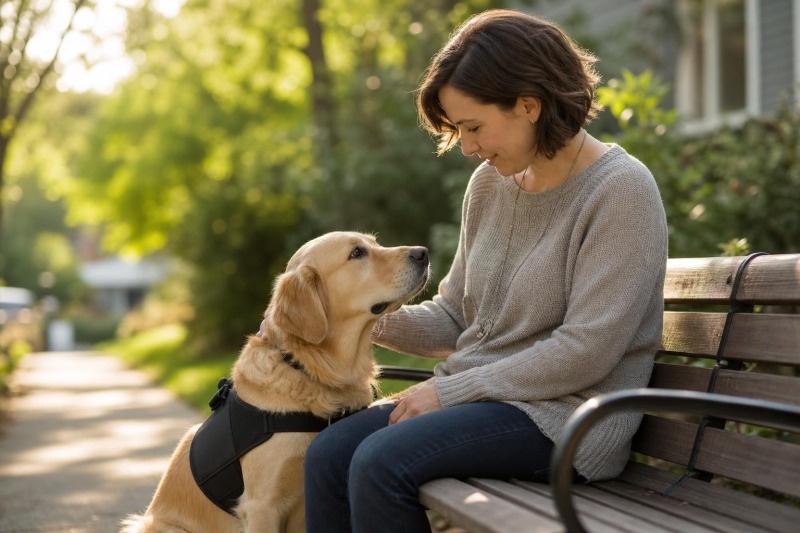
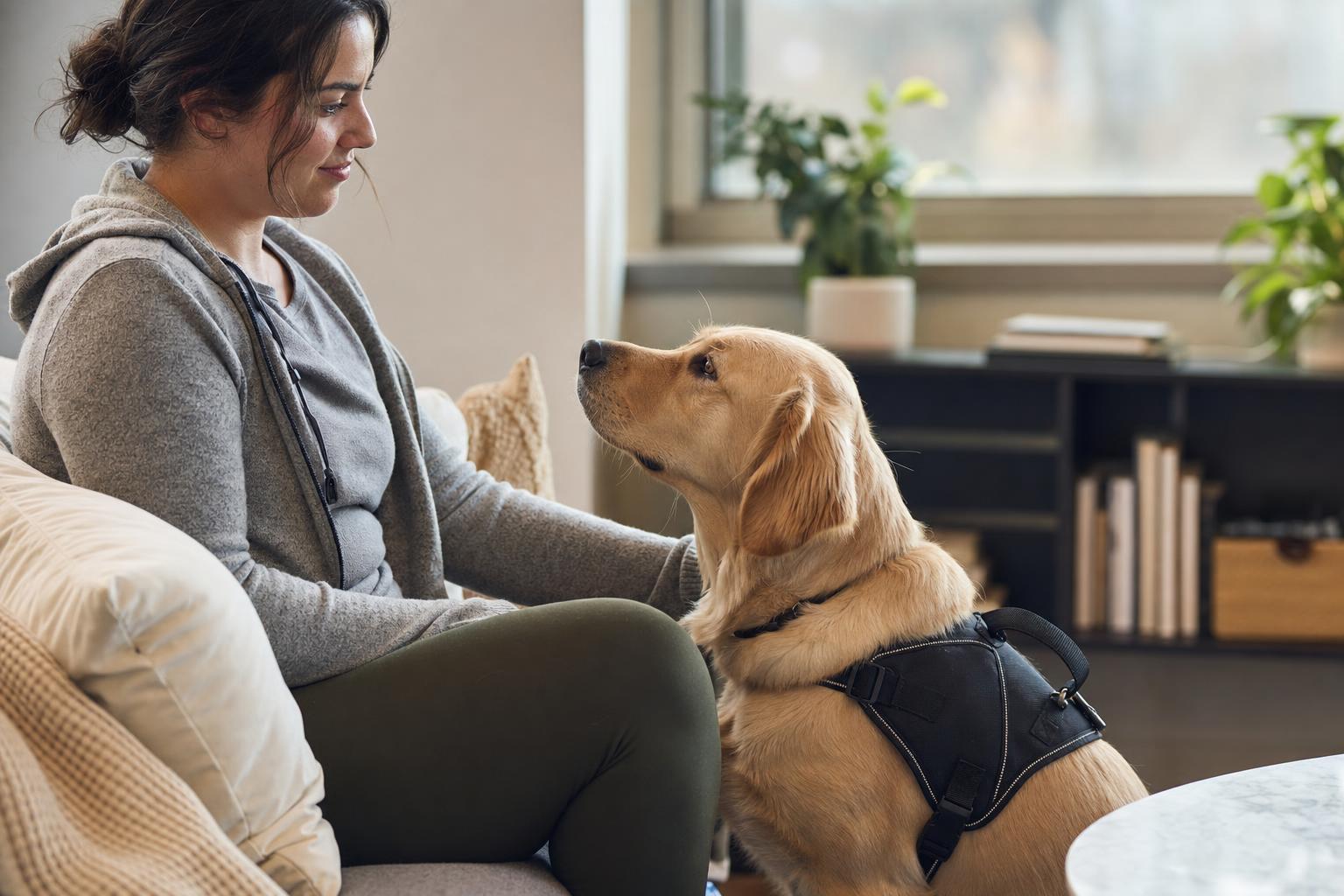
Many psychiatric service dogs are trained to interrupt escalating symptoms before they get out of hand. A dog may notice shaking hands, rapid breathing, rocking, or the faraway look that comes before dissociation. In response, the dog might press its body against the handler’s legs, rest its head in the handler’s lap, or persist with nudges until attention shifts back to the present moment. This kind of grounding task can be a lifeline. It gives the handler something concrete to feel and respond to when the mind starts drifting or racing.
Deep pressure therapy also falls into this category when it is specifically trained as a task. The dog may climb partly into the handler’s lap or lean its weight across the thighs or chest in a controlled way. For some handlers, that pressure helps reduce panic and brings the nervous system down a notch. It is not magic, and it is not one-size-fits-all, but in the right match it can be a powerful tool.
Nightmare and Sleep Support Tasks
Some handlers struggle most when the house goes quiet. PTSD, trauma disorders, and severe anxiety can turn sleep into a battleground. A psychiatric service dog may be trained to wake the handler during night terrors or intense nightmares. The dog might paw at the bed, lick the hand, or nudge until the person wakes enough to reorient. Once awake, the dog may remain close to provide grounding pressure or guide the handler to a light switch or another room.
When a dog knows its work and carries it out without fuss, that steadiness can mean a great deal. For someone waking disoriented and afraid, a trained dog can be the difference between staying trapped in that moment and finding a path back to the present.
Medication Retrieval and Help-Seeking
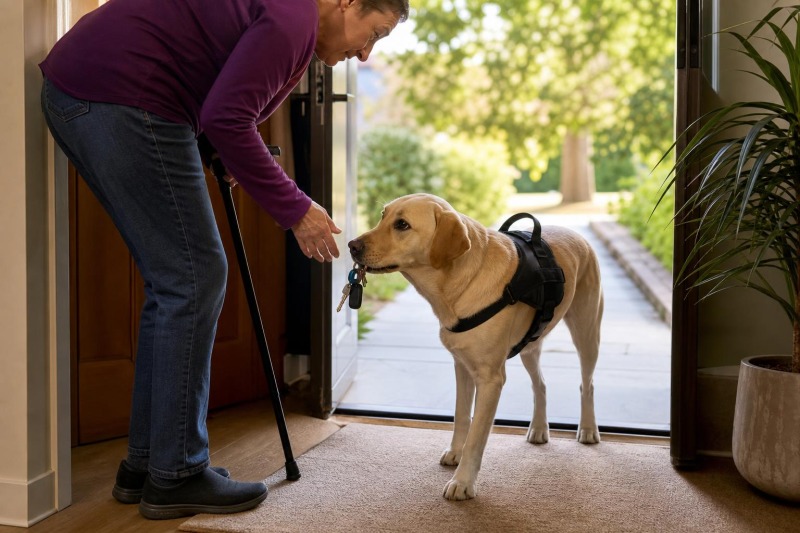
Some psychiatric service dogs are taught to retrieve medication bags, water bottles, or emergency kits. Others can bring a phone or activate an alert device if the handler is in crisis. In some situations, a dog may be trained to get another person in the home. These tasks are practical, measurable, and directly connected to reducing the effects of the disability.
This sort of work reminds people that service dogs are not just emotional anchors. They are functional partners. A dog that can retrieve what is needed during a panic episode or mental health crisis can help shorten recovery time and reduce the risk of harm. That is real work, the same way a well-trained field dog doing a difficult retrieve is real work.
Guiding and Creating Space in Public
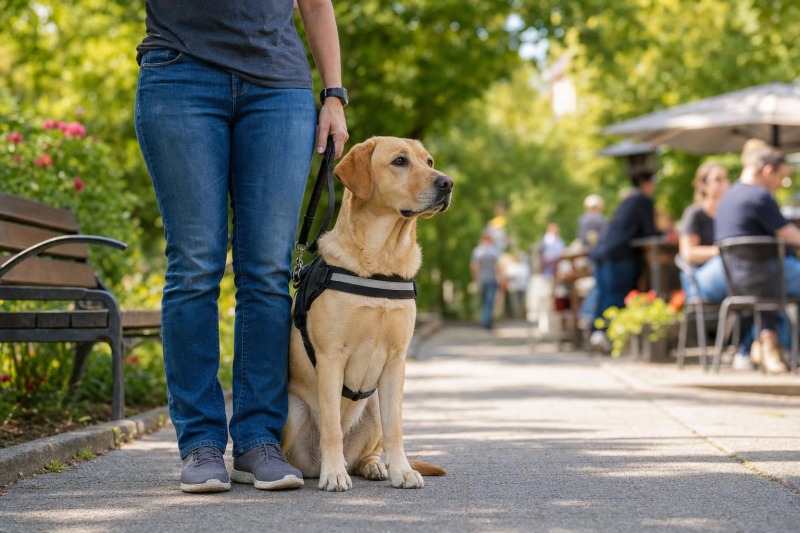
Public settings can be hard ground for someone with psychiatric disabilities. Crowds, noise, close physical contact, and confusion can trigger panic, hypervigilance, or disorientation. A psychiatric service dog may be trained to guide the handler to an exit, lead them to a familiar person, or create a buffer in line or seating areas. That last task, often called blocking or covering depending on the trained behavior, can help a handler feel safer and more aware of their surroundings.
Done correctly, this is not aggression and it is not intimidation. It is calm, controlled positioning. The dog steps into place and holds there like a seasoned partner that understands its duty. For handlers who struggle with intense anxiety in public, that little bit of space can make the difference between finishing an errand and having to abandon it halfway through.
How Psychiatric Service Dogs Differ From Therapy Dogs and Companion Dogs
This is where the conversation needs plain talk. Therapy dogs, service dogs, and companion dogs all matter, but they are not interchangeable. A therapy dog is typically brought into hospitals, schools, nursing homes, or care settings to provide comfort to many people. A companion dog is a pet whose presence improves quality of life. An emotional support animal may help someone emotionally, but it is not automatically a service dog under the law. A psychiatric service dog is individually trained to perform disability-related tasks for one handler.
That difference is not just technical language. It shapes access, expectations, training standards, and day-to-day responsibilities. A dog that is gentle at home may still not be suited for service work. Public access requires steadiness, control, and a temperament that can handle noise, movement, strangers, and long stretches of waiting without falling apart or causing trouble.
Who Might Benefit From a Psychiatric Service Dog?
Not every person with a mental health condition needs a service dog, and not every good dog should become one. Still, the right dog in the right situation can support a person whose disability interferes with daily functioning. Someone with severe panic attacks may need a dog trained to interrupt the episode and guide them to safety. A person with PTSD may rely on nightmare interruption, room checking tasks if clinically appropriate and ethically trained, or grounding during flashbacks. Another handler may need medication retrieval and structured support during dissociation.
The best way to think about it is not whether a dog sounds comforting, but whether trained tasks would reduce the impact of the disability in practical daily life. That is the heart of the matter.
Training Matters More Than Most People Realize
Plenty of dogs have loving hearts. Fewer have the nerve, consistency, and trainability to become reliable service dogs. Training a psychiatric service dog takes time, repetition, clean communication, and an honest eye. The dog must learn the tasks, of course, but it also must learn how to behave in public without becoming a nuisance or a risk. House manners, leash manners, neutrality around distractions, and calm responses to stress are part of the job.
A lot of folks underestimate that last part. They see a dog rest its chin on a knee and think that is all there is to it. But service work calls for composure under pressure. It is not unlike taking a young dog through rough country and teaching it to mind itself no matter what scent is on the wind. You build reliability one repetition at a time.
Psychiatric service dog tasks are trained actions that help a person manage the real effects of a psychiatric disability. Those tasks may include interrupting panic behaviors, grounding during dissociation, waking from nightmares, retrieving medication, guiding a handler out of stressful situations, or creating safe space in public. What makes the dog a service dog is not warmth or sympathy alone, but trained, disability-related work.
When people understand that, they begin to see these dogs clearly. They are not accessories. They are not shortcuts. They are working partners, and good ones earn their keep every day in quiet ways the world often misses. For the handler who needs that help, a well-trained psychiatric service dog can be as steady and dependable as any partner a person could ask for.