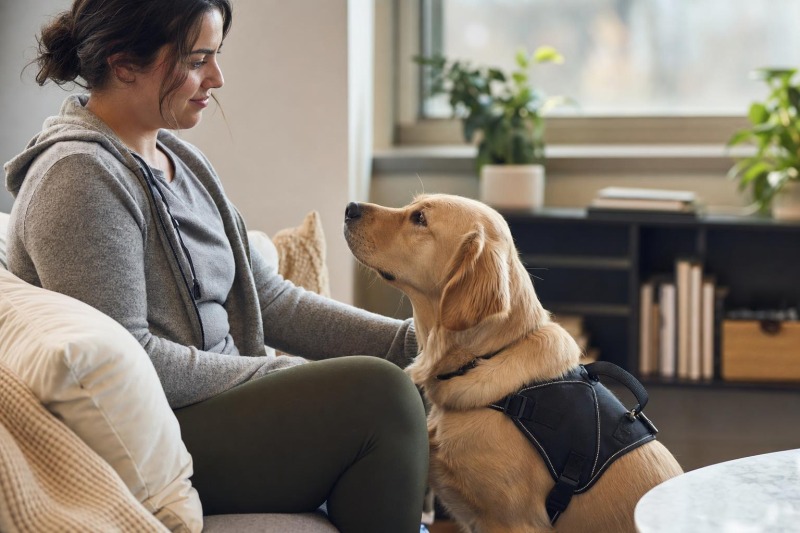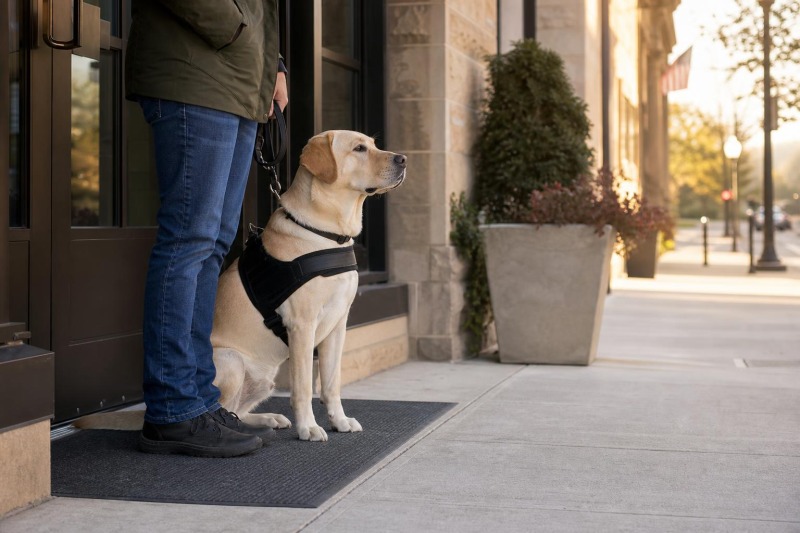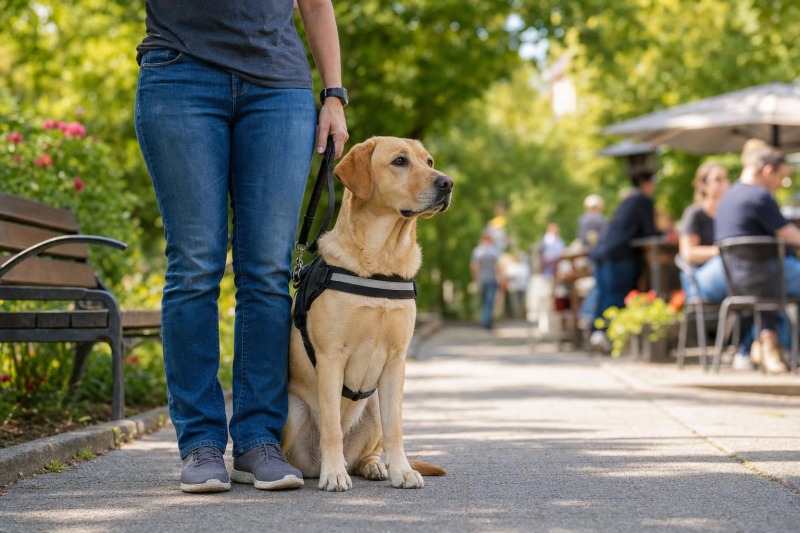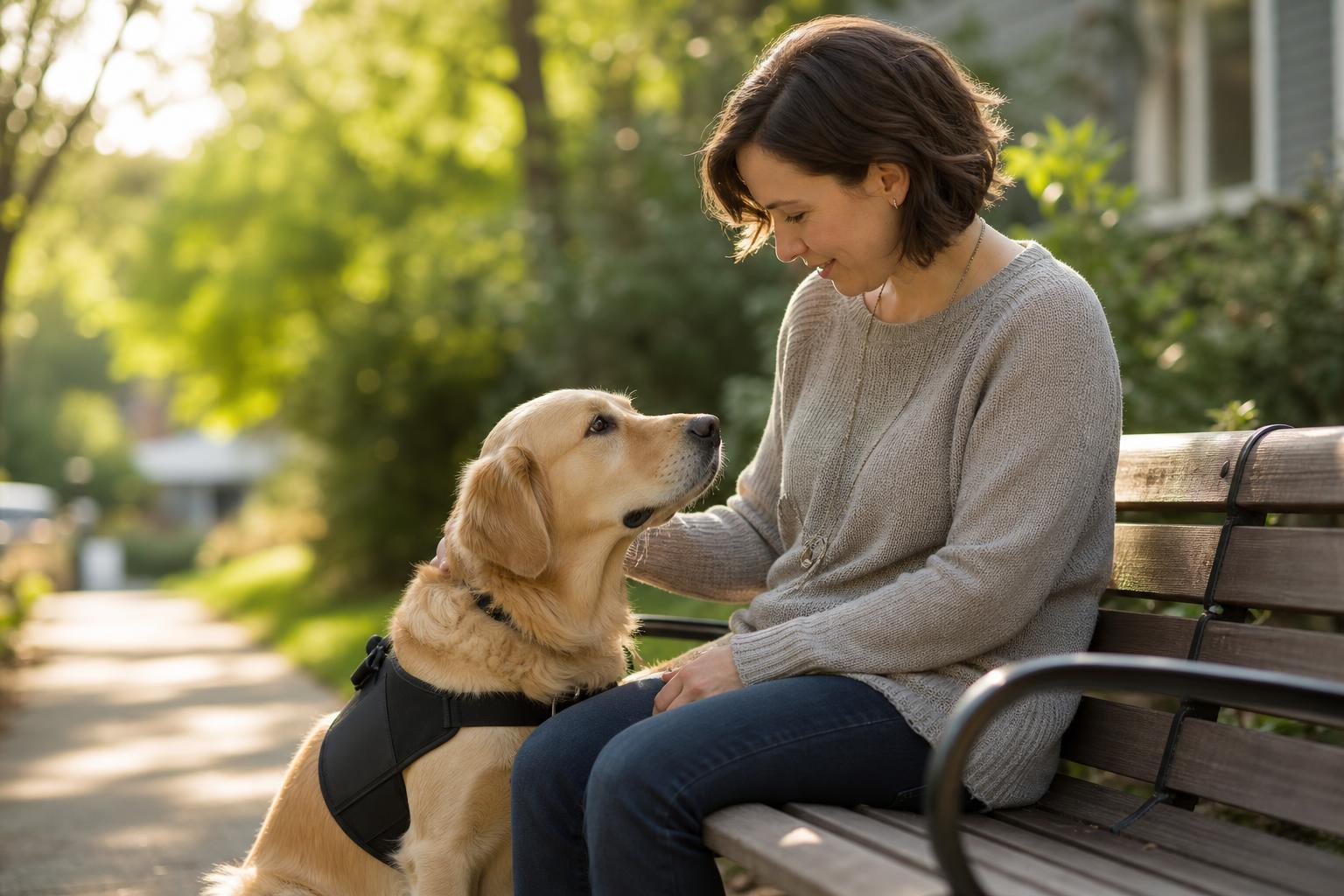
A psychiatric service dog performs trained disability-related tasks. Its role differs from the comfort that a pet or emotional support dog may provide through its presence.
For many people, the term service dog brings to mind guide dogs for blindness or mobility dogs that brace and retrieve. Those dogs are vital, no question about it, but psychiatric service dogs serve with just as much seriousness. Their work may not always be obvious to an onlooker in a store aisle or doctor’s waiting room, yet what they do can be every bit as critical. They help handlers manage conditions such as post-traumatic stress disorder, severe anxiety disorders, depression, panic disorder, bipolar disorder, and other psychiatric disabilities when those conditions substantially limit daily life.
What Is a Psychiatric Service Dog?
A psychiatric service dog is a dog individually trained to perform specific tasks that lessen the effects of a person’s psychiatric disability. That task-based training is the heart of the matter. The dog is not simply present for comfort, even though comfort naturally comes with a steady dog at your side. The dog is taught to do work that directly helps the handler when symptoms rise up and threaten safety, stability, or independence.
That distinction matters because folks often confuse psychiatric service dogs with emotional support animals and therapy dogs. A therapy dog usually visits hospitals, schools, nursing homes, or clinics to bring comfort to many people. An emotional support animal may help a person feel calmer at home through companionship. A psychiatric service dog, on the other hand, is trained to take action for one handler with a disability. That action may include interrupting self-harm behaviors, waking someone from night terrors, guiding a handler out of a crowded place during a panic episode, reminding them to take medication, or creating physical space when the world starts pressing in too close.
What Psychiatric Service Dogs Actually Do
If you have never seen a skilled psychiatric service dog at work, you might miss the significance of what looks like a simple nudge, lean, paw, or alert stare. But in the field, small actions often mean the most. A hunting dog does not need fanfare to be effective; it just needs to know the work and do it at the right moment. Psychiatric service dogs are much the same. Their tasks are shaped around the handler’s needs, and the best ones work with calm precision.
Interrupting Harmful Behaviors
Some handlers live with dissociation, panic spirals, compulsive behaviors, or self-harming actions that can become dangerous when symptoms flare. A psychiatric service dog may be trained to interrupt these behaviors by nudging, pawing, climbing into the handler’s lap, or persistently redirecting attention. That interruption can break a cycle long enough for the handler to regain footing and use other coping strategies.
Providing Grounding During Panic or Dissociation
When a person is overwhelmed by panic or detached from their surroundings, it can feel like getting lost in heavy fog before daylight. A trained dog can ground the handler through touch, pressure, licking, or tactile cues. Many dogs perform deep pressure therapy by laying across the handler’s lap or chest to help regulate breathing and bring awareness back into the body. It may look gentle from the outside, but it is real work with a real purpose.
Alerting to Escalating Symptoms
Some psychiatric service dogs learn to recognize early signs of distress before a full episode hits. They may notice a shift in breathing, scent, posture, pacing, trembling, or repetitive movement. Once they detect those changes, they can alert the handler so action can be taken early. That might mean leaving a crowded room, sitting down, taking medication, contacting support, or using practiced grounding techniques. Catching trouble before it rolls downhill is often half the battle.
Creating Space and Guiding the Handler
For people with severe anxiety or PTSD, tight crowds and close physical contact can trigger intense distress. A psychiatric service dog may be trained to stand behind the handler, block approaching strangers from getting too close, or guide the handler toward an exit. This is not aggression and not intimidation. It is controlled positioning and task work meant to reduce overload and help the handler move safely through public spaces.
Nightmare and Sleep Support
Sleep can be hard country for people dealing with trauma-related conditions. Night terrors, flashbacks, and panic awakenings can leave someone exhausted and on edge before the day even starts. Some psychiatric service dogs are trained to wake their handlers from nightmares, turn on lights with an adaptive switch, or stay close during the aftermath until the person is oriented again. A dependable dog at 2 a.m. can feel like the difference between being stranded and being steadied.
Medication Reminders and Retrieval Tasks
Some handlers struggle with memory, executive functioning, or symptom-related disorganization. A psychiatric service dog can be trained to alert at medication times, bring a pouch, retrieve a phone, or fetch a specific item during a crisis. These tasks may sound simple, but simple often keeps the day on the rails.
Who Can Benefit From a Psychiatric Service Dog?
Psychiatric service dogs can help people whose mental health conditions rise to the level of disability and interfere with major life activities. That might include working, sleeping, traveling, shopping, attending school, or even leaving the house safely. The key is not whether someone feels stressed now and then. The key is whether a disability substantially limits daily functioning and whether a dog trained in specific tasks can meaningfully reduce that limitation.
Not everyone with a diagnosis needs or wants a psychiatric service dog, and not every good dog is suited for this line of work. The handler must be able, with support if needed, to care for the dog’s daily needs. The dog must have stable nerves, excellent public manners, and the ability to work under pressure without becoming reactive or shut down. This is serious work, and the partnership has to be built on consistency, trust, and proper training.
Psychiatric Service Dogs vs. Therapy Dogs and Companion Dogs
This is where a lot of confusion settles in, so it is worth speaking plainly. A companion dog gives friendship, routine, and emotional comfort. That alone is powerful, and many households are better because of it. A therapy dog is trained to interact with many people in settings like schools, hospitals, and care facilities. Those dogs offer comfort outward, to others. A psychiatric service dog serves one person with a disability by performing trained tasks tied directly to that disability.
That difference affects public access as well. In many places, service dogs are allowed to accompany their handlers into public spaces where pets are not permitted, because they are working dogs. Therapy dogs and ordinary companion dogs do not have that same standing. It is important for the public to understand this, and just as important for dog owners to be honest about what role a dog actually fills.
Training and Temperament Matter More Than Breed Hype
Folks love to argue breeds, same as they argue trucks, calibers, and the best line to cast at dusk. Breed can matter, sure, because genetics shape drive, sensitivity, size, and stamina. But in psychiatric service work, temperament and training matter most. The right dog must be stable in public, responsive without being frantic, affectionate without being pushy, and confident without being hard. A dog that startles easy, guards resources, or feeds off human stress is not a good candidate no matter how handsome the papers look.
Many successful psychiatric service dogs come from breeds known for trainability and steady temperaments, but the individual dog is always the real story. The best teams are built with patience, professional guidance when needed, and a clear understanding that public access work demands reliability every single day, not just on the dog’s best day.
The Human Side of the Partnership
What moves me most about psychiatric service dogs is not just the task work. It is the quiet confidence they help restore. A handler who once avoided grocery stores may step inside knowing their dog can interrupt a panic spiral before it takes hold. Someone haunted by nightmares may sleep more soundly because help is right there at the bedside. A person who felt pinned down by fear may begin to travel, work, or reconnect with the world one steady outing at a time.
That does not mean a psychiatric service dog is a cure. No honest dog person would sell it that way. These dogs are tools, partners, and daily support systems, not magic. They work best as part of a bigger picture that may include therapy, medical care, medication, skills training, family support, and lifestyle adjustments. But a good dog can carry a share of the load, and sometimes that share is enough to help someone keep moving forward.
Psychiatric service dogs perform trained tasks that help people with disabling mental health conditions live with more safety, independence, and peace of mind. They interrupt harmful behaviors, provide grounding, alert to distress, support sleep, guide handlers through triggering environments, and bring practical help when symptoms hit hard. Their work is often subtle, but subtle does not mean small.
If you are exploring whether a psychiatric service dog is right for you or someone you love, start with clear information and honest expectations. Learn the difference between service dogs, therapy dogs, and companion dogs. Think hard about lifestyle, training, care, and long-term commitment. When the match is right, a psychiatric service dog is not just a comforting presence. It is a working partner with a job to do, and done well, that job can be life changing.