A school therapy-dog program needs clear educational aims, family communication, and arrangements for students who cannot or do not want to interact. The dog also needs suitable breaks and handling.
Schools today are asking children to carry a lot. Academic pressure, social stress, family strain, and the general noise of modern life can wear on young minds. That is where therapy dogs in schools have found a real purpose. These dogs are not there as mascots or a passing novelty. In the right hands, under a clear program, they become part of a larger effort to support emotional health, improve student engagement, and build a safer, kinder school culture.
What Therapy Dogs Do in a School Setting
A therapy dog is trained to provide comfort, emotional support, and calm in structured environments. In schools, that often means visiting classrooms, counseling offices, libraries, and special education programs. Unlike service dogs, which are trained to perform specific tasks for one individual with a disability, therapy dogs work with many people. Their job is to connect, soothe, and help create a more grounded atmosphere.
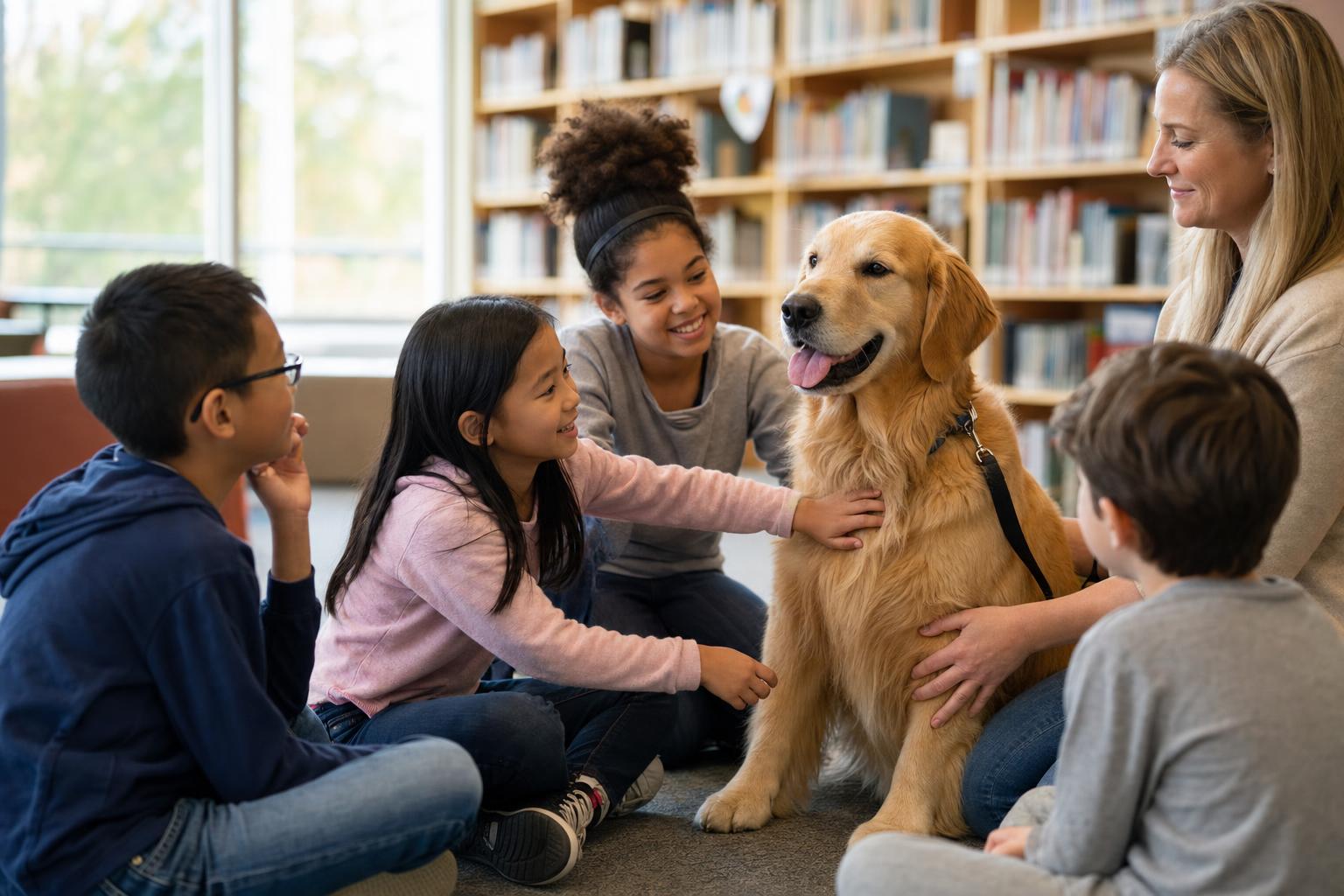
A student who refuses to read aloud to classmates may happily read page after page to a dog stretched out on the rug. That may sound simple, but simple is not small. A child who feels safe enough to try is a child who has a chance to grow.
Emotional Support and Stress Relief
One of the clearest benefits of therapy dogs in schools is emotional regulation. Many students walk through the doors carrying anxiety before the first bell even rings. A calm dog gives them something reliable to focus on. Petting a dog, sitting nearby, or even just watching a relaxed animal can help lower tension and create a sense of safety.
For children dealing with test anxiety, social worries, grief, or trauma, that kind of support matters. It does not replace counseling, strong teaching, or family support, but it can make those supports easier to receive. A therapy dog often becomes a bridge. The child who will not speak to an adult may whisper to the dog first, and from there the door opens.
Improved Reading Confidence
One of the most talked-about school therapy dog programs involves reading. It works because dogs do not judge. They do not correct pronunciation with a raised eyebrow. They do not snicker when a child stumbles over a word. For young readers, especially those who are behind or self-conscious, that matters more than many folks realize.
When students read to a therapy dog, they often relax enough to practice more freely. Confidence grows, and confidence feeds progress. Teachers and school librarians have long noticed that reluctant readers can become much more willing participants when a dog is part of the routine. The dog is not teaching phonics, of course, but he is helping create the right conditions for learning.
Better School Climate and Social Connection
A good therapy dog can become a quiet center of gravity in a school. Students who might not otherwise interact may gather around the dog and begin talking. Staff members often benefit too. A school community under strain can use moments of warmth and connection. Therapy dogs help humanize an environment that can otherwise feel rushed and rigid.
That does not mean every hallway turns into a storybook scene. Schools are busy places, and programs need structure. Still, when a dog is woven into the day with intention, the result is often a gentler tone across the building. Children learn about respect, self-control, empathy, and appropriate behavior through those interactions. In many ways, the dog becomes both comfort and teacher.
Support During Crisis or Difficult Transitions
Some of the strongest evidence for therapy dog programs in schools comes during hard seasons. After a crisis, a community loss, or even a stressful return from long breaks, therapy dogs can help students and staff regulate emotions. They offer a grounding presence when words are hard to find.
A steady dog does not rush in with speeches. He shows up, settles in, and gives folks something honest to lean on. In schools, that steady presence can help children move through fear, sadness, or disruption with a little more courage.
How School Therapy Dog Programs Usually Work
Strong therapy dog programs do not happen by accident. They are built with planning, training, and clear expectations. Usually, the dog is handled by a trained adult, often a counselor, teacher, school psychologist, librarian, or administrator. The dog should be properly evaluated for temperament, obedience, and comfort in busy public settings.
Schools often begin small. A dog may visit one reading group, spend time in a counseling office, or join a limited pilot program before becoming a regular part of the school week. This measured start allows the school to observe how students respond, identify logistical issues, and set policies around hygiene, consent, allergies, scheduling, and safety.
Good programs also make room for students who are fearful of dogs, allergic, or uncomfortable around animals. Therapy dogs should never be forced on anyone. The goal is support, not pressure. The best handlers understand canine body language, student boundaries, and how to stop an interaction before it becomes too much for either child or dog.
What Makes a Dog Right for School Work
Not every friendly dog belongs in a school. That is just the truth of it. A school therapy dog needs more than charm. He needs a rock-solid temperament, reliable obedience, comfort around noise and movement, and the ability to remain calm amid unpredictability. Kids drop pencils, burst into laughter, cry suddenly, and move in ways that can surprise a dog. A suitable therapy dog takes those things in stride.
Breed matters less than disposition, though certain dogs may naturally lean toward calm social work. What matters most is training, health, handler skill, and the dog’s actual enjoyment of the work. A dog that merely tolerates school visits is not the same as one that thrives in them. The difference shows.
Common Challenges and How Schools Address Them
For all the good these programs can do, schools must handle concerns with care. Allergies are real. Fear of dogs is real. Sanitation matters. Liability matters too. Those concerns do not mean schools should avoid therapy dog programs, but they do mean the program needs clear rules, communication with families, and practical safeguards.
Most successful schools address these concerns up front. They notify parents, define where and when the dog will be present, maintain grooming and vaccination records, and create opt-out options. They also train staff on appropriate interactions and keep the dog’s workload reasonable. A tired dog is not a good therapy dog, and an overwhelmed school environment can push even a kind dog past his comfort zone.
Why Therapy Dogs Matter More Than Ever
There was a time when many people would have dismissed the idea of therapy dogs in schools as soft-hearted fluff. These days, more folks understand that emotional well-being and learning are tied together like hounds on the same lead. A child who is anxious, isolated, or constantly overwhelmed is not in the best position to learn. If a therapy dog helps create enough calm for that child to engage, then the dog is doing serious work.
And there is another truth here that dog people know in their bones. Dogs have a way of meeting us without pretense. In a world full of screens, schedules, and sharpened edges, that kind of presence is rare. For children especially, it can be powerful. The school dog may not remember spelling lists or math facts, but he may help a child feel seen, and sometimes that is the first step toward everything else getting better.
Choosing or Supporting a School Therapy Dog Program
If you are a parent, educator, or someone simply interested in therapy dogs, it is worth looking closely at how a program is built. Ask about certification, handler training, dog temperament, and school policies. Ask how student needs are balanced, how consent is handled, and what goals the program is meant to support. The best programs are not vague feel-good efforts. They are purposeful, professional, and responsive to the school community.
When done right, therapy dogs in schools offer far more than a pleasant distraction. They can improve reading confidence, reduce stress, strengthen relationships, and bring comfort when children need it most. It is a practical, compassionate tool that can help schools become better places for learning and living.