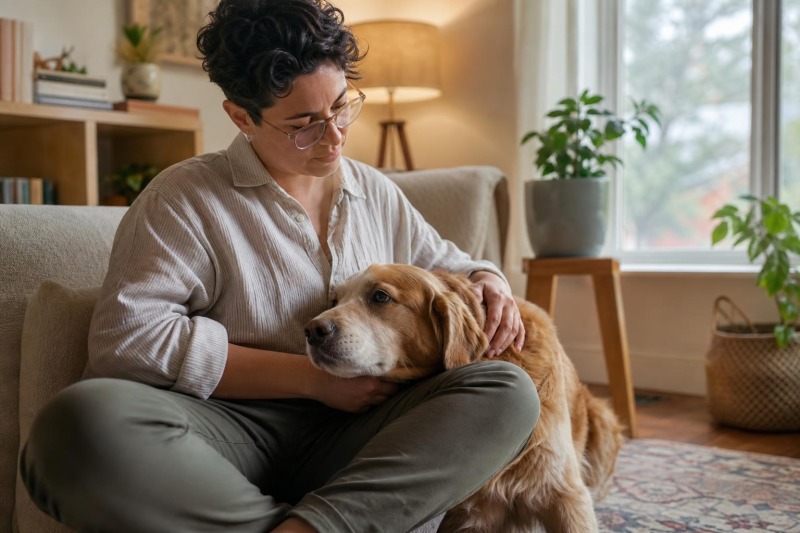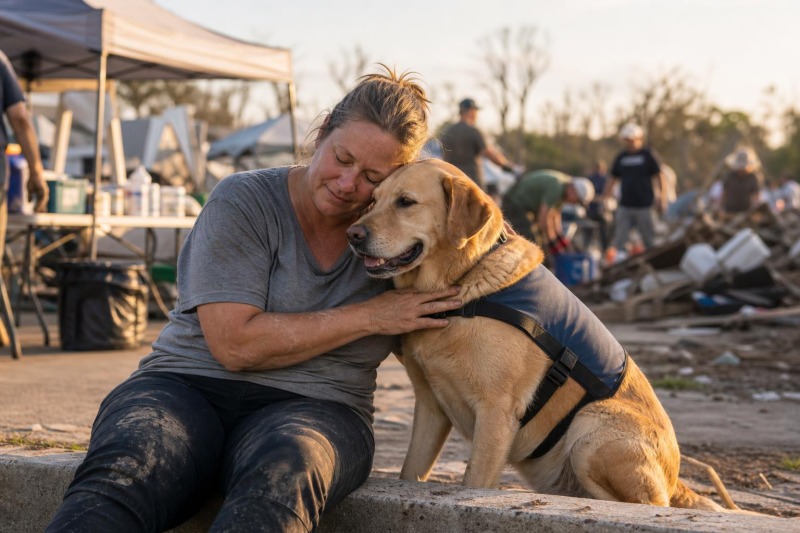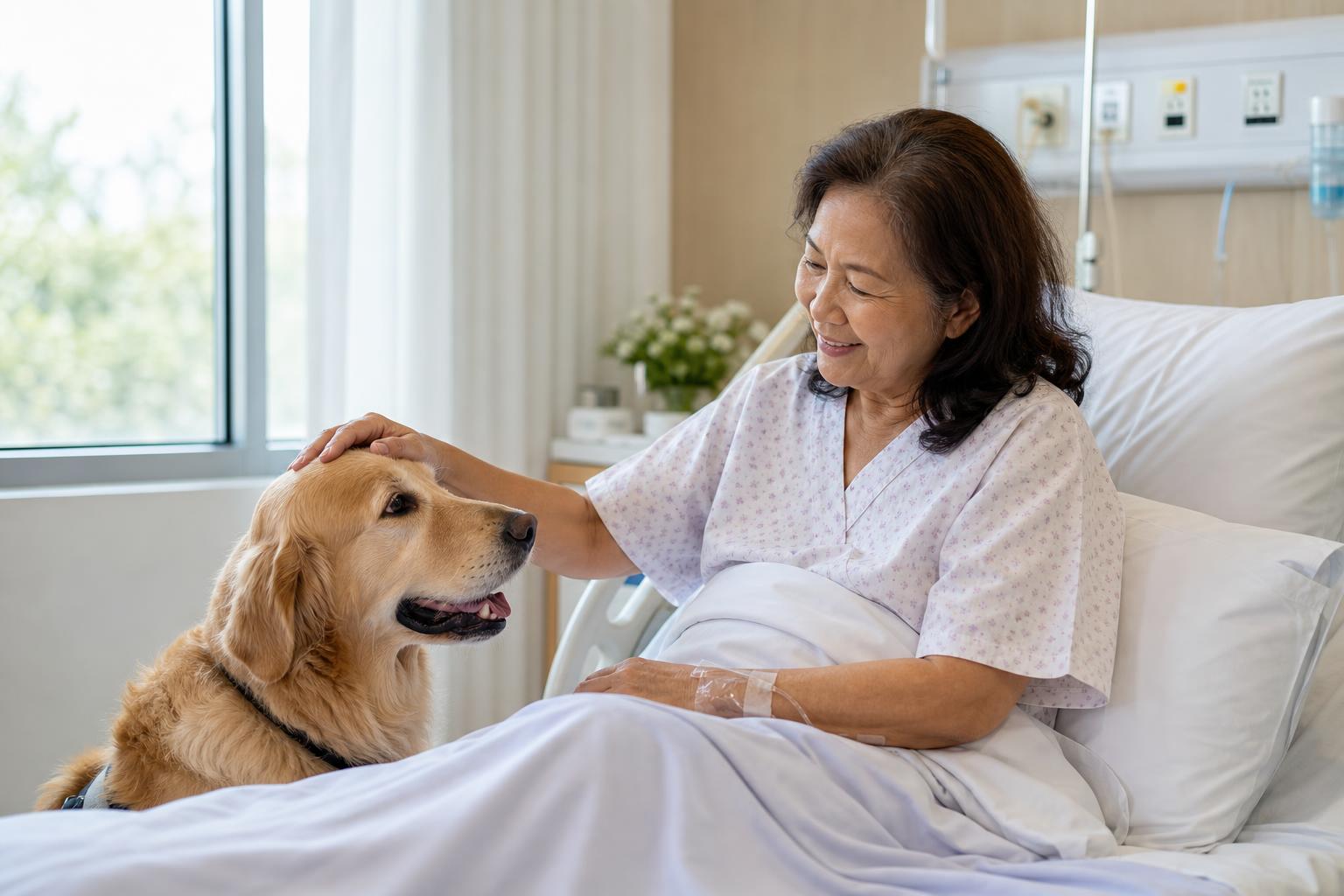
Hospital visits ask more of a dog-handler team than a friendly greeting. Infection-control requirements, patient consent, staff coordination, and the dog's comfort all belong in the plan.
There is something honest about a dog’s presence. A machine beeps, a cart rattles past, a nurse moves quickly from room to room, and in the middle of all that, a therapy dog walks in with a calm tail wag and gentle eyes. It is not magic, though sometimes it feels close. It is the kind of grounded companionship that helps people breathe deeper, unclench their hands, and remember they are still human inside a medical system that can feel cold and overwhelming.
The unique role of therapy dogs
Therapy dogs are not the same as service dogs, and that is an important distinction for anyone learning about working dogs. A service dog is trained to perform specific tasks for one handler with a disability. A therapy dog, by contrast, works with a handler to provide comfort and emotional support to many different people in settings like hospitals, nursing homes, schools, and rehabilitation centers. In a hospital, the therapy dog is there to visit, connect, and help ease strain. That role may sound simple, but the impact can run deep.
These dogs are chosen and trained for stable temperaments, reliable manners, and the kind of patience you cannot fake. Hospital work asks a lot from a dog. They may encounter wheelchairs, IV poles, loudspeaker announcements, unfamiliar odors, fragile patients, and people who are confused, grieving, or scared. A therapy dog that can stay soft and steady in that environment becomes a remarkable partner in care.
Reducing stress and anxiety for patients
One of the clearest ways therapy dogs help in hospitals is by lowering stress. Anyone who has sat in a hospital room for hours knows how quickly the walls can seem to close in. Patients waiting for surgery, recovering from illness, or facing painful procedures often carry a burden of anxiety that medicine alone does not fully touch. A therapy dog visit can interrupt that spiral. Petting a calm dog, speaking to it, or simply watching it rest by the bedside gives the mind somewhere safe to land.
Their breathing changes. Their shoulders drop. Conversation starts to flow. Hospital staff have long noticed that these visits can help patients feel less isolated and more willing to engage with their care. While a therapy dog is not a replacement for medical treatment, it can be a powerful complement to it.
Children, in particular, often respond in immediate and honest ways. A child who is frightened by needles or medical equipment may focus instead on brushing a dog’s coat or giving a simple command. That shift in attention can make procedures feel more manageable. The dog becomes a bridge between fear and trust.
Helping patients feel less alone
Hospitals can be lonely places, even when they are full of people. Patients may be away from home, missing their routines, and cut off from the comfort of familiar faces. Some do not get many visitors. Others are surrounded by family but still feel emotionally stranded. Therapy dogs help by offering uncomplicated companionship. They do not ask for explanations. They do not judge weakness, tears, scars, or silence. They simply show up and stay present.
That kind of presence matters more than many realize. Human conversation can feel hard when someone is tired, discouraged, or in pain. A dog allows for connection without pressure. A patient can stroke the dog’s ears in silence and still receive comfort. In hospital rooms where words come slow, the dog often says enough by just being there.
Comfort for families in hard moments
It is not just patients who benefit. Family members sitting beside a loved one’s bed often carry their own exhaustion and heartache. They may be trying to stay strong, answer questions, make decisions, and keep fear from spilling over. When a therapy dog visits, families often get a brief but meaningful release. They smile. They remember pets from home. They take a breath that has been stuck high in the chest all day. In serious care units and long hospital stays, those small moments of relief can make a real difference.
Encouraging recovery and participation
Another valuable part of hospital therapy dog programs is motivation. Recovery can be slow work. Physical therapy, occupational therapy, and rehabilitation exercises ask a lot from people who may already feel worn thin. A dog can provide just enough spark to get someone moving. A patient who hesitates to walk down the hallway may agree to do it if the therapy dog walks alongside. A child may reach farther, sit up longer, or speak more during a session when a dog is part of the interaction.
This is where the practical side of therapy dog work shines. Comfort is not only emotional. It can help turn passive patients into active participants in their own care. When spirits lift, engagement often rises with it. People become more willing to talk, move, practice, and try again. That may seem like a modest gain, but in a hospital, modest gains stack up into meaningful progress.
Supporting emotional health in medical settings
Hospitals carry more than physical illness. They also carry grief, uncertainty, and mental strain. Therapy dogs can support emotional health by helping reduce feelings of sadness, agitation, and hopelessness. For patients facing long admissions or serious diagnoses, the days can begin to blur together. A therapy dog visit breaks that pattern. It brings novelty, warmth, and a reminder of life beyond the hospital room.
There is also comfort in normalcy. A dog invites ordinary behavior in an extraordinary place. A patient may laugh at a sloppy lick, scratch behind the dog’s neck, or talk about the dogs they grew up with. That short return to everyday feeling can be powerful medicine for the heart, even if no prescription pad ever records it.
A boost for hospital staff too
Nurses, doctors, therapists, and support staff work under intense pressure. They see suffering up close and often move from one difficult situation to the next with hardly a pause. Therapy dogs can help staff reset, even if only for a minute or two in a hallway or break area. A brief interaction with a calm dog can ease tension and improve morale. A good dog has a way of reminding worn-out people why gentleness still matters, especially in places where stakes are high and time is short.
What makes a good hospital therapy dog
Not every friendly dog is suited for hospital work. The best therapy dogs are steady, social, and highly tolerant of strange environments. They need to be comfortable with handling, resilient around noise, and able to remain calm when people move unpredictably. Cleanliness, obedience, and reliable manners are essential. A hospital dog must not jump, bark excessively, or become rattled by medical equipment and unfamiliar contact.
Just as important is the handler. A strong therapy dog team depends on a handler who can read both the dog and the people around them. Good handlers know when a patient wants engagement and when they simply want quiet company. They also know when the dog needs a break. The work may look gentle from the outside, but it requires awareness, discipline, and respect for boundaries.
Why therapy dogs matter more than ever
Modern healthcare has made tremendous advances, but people still need comfort in ways no machine can deliver. Therapy dogs help fill that gap. They do not cure disease, close wounds, or replace trained medical staff. What they do is bring emotional ease, connection, and calm into places where those things are often in short supply. That support can help patients cope better, families endure difficult days, and staff keep going through demanding work.
For anyone interested in therapy dogs, service dogs, or companion dogs, hospital therapy work offers one of the clearest examples of how deeply dogs can serve people without saying a word. In the right moment, it can steady a frightened child, comfort a grieving spouse, encourage a weary patient to take one more walk, or remind a nurse at the end of a long shift that tenderness still has a place in care.
That is the strength of a therapy dog in a hospital. Quiet, dependable, and true. Much like the best dogs have always been, whether in the field, at the hearth, or beside a bed where someone needs a little hope.