Disaster-response therapy visits belong within an organized response, with permission and supervision. A willing handler and friendly dog should not arrive at a disaster site without a coordinated assignment.
At Companion Dog Central, we talk often about the bond between people and dogs, but nowhere is that bond more visible than in a disaster zone. After storms, wildfires, school crises, mass casualty events, and other emergencies, trained therapy dogs and their handlers may be invited in to support survivors, grieving families, children, hospital patients, and exhausted first responders. Their work is quiet, gentle, and deeply human. In a world gone sideways, a dog offers a simple anchor: warm fur, calm eyes, and a reason to take one slow breath.
What Therapy Dogs Do in Disaster Relief
Therapy dogs in disaster relief are not the same as search and rescue dogs or service dogs. That distinction matters. Search and rescue dogs are trained to locate missing people. Service dogs are trained to perform specific tasks for a person with a disability. Therapy dogs, on the other hand, are trained to provide comfort, emotional support, and a calming presence in stressful settings. In disaster relief work, that role becomes especially valuable because trauma has a way of tightening a person’s chest, shortening patience, and making the world feel unsafe.
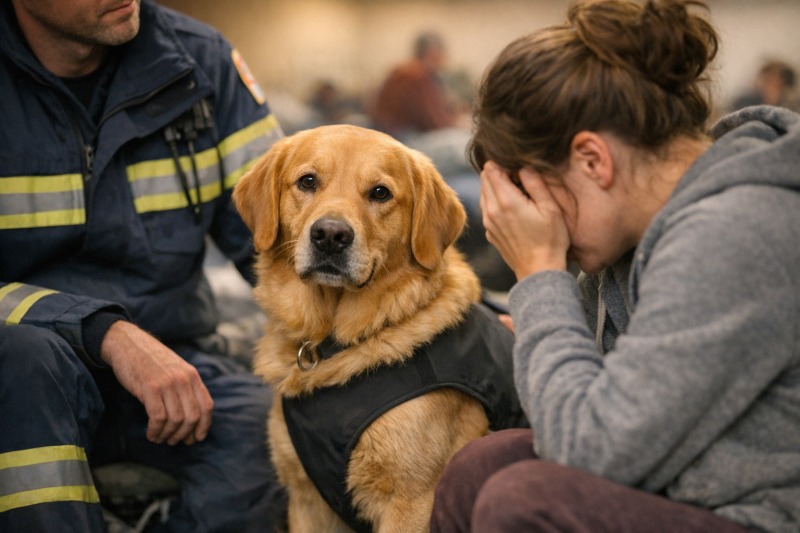
A therapy dog may sit beside a child in an emergency shelter after a tornado. The dog may visit a hospital floor where victims are recovering from burns or injuries. It may spend time with firefighters, medics, or law enforcement officers who have been running on adrenaline for too many hours and have not yet let themselves feel what the day has done to them. Sometimes that dog is there for a family waiting on news. Sometimes it is there for a school community trying to process the unthinkable. The job is not flashy, but it is powerful.
Folks who would not talk to a counselor will scratch a dog behind the ears and start speaking before they even realize it. Children who have gone silent may whisper to a dog long before they trust another adult. That is not magic. It is trust, built on instinct. Dogs do not judge grief. They do not ask for explanations. They simply stay present.
Why Dogs Help People Heal After Crisis
In the field, after any kind of upheaval, people often lose their footing emotionally before they lose it physically. Even those who look composed can be carrying shock, confusion, guilt, fear, or numbness. Therapy dogs help break through that wall in a gentle way. Petting a calm dog can lower stress and invite a person back into the present moment. The rhythm of touching fur, hearing a tag jingle, or feeling a dog lean into your leg can give the nervous system something safe to focus on.
There is also something honest about a dog’s presence. People in disaster zones are often surrounded by sirens, instructions, uniforms, and procedures. All of that is necessary, but it can feel overwhelming. A therapy dog brings a different kind of order, the kind rooted in comfort and routine. Sit down. Breathe. Put your hand here. For one minute, you are not just a victim, a patient, or a responder. You are a person with a dog beside you.
The Emotional Support First Responders Need
One part of this work that deserves more attention is support for first responders. Firefighters, EMTs, police officers, nurses, emergency managers, and volunteers often carry the emotional weight of a disaster long after the cameras leave. They are expected to hold it together, and many do, at least on the outside. A therapy dog can give those men and women a brief but meaningful release. It may be the first time all shift that somebody asks how they are doing instead of what they need to do next.
That matters more than some folks realize. Burnout and secondary trauma are real. When a handler and therapy dog step into a command post, staging area, or hospital corridor, they are offering more than morale. They are helping create a moment of emotional decompression, and in high-stress professions, that can be worth plenty.
What Makes a Good Disaster Relief Therapy Dog
Not every friendly dog is suited for disaster relief. A good therapy dog in these settings must be exceptionally steady. That dog needs to tolerate noise, medical equipment, crying, crowds, sudden movement, unusual smells, and tense human emotions without becoming reactive or shut down. The best ones are social without being pushy, affectionate without being wild, and confident without being stubborn.
Temperament is everything. In rough country, whether you are hunting or helping, nerves tell the truth. A disaster relief therapy dog has to take strange footing, uncertain environments, and emotional energy in stride. They need to be able to settle quickly, follow the handler’s lead, and remain composed when people hold them too tightly or cry into their coat.
The handler matters just as much. This work is a team effort, and the human on the other end of the leash must read both the dog and the room. A skilled handler knows when to approach, when to step back, and when the dog has done enough for the day. Good teams work with compassion, professionalism, and clear boundaries. They understand that even the steadiest dog is still a dog, not a machine.
Training, Certification, and Readiness
Most disaster relief therapy dogs begin with solid obedience, advanced socialization, and exposure to a wide range of environments. From there, many teams pursue therapy dog certification through recognized organizations. Some go on to receive additional preparation for crisis response or disaster deployment, depending on the group they work with and the nature of the assignments. Health screenings, vaccination records, grooming standards, and behavioral evaluations are often part of the process.
Readiness also means practice. Dogs need regular work to stay sharp and comfortable in public settings. Handlers need continuing education in trauma-informed interaction, safety, and deployment procedures. The best teams respect the seriousness of the role. They understand they are entering spaces where people may be grieving the worst day of their lives.
Where Therapy Dogs Are Used After Disasters
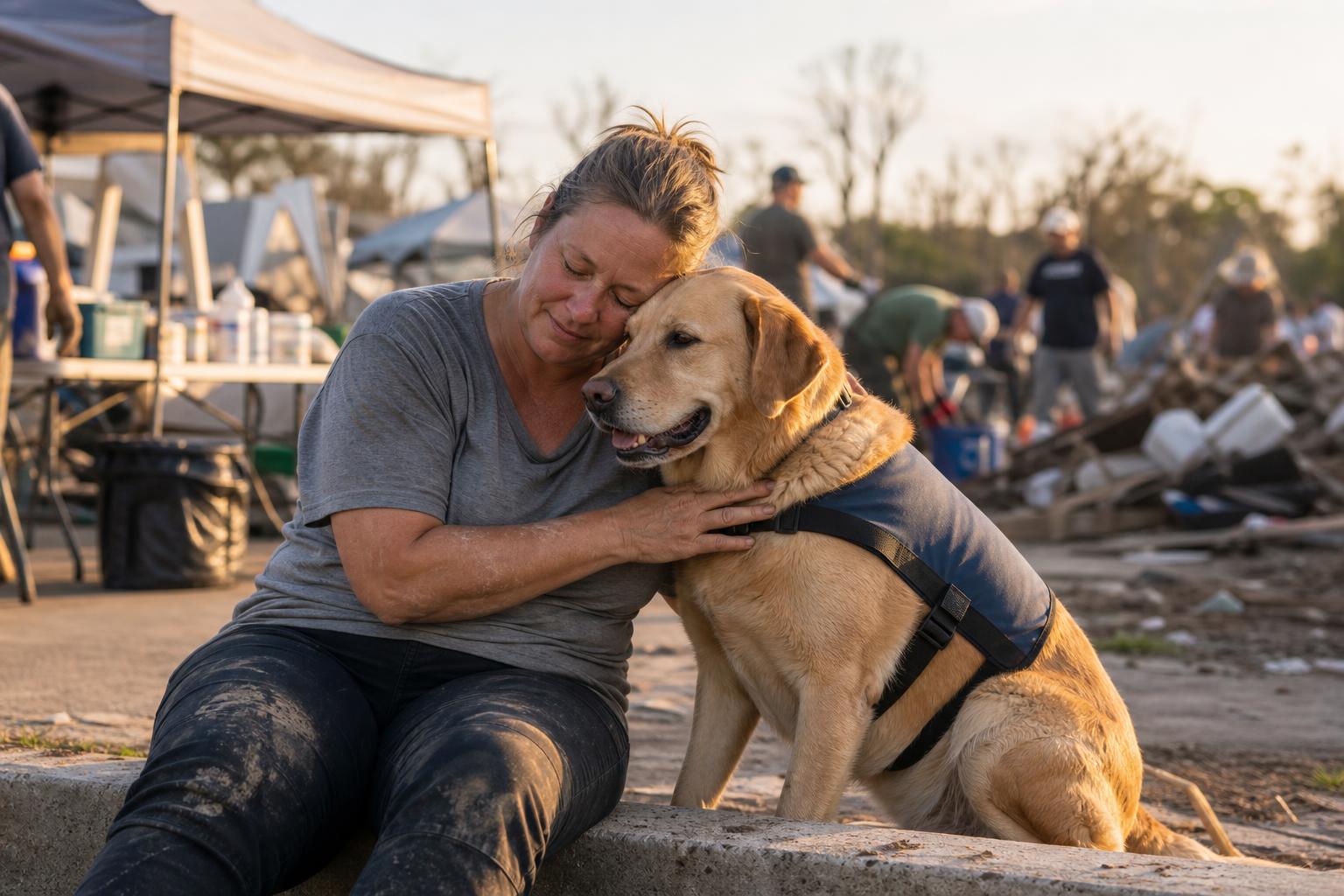
The public often pictures therapy dogs only in shelters, but their reach is broader than that. They may be called to evacuation centers, hospitals, family assistance centers, schools, community vigils, disaster recovery hubs, and responder rest areas. After a wildfire, they might visit families displaced from home. After a flood, they may work in temporary housing locations where children are unsettled and older adults are worn thin. Following acts of violence or public tragedy, they can support students, staff, clergy, and grieving relatives during the long days that follow.
Sometimes their role is immediate, arriving during the acute aftermath. Other times it comes later, when communities begin memorials, counseling sessions, or reentry into schools and workplaces. Trauma does not follow a neat schedule. A dog’s presence can be just as helpful weeks later as it was in the first 48 hours.
The Difference Between Comfort and Cure
It is important to speak plainly here. Therapy dogs do not erase trauma, and they are not a replacement for mental health care, emergency response, or medical treatment. What they offer is comfort, regulation, and connection. In hard moments, that can open the door for healing, but it is not the whole house. The best disaster relief programs understand this and place therapy dogs alongside trained professionals, not in place of them.
That said, comfort is not a small thing. Sometimes what keeps someone moving is not a grand solution. Sometimes it is one quiet minute with a dog that asks nothing and gives everything it can.
How Families Can Learn From These Dogs
For anyone interested in therapy dogs, service dogs, or companion dogs, disaster relief therapy work offers a powerful lesson in what makes a dog truly valuable. It is not just obedience. It is emotional steadiness, trust, and the ability to meet human need with calm presence. Those same qualities matter in family life, too. A well-bred, well-trained, thoughtfully socialized dog can be a source of daily comfort in ordinary times, not only in crisis.
If you are considering a therapy dog path, start by being honest about your dog’s temperament. A sweet dog at home may not enjoy crowds, wheelchairs, loud noise, or intense emotions from strangers. There is no shame in that. Good handlers put the dog’s welfare first. If the dog truly has the temperament, then training and structured experience can shape that raw potential into meaningful service for others.
When the ground shifts under people, therapy dogs offer a kind of quiet footing. They remind us that safety can still exist in small forms, even when the world feels broken. In disaster relief, their work is not dramatic, but it is deeply needed. They bring comfort where words fail, warmth where shock has settled in, and a living reminder that gentleness still has a place in the middle of chaos.
That is the heart of it. A good therapy dog cannot stop the storm, but it can stand beside folks after the wind has passed. And sometimes, in the long shadow of disaster, that simple act of staying close is one of the finest kinds of help there is.