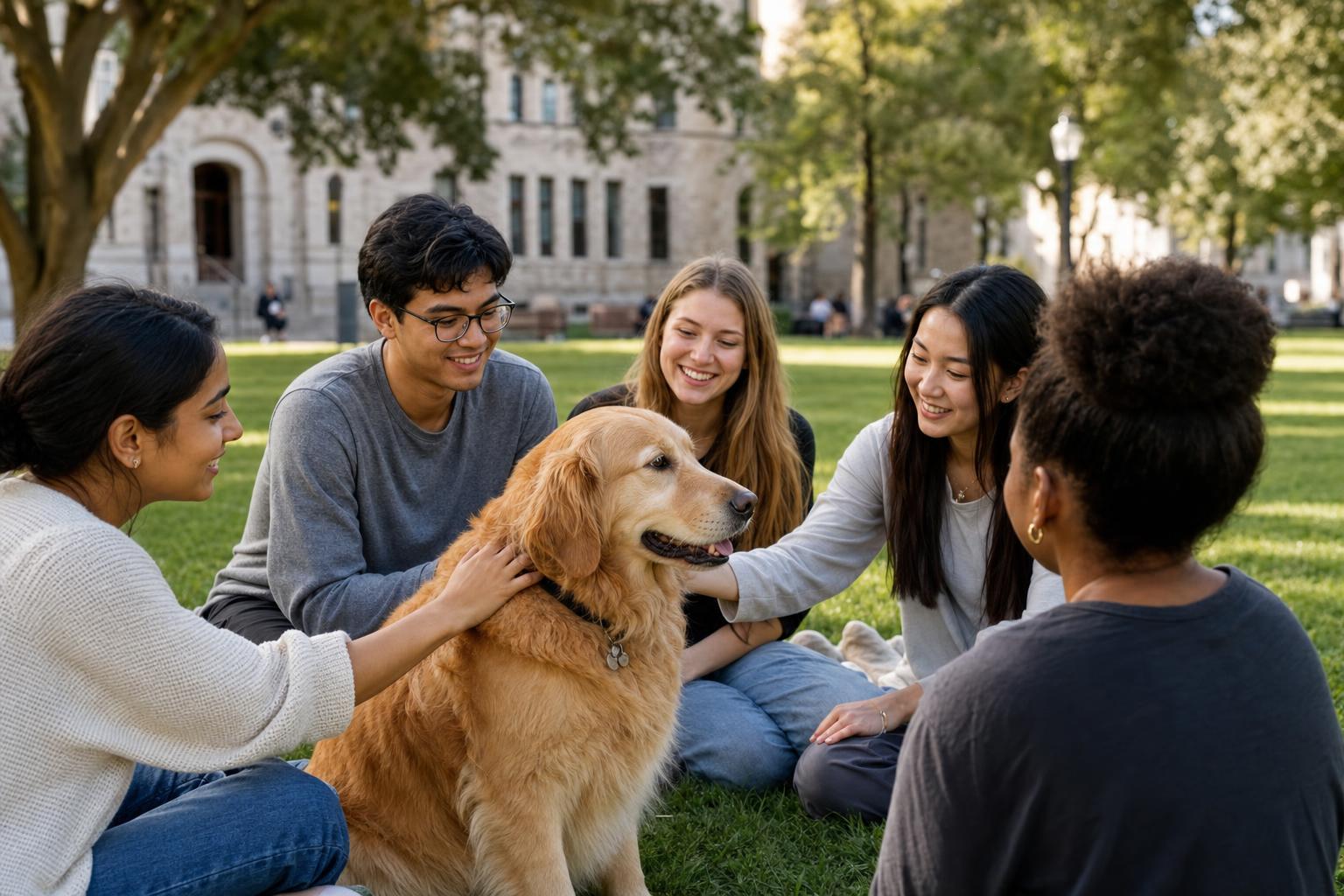
Campus dog visits need an appropriate location, willing participants, and staff coordination. Crowd size, allergies, cultural preferences, and the dog's ability to take a break all affect the event.
Therapy dogs in colleges and universities are not a passing trend. They are part of a broader effort to support student well-being in a world that asks a lot of young adults all at once. Students are balancing classes, money worries, social change, homesickness, and the plain hard work of figuring out who they are. A calm, well-trained therapy dog can create a bridge back to center, even if only for fifteen minutes between exams.
Why Therapy Dogs Matter on College Campuses
College can be exciting, but it can also be lonely in ways people do not always talk about. A student may be surrounded by thousands of people and still feel isolated. Another may be carrying academic stress so heavy it follows them into the dining hall, the dorm, and bed at night. In that kind of environment, therapy dog programs give students a simple, human kind of relief. They offer contact, routine, warmth, and a reason to pause.
A good therapy dog does not care whether a student is top of the class or barely hanging on. The dog shows up the same way every time, steady and welcoming. That reliability is powerful. For students missing home, especially those who grew up with pets, petting a friendly dog can feel like grabbing hold of something familiar in the middle of a season that feels uncertain.
Research and campus reports continue to point toward the same conclusion: interaction with therapy dogs can help lower stress and improve mood. That does not mean a therapy dog replaces counseling, medical care, or disability support. It means the dog adds another layer of help, one that is approachable for students who may not yet be ready to seek formal services.
What Therapy Dogs Do in Universities
Therapy dogs in universities are typically invited into campus settings to provide emotional comfort and positive social interaction. You will often find them during finals week, orientation events, mental health awareness programs, residence hall activities, library de-stress sessions, or student support initiatives. Sometimes they visit regularly through an established campus program. Other times they are part of special events during high-stress periods.
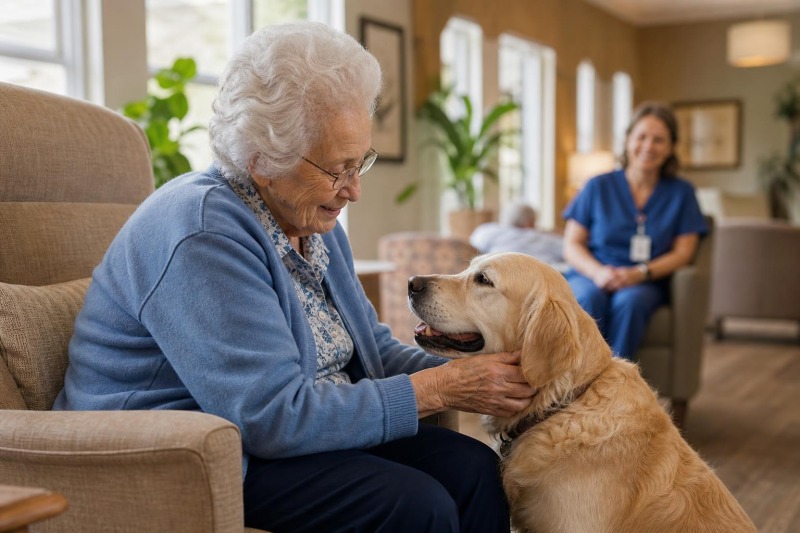
The key thing to understand is that therapy dogs are not the same as service dogs. A service dog is trained to perform specific tasks for a person with a disability and has legal protections tied to that role. A therapy dog, on the other hand, works with a handler to provide comfort to many people in schools, hospitals, nursing homes, and public programs. That distinction matters, especially on campuses where accessibility rules, housing policies, and public access questions need to be handled properly.
Therapy Dogs vs. Service Dogs on Campus
This is where confusion often starts. Students may see a dog helping reduce stress in the student union and assume all supportive dogs on campus serve the same purpose. They do not. A therapy dog is invited to be there as part of a program. A service dog is there because its handler needs it for daily living. One supports a group through comfort and presence. The other is individually trained to assist one person with tasks related to a disability.
That difference should be respected by students, administrators, and families alike. When a campus understands the line between therapy dogs, service dogs, and emotional support animals, it can build better policies and avoid a whole lot of misunderstanding.
How Campus Therapy Dog Programs Are Structured
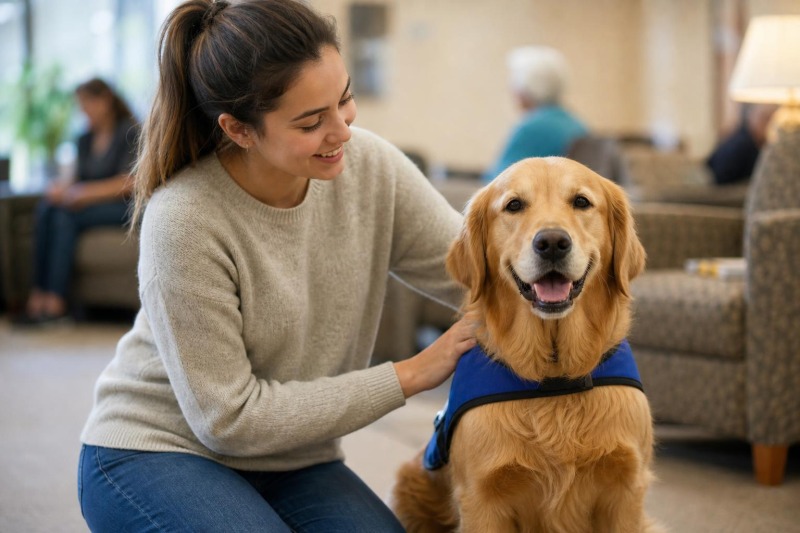
The strongest therapy dog programs are not random drop-ins with a friendly pet. They are organized, screened, and handled with care. Most colleges that bring in therapy dogs work with certified therapy dog teams through recognized organizations or local volunteer groups. The dogs are temperament-tested, trained for public interaction, and paired with handlers who know how to manage visits safely.
A proper campus program pays attention to location, noise level, crowd flow, student consent, and the dog’s comfort. That last part matters more than people think. A therapy dog should never be treated like a machine that dispenses calm on demand. These dogs need breaks, clean water, manageable schedules, and protection from being overwhelmed. A good handler watches the dog the way a seasoned guide watches weather signs before dawn. If the dog is tired, stressed, or overstimulated, the session should end. No question about it.
Universities also need practical rules. There should be sanitation measures, clear expectations about touching, and accommodations for students with allergies, fear of dogs, or cultural concerns. The goal is to create an inclusive wellness resource, not one that leaves some students uncomfortable or excluded.
The Benefits Students Often Feel Right Away
Some benefits of therapy dog visits show up quickly. Students often smile more, relax their posture, and begin talking to one another in ways they might not have a few minutes earlier. A dog can turn a silent line of anxious students into a conversation. It can make a counseling outreach table feel less intimidating. It can soften the edge of exam week when everyone looks like they have been running hard for too long.
There is also a social benefit that should not be overlooked. Colleges can be rough country for students who struggle to make connections. Therapy dog events often create easy interaction without pressure. Students gather, ask questions, share stories about pets back home, and for a little while the room feels less divided. That sense of connection may seem small, but on a campus, small things can keep a person from slipping deeper into isolation.
A student who would never walk into a wellness office may stop by to see the dog. That first visit might be casual. The next one might include a conversation with a counselor, staff member, or peer advocate standing nearby. Sometimes the dog is not the whole answer. Sometimes the dog is the open gate that gets a person moving toward help.
What Makes a Good College Therapy Dog
Not every friendly dog is suited for college therapy work. A campus can be noisy, crowded, unpredictable, and full of odd sights and smells. A suitable therapy dog needs a stable temperament, patience, and the ability to stay calm around strangers, wheelchairs, backpacks, sudden laughter, and bustling hallways. The dog should enjoy meeting people without becoming overexcited or uneasy.
Breed matters less than temperament, training, and health. What counts is reliability. A good therapy dog is gentle, confident, and handler-focused. The handler, for that matter, needs to be just as dependable, able to read the dog, guide interactions, and advocate for the animal’s well-being at all times.
The Handler’s Role Is Just as Important
A fine therapy dog team is exactly that, a team. The handler manages the environment, helps students interact appropriately, keeps visits respectful, and notices when the dog needs space. On a college campus, handlers often become informal ambassadors as well. They answer questions, explain the dog’s role, and help students understand the difference between therapy work and service work. A calm handler can make the whole event feel grounded and safe.
Challenges Colleges Should Think Through
For all the good therapy dogs can do, a campus should not treat them as a cure-all. Student mental health is a serious matter that calls for trained professionals, accessible counseling, crisis support, and long-term resources. Therapy dogs are best viewed as one part of a broader support system.
Schools also need to consider liability, animal welfare, scheduling, and equity of access. If events only happen in one building or at one time of day, many students may miss out. If publicity is unclear, students may not know whether the dogs are part of an official program. If there is no plan for students with allergies or fear of dogs, the event may create stress instead of easing it.
None of those challenges are reasons to avoid therapy dog programs. They are reasons to run them well. When colleges take the time to build thoughtful programs, students benefit and the dogs are protected too.
Why Therapy Dogs Belong in the Conversation About Student Support
Higher education has changed. Students today carry visible and invisible loads that can wear a person down fast. Campuses are searching for ways to support resilience, belonging, and mental wellness. Therapy dogs fit naturally into that effort because they offer something rare and immediate: uncomplicated comfort. No grades. No expectations. No need to explain yourself before you are allowed to receive a little kindness.
People know real comfort when they feel it. A dog leaning gently into a student’s knee during finals week may not solve every problem waiting outside the library doors, but it can lighten the burden for a spell. Sometimes that pause is enough to help a student reset, ask for help, or simply make it through a hard day with a steadier heart.
Therapy dogs in colleges and universities are at their best when they are part of a responsible, well-run program rooted in respect for both students and dogs. Done right, they strengthen campus life in a way that is simple, practical, and deeply human. In a world full of noise, a steady dog can still do what dogs have always done for good people: bring calm, offer company, and remind us we do not have to carry every load alone.