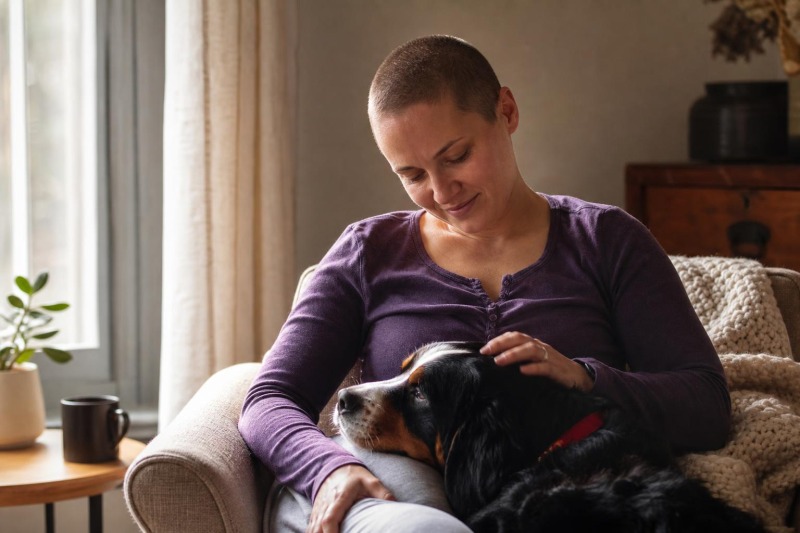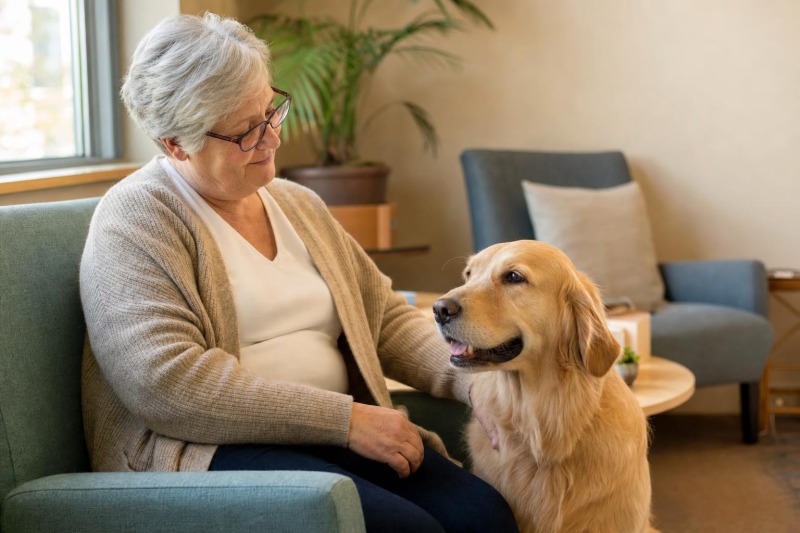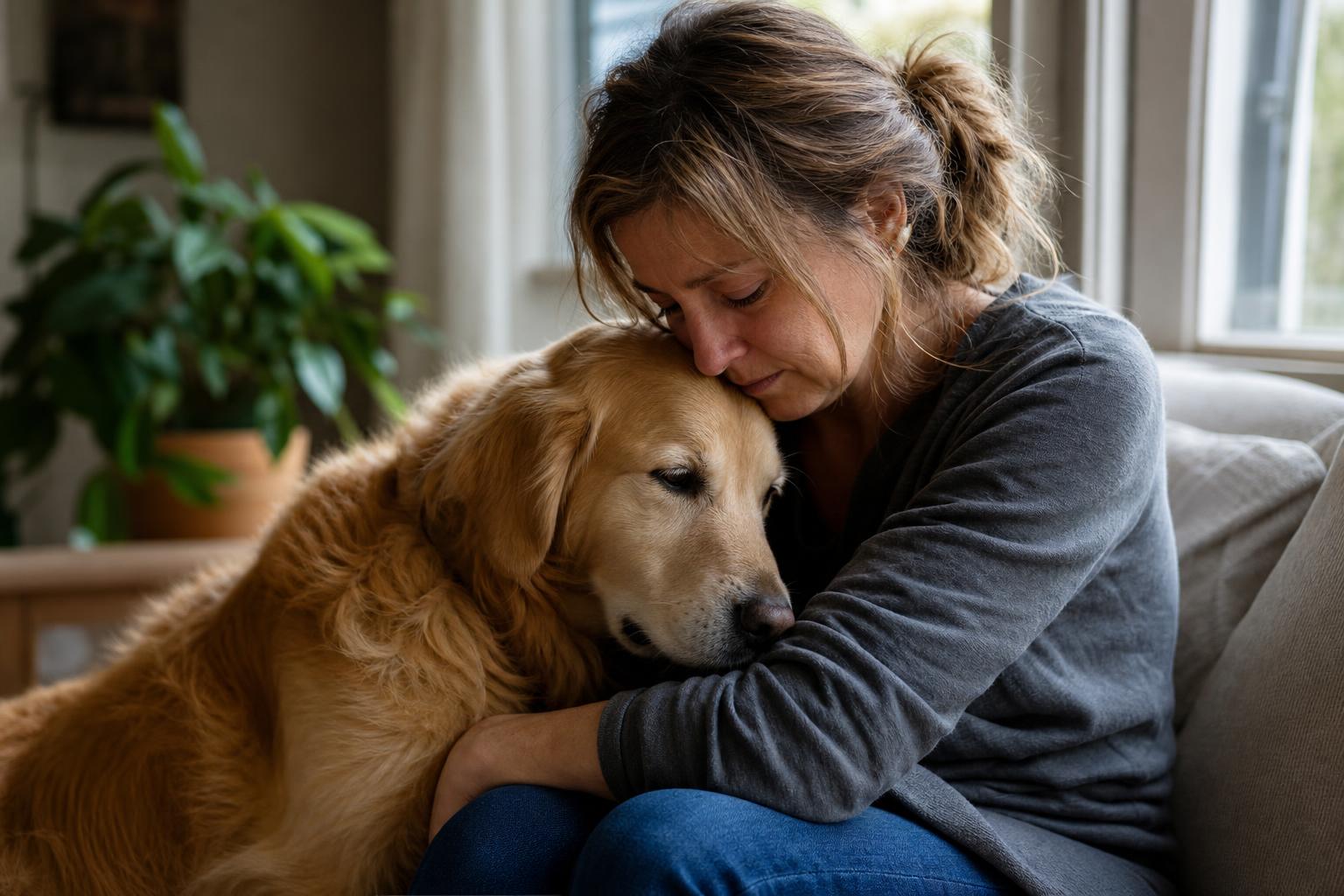
Some people welcome a dog during grief support, while others prefer space or a different form of help. Any organized visit should respect consent, individual needs, and the dog's welfare.
On the best therapy teams, the dog offers a calm presence that lowers the pressure in the room. A grieving person does not have to explain everything. They do not have to be polished, brave, or talkative. Sometimes they just rest a hand on warm fur and take one full breath after another. That may sound simple, but in the thick of loss, simple can be mighty.
What Makes Therapy Dogs Helpful During Grief?
Therapy dogs are trained to provide emotional support in structured settings such as hospitals, schools, nursing homes, hospice centers, funeral support programs, and grief counseling environments. Unlike service dogs, which are trained to perform tasks for a person with a disability, therapy dogs work with handlers to support many different people. They are also different from companion dogs, though any good dog owner knows a beloved pet can be a comfort in hard times. A therapy dog has the temperament, social skills, and training to remain calm, approachable, and safe around strangers who may be emotionally overwhelmed.
There is something honest about a dog’s presence. A good therapy dog does not rush grief, does not fill silence with useless chatter, and does not ask a mourning child or widow to tidy up their feelings. That quiet acceptance matters. Many grieving people struggle with loneliness, anxiety, sleep problems, and the physical toll that sorrow takes on the body. Gentle contact with a therapy dog can help slow breathing, reduce tension, and create a sense of grounding in the moment.
In grief work, that instinct can be worth its weight in gold. A seasoned therapy dog often senses when someone wants closeness and when they need a little space. Some lean in softly. Some rest near a chair. Some offer a paw, or simply stay put like a steady campfire on a cold night.
Children Coping With Loss
Children often do not have the words for grief. Adults will ask how they feel, and the child may shrug, lash out, go quiet, or change the subject. A therapy dog can serve as a bridge. Kids may talk to the dog before they are willing to talk to a counselor. They may read aloud, cry into the dog’s neck, or tell stories about the person they miss. That kind of emotional doorway can be a blessing in schools, family counseling offices, and bereavement programs.
For a child, grief can also show up as fear. Fear of more loss. Fear of being left. Fear of the house feeling different forever. A calm therapy dog helps restore a sense of safety. Not by magic, but by consistency. The dog shows up, settles in, and becomes a dependable part of a hard moment.
Adults Facing Personal Loss
Adults are often expected to keep moving, even when their hearts are dragging behind them. They are making funeral arrangements, answering calls, sorting paperwork, and trying to hold family together while carrying their own sorrow. Therapy dogs offer a pause in all that. During grief counseling, support groups, or hospice visits, the presence of a therapy dog can soften emotional defenses and make it easier to speak honestly.
Some adults are not comfortable opening up to strangers. Yet they may absentmindedly stroke a dog while sharing memories they have not spoken aloud to anyone else. That is not a small thing. Grief locked up too tightly can harden into isolation. Therapy dogs often help crack that shell just enough for healing work to begin.
Seniors and End-of-Life Grief
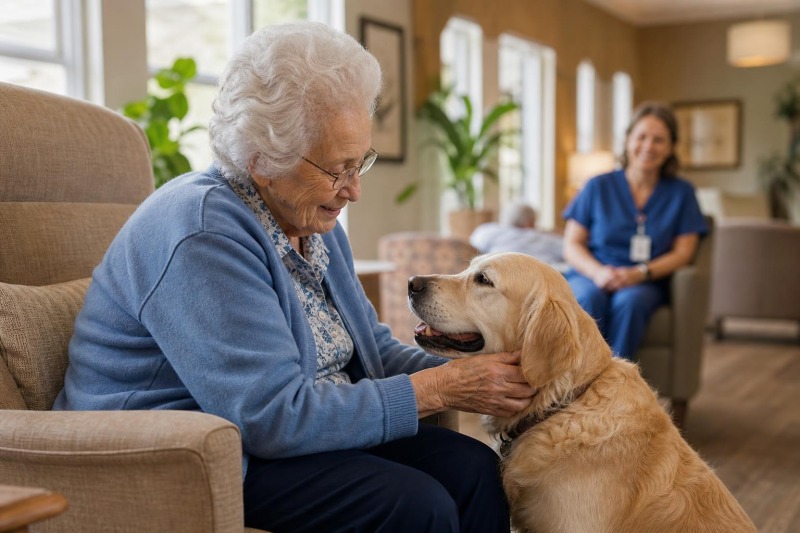
Seniors may face repeated losses in a short span of time, including spouses, siblings, friends, health, independence, and routine. In assisted living communities, nursing homes, and hospice settings, therapy dogs can bring warmth and connection where sorrow and loneliness have settled in deep. A senior who has gone quiet may smile at a dog’s gentle nudge. Someone who has withdrawn may begin reminiscing about hunting dogs, house pets, or a faithful farm dog from years gone by.
Those memories matter. They reconnect people with identity, affection, and a sense that life has held goodness even in the shadow of loss.
The Science Behind the Comfort
There is heart in this work, but there is also sense behind it. Human-animal interaction has been associated with lower stress, reduced blood pressure, and improved mood in many settings. When a grieving person pets a calm dog, the body may shift away from high alert. That physical easing can make room for emotional release. In plain terms, the dog helps the body stop bracing for a while.
Grief is not only emotional. It is physical, mental, spiritual, and social. People lose appetite, sleep poorly, feel foggy, and pull back from others. Therapy dogs can support a healthier emotional environment by inviting small moments of regulation. A grieving person may laugh for the first time in days. They may sit a little longer in counseling. They may choose to attend one more support session because the dog will be there. Those are meaningful gains.
Where Therapy Dogs Help Most
Therapy dogs for grief support are often found in hospice care, hospitals, memorial events, grief camps for children, schools after a traumatic loss, counseling centers, crisis response work, and community support programs. They can be especially valuable after sudden loss, tragedy, or disasters when people are shocked and emotionally flooded.
In these settings, the therapy dog and handler work as a team. The handler reads the environment, protects the dog from stress, and helps create safe interactions. A trustworthy handler knows this is not about putting a cute dog on display. It is about offering a grounded, respectful presence for people in pain.
Choosing the Right Therapy Dog for Grief Work
Not every friendly dog is suited for grief support. The best therapy dogs tend to have stable temperaments, strong obedience, low reactivity, and an easy willingness to engage with different kinds of people. They should tolerate wheelchairs, medical equipment, tears, awkward touch, unpredictable noise, and long periods of calm behavior. They also need to enjoy the work. A dog that is anxious, overly bouncy, timid, or easily overwhelmed is not a good fit for this kind of calling.
Breed can matter less than temperament, though certain breeds are commonly seen in therapy work because of their trainability and social nature. Golden Retrievers, Labrador Retrievers, Poodles, and Cavalier King Charles Spaniels often do well, but a mixed breed with the right mind can be every bit as effective. What counts is steadiness.
Training and Certification Matter
If you are considering therapy dog work, proper training and evaluation are essential. A grief support dog should be comfortable with strangers, able to settle on cue, and responsive to the handler in emotionally intense settings. Many organizations provide therapy dog testing, registration, and guidelines for visiting facilities. Ongoing practice matters too. A dog may be sweet at home and still not be prepared for the emotional weight of grief environments.
Handlers need training just as much as dogs do. They must understand boundaries, infection control where applicable, reading canine stress signals, and how to work alongside counselors, chaplains, teachers, or medical staff. Good intentions alone are not enough.
Therapy Dogs Are Support, Not a Replacement for Care
It is important to keep one thing straight. Therapy dogs are a valuable support, but they are not a replacement for licensed mental health care, grief counseling, medical treatment, or crisis intervention when those are needed. The dog opens doors. The dog creates calm. The dog helps someone feel less alone. But serious grief complications, trauma responses, depression, and suicidal thoughts require qualified human professionals.
That said, therapy dogs can work beautifully alongside those professionals. In many cases, they help people stay engaged in treatment long enough to benefit from it.
Finding Therapy Dog Grief Support Near You
If you are looking for therapy dogs for grief support, start with local hospice organizations, hospitals, counseling practices, schools, bereavement centers, and certified therapy dog groups. Ask whether they offer canine-assisted grief support or partner with registered therapy dog teams. If you are a facility director or counselor, seek teams with proper credentials, insurance where required, and experience in sensitive environments.
For families going through loss, even one or two visits can provide comfort. For others, regular contact in a support group or counseling setting may be more helpful. There is no single right schedule. Grief has its own weather, and support should fit the person, not the other way around.
The Quiet Gift of a Good Dog
There is a reason people reach for dogs in life’s hardest chapters. A good dog brings you back to the ground under your boots. Back to the rhythm of breathing. Back to the simple truth that comfort can still exist, even when sorrow has set up camp in the heart.
Therapy dogs for grief support offer that quiet gift without fanfare. They do not erase loss. They stand with people inside it. For the grieving child, the exhausted spouse, the lonely senior, or the family trying to make sense of an empty chair at the table, that kind of steady presence can be the first small light on a dark trail.
If you are learning about therapy dogs, service dogs, or companion dogs, grief support is one of the clearest examples of how powerful the human-canine bond can be. In the right hands, with the right dog, that bond becomes more than comfort. It becomes part of healing.