Impulse-control exercises teach useful actions such as waiting briefly, turning back to a handler, or settling on a mat. Keep the task achievable and reward the behavior you are teaching.
If you have ever watched a young dog launch for a dropped sandwich, hit the end of a leash to greet a stranger, or explode through a doorway like a bird dog flushing from cover, you already understand the challenge. Dogs are born with drives. Some are soft and easygoing, others are all fire and motion. Good training does not crush that spirit. It shapes it. Impulse control teaches a dog how to pause, think, and choose the right response instead of acting on every urge.
Why Impulse Control Matters for Every Type of Dog
For a companion dog, impulse control makes daily life smoother and more enjoyable. It means fewer frantic greetings, less pulling on walks, and a dog that can settle in the home instead of constantly demanding action. For therapy dogs, it is even more important. These dogs must move through unpredictable places with confidence and composure. A dog that cannot resist jumping, grabbing, or lunging will struggle in schools, hospitals, and public events. For service dogs, impulse control is not just helpful. It is foundational. A service dog must ignore distractions, delay gratification, and remain responsive under pressure.
In plain terms, impulse control is what allows a dog to live successfully in a human world. It helps a dog wait at thresholds, leave food alone, greet people politely, walk calmly past other dogs, and hold position when excitement rises. More than that, it builds trust. When your dog learns self-restraint, you begin to rely on each other in a different way.
What Impulse Control Really Means
A lot of folks hear the phrase and picture a dog frozen stiff, afraid to make a move. That is not what we are after. Real impulse control is not fear, and it is not suppression for its own sake. It is the ability to regulate behavior in the face of temptation, stimulation, or frustration. A dog sees the thing it wants and still chooses to look to the handler, hold position, or wait for a cue.
That kind of response takes maturity, but it also takes clear teaching. Dogs are not stubborn simply because they act quickly. Most of the time, they are doing what comes naturally. Training gives them another path. We reward the pause. We reward the check-in. We reward the moment the dog chooses calm over chaos.
Start with Expectations You Can Actually Win
A young dog that cannot sit still in the kitchen is not ready to hold perfect composure at a crowded park. Start where success is likely. Work in a quiet room, then the backyard, then the front walk, and then places with more life in them. That progression matters.
Impulse control grows when the dog understands the game and keeps winning at it.
Core Exercises That Build Self-Control
Teaching impulse control is not about one magic drill. It is about a collection of habits that teach the dog to wait, think, and respond to direction. Some of the best work happens in everyday moments.
The Doorway Wait
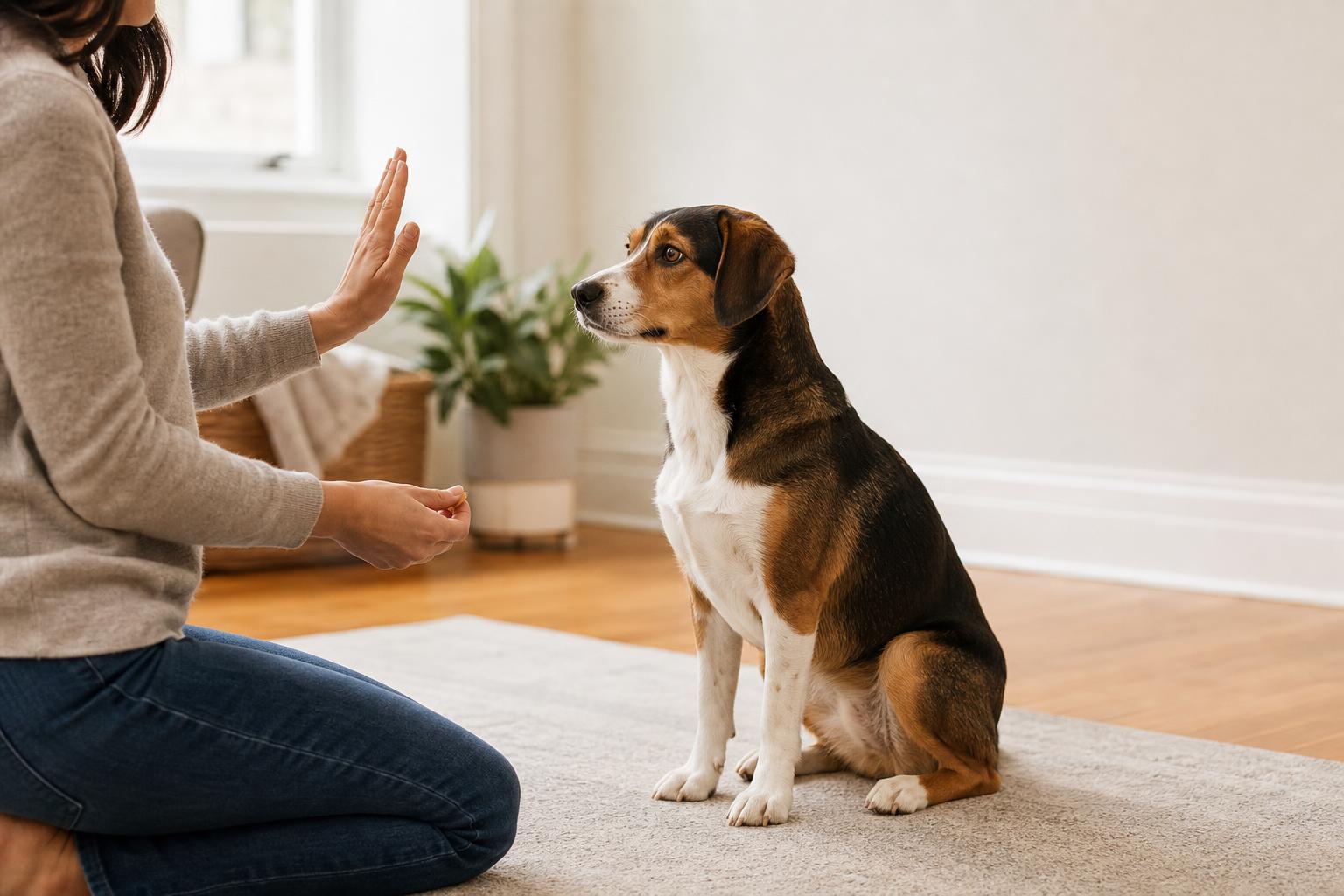
Doors are honest teachers. Most dogs want to burst through them. Ask for a sit or stand-stay before opening the door. If the dog surges forward, the door closes. If the dog holds position, the door opens again. Pretty soon the dog learns that patience makes the world move, while rushing gets nothing. This is one of the cleanest ways to teach that self-control creates opportunity.
Food Manners and Leave It
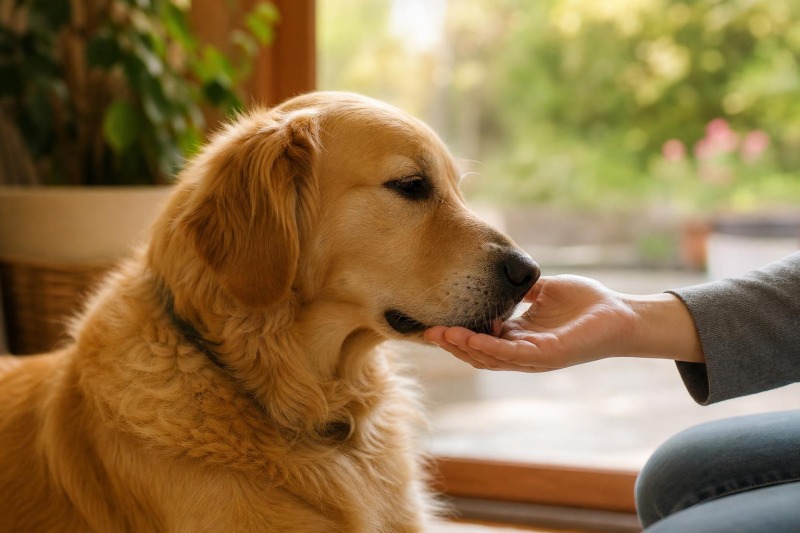
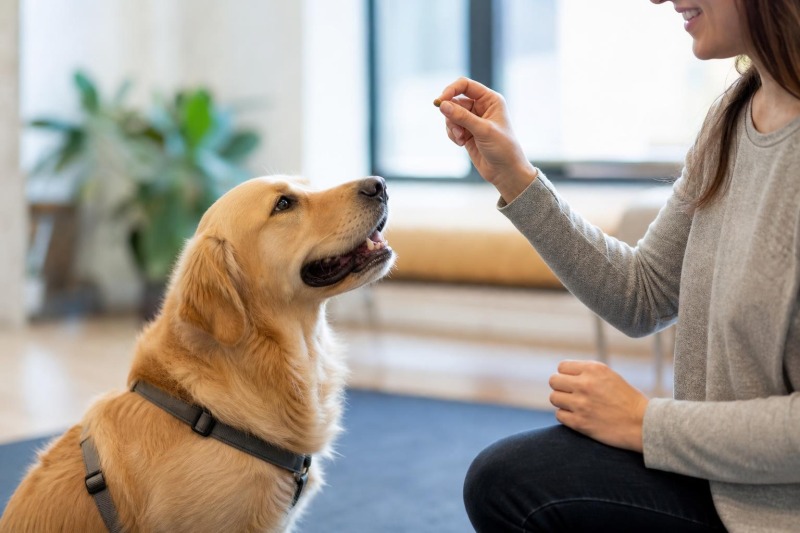
Food is powerful, which makes it useful in training. Hold a treat in your hand and let the dog figure out that mugging, pawing, and diving in will not work. The instant the dog backs off or even hesitates, mark the behavior and reward. That pause is gold. Over time, you can turn that lesson into a reliable leave it cue, which helps with dropped food, sidewalk trash, and all the little temptations dogs find before we do.
Waiting for Attention
Many dogs learn that barking, pawing, spinning, or shoving a nose into your elbow gets a response. If you want a calmer dog, teach that polite behavior opens the door to attention. Wait for four paws on the floor, a sit, or even a brief moment of stillness before petting or engaging. It sounds simple, but this daily pattern shapes how your dog asks for things.
Settling on a Mat
A mat or bed can become a landing place for a busy mind. Teach your dog that going to the mat and staying there brings reward, calm praise, and eventually real relaxation. This is especially valuable for therapy dogs learning to remain composed in public and for service dogs that need an off switch between tasks. Companion dogs benefit just as much. A dog that can settle is easier to live with and often happier too.
The Role of Frustration in Dog Training
Here is something seasoned handlers come to respect: impulse control and frustration tolerance are close cousins. A dog that cannot get what it wants right away may bark, grab, jump, or shut down. That does not mean the dog is bad. It means the dog has not yet learned how to handle delayed reward.
When you teach impulse control, you are teaching the dog to work through that feeling without coming apart. Keep sessions short enough that the dog can succeed. Reward generously when the dog makes a good choice. If frustration boils over, lower the difficulty instead of digging in your heels. Training should stretch the dog, not unravel it.
Why Calm Handlers Build Calm Dogs
Dogs read us better than most people realize. If you rush, nag, repeat commands, or handle every mistake like a crisis, your dog will feel that pressure. A steady dog often comes from a steady handler. Speak clearly. Set up the exercise so the dog can understand it. Be patient enough to let the lesson sink in.
If the dog is all heat and no direction, the day goes sideways in a hurry. But if you bring calm timing and clear signals, that energy starts to channel into something useful. The same principle applies in the home, on the sidewalk, and in public access training.
Proofing in the Real World
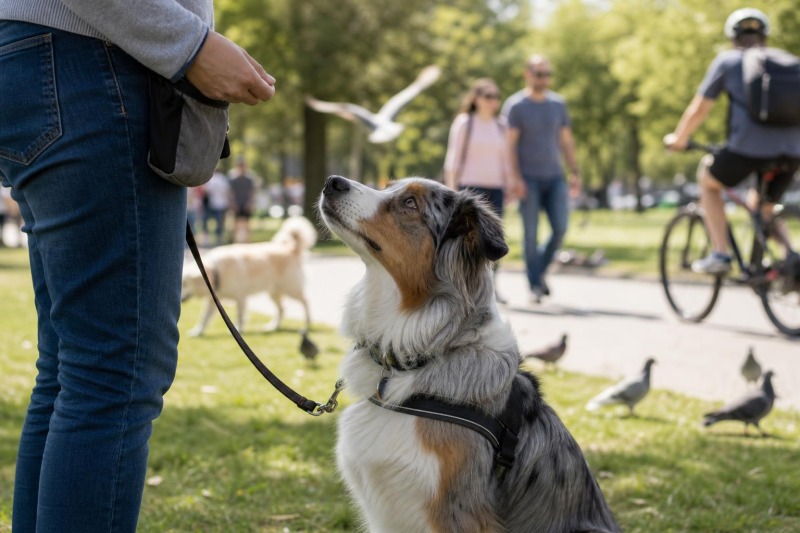
Once your dog understands the basics, you have to test those skills where life is actually happening. Practice near playgrounds, outside pet-friendly stores, on neighborhood walks, or in parking lots where carts rattle and doors slam. Keep enough distance that your dog can still think. Reward attention, stillness, and recovery from distraction.
This is where many therapy dog and service dog prospects either rise or show you what still needs work. Real environments expose weak spots. That is not failure. It is information. The dog who can hold a sit in the kitchen but not outside the grocery store is simply telling you where training needs to continue.
Common Mistakes When Teaching Impulse Control
One common mistake is only expecting self-control when it is convenient for us. If you allow pulling sometimes, door charging sometimes, and frantic greetings when guests arrive, your dog receives a muddy message. Consistency matters. Another mistake is confusing punishment with learning. Corrections may interrupt behavior, but they do not always teach the dog what to do instead. Reward-based clarity builds more dependable choices.
It is also easy to forget the dog in front of you. Temperament matters. A soft companion dog may need confidence and gentle pacing. A driven service prospect may need structure and hundreds of repetitions in different settings. A therapy dog candidate may need extra work around strangers, mobility equipment, and unusual noises. Good training is never one-size-fits-all.
Impulse Control Is Built Into Daily Life
The best part of this kind of training is that you do not need to carve out hours each day to make progress. Ask for a wait before meals. Pause at every doorway. Reward calm before clipping on the leash. Practice leave it on walks. Send your dog to the mat while you drink coffee or answer the door. These moments add up fast.
Over weeks and months, those little choices begin to shape character. Your dog starts to understand that patience pays. The frantic edge softens. The eyes check in with you instead of locking onto every distraction. You feel less like you are holding back a storm and more like you are working with a partner.
The Long-Term Payoff of Teaching Impulse Control
A dog with impulse control is not dull. That dog is freer. Freer to go more places, freer to handle more situations, and freer to be trusted. That matters whether your goal is a well-mannered family companion, a gentle therapy dog, or a highly reliable service dog.
There is pride in watching a dog choose restraint when the easier path would be to lunge, snatch, or bolt. It reminds you that training is not just about commands. It is about shaping judgment. And once that judgment begins to take root, life with your dog changes in all the right ways.
Teaching impulse control takes time, repetition, and a fair amount of humility. Some days will feel smooth, others will feel like you are back at the start. Stay with it. Build the lessons carefully. Reward the choices you want. You are not just teaching your dog to wait. You are teaching your dog how to live well beside you, with steadiness when it counts.