Choose service-dog equipment around the trained tasks, the handler's needs, and the dog's movement and comfort. A vest may communicate a role, but it does not create service-dog status.
For folks learning about service dogs, therapy dogs, or companion dogs, one thing is worth understanding early: not every working dog needs the same setup. A mobility dog has different gear needs than a psychiatric service dog. A medical alert dog may wear lightweight equipment for all-day use, while a dog helping with balance support may need a highly specialized harness fitted with care. The right gear should serve the dog’s job, not interfere with it.
Why Service Dog Gear Matters in Everyday Life
Out in the world, service dogs move through grocery aisles, parking lots, doctor’s offices, airports, sidewalks, and crowded waiting rooms. That is hard country in its own way. Slick floors, hot pavement, distracted strangers, and long stretches of focus can wear on any dog. Proper equipment helps a service dog stay comfortable and keeps communication clear between handler and dog.
A solid setup can also reduce confusion in public. While service dog laws do not require special vests or identification in many places, clearly marked gear often helps avoid unnecessary questions and gives people a visual cue that the dog is working. That does not replace training, and it certainly does not grant rights by itself, but it can make daily handling smoother.
Comfort Comes Before Appearance
If the shoulders are free, the dog strides easy, and the head stays natural, you are likely on the right track. If there is chafing behind the elbows, twisting across the chest, or a vest riding up over the neck, that gear is wrong no matter how sharp it looks online. Service dogs often wear equipment for long hours, so breathable fabric, smooth edges, proper adjustment, and even weight distribution matter more than style ever will.
Choosing the Right Service Dog Vest
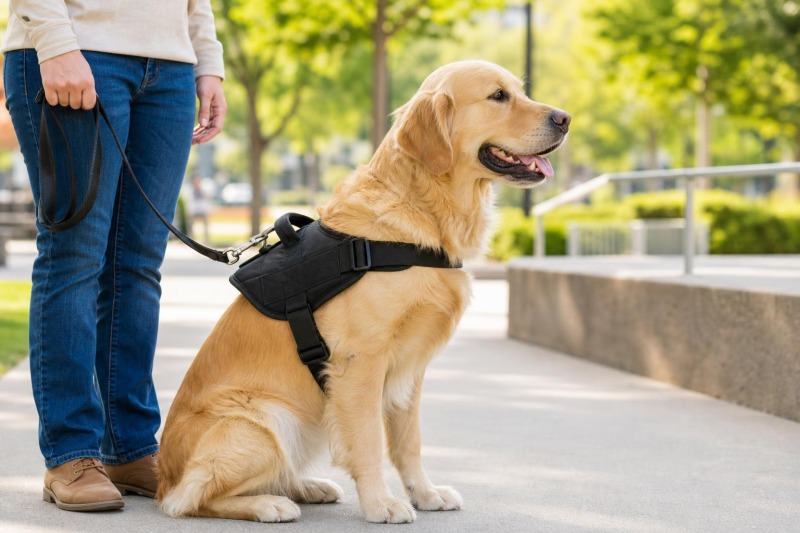
The vest is what most people picture first, and for many teams it plays an important role. A service dog vest helps identify the dog as a working animal and can carry patches, handle attachments, and small necessities. Still, not every vest is built for real use. Some are little more than costume-grade fabric with weak stitching and poor fit.
Look for a vest that allows full shoulder movement and does not press into the dog’s throat. Lightweight mesh can be useful in hot climates, while heavier materials may hold up better in rough weather and frequent travel. Strong buckles, reinforced seams, and adjustable straps are worth paying for. If a dog will wear a vest daily, washability matters more than folks think. Mud, rain, shed hair, and city grime have a way of finding every seam.
Patches should be readable without turning the dog into a walking billboard. Clean, simple labels such as “Service Dog” or “Do Not Distract” are often enough. Too many add-ons can snag, irritate, or simply clutter the setup.
Harnesses for Support, Guidance, and Control
Harnesses deserve careful attention because they can affect both task work and physical health. A standard walking harness is not the same as a mobility support harness, and one should never be substituted for the other without expert guidance. Dogs performing brace or balance-related work need professionally designed equipment that protects the dog’s body and matches the handler’s needs.
For non-mobility tasks, many handlers prefer a Y-front harness or another design that leaves the shoulders open and gives excellent control without restricting movement. These are practical for guide work, psychiatric service support, and general public access handling. Padding helps, but bulk for its own sake does not. A harness should feel secure, not heavy and cumbersome.
Handle Options and Specialized Use
Some service dog harnesses include rigid handles, semi-rigid handles, or soft traffic handles. Each serves a different purpose. A soft handle may help keep the dog close in crowded spaces. A structured guide handle supports communication for certain tasks. Mobility equipment, however, crosses into serious territory and must be selected with veterinary and training input. Guesswork can injure a dog over time, and no piece of gear is worth that gamble.
Leashes, Collars, and Everyday Control
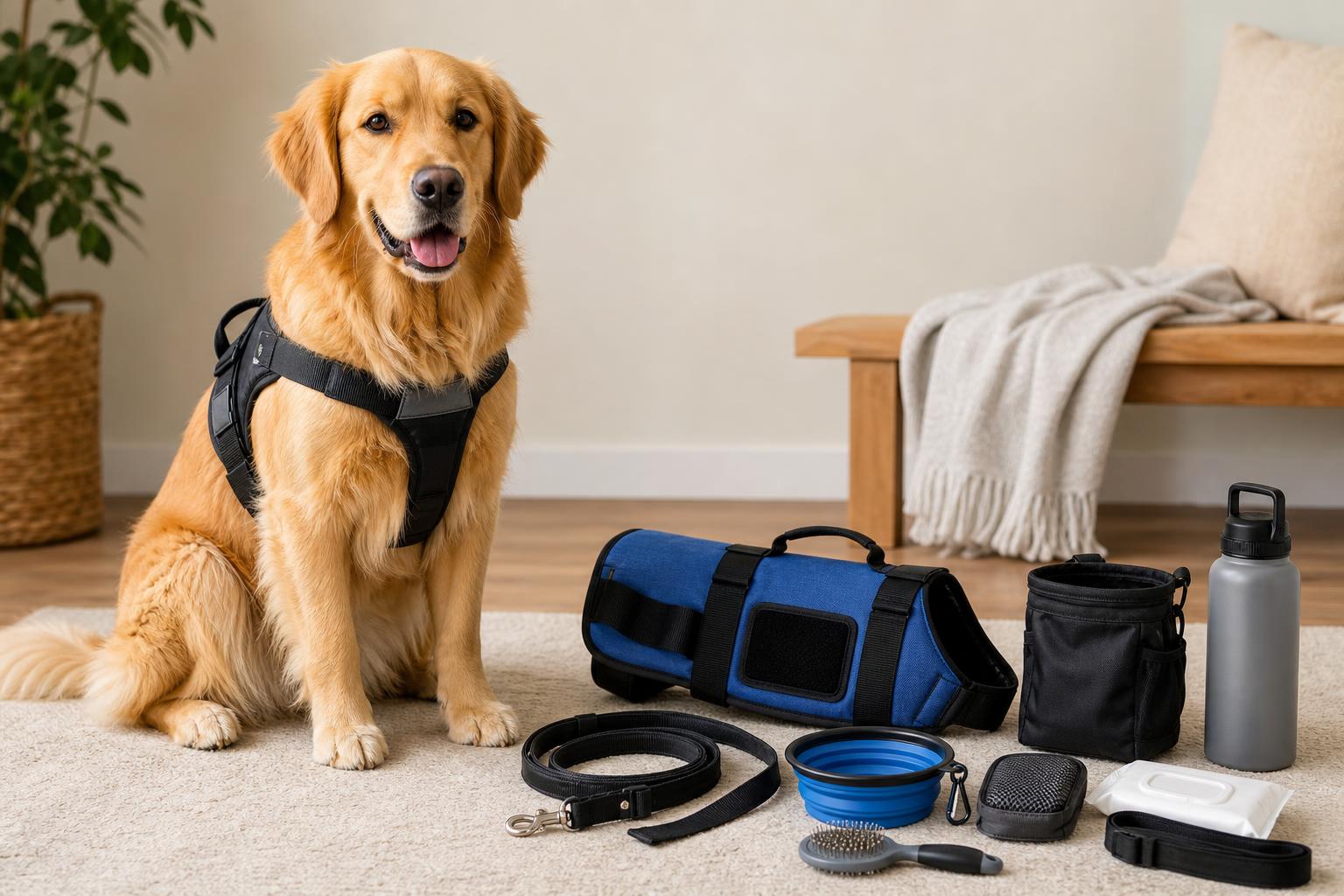
People will spend freely on a vest and then clip on a stiff, cheap leash that burns the hand and tangles underfoot. A good leash should feel natural, with enough length to allow movement but not so much that it becomes sloppy in tight public spaces. Leather breaks in nicely over time, much like old field gear, while quality biothane handles wet weather and cleaning with less fuss.
Many service dog teams keep more than one leash for different situations. A standard leash for daily public access, a shorter traffic leash for busy areas, and sometimes a longer line for training can all have their place. Reliability matters most. Strong hardware and smooth clipping points keep little failures from becoming big ones.
Collars should be comfortable, visible if needed, and secure. Flat collars are common for tags and basic handling, while martingale collars may be helpful for some dogs under trainer guidance. Prong or aversive tools are a separate discussion and generally not what most handlers want for polished public work. Calm control and steady communication should be the goal.
Boots, Weather Gear, and Protection for Tough Conditions
Not every service dog needs boots, but in certain places they are not a luxury. Hot pavement, ice melt, sharp gravel, broken glass, and winter crust can turn a simple outing into a problem fast. A dog with sore feet cannot work well. Boots should fit snugly without cutting circulation, and they need to be introduced gradually. Most dogs do not take to them naturally at first, and that awkward high-step walk is common until they settle in.
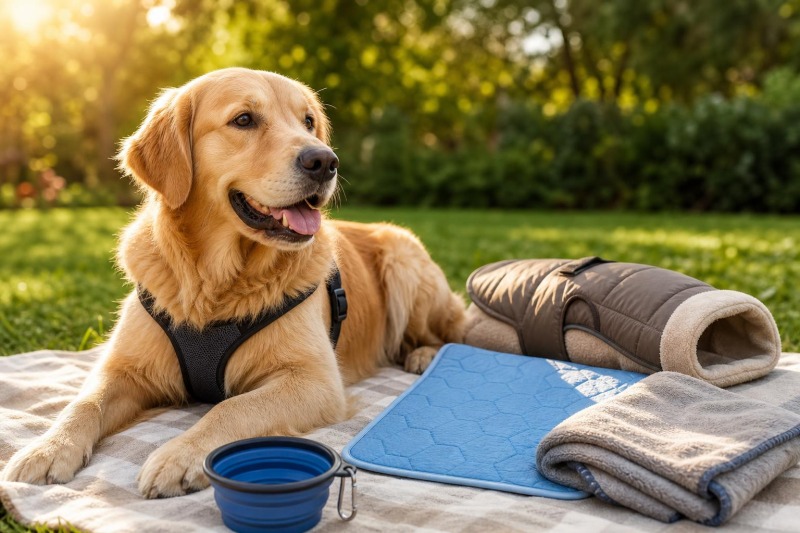
Rain jackets and cooling vests can also be useful depending on climate and coat type. Heavy-coated dogs working in summer heat may benefit from cooling support, while short-coated dogs in cold, wet weather may need protection during outdoor waits and travel. The point is not to dress a dog up. The point is to preserve stamina and comfort so the dog can focus on trained tasks.
Travel and Public Access Essentials
Any handler who spends long days away from home learns quickly that the little things matter. A compact water bowl, poop bags, a small towel, grooming wipes, and a secure place for medical or training records can make travel easier. The best travel equipment disappears into the routine.
For vehicle safety, a crash-tested restraint or travel crate should be considered whenever possible. Loose dogs in vehicles are at risk, working dog or not. Seatbelt tethers made from flimsy hardware may be better than nothing, but serious travel calls for gear built for impact protection.
Keeping the Dog Focused in Busy Environments
Public access work demands mental energy. Gear should help the dog stay in working mode, not create irritation. If a tag jingles nonstop, a strap slips every few steps, or a vest heats up too quickly, the dog notices. Handlers notice too, usually after a day that felt harder than it should have. Often the fix is simple: lighter gear, cleaner fit, fewer accessories, better materials.
Identification, Documentation, and Common Misunderstandings
There is a great deal of confusion online about service dog ID cards, registrations, and certificates. In many cases, these products are sold to worried owners who simply want to do the right thing. The truth is that flashy paperwork bought from a website does not replace legitimate training or legal standards. Gear and accessories should support a real working partnership, not try to imitate one.
That said, some handlers do carry veterinary information, emergency contacts, vaccination records, or training notes in a pouch or travel folder. That kind of documentation can be practical, especially during travel or emergencies. It just should not be confused with proof manufactured for appearance alone.
How to Fit and Maintain Service Dog Equipment
Even the best service dog equipment fails if it is fitted poorly or never checked. Straps stretch. Dogs gain or lose coat with the seasons. Young dogs mature through the chest and shoulders. A setup that fit well in spring may rub by fall. Take time to inspect for frayed stitching, bent clips, worn hook-and-loop panels, and pressure points on the dog’s body.
Maintenance is not glamorous, but it keeps working gear reliable. Wash vests according to their material, clean dirt from buckles, condition leather if needed, and replace gear before it becomes unsafe. A service dog depends on consistency. So does the handler.
When all is said and done, the best service dog gear is the gear that lets the dog work freely, safely, and with confidence. It should fit the dog’s body, support the trained tasks, and hold up to real miles in the real world.
If you are shopping for a service dog, training a prospect, or simply trying to understand how working dogs are equipped, remember this: the dog comes first. Always. Not the trend, not the patch set, not the marketing. Watch the dog move, pay attention to comfort, and choose equipment like you would choose any trusted field tool. Make it honest, make it durable, and make sure it earns its place.