Indoor games can offer sniffing, movement, and simple problem-solving without a large space. Choose a safe surface and adjust the difficulty before the dog becomes frustrated or tired.
For companion dogs, therapy dogs, and service dogs in training, indoor enrichment is not a luxury. It is part of raising a dog that can think, settle, and stay connected to people. The finest indoor games for companion dogs are the ones that meet the dog where he is. Some dogs need help burning off steam. Some need confidence. Some need gentle problem-solving that keeps their mind occupied without winding them too tight. A well-chosen game can do all of that while deepening trust between dog and handler.
Why Indoor Games Matter for Companion Dogs
People often think exercise means distance. They picture long walks, open fields, and a dog stretching his legs across country. Ten thoughtful minutes spent searching, remembering, waiting, choosing, and responding can leave a dog more settled than a rushed march around the block.
This matters especially for companion dogs that live close to their people. A dog that is bored indoors may pace, bark, shadow family members, chew at furniture, or invent mischief just to make the day interesting. A dog with structured games has an outlet. He learns that the home is a place where good things happen through patience and attention. That lesson carries over into daily life, whether your dog is meant to offer comfort as a therapy dog, perform tasks as a service dog, or simply be the steady-hearted friend every family hopes for.
The Difference Between Excitement and Enrichment
Not every game helps every dog. Some high-energy games stir a dog up until he is running hot and careless. There is a place for that in moderation, but true enrichment often looks a little steadier. It asks a dog to think, to use his nose, to control his impulses, and to work with you instead of around you. That kind of game produces the kind of dog people love living with.
Hide-and-Seek Builds Scent Skills and Connection
One of the best indoor games for companion dogs is plain old hide-and-seek. It costs nothing, works in nearly any home, and teaches a dog to use both his nose and his brain. Start simple. Ask your dog to stay with another person or behind a baby gate, then hide somewhere easy and call him. When he finds you, make a real fuss over it. Let him know he has done something worthwhile.
After a few rounds, you can make it more interesting by hiding in another room, behind a door, or beside a couch where he must truly search. This game is especially valuable for dogs that need confidence or a stronger bond with their handler. Finding you becomes the reward. For therapy and service prospects, that habit of searching for and orienting toward their person is a mighty useful thing.
You can do the same game with treats or favorite toys. A dog that learns to work a scent cone in the house is using natural ability in a healthy way. He is not just being entertained. He is practicing concentration.
Food Puzzles and Scatter Games Slow the Mind Down
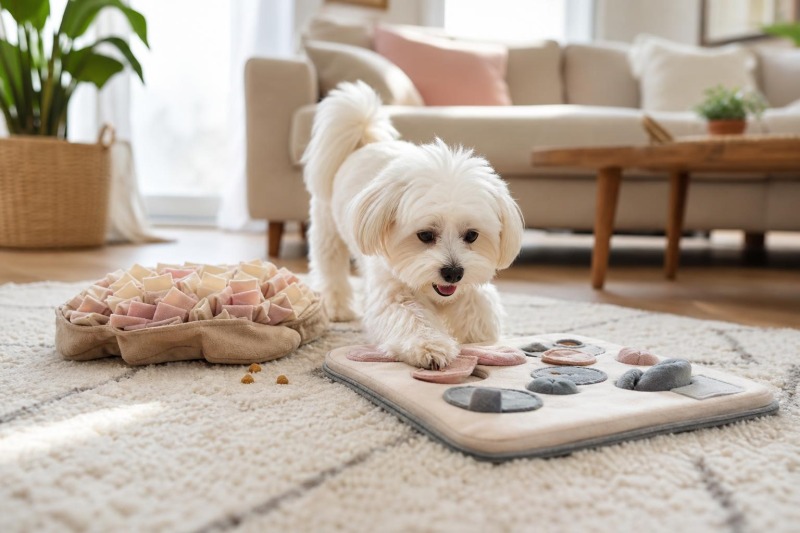
It sounds simple because it is simple, but simple does not mean weak. Foraging settles many dogs because it taps into behavior that feels natural and rewarding.
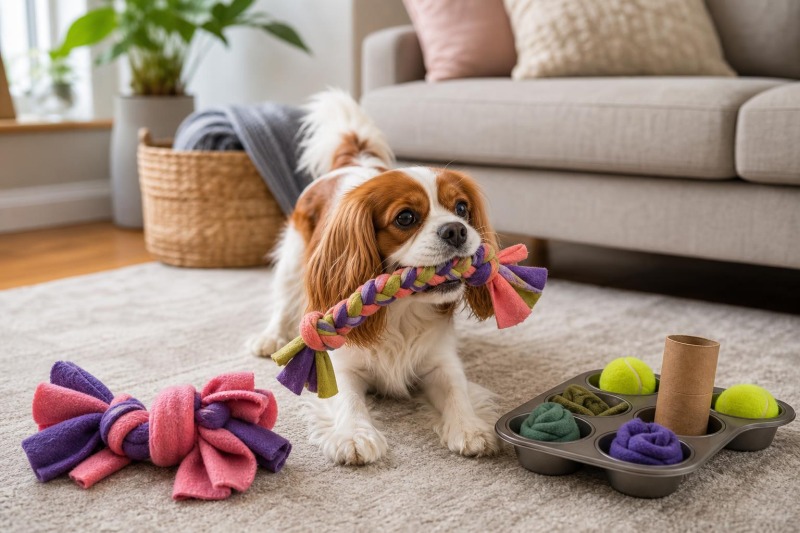
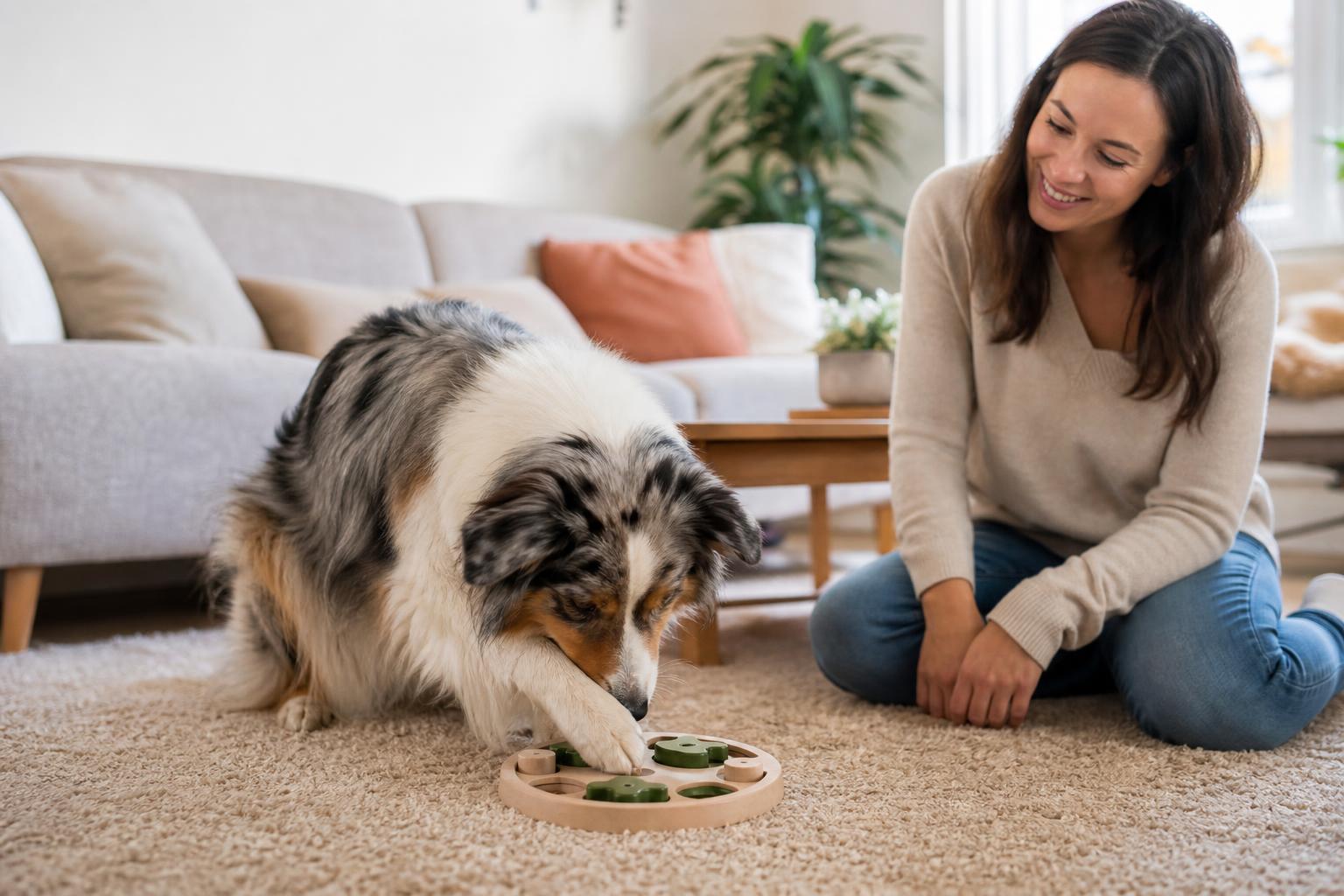
Puzzle feeders, stuffed food toys, and homemade treat boxes also make excellent indoor enrichment for companion dogs. They encourage persistence and calm problem-solving. That is a fine balance for dogs that need to stay emotionally level. A companion dog that learns to work through a food puzzle without frustration is practicing patience in a way that carries into the rest of life.
Best for Rainy Days and Small Spaces
Apartment dwellers and families with limited room can lean on food games more than they think. You do not need a large house to give a dog a meaningful challenge. A hallway, kitchen corner, or living room rug can become a hunting ground if you use it wisely. Just be sure the dog does not get so frustrated that the game loses its value. Set him up to succeed first, then raise the difficulty over time.
Tug with Rules Teaches Control, Not Chaos
Tug gets a bad rap in some circles, but done right, it is one of the finest indoor games for companion dogs. The key is not the toy itself. The key is the rules around it. The dog should know when the game starts, when he may take the toy, and when he must release it.
A short tug session with clear cues teaches impulse control, responsiveness, and cooperation. Ask for a sit before you present the toy. Use a release cue so the dog knows when to grab. Pause the game and ask for an out. Restart only when he responds well. This keeps the game from turning into wild possession and makes it a useful training tool. For dogs preparing for therapy or service work, that self-control matters as much as enthusiasm.
If a dog gets too amped up, shorten the round and finish with a calming exercise such as going to a mat or lying down for a reward. Good games should leave your dog satisfied, not spinning.
Find It Games Turn the House into a Training Field
There is something honest and satisfying about watching a dog lower his nose and work out a problem. “Find it” games are excellent because they can start with beginner-level tosses and grow into true scent challenges. Toss a treat a few feet away and say, “Find it.” Once your dog understands the cue, place treats where he cannot see them and let him hunt. Over time, you can hide multiple rewards throughout one room, then the next.
Indoors, that quality is worth cultivating. Nose-driven games are particularly helpful for dogs that need low-impact exercise, senior companion dogs, or dogs recovering from injury. They still get a sense of purpose and accomplishment without hard physical strain.
Using Scent Work to Build Confidence
Nervous dogs often benefit from scent games because the nose gives them something clear and instinctive to do. Instead of worrying about the world, they work it out one breath at a time. That quiet confidence can be a turning point for a dog that struggles with uncertainty in the home or around visitors.
Teach “Place” Through Game-Based Training
One of the most useful indoor skills for any companion dog is learning to go to a bed or mat and settle there. You can turn that into a game without losing structure. Toss a treat to the mat, reward the dog when all four paws land on it, then release him off. Repeat until he starts driving to the mat on purpose. From there, build duration slowly.
This may not sound like a game at first blush, but dogs often take to it with real enthusiasm when the timing is clear and the rewards are fair. It becomes a pattern they enjoy. Better still, it gives you a practical tool for greeting guests, eating dinner in peace, or helping a therapy or service prospect learn composure in the home. A calm dog is not born by accident. Calm is taught and rehearsed.
Indoor Retrieval Can Be More Than Chasing a Ball
Most folks think of fetch as a backyard affair, but indoor retrieval can be refined into useful work. Roll a soft toy down a hallway, then ask for a clean return and hand delivery. If your dog already likes to carry things, teach him to pick up a named object such as a toy, a leash, or a soft dummy. Companion dogs and service dogs alike can benefit from this sort of focused tasking.
The trick is keeping the game neat and thoughtful rather than frantic. Short retrieves on non-slip flooring are safer and easier on the body. Reward the return, not just the chase. A dog that learns to bring an item back to hand is learning cooperation, memory, and precision all at once.
Short Training Games Keep a Dog Mentally Sharp
Sometimes the best indoor game is three minutes of obedience dressed in the right attitude. Touch a hand target. Spin left, then right. Back up two steps. Sit, down, stand. Wait at a doorway. These quick sessions keep communication fresh and help the dog feel engaged.
This is especially true for dogs whose future involves public manners and steadiness. Therapy dogs need emotional control. Service dogs need accuracy and reliability. Companion dogs need enough structure to fit gracefully into daily home life. Little lessons scattered throughout the day can shape all of that without turning the house into a boot camp.
How to Choose the Right Indoor Game for Your Dog
The best game depends on the dog in front of you. A bold, busy youngster may need scent work and food puzzles to slow his mind and help him focus. A shy dog may thrive with hide-and-seek and easy nose games that let him win. A mature companion dog may prefer gentle retrieval, place work, or simple shaping games that do not tax the joints. Watch how your dog finishes the session. If he ends calmer, more attentive, and satisfied, you are on the right track.
Keep sessions short enough that the dog wants more. End on success. Change things up before boredom sets in. And remember this: the purpose is not to fill every waking minute. It is to give your dog meaningful work that fits his role in your home and strengthens your partnership.
A fine dog is made in the ordinary hours. Not just on grand outings, not just in formal classes, but right there in the living room while rain taps the windows and supper warms on the stove. Indoor games for companion dogs can shape patience, confidence, responsiveness, and peace in ways that many owners overlook. They give a dog something honest to do, and in return, that dog often gives you a steadier mind, better manners, and a deeper kind of companionship.
If you live with a companion dog, therapy dog, or service dog prospect, do not underestimate what can be built at home. A hallway can become a retrieve lane. A rug can become a scent field. A mat can become a lesson in calm. And over time, those small moments add up to the kind of dog that is a pleasure to live with every single day.